


Rejection Sensitive Dysphoria: Understanding the ADHD Emotional Flash in Relationships

Imagine a partner makes a minor comment about a forgotten chore, and suddenly it feels like a physical blow to your chest. That sharp, gut-punch sensation isn't you being dramatic or oversensitive; it's a profound neurological event. For many people navigating adhd and relationships uk, these moments of Rejection Sensitive Dysphoria (RSD) feel like an emotional flash flood that threatens to wash away years of trust. You've likely spent a lifetime trying to hide this intensity, feeling exhausted by the constant need to people-please just to keep the peace.
It's vital to understand that your experience is real, valid, and deeply rooted in the way your brain is wired. This article explores the neurological foundations of RSD and its specific impact on your closest partnerships. You'll gain a deeper insight into why your ADHD causes these intense emotional flashes and how clinical validation can help you move from confusion to emotional control. We'll also outline the practical path toward a private clinical assessment, providing the clarity you need to move forward with confidence.
Table of Contents
What is Rejection Sensitive Dysphoria (RSD)?
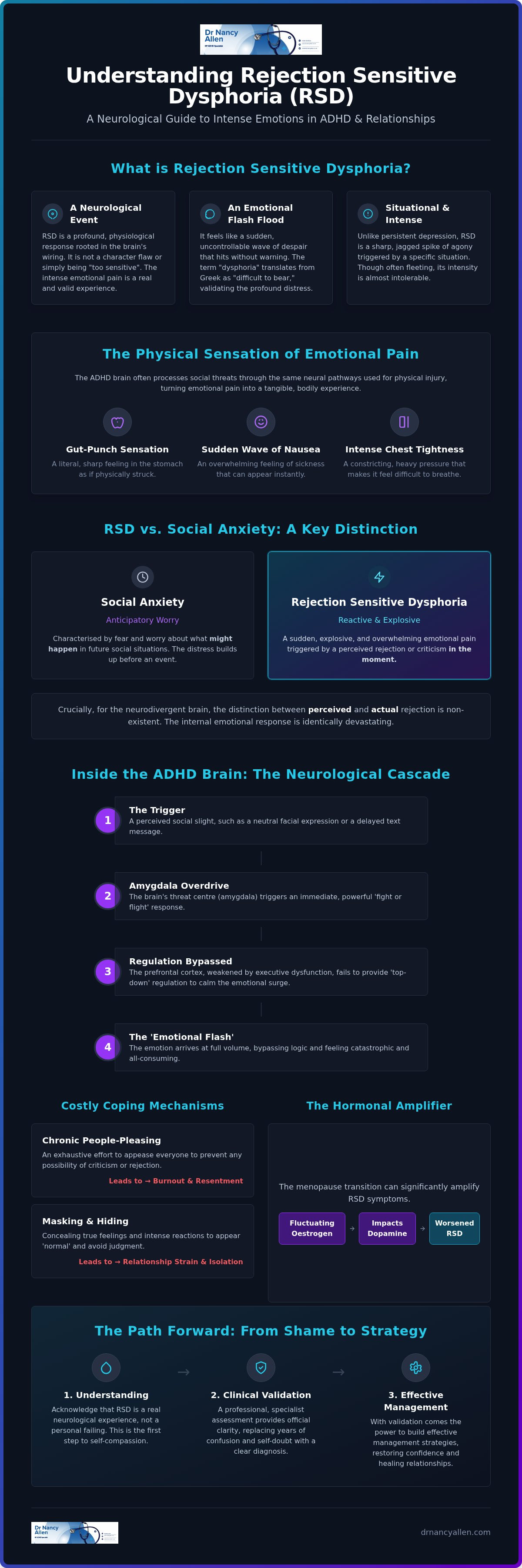
Rejection Sensitive Dysphoria (RSD) is an extreme emotional sensitivity triggered by the perception of being rejected, criticised, or teased. For those managing adhd and relationships uk, it often feels like a sudden, uncontrollable wave of despair that hits without warning. The term "dysphoria" finds its roots in Ancient Greek, literally translating to "difficult to bear." This etymology is particularly apt, as it validates that the experience isn't merely a mood swing; it's a profound, almost intolerable state of psychological distress that requires clinical understanding and empathy.
Whilst RSD is not currently classified as a standalone diagnosis in the DSM-5, clinicians recognise it as a core component of emotional dysregulation. Understanding The Neurological Basis: Why the ADHD Brain Reacts Intensively is essential for anyone struggling with these sudden shifts in mood. It's distinct from clinical depression or general low self-esteem because the pain is situational and fleeting, though incredibly intense. Unlike depression, which can be a persistent, heavy cloud, RSD is a sharp, jagged spike of agony that usually subsides once the perceived social threat passes.
To better understand this concept, watch this helpful video:
The Physical Sensation of Emotional Pain
The pain of RSD isn't confined to the mind. Many individuals describe a literal gut-punch feeling, intense chest tightness, or a sudden wave of nausea when they sense a shift in their partner's mood. This physical response occurs because the ADHD brain often processes social threats through the same neural pathways used for physical injury. To your nervous system, a partner's neutral tone can feel like a direct threat to your safety and survival. Ultimately, RSD is a neurological flash-flood of emotion that bypasses logical reasoning and executive control.
RSD vs. General Social Anxiety
It's easy to confuse RSD with general social anxiety, but the mechanics are fundamentally different. Social anxiety is largely anticipatory; you worry about what might happen before you even enter a social situation. In contrast, an RSD flash is sudden and explosive, often triggered by a neutral facial expression or a slightly delayed text message. For the neurodivergent brain, the distinction between perceived and actual rejection is non-existent. Whether a partner truly intended to be cold or was simply distracted, the internal response is an identical, devastating surge of emotional pain that can derail an entire day. Understanding this distinction is a vital step in navigating adhd and relationships uk with more self-compassion.
The Neurological Basis: Why the ADHD Brain Reacts Intensively
The ADHD brain operates differently when processing social signals. While many focus on the inability to concentrate, the neurological roots of Rejection Sensitive Dysphoria lie in a significant struggle with top-down emotional regulation. In a neurotypical brain, the prefrontal cortex acts as a steady hand, helping to perform cognitive reappraisal. This allows a person to step back and think, "Perhaps they didn't mean it that way." In the ADHD brain, this rationalising process is often bypassed entirely.
When you encounter negative social feedback, your amygdala triggers an immediate, primitive fight or flight response. Because executive dysfunction impairs the prefrontal cortex's ability to dampen this surge, the emotion arrives at full volume. This intensity is compounded by the dopamine connection. Low levels of this neurotransmitter mean the brain's reward system is underactive, while its threat processing system is hypersensitive. Consequently, navigating adhd and relationships uk requires an understanding that these reactions are chemical, not character-based. A minor disagreement can feel like a catastrophe because the brain cannot effectively weight the scale of the threat.
Emotional Dysregulation as a Core ADHD Trait
ADHD is fundamentally a disorder of self-regulation. This encompasses focus, mood, impulse control, and the ability to shift attention away from distressing thoughts. Many individuals experience "flooding," where a single intense emotion consumes their entire conscious experience for a period. It's as if the brain's emotional "off-switch" is malfunctioning. Securing a professional adult adhd assessment is often the first step in identifying these neurological patterns and moving away from a cycle of shame.
The Feedback Loop of Social Trauma
This biological vulnerability is often worsened by a lifetime of social trauma. By the time they reach adulthood, many people with ADHD have received significantly more corrective or negative comments than their neurotypical peers. This creates a feedback loop where the brain's threat-detection system is permanently set to high. Whether in a UK office, a school setting, or a family home, the brain is constantly scanning for signs of disapproval to avoid further pain. Understanding these mechanics is essential for regaining a sense of emotional security and clarity in your daily life, ensuring that past experiences don't dictate your future adhd and relationships uk.
The Hormonal Connection: RSD and the Menopause Transition
Estrogen is far more than a reproductive hormone; it acts as a critical modulator of dopamine within the brain. For women with ADHD, this biological relationship is foundational to emotional stability. When estrogen levels begin to fluctuate and eventually decline during the perimenopause and menopause transition, dopamine production often follows a similar downward trajectory. This shift can turn previously manageable traits into overwhelming challenges, particularly when it comes to emotional sensitivity and the "gut-punch" sensations of rejection.
Hormonal transitions often cause a significant spike in the severity of Rejection Sensitive Dysphoria. Many women find that the emotional resilience they built over decades suddenly feels fragile. Understanding this intersection is vital for anyone managing adhd and relationships uk, as it explains why certain emotional flashes may feel uncontrollable despite your best efforts to remain calm. Specialised care that addresses both neurodiversity and hormonal health is essential for regaining a sense of balance.
Estrogen, Dopamine, and Emotional Resilience
As estrogen levels drop during midlife, the neurodivergent brain loses a significant portion of its natural buffer against stress. This decline directly impacts dopamine availability, making the brain more vulnerable to sudden RSD flashes. You may experience a combination of brain fog and heightened emotional volatility that mimics or worsens existing ADHD symptoms. For those navigating the complexities of menopause symptoms, it's important to recognise that these changes are not a failure of character, but a physiological response to shifting chemistry.
Why RSD Often Peaks in Midlife
Midlife frequently presents a "perfect storm" of life stressors, including career pressures and family responsibilities, just as hormonal protection against emotional dysregulation wanes. It's common for women in the UK to seek an ADHD diagnosis for the first time during this period, as the internal strategies they once used to mask their symptoms no longer suffice. When the threat-detection system is set to high due to low dopamine, the symptoms and treatment for RSD must be managed with a nuanced, hormonal perspective.
A personalised treatment plan is necessary to address the double burden of declining hormones and ADHD neurological traits. By acknowledging how these factors interact, you can move away from the confusion of midlife emotional intensity. This integrated approach is a cornerstone of managing adhd and relationships uk, providing the clarity needed to sustain healthy, supportive partnerships through every stage of life.
Navigating ADHD and Relationships: Managing RSD in Daily Life
Living with RSD often leads to a series of defensive strategies designed to protect against the agony of perceived rejection. In the context of adhd and relationships uk, these behaviours frequently manifest as chronic people-pleasing, perfectionism, or sudden social withdrawal. Whilst these tactics might offer temporary safety, they come at a heavy price. Masking your true emotional state to appear easy-going or "normal" is mentally exhausting. Over time, this constant vigilance erodes your sense of self and prevents the very intimacy you're trying to protect.
Self-compassion is the foundation of moving forward. It's vital to recognise that your intense reactions aren't a choice; they're a physiological response to a perceived threat. Shifting from a mindset of shame to one of radical acceptance allows you to view these emotional flashes as neurological events rather than character flaws. This perspective is the first step toward regaining control over your emotional life.
Breaking the Cycle of People-Pleasing
Fear of a negative reaction often drives individuals to over-commit, sacrificing their own needs to ensure others remain happy. This total loss of personal boundaries creates a cycle of resentment and eventual burnout. To break this, try a simple three-step framework before agreeing to any request: breathe and acknowledge the urge to please, ask for time to check your capacity, and evaluate if saying yes will cause you future distress.
Sharing your needs with a partner doesn't have to be an apology. It's an act of clarity that helps them understand your internal landscape without the weight of shame. When you communicate your boundaries clearly, you create a more stable environment for your adhd and relationships uk to thrive.
Grounding Techniques for Emotional Flashes
Implementing a "Wait 24 Hours" rule is an essential tool for managing digital and verbal communication. This boundary prevents you from responding to perceived criticism or difficult emails whilst in the heat of a neurological flood. It allows the initial surge of pain to subside so your executive brain can come back online to evaluate the situation logically.
Sensory resets can also help quiet the nervous system during a surge. The 5-4-3-2-1 technique involves identifying five things you see, four you touch, three you hear, two you smell, and one you taste to bring you back to the present moment. Alternatively, splashing your face with cold water provides a sharp reset to the vagus nerve. If you feel overwhelmed by these emotional intensities, you may find that a private specialist consultation provides the professional roadmap you need to manage these daily challenges with confidence.
Seeking Professional Clarity: The Path to Clinical Validation
For many, the journey of managing adhd and relationships uk begins with a nagging sense that something is fundamentally different. A formal clinical assessment is the essential first step in moving from a place of shame and confusion to one of strategy and support. It provides a definitive answer to the "why" behind your emotional intensity. Instead of viewing yourself as "too much" or "dramatic," validation allows you to see your brain’s unique wiring for what it is. This shift in perspective is often the most powerful tool in repairing the emotional toll that RSD takes on a partnership.
A private consultation offers the luxury of time, which is often missing in standard medical settings. You deserve a space where your history is heard with empathy and clinical precision. This deep discussion ensures that every nuance of your experience, from childhood patterns to current relationship friction, is understood. This clarity leads to targeted interventions, whether you are seeking an adult assessment or exploring a child ADHD assessment to support your family’s collective wellbeing. A personalised treatment plan, tailored to your unique life stage and hormonal profile, provides the peace of mind that comes from being truly seen by a specialist.
The Private Assessment Journey
Accessing help shouldn't be a source of further stress. Modern care provides a secure online consultation process available to patients across the United Kingdom, removing geographic barriers to specialist expertise. In many cases, you can receive a formal diagnosis and a comprehensive treatment plan within as little as 72 hours. This rapid turnaround is transformative. It replaces months or years of uncertainty with immediate, actionable insights. For many, this validation is the turning point that restores relationship health and personal confidence, allowing you to move forward without the weight of unexplained emotional flashes.
Beyond the Diagnosis: Holistic Management
Clinical validation isn't just about a label; it’s about a holistic roadmap for your future. This involves a collaborative approach that might combine medication with lifestyle support and hormonal management, especially for those navigating the complexities of midlife. Having a Trusted Expert Guide by your side ensures that your care remains consistent, evidence-based, and compassionate. It’s about more than just managing symptoms. It’s about restoring your quality of life and emotional stability so you can engage fully with those you love. To take the first step toward a clearer future, you can book a private consultation with Dr Nancy Allen to begin your journey to clarity and emotional stability.
Restoring Emotional Balance and Connection
Understanding that your emotional intensity is a physiological response rather than a personal failing is the first step toward healing. We’ve explored how the ADHD brain struggles with top-down regulation and how hormonal shifts during menopause can amplify these challenges. These emotional flashes don't have to define your life or your partnership. By choosing a path of clinical validation, you can replace a cycle of shame with a structured, empathetic management plan.
Navigating adhd and relationships uk requires a specialist who understands the complex overlap between neurodiversity and hormonal health. With 25 years of clinical experience, Dr Nancy Allen provides the expert guidance needed to regain control. You can receive a formal diagnosis and a personalised treatment plan within as little as 72 hours through a secure online consultation.
Begin your journey to emotional clarity with a private ADHD assessment. You deserve to move forward with the clarity that comes from expert, compassionate care.
Frequently Asked Questions
Is Rejection Sensitive Dysphoria a formal medical diagnosis?
Rejection Sensitive Dysphoria is not currently classified as a standalone medical diagnosis in the DSM-5 or ICD-11. Instead, clinicians recognise it as a significant symptom of emotional dysregulation specifically associated with ADHD. It describes an extreme sensitivity to perceived or actual rejection that is common amongst neurodivergent individuals. Whilst not a separate condition, its impact on adhd and relationships uk is profound, often requiring specialised clinical validation to manage effectively.
Can medication help with the symptoms of RSD?
Yes, certain medications can significantly reduce the intensity of RSD symptoms. Stimulants and non-stimulants often help by improving the brain's ability to regulate emotional responses and dampening the "fight or flight" surge triggered by the amygdala. For many, medication provides a vital buffer, allowing for better cognitive reappraisal during social friction. A private consultation can help determine a personalised treatment plan that balances your unique neurological needs with your lifestyle.
How is RSD different from Borderline Personality Disorder (BPD)?
RSD and Borderline Personality Disorder share symptoms of emotional intensity, but their patterns differ. RSD flashes are sudden, situational, and usually subside quickly once the perceived threat passes. In contrast, BPD typically involves more persistent, long-term patterns of instability in self-image and relationships. A thorough clinical assessment is essential to distinguish between the two, as the management strategies for adhd and relationships uk are distinct from those used for personality disorders.
Does everyone with ADHD experience Rejection Sensitive Dysphoria?
Whilst not every individual with ADHD experiences Rejection Sensitive Dysphoria, the vast majority report some degree of this intense sensitivity. It is considered one of the most common and distressing aspects of the condition. The severity can vary based on factors like life history, current stress levels, and hormonal health. Understanding your specific emotional profile through a specialist assessment helps in developing targeted strategies to regain control over these sudden, overwhelming flashes.
How can I explain RSD to my partner or family members?
Explaining RSD is most effective when you frame it as a neurological "flash flood" rather than a choice or a character trait. You might describe it as a physical sensation, like a gut-punch, that happens before your logical brain can intervene. Emphasise that whilst the reaction is intense, it is a physiological response to a perceived social threat. This clinical validation helps loved ones understand that you aren't being "dramatic" on purpose.
Can children have RSD, or is it only found in adults?
Yes, children frequently experience RSD, though it may manifest differently than in adults. In younger people, these emotional flashes often look like sudden meltdowns, irritability, or an extreme reluctance to try new things for fear of failure. It is often mislabelled as defiance or being too sensitive. Dr Nancy Allen provides child ADHD assessments to help families identify these patterns early, replacing confusion with supportive strategies that protect the child’s self-esteem.
What is the link between RSD and masking in ADHD?
Masking is often a direct defensive response to the pain of RSD. Individuals may work exhaustively to appear "perfect" or easy-going to avoid any possibility of criticism or rejection. This constant vigilance is mentally draining and often leads to burnout or social withdrawal. By hiding your true self to stay safe, you inadvertently create a barrier to genuine intimacy. Clinical support helps you move away from masking toward a more authentic way of living.
How do I know if my emotional intensity is RSD or perimenopause?
It is often both, as the two are biologically linked. During perimenopause, declining estrogen levels cause a drop in dopamine, which can significantly worsen existing RSD symptoms. If you find your emotional resilience has suddenly vanished in midlife, it is likely the hormonal transition amplifying your ADHD traits. Seeking specialist care that understands this overlap is crucial for developing a treatment plan that addresses both your hormones and your neurodiversity.


Comments