


Childhood ADHD: Exploring Nonstimulant Treatment Options

Imagine your child finally finding focus at school, only to face a difficult "crash" of irritability and sleep disturbances the moment they step through the front door. For many parents, the traditional path of stimulants feels like an uneasy trade-off between academic success and evening peace. Stimulant medications are not the only option for treating childhood ADHD. Learn how nonstimulant medications work and why some families and healthcare providers may consider them as part of a child's treatment plan. These alternatives offer a steadier rhythm, avoiding the highs and lows that often disrupt family life.
We recognise that the decision to start or change medication is deeply personal and often fraught with worry about appetite loss or the "rollercoaster" effect of short-acting meds. You deserve a solution that supports your child's unique neurodiversity with compassion and clinical precision. This guide will show you how non-stimulant medications provide a vital alternative for managing childhood ADHD, offering 24-hour symptom support and a tailored approach to well-being. We will explore the clinical benefits of options like Atomoxetine and Guanfacine, giving you the clarity needed to discuss a balanced, 24/7 treatment plan with a specialist.
Table of Contents
What are Non-stimulant ADHD Medications for Children?
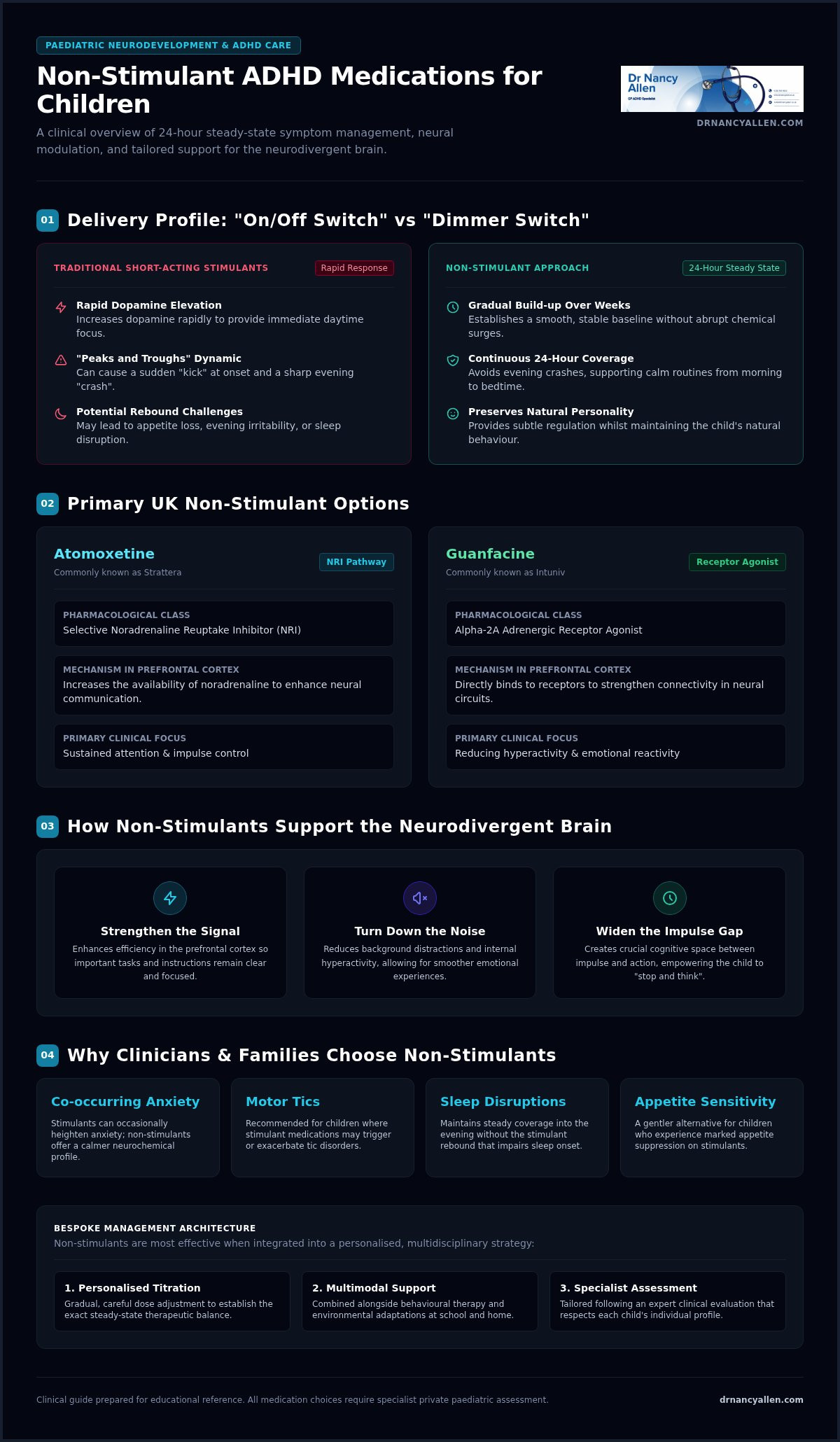
For many families, the journey toward managing ADHD begins with stimulants like methylphenidate. However, it's vital to understand that stimulant medications are not the only option for treating childhood ADHD. Learn how nonstimulant medications work and why some families and healthcare providers may consider them as part of a child's treatment plan to ensure a more consistent, gentle experience for the child. Unlike stimulants, which work by rapidly increasing dopamine levels to provide immediate focus, non-stimulants operate on a "steady-state" principle. They build up in the system gradually over several weeks, creating a stable baseline of support that lasts 24 hours a day.
To better understand how these two types of medication differ in their approach, watch this helpful video:
Because these medications don't cause a sudden surge in neurochemicals, children don't experience a "kick" when the dose starts or a "crash" as it wears off. This makes them a sophisticated choice for those who find the peaks and troughs of traditional medication too jarring. In the UK, the two primary non-stimulant options are Atomoxetine and Guanfacine, each targeting different pathways in the brain to improve executive function and emotional regulation.
The Role of Non-stimulants in UK Clinical Practice
In clinical practice, non-stimulants are rarely used in isolation. They form a core part of a wider strategy that includes ADHD management options like behavioural therapy and environmental adjustments. Specialists often favour these medications for children who present with co-occurring anxiety or motor tics, as stimulants can sometimes exacerbate these symptoms. Determining the right path requires a thorough, expert-led child adhd assessment. This ensures that the treatment plan respects the child's specific neurodivergent profile rather than following a generic protocol.
Atomoxetine vs Guanfacine: A Brief Overview
Whilst both are non-stimulants, they work in distinct ways. Atomoxetine, often known by the brand name Strattera, is a selective noradrenaline reuptake inhibitor (NRI). It increases the amount of noradrenaline in the prefrontal cortex, which helps with sustained attention and impulse control. Guanfacine, or Intuniv, is an alpha-2A adrenergic receptor agonist. Instead of changing chemical levels, it binds directly to receptors to "strengthen the signal" of neural connections. This difference in mechanism allows clinicians to tailor the choice based on whether a child needs more help with focus or with reducing hyperactivity and emotional reactivity.
How Non-stimulant Medications Support the Neurodivergent Brain
Understanding the biology of ADHD helps demystify how different treatments affect a child’s daily life. While stimulants act much like an "on/off switch" for focus, non-stimulants function more like a "dimmer switch." They work by modulating noradrenaline in the prefrontal cortex, the area of the brain responsible for executive functions. By increasing the efficiency of these neural pathways, non-stimulants help to "strengthen the signal" of important tasks whilst "turning down the noise" of distracting impulses and hyperactivity. This creates a smoother emotional experience for the child. It's essential to remember that Learn how nonstimulant medications work and why some families and healthcare providers may consider them as part of a child's treatment plan, especially when seeking a more subtle and sustained effect.
Targeting Executive Function and Emotional Regulation
The primary benefit of this mechanism is the improved ability to "stop and think." For a neurodivergent child, the gap between an impulse and an action is often non-existent. Non-stimulants widen this gap. This shift often leads to a noticeable reduction in "meltdown" frequency, as the child gains better control over their emotional responses. Over time, families often report improvements in working memory and task persistence. Unlike the immediate "hit" of stimulants, these benefits accrue over weeks, fostering a long-term sense of self-efficacy. Clinicians often recommend non-stimulant ADHD medications because they address these core regulatory challenges without the intensity sometimes associated with other pharmacological interventions.
The Importance of Consistency: Why They Work 24/7
One of the most significant frustrations for parents is the "rebound" effect, where symptoms return with a vengeance as a short-acting medication wears off in the late afternoon. Non-stimulants provide a vital alternative because they maintain a stable blood level. They don't "wear off" at 4 PM. This means the child is supported during the chaotic morning routine before school and the quiet wind-down period in the evening. Because there is no sudden drop-off, the emotional volatility that often marks the end of the school day is significantly reduced. This 24-hour coverage allows for a more predictable and peaceful home environment. If you feel your current approach is causing a "rollercoaster" effect for your child, exploring a more personalised strategy with a specialist can provide the stability your family needs.
Why Families and Providers Choose Non-stimulants
For many, the decision to look beyond traditional stimulants isn't about rejecting standard care, but about finding a more precise fit for a child's specific biology. It's a relief for many parents to discover that Learn how nonstimulant medications work and why some families and healthcare providers may consider them as part of a child's treatment plan to avoid common pitfalls like appetite suppression or severe sleep disturbances. By aligning with CDC treatment recommendations for ADHD, we can build a multimodal strategy that prioritises the child's overall well-being over a simple reduction in school-day symptoms.
One of the most compelling reasons to choose non-stimulants is the preservation of a child's natural personality. Some families worry that medication might lead to a "zombie" feeling or a loss of the child's spark. Non-stimulants, with their gradual onset, rarely cause this type of emotional blunting. They're also an excellent choice for children with a history of substance sensitivity or those with certain heart concerns, as they don't impact the central nervous system with the same intensity as stimulants. This gentler approach ensures a smoother transition between school and home life, keeping the family evening calm and connected.
When Non-stimulants are the First Choice
While often viewed as a second-line treatment, there are clinical indicators where a non-stimulant is the preferred first choice. If a child presents with significant motor tics or high levels of anxiety, stimulants can sometimes make these symptoms more pronounced. In these cases, starting with an option like Guanfacine can provide the necessary focus whilst actually helping to settle the nervous system. Lifestyle also plays a huge role. If a child's most challenging behaviours occur during the morning routine or at bedtime, the 24-hour coverage of a non-stimulant makes it a more logical starting point than a medication that only lasts eight hours.
Potential Side Effects and How to Manage Them
Like any clinical intervention, non-stimulants can have initial side effects. Some children may experience tiredness, a slightly upset stomach, or occasional dizziness during the first few weeks. It's important to remember that these effects usually dissipate as the body adjusts during the titration period. We manage this by starting with a very low dose and increasing it slowly. This "low and slow" approach is a hallmark of a high-quality private adhd diagnosis uk pathway, where regular follow-ups allow us to fine-tune the treatment based on real-time feedback from the family. This level of validation and expert oversight ensures that any hurdles are handled with compassion and clinical insight.
Integrating Non-stimulants into a Personalised Treatment Plan
Successful treatment is rarely about a single prescription; it is about finding a rhythm that supports your child's whole life. The titration process for non-stimulants is a marathon, not a sprint. We start with a "low and slow" approach, gradually increasing the dosage to allow the child's body to adjust whilst minimising potential side effects. Unlike stimulants that provide immediate results, these medications require patience. It often takes between 4 to 8 weeks to see the full clinical effect. It's essential to remember that Learn how nonstimulant medications work and why some families and healthcare providers may consider them as part of a child's treatment plan to ensure a stable, long-term foundation for development.
Monitoring progress during this time is a shared responsibility. We rely on a combination of home observations and school reports to track efficacy. Sometimes, a "top-up" stimulant might be used alongside a non-stimulant base. This adjunctive approach provides the 24-hour stability of a non-stimulant whilst offering extra support during the high-demand hours of the school day. This level of nuance ensures the treatment remains as unique as the child themselves.
The Collaborative Approach: Parents, Teachers, and Clinicians
Effective communication with your child's school is a cornerstone of success. Teachers are often the first to notice subtle improvements in a child's ability to wait their turn or persist with a difficult task. When tracking behaviours, "success" on a non-stimulant often looks like a gradual lowering of the "noise" in the child's environment, leading to fewer emotional outbursts and better social integration. As the child grows, their clinical needs will naturally evolve, making regular specialist reviews essential to keep the plan aligned with their development.
A Holistic View: Beyond the Prescription
Medication works best when supported by a healthy lifestyle. Sleep hygiene and balanced nutrition aren't just "good habits"—they are essential components of neurodivergent care. Noradrenaline support is significantly more effective when the brain is well-rested. Similarly, behavioural strategies that focus on executive function coaching can work in tandem with medication to build lasting skills. Personalised care means looking at the child's entire ecosystem, from their classroom environment to their evening wind-down routine.
Finding the right balance for your child requires an unhurried, expert perspective. If you are ready to move beyond generic solutions and explore a bespoke strategy for your child's neurodiversity, you can book a specialist consultation to begin building a plan that supports their future.
Taking the Next Step: Professional Assessment and Guidance
Researching treatment options is a vital first step, but the path from information to action often feels daunting. Many families find themselves stuck in a public healthcare system that, despite its best efforts, frequently relies on a "one size fits all" approach. Long waiting lists and brief appointments can leave little room for the nuanced discussions required to find the right medication. It's important to remember that Learn how nonstimulant medications work and why some families and healthcare providers may consider them as part of a child's treatment plan to ensure your child receives care that is as unique as their neurodivergent profile.
Seeking a private assessment provides the space and time necessary to move beyond generic protocols. At this stage, the goal is to replace anxiety with a structured, evidence-based path forward. Dr Nancy Allen’s approach is built on 25 years of clinical experience, prioritising a sophisticated balance between clinical authority and deep-seated empathy. This ensures that both the child’s and the parents’ experiences are validated, creating a foundation of trust that is essential for long-term success. Learn how nonstimulant medications work and why some families and healthcare providers may consider them as part of a child's treatment plan during a consultation that prioritises the human element of medicine.
What to Expect from a Private Child ADHD Consultation
A private consultation is designed to be unhurried and thorough, mirroring the pace of a specialist medical practice that values clarity over speed. Unlike a standard assessment, this process involves deep history-taking and a granular analysis of symptoms across different environments. It's an opportunity to explore the specific molecular mechanisms of non-stimulants and how they might interact with your child's temperament. You can expect:
A comprehensive review of your child’s developmental and medical history.
Dedicated time to ask detailed questions about noradrenaline support and 24-hour symptom coverage.
A clinical environment that reduces the anxiety often associated with seeking specialist help.
A personalised treatment plan delivered within 72 hours, providing immediate clarity for your family.
Your Journey to Clarity and Support
Moving from a state of confusion to one of confident action is a transformative experience for any parent. Early, accurate, and compassionate intervention doesn't just manage symptoms; it restores a child's confidence and supports their holistic well-being. By choosing a path that respects neurodiversity, you are providing your child with the tools they need to thrive both in and out of the classroom. The peace of mind that comes from an expert-led assessment is the first step toward a more stable and fulfilling family life. If you're ready to begin this journey, you can Book a Child ADHD Assessment with Dr Nancy Allen today.
Empowering Your Child’s Neurodivergent Journey
Finding the right balance for your child’s ADHD doesn’t have to feel like a series of compromises. We’ve explored how non-stimulants provide a stable, 24-hour foundation, particularly for children who find the "rollercoaster" of stimulants disruptive or struggle with co-occurring anxiety. Learn how nonstimulant medications work and why some families and healthcare providers may consider them as part of a child's treatment plan to ensure a gentler, more consistent experience that respects your child’s natural personality.
With 25 years of clinical experience, Dr Nancy Allen offers a path to clarity through unhurried, empathetic consultations. Her practice provides national UK coverage via secure online sessions, delivering personalised treatment plans within 72 hours. You don’t have to stay stuck in a cycle of confusion or long waiting lists. You can book a specialised Child ADHD Assessment with Dr Nancy Allen today to begin a collaborative journey toward your child's well-being. There is a way forward that prioritises both clinical excellence and your child’s unique spark, and we are here to help you find it.
Frequently Asked Questions
How long does it take for non-stimulant ADHD medication to start working?
Non-stimulant medications typically take between one and four weeks for initial clinical improvements to emerge, with maximum efficacy often taking up to eight weeks. Unlike stimulants that work within an hour, these treatments build up gradually to create a stable baseline. This "low and slow" approach allows the child's body to adjust whilst providing consistent, 24-hour symptom support that doesn't wear off in the late afternoon or evening.
Are non-stimulant medications safer than stimulants for children?
Safety is always personalised, but non-stimulants are non-controlled substances with no potential for abuse or dependence. Learn how nonstimulant medications work and why some families and healthcare providers may consider them as part of a child's treatment plan to avoid side effects like appetite loss or motor tics, which can sometimes be exacerbated by traditional stimulant choices.
Can my child take both a stimulant and a non-stimulant medication together?
Yes, it's quite common for a clinician to prescribe both as part of an adjunctive therapy plan. A non-stimulant provides a stable, 24-hour foundation, whilst a low-dose stimulant "top-up" offers additional support during high-demand school hours. This combination can be particularly effective for smoothing out the "rebound" irritability or sleep disturbances that some children experience when their primary stimulant medication begins to wear off in the late afternoon.
Will non-stimulant medication change my child’s personality?
These medications are designed to support your child's neurodiversity without blunting their natural spark. Because they work as a "dimmer switch" rather than an "on/off switch," they rarely cause the emotional "zombie" feeling sometimes associated with stimulants. Most families find that by reducing hyperactivity and emotional volatility, the child's true personality is actually better able to shine through in both social and academic settings without feeling jarring or forced.
What happens if we miss a dose of a non-stimulant medication?
If a dose is missed, you should simply resume the regular schedule the following day; you must never double the dose to catch up. Because these medications rely on a "steady-state" level in the bloodstream, missing a single dose shouldn't cause an immediate crisis, but frequent misses will reduce the overall efficacy. It's important to maintain consistency to ensure the 24-hour support remains effective for your child's daily routine and behaviour.
Do non-stimulant ADHD medications cause sleep problems or insomnia?
Non-stimulants are generally much less likely to cause insomnia than stimulants. In fact, certain types like Guanfacine are often used specifically to help children who struggle with sleep-onset issues. While some children might feel slightly more tired during the initial titration phase, this usually settles within a few weeks. These medications offer a vital alternative for families who find that traditional stimulants disrupt their child's natural sleep patterns and evening wind-down.
Can non-stimulants help with my child’s emotional outbursts and meltdowns?
Yes, non-stimulants are particularly effective at reducing emotional dysregulation and the frequency of meltdowns. By strengthening the neural connections in the prefrontal cortex, they help a child "stop and think" before reacting to a frustration. This increased gap between an impulse and an action provides the child with the emotional space needed to navigate difficult moments without becoming overwhelmed, leading to a significantly calmer and more predictable home environment.
Is a private ADHD assessment necessary to access non-stimulant medications?
Whilst the NHS provides ADHD services, a private Child ADHD Assessment offers a significantly faster route to specialist care and nuanced medication discussions. Dr Nancy Allen provides personalised treatment plans within 72 hours, allowing for unhurried consultations about non-stimulant options that might not be as readily available through standard public pathways. This expert-led approach ensures your child's specific needs are validated and addressed with a bespoke plan that covers their entire day.


Comments