


ADHD and Sleep: Treatment Options for Restorative Sleep

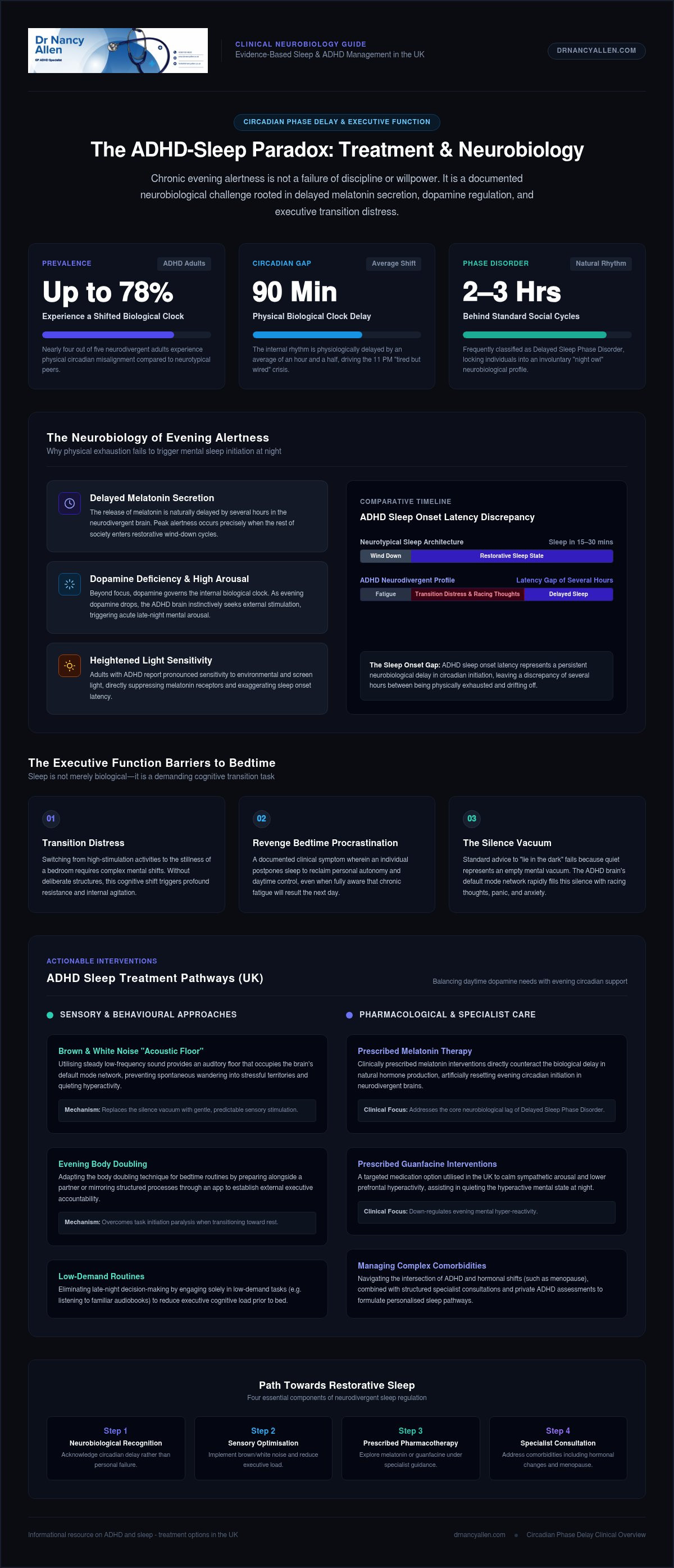
Did you know that for up to 78% of adults with ADHD, the internal biological clock is physically shifted by an average of 90 minutes compared to neurotypical peers? It's a frustrating reality that often leads to the "tired but wired" phenomenon at 11 PM, where your body is exhausted but your brain refuses to disengage. If you've found that standard advice like "just put your phone away" fails to make a dent in your chronic daytime fatigue, you aren't alone. Your struggle isn't a lack of discipline; it's a documented neurobiological challenge linked to circadian phase delay.
We understand how deeply this cycle impacts your executive function and quality of life. This guide provides a comprehensive look at adhd and sleep - treatment options available in the UK, offering evidence-based medical and behavioural strategies to quiet your mind. You'll discover the specifics of prescribed interventions like melatonin and guanfacine, learn how to structure a productive conversation with a specialist, and find a clear path toward the restorative sleep you've been searching for. By balancing daytime dopamine needs with evening circadian support, we can help you regain control over your nights and your days.
Table of Contents
The ADHD-Sleep Paradox: Why Your Brain Struggles to Switch Off
For many, the end of the day brings a cruel contradiction. Whilst your body feels heavy with fatigue, your mind begins to race at a frantic pace. This "tired but wired" state isn't a failure of willpower; it's a conflict between physical exhaustion and mental hyperactivity. In the neurodivergent brain, the release of melatonin, the hormone responsible for sleep, is often delayed by several hours. This biological lag means that when the rest of the world is winding down, your brain is just reaching its peak alertness.
Dopamine plays a pivotal role in this nightly struggle. Beyond its well-known influence on focus, dopamine helps regulate our internal biological clock. When levels are low, the brain often seeks stimulation to compensate, leading to a state of high arousal late at night. ADHD-related sleep onset latency is characterised by a persistent neurobiological delay in the circadian timing of sleep initiation, often resulting in a gap of several hours between physical tiredness and the ability to drift off. Understanding these mechanisms is the first step in exploring effective adhd and sleep - treatment options.
To better understand this concept, watch this helpful video:
Circadian Rhythm Disruptions in Neurodivergence
Research suggests the ADHD internal clock often runs two to three hours behind the standard social cycle. This shift is frequently classified as delayed sleep phase disorder, a condition where your natural rhythm makes you a "night owl" by biological design rather than choice. Adults with ADHD often report heightened light sensitivity, which further disrupts the body's ability to recognise when it's time to rest. You can read more about why the ADHD brain struggles to sleep in our detailed guide on neurobiological barriers.
The Executive Function of Going to Bed
Sleep isn't just a biological process; it's an executive function task. Moving from a high-stimulation activity to the quiet of a bedroom requires a mental shift that many find incredibly difficult. We call this "transition distress." When your brain lacks the impulse control to stop late-night scrolling, you may fall into the trap of revenge bedtime procrastination. This clinical symptom occurs when you stay up late to reclaim a sense of autonomy over your day, even if it means sacrificing essential rest.
Behavioural and Environmental Treatment Options
Standard sleep hygiene advice often feels like a punishment for the ADHD brain. Telling someone with a hyperactive mind to "just lie in the dark" ignores the fundamental neurobiological need for stimulation. When we discuss adhd and sleep - treatment options, we must move beyond generic tips toward sensory-informed environments that respect how your brain actually functions. For many, silence is not peaceful; it is a vacuum that the brain fills with racing thoughts or anxiety.
Utilising brown or white noise can be a transformative step. These steady frequencies provide an "acoustic floor" that occupies the brain’s default mode network, preventing it from wandering into stressful territories. This subtle level of stimulation allows the mind to anchor itself, making the transition to sleep less of a mental battle. If these environmental shifts aren't providing the relief you need, a private ADHD assessment can help identify the specific neurobiological barriers unique to your experience.
Managing the "transition distress" of bedtime often requires external accountability. The concept of "body doubling," where you perform a task alongside someone else, can be adapted for evening routines. This might involve a partner starting their routine at the same time or using an app to mirror the process. By creating "low-demand" evening routines, you reduce the executive load. This means choosing activities that require minimal decision-making, such as listening to a familiar audiobook whilst dimming the lights, to gently signal to your nervous system that the day is ending.
Sensory Regulation for Restorative Rest
Many neurodivergent individuals struggle with proprioceptive processing, making it difficult to feel "grounded" in bed. Weighted blankets provide deep pressure input that can calm a restless nervous system and reduce the physical agitation often associated with ADHD and sleep problems. Temperature regulation is another common hurdle; choosing breathable fabrics and cooling pads can prevent the sensory "overload" that leads to middle-of-the-night waking. The goal is to create a low-stimulation zone that feels like a sanctuary rather than a restriction on your active mind.
Cognitive Strategies: Quietening the Mental Chatter
Working memory deficits often lead to "brain loops" where you replay tasks for the next day. A "Brain Dump" technique, where you externalise every thought onto paper before lying down, can clear this mental clutter. Additionally, traditional mindfulness can be frustrating for ADHD brains. Instead, try "external mindfulness," focusing on a specific sound in the room or the texture of your sheets rather than internal stillness. You might also develop a "dopamine menu" for the evening. This is a list of gentle, low-dopamine activities—like a favourite repetitive hobby or a warm bath—that provide just enough satisfaction to prevent the "revenge bedtime procrastination" that occurs when your brain is desperate for autonomy after a long day of masking.
Pharmacological Management: UK ADHD Sleep Medication Options
Whilst it may seem counterintuitive, stimulants don't always lead to insomnia. For a significant number of individuals, these medications actually quiet the internal noise, allowing the brain to focus on the process of winding down. However, the timing of your dose is critical. When medication wears off too early, you might experience a "rebound" effect, where symptoms return with increased intensity, leading to evening irritability and a racing mind. Exploring pharmacological adhd and sleep - treatment options requires a nuanced understanding of how different release profiles interact with your unique biology.
Accessing these clinical pathways starts with a private ADHD assessment. This specialist review ensures that any prescription aligns with the NICE ADHD guidelines, which prioritise safety and efficacy in managing both daytime and night-time symptoms. A thorough assessment allows for a personalised plan that addresses the "crash" many feel in the late afternoon, ensuring you have the mental clarity required to navigate your evening routine without feeling overwhelmed.
Stimulant Timing and Sleep Release Profiles
The choice between Lisdexamphetamine and Methylphenidate often comes down to how long the effects last and how they taper off. Lisdexamphetamine is a prodrug with a typically smoother, longer release profile, whilst methylphenidate is available in various short and long-acting formulations. By carefully managing methylphenidate ratios, clinicians can extend coverage into the early evening. In some cases, a small afternoon "booster" dose of immediate-release medication helps bridge the gap, providing the executive function needed to actually initiate sleep preparations rather than falling into a cycle of late-night distraction.
Non-Stimulant and Adjunctive Sleep Aids
For those who find stimulants too disruptive or insufficient for rest, non-stimulant ADHD medication offers an alternative path. Guanfacine, often prescribed under the brand name Intuniv, is particularly effective at reducing sympathetic nervous system arousal. It helps lower the "fight or flight" feeling that keeps many neurodivergent people in a state of high alert at midnight. Additionally, prescription-grade Melatonin is a common adjunctive treatment in the UK. Unlike over-the-counter supplements found in other countries, UK prescription melatonin is strictly regulated for purity and dosage, ensuring a more predictable impact on the circadian rhythm for those with documented sleep onset delays.
Managing Comorbidities: When Sleep Struggles are Complex
For many individuals, addressing the core neurobiology of ADHD is only one part of the puzzle. Sleep disruptions often stem from a complex web of co-occurring conditions that require a more specialised lens. Amongst the neurodivergent population, there is a notably higher prevalence of Sleep Apnoea, where breathing repeatedly stops and starts during the night. This condition often mimics or worsens ADHD-related brain fog, making it essential to rule out physical airway obstructions before concluding that sleep issues are purely mental hyperactivity. When you explore adhd and sleep - treatment options, you must consider how your nervous system and respiratory health interact as a whole.
There is also a significant overlap between ADHD and conditions like Mast Cell Activation Syndrome (MCAS) or Postural Tachycardia Syndrome (POTS). These conditions can keep the body in a state of high physiological arousal even when the mind is ready for rest. A holistic medical review is vital for complex cases to ensure that treating one symptom doesn't inadvertently exacerbate another. If you are struggling with a combination of fatigue and physical restlessness, a specialist medical consultation can provide the clarity needed to untangle these overlapping health concerns.
The ADHD-Menopause Sleep Connection
Hormonal health plays a decisive role in how ADHD symptoms manifest, particularly for women. Declining oestrogen levels during perimenopause and menopause can cause a sharp drop in dopamine, which drastically worsens executive dysfunction and insomnia. This hormonal shift often introduces night sweats and temperature sensitivity, making it nearly impossible to maintain a consistent sleep cycle. For many, Hormone Replacement Therapy (HRT) used in conjunction with ADHD medication can be a transformative approach to achieving restorative sleep. You can learn more about these unique challenges in our guide to ADHD in Women.
Dysautonomia, POTS, and Night-time Arousal
The link between ADHD and POTS involves a dysfunction of the autonomic nervous system, which can cause your heart rate to spike unexpectedly. This often leads to "adrenaline dumps" in the middle of the night, where you wake up suddenly with a racing heart and a sense of dread. Managing these episodes requires more than just standard sleep hygiene; it involves regulating your salt and fluid intake and using physical counter-manoeuvres to stabilise your system. By managing dysautonomia through targeted clinical support, you can reduce these night-time interruptions and allow your nervous system to finally settle into a deeper, more restorative state of rest.
Navigating Your Journey: Seeking Specialist Support
Generic sleep hygiene is often ineffective for neurodivergent individuals because it fails to address the underlying biological delays in melatonin production and executive function challenges. Whilst standard primary care often suggests "putting the phone away," this advice overlooks the "tired but wired" phenomenon that keeps your mind racing long after your body is exhausted. Effective adhd and sleep - treatment options require a clinical understanding that respects your brain's unique wiring rather than fighting against it. A one-size-fits-all approach simply cannot account for the circadian shifts and sensory sensitivities that define the ADHD experience.
The Value of Expert Validation
For many, the most significant barrier to restorative sleep is the internalised shame of feeling "lazy" or "undisciplined" when they cannot switch off. Moving toward a diagnosis of neurodivergence is a critical mental shift that transforms your self-perception. It replaces self-criticism with a practical framework for success. An accurate diagnosis provides the foundation for all future treatment, ensuring that every strategy, from sensory adjustments to medication, is grounded in clinical evidence. Our patient-centric approach ensures you feel heard and validated throughout your journey, moving away from the detached, sterile feel of traditional medical institutions to focus on your specific quality of life.
Booking Your Path to Clarity
Dr Nancy Allen brings over 25 years of clinical experience to every consultation, focusing on the intricate overlap between neurodivergence and hormonal health. We provide secure online consultations for patients across the UK, removing the logistical stress of travel for those already struggling with chronic fatigue. Once an assessment is complete, we develop personalised treatment plans that can be delivered within 72 hours. This speed is a vital alternative to the routine adult NHS ADHD assessment wait times, which can range from 2 to 7 years depending on your local trust, ensuring you receive the support you need without unnecessary delay.
If you've felt dismissed or stuck in a cycle of "failed" sleep advice, it's time for a more nuanced perspective that prioritises the human element of medicine. Seeking specialist support is the first step in accessing the medication and behavioural scaffolding required to finally quiet your mind. These adhd and sleep - treatment options are most effective when they are tailored to your specific life stages and hormonal health. You deserve a plan that acknowledges your neurobiology and provides a clear, actionable path toward the restoration of your confidence. Book your specialist ADHD assessment with Dr Nancy Allen and begin the journey toward the restorative sleep you deserve.
Reclaiming Your Nights and Your Days
Achieving restorative rest requires moving beyond generic advice and addressing the biological reality of the neurodivergent brain. By understanding how circadian disruptions and sensory needs interact, you can begin to implement effective adhd and sleep - treatment options that actually work for your unique wiring. Whether you're navigating the complexities of menopause or managing the "tired but wired" state of executive dysfunction, the path to clarity begins with specialist validation.
Dr Nancy Allen provides secure online consultations nationwide, offering expert insight into the overlap between neurodivergence and hormonal health. With a commitment to patient-centric care, you can access an assessment and receive a personalised treatment plan within 72 hours. This streamlined approach ensures that you don't remain stuck in a cycle of fatigue whilst waiting years for the support you need. Specialist care allows you to move from simply "getting by" to truly thriving with a brain that finally knows how to rest.
Book your private ADHD assessment for a personalised treatment plan.
You don't have to navigate chronic exhaustion alone; restorative sleep is a tangible goal we can achieve together.
Frequently Asked Questions
Can ADHD medication actually help me sleep better?
Yes, ADHD medication can improve sleep quality by reducing the mental hyperactivity that often prevents you from switching off. Whilst it seems counterintuitive to use stimulants, they help regulate dopamine levels, which can quiet a racing mind and make it easier to initiate a bedtime routine. This is why personalised adhd and sleep - treatment options are so vital; the right dosage ensures you don't experience a rebound effect that causes evening restlessness.
Is it safe to take Melatonin every night if I have ADHD?
Prescription-grade melatonin is generally considered safe for long-term use when managed by a specialist to address circadian rhythm disruptions. In the UK, melatonin is a prescription-only medicine, which ensures the purity and dosage are clinically appropriate for your needs. It's used to "reset" your internal clock, helping to advance your sleep phase so you feel tired at a more conventional hour without the grogginess associated with over-the-counter supplements.
Why do I feel more awake and productive at 2 AM?
This phenomenon is often due to Delayed Sleep-Wake Phase Disorder, where your internal biological clock is physically shifted by approximately 90 minutes compared to neurotypical peers. This delay means your brain reaches peak alertness just as others are winding down. You aren't being "lazy" or "difficult"; your system is simply operating on a different schedule. This shift often makes the quiet, low-distraction environment of the early morning feel like your most productive window.
What is the best non-stimulant ADHD medication for sleep issues in the UK?
Guanfacine, often prescribed as Intuniv, is frequently recommended for those who struggle with high night-time arousal. It works by lowering sympathetic nervous system activity, which reduces the "fight or flight" feeling that keeps many people awake. Other adhd and sleep - treatment options include clonidine, which is used off-label in the UK to help quiet racing thoughts. These medications provide 24-hour symptom coverage and are particularly helpful for those who find stimulants too disruptive in the evening.
How does menopause affect ADHD sleep patterns?
Menopause causes a significant drop in oestrogen, which directly impacts dopamine production and exacerbates ADHD symptoms like restlessness and insomnia. This hormonal shift often introduces night sweats and temperature regulation issues, making restorative sleep even harder to achieve. For many women, combining ADHD treatment with Hormone Replacement Therapy (HRT) is the most effective way to stabilise their mood and regain a consistent, healthy sleep cycle during this transitional life stage.
Can I combine ADHD stimulants with sleep medication?
Yes, many patients successfully combine daytime stimulants with evening sleep aids under the supervision of a specialist. This dual approach ensures that your ADHD symptoms are managed throughout the day whilst providing the necessary support to settle your nervous system at night. It's essential that these medications are balanced correctly to avoid morning fatigue. A specialist review can help determine the safest and most effective combination for your specific neurobiological needs.
What should I do if my GP refuses to prescribe sleep aids for my ADHD?
If your GP is hesitant, seeking a private specialist assessment is a productive next step. GPs often follow strict local prescribing guidelines and may not feel comfortable managing off-label sleep medications or specialist prescriptions like melatonin for adults. A private consultation with Dr Nancy Allen provides the expert validation and nuanced treatment planning required to access these clinical pathways. We can provide a comprehensive report to your GP to support ongoing care.
Is there a specific diet that helps with ADHD-related insomnia?
There isn't a single "ADHD diet" that cures insomnia, but certain nutritional habits can support better rest. Consuming a high-protein snack in the evening can help stabilise blood sugar and support the production of sleep-inducing neurotransmitters. It's also helpful to limit caffeine and high-sugar foods in the late afternoon. Focus on maintaining a consistent eating schedule to help regulate your body's internal clock and reduce the physical restlessness that can interfere with your ability to drift off.


Comments