


Combining ADHD Medications: Benefits and Safety Explained

What if the key to managing your ADHD isn't found in a higher dose, but in a more nuanced combination of treatments? Many individuals find themselves asking, "Can i have a stimulant and non stimulant for treamtent of MY adhd symptoms?" when their current regime feels like it's falling short. You might experience a frustrating "crash" as your medication wears off in the evening, or perhaps the dose required to focus during the day leaves you feeling anxious and unable to sleep. It's a common struggle, and feeling like your treatment only works for part of the day is incredibly taxing.
We believe that your care should be as unique as your symptoms, and a "one size fits all" approach rarely provides the lasting clarity you deserve. Discover how combining different ADHD medications can provide a more comprehensive approach to managing your unique symptoms safely and effectively. We'll explore the clinical evidence for dual-therapy, the benefits of 24-hour symptom coverage, and how a personalised treatment plan can reduce side effects whilst helping you feel truly balanced throughout the day and night.
Table of Contents
Understanding Combination Therapy for ADHD: Can You Take Both?
If you've been managing ADHD for a while, you may have found that your current medication works well for focus but leaves you feeling restless or irritable as evening approaches. This leads many to ask, "Can i have a stimulant and non stimulant for treamtent of MY adhd symptoms?" The answer is that modern psychiatry is increasingly moving towards combination therapy, also known as adjunctive treatment. This isn't about simply taking more medication; it's about a strategic alignment of different pharmacological mechanisms to provide more comprehensive support.
Standard clinical pathways often start with a single medication. However, ADHD is a complex condition affecting various executive functions, from working memory to emotional regulation. A single stimulant might sharpen your focus whilst doing little for your impulsivity or sleep. By broadening the management of attention deficit hyperactivity disorder to include both stimulant and non-stimulant classes, clinicians can target these symptoms more precisely. This shift reflects a more empathetic understanding that your brain's needs don't always fit into a single pill's profile. It validates your experience that "good enough" focus shouldn't come at the cost of your overall well-being.
To better understand how these different classes of medication interact, watch this clinical overview from Dr John Kruse:
The Concept of Adjunctive Treatment
Adjunctive treatment involves adding a second medication to "augment" or enhance the effects of the primary one. It's fundamentally different from switching medications, where you stop one to try another. Instead, we look for synergy. The goal is to create a smoother therapeutic experience, filling in the gaps that a stimulant might leave behind. This approach acknowledges that your symptoms are unique and may require a more nuanced, multi-modal strategy to achieve true stability. It's a collaborative process where the secondary medication acts as a supportive layer, ensuring your cognitive performance remains steady throughout the day.
Common Reasons for Dual Prescribing
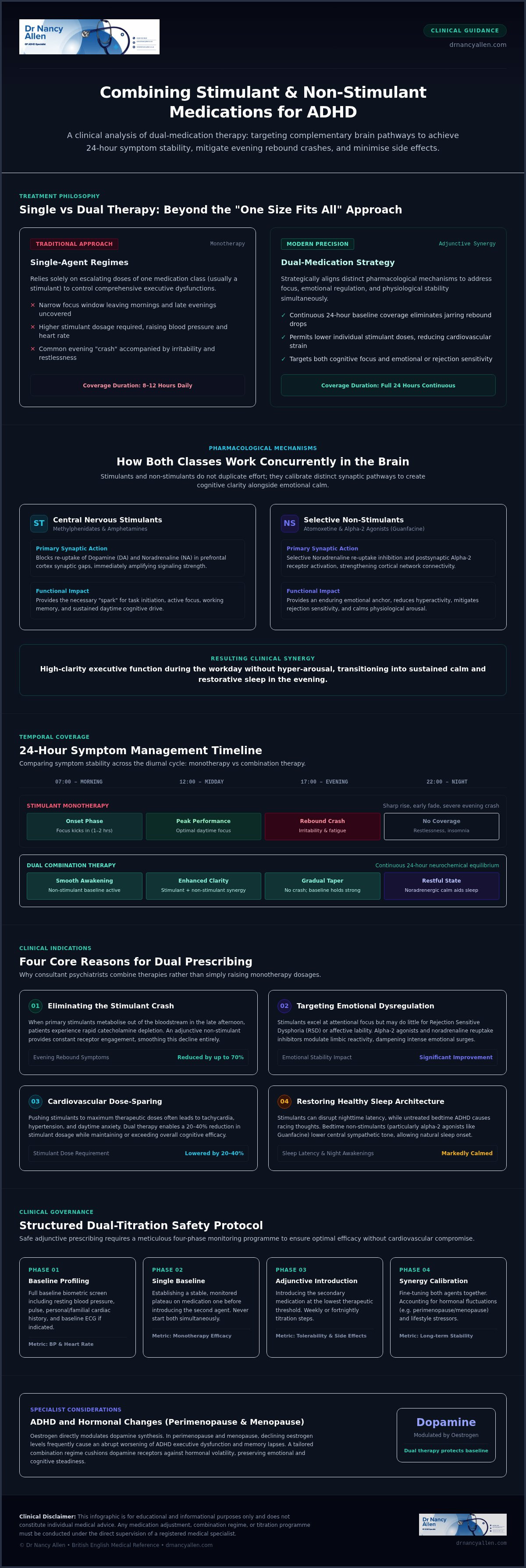
Why do we consider dual prescribing? One of the most frequent reasons is the stimulant "rebound" effect, where symptoms return with intensity as the morning dose wears off. Adding a non-stimulant can provide a baseline level of support that remains constant. We also use this method to manage specific challenges that stimulants can sometimes exacerbate. Common reasons for exploring this approach include:
Managing the stimulant rebound effect as the primary dose wears off.
Addressing emotional dysregulation or rejection sensitivity.
Improving sleep quality by reducing nighttime restlessness.
Lowering the required stimulant dose to minimise cardiovascular side effects.
By combining treatments, we can often lower the stimulant dose, effectively reducing side effects like anxiety or heart rate spikes whilst maintaining high-quality symptom control. This allows for a more balanced lifestyle, where you aren't just functional during work hours, but also present and calm during your personal time.
How Stimulants and Non-Stimulants Work Together in the Brain
To understand why a dual approach is often so effective, we must look at the biological mechanics of the ADHD brain. If you're wondering, "Can i have a stimulant and non stimulant for treamtent of MY adhd symptoms", it helps to understand the biological synergy at play. Stimulants and non-stimulants don't just repeat the same job. They target different neurotransmitter pathways to create a more stable cognitive foundation. While one provides the necessary "spark" for focus, the other acts as a steadying force for your emotional baseline.
Following established ADHD diagnosis and treatment guidelines, we can see how these medications address different neurotransmitter deficiencies. Stimulants primarily increase the availability of dopamine and norepinephrine in the synaptic gap. This process sharpens the signal-to-noise ratio in the brain, making it easier to distinguish between important tasks and background distractions. Non-stimulants, however, often work by strengthening the connections between neurons in the prefrontal cortex, which governs our ability to pause and think before acting.
The Stimulant Mechanism
Think of stimulants as the "on switch" for task initiation and alertness. They work rapidly to increase dopamine levels, which is crucial for motivation and executive function. Understanding the choice between Lisdexamphetamine and Methylphenidate is the first step in this process. Stimulants specifically target the prefrontal cortex to enhance the "signal" of the task you're trying to complete. This immediate delivery is why you feel the effects shortly after taking them, but it's also why they can lead to a sharp decline as the medication leaves your system.
The Non-Stimulant Mechanism
If stimulants are the on switch, non-stimulants are the "volume control" for impulsivity and emotional noise. A non-stimulant ADHD medication operates on a different timeline. Unlike the quick burst of a stimulant, medications like Atomoxetine or Guanfacine build up gradually in your system over several weeks. This slow accumulation provides 24-hour coverage that doesn't disappear when you finish work. It creates a smoother emotional baseline, reducing the "all or nothing" feeling that many people with ADHD struggle with daily.
By combining these two actions, we can achieve a more "solid" foundation for cognitive function. The stimulant handles the high-demand focus required for your career or studies, whilst the non-stimulant manages the underlying impulsivity and emotional regulation that persists into the evening. This balanced approach often allows for a more sustainable quality of life. If you feel your current single-medication plan is leaving gaps in your day, you may benefit from a consultation at Dr Nancy Allen's clinic to explore a more tailored regime.
The Clinical Benefits of a Dual-Medication Approach
The clinical rationale for dual-medication therapy is rooted in the pursuit of 24-hour stability. If you find yourself asking, "Can i have a stimulant and non stimulant for treamtent of MY adhd symptoms", you are likely searching for a solution that doesn't expire at 5 PM. A dual approach allows us to maintain efficacy whilst potentially lowering the dose of individual medications, which often leads to a more tolerable side-effect profile. This strategy moves away from the "all or nothing" experience of single-medication regimes.
By integrating two different classes of medication, we can address the full spectrum of ADHD challenges. The benefits of this personalised approach include:
Enhanced coverage: Consistent symptom management that lasts from the moment you wake up until you go to sleep.
Emotional stability: Significant reduction in rejection sensitivity dysphoria (RSD) and mood volatility.
Restorative rest: A decrease in evening hyperactivity and "brain chatter" makes it easier to transition into sleep.
Dose optimisation: The ability to use a lower stimulant dose can reduce physical side effects like jitters or appetite suppression.
Managing the Stimulant Rebound
For many, the most difficult part of the day is the late afternoon "crash" or rebound effect. This happens when the stimulant levels in your blood drop rapidly, often leading to a window of intense irritability and brain fog. Non-stimulants soften this transition by providing a constant pharmacological floor. This means you can remain focused for evening tasks, engage meaningfully with family life, and avoid the emotional exhaustion that typically follows a productive workday.
Targeting Emotional Dysregulation
While stimulants excel at improving task initiation and alertness, they sometimes fail to soothe the underlying emotional impulsivity of ADHD. Alpha-2 agonists, such as Guanfacine, have a specific calming effect on the sympathetic nervous system. This helps to quieten the "fight or flight" response that many neurodivergent individuals feel constantly. This calming mechanism is particularly relevant when we consider the frequent overlap between dysautonomia and ADHD, where the body's autonomic system requires extra support to reach a state of calm. By addressing the nervous system alongside dopamine levels, we create a more comprehensive sense of internal balance.
Safety, Side Effects, and Titrating Combined ADHD Treatments
Safety is the cornerstone of any effective treatment plan. When considering a dual-medication approach, the clinical framework in the UK is guided by NICE standards, which emphasise the need for specialist oversight throughout the process. If you're wondering, "Can i have a stimulant and non stimulant for treamtent of MY adhd symptoms", it's important to recognise that safety isn't just about the drugs themselves, but how they're introduced to your system. A structured titration programme ensures that we aren't guessing, but rather making evidence-based adjustments to your care.
The Titration Journey
Clinicians usually recommend reaching a stable dose on one medication before adding a second. This "one-at-a-time" rule is crucial for clarity. It allows us to see exactly how your body responds to each change. During this phase, you'll be encouraged to monitor your daily experiences closely. Tracking your ADHD symptoms and sleep patterns helps us understand if the non-stimulant is successfully softening the evening crash or if the stimulant dose needs fine-tuning. We aim to find a balanced ratio that provides focus without the physical "jitteriness" often associated with high-dose stimulants.
Potential Side Effects to Monitor
Combining medications can sometimes lead to overlapping side effects, such as a dry mouth or reduced appetite. However, a dual approach often allows for lower doses of each, which can actually reduce the overall side-effect burden. You'll need to keep a close eye on your cardiovascular health, specifically your blood pressure and heart rate, as both medication classes can influence these metrics. Regular monitoring is a non-negotiable part of a private titration service.
It's common to feel a degree of fatigue when starting a non-stimulant. This is usually temporary as your nervous system settles into a new baseline. If you notice any concerning shifts, such as palpitations, fainting, or significant mood changes, you must contact your specialist prescriber immediately. Clear, honest feedback is the most powerful tool we have in ensuring your treatment remains both safe and effective. If you're looking for expert guidance on managing complex symptoms, you can enquire about a private assessment to begin your personalised journey.
Personalising Your ADHD Management Plan with Dr Nancy Allen
Every individual experience of neurodivergence is unique, which is why a standardised approach to medication often fails to provide the clarity you need. If you've spent months wondering, "Can i have a stimulant and non stimulant for treamtent of MY adhd symptoms", the answer lies in a strategy that respects your specific life circumstances. For those with complex symptoms or a history of partial response to treatment, a private ADHD assessment offers the necessary time and clinical depth to explore these more nuanced dual-medication regimes safely.
One area where Dr Nancy Allen provides particular expertise is the intersection of ADHD and hormonal health. Many women find that their ADHD symptoms become significantly more difficult to manage during perimenopause and menopause, as fluctuating oestrogen levels directly impact dopamine availability in the brain. In these cases, simply increasing a stimulant dose may not be the most effective solution. A personalised plan might instead involve a combination of ADHD medications alongside specialist menopause care to restore cognitive function and emotional well-being throughout this transition.
A truly effective management plan extends beyond the prescription pad. It involves a holistic view of your life, incorporating:
Personalised medication titration that respects your body’s unique sensitivity.
Guidance on workplace adjustments to support your executive function.
Lifestyle strategies that work in harmony with your pharmacological support.
Specialist insight into how hormonal cycles influence your medication's efficacy.
A Patient-Centric Approach to Prescribing
Dr Allen’s clinical philosophy is built on the belief that you are the expert in your own experience. Moving away from the "one-size-fits-all" medical model, she prioritises consultations where you feel heard, validated, and supported. With over 25 years of clinical experience, she combines evidence-based professional authority with deep-seated empathy. This ensures that your treatment plan isn't just clinically sound, but also feels balanced and sustainable for your daily life. You aren't just a patient; you're a partner in a collaborative journey toward better health.
Booking Your Consultation
Beginning your journey toward a more balanced treatment plan is straightforward. Dr Nancy Allen provides secure online appointments for adults across the UK, ensuring that specialist care is accessible regardless of your location. In your initial treatment planning session, you can expect a thorough review of your history, current symptoms, and any previous experiences with medication. This unhurried consultation allows for the fine-tuning of a dual-medication regime that provides the 24-hour support you've been seeking. From the initial diagnosis through to long-term management, you'll have a trusted expert guide to help you navigate every step of your ADHD journey.
Finding Your Path to Balanced ADHD Support
If you've been asking, "Can i have a stimulant and non stimulant for treamtent of MY adhd symptoms", you now understand that a dual-medication approach offers a strategic way to bridge the gaps in your care. By combining the immediate focus of stimulants with the steadying baseline of non-stimulants, you can achieve 24-hour symptom coverage and significantly reduce the evening "crash". This isn't just about more medication; it's about a more precise alignment with your brain's unique needs.
Reclaiming your clarity starts with a clinical partnership that values your individual experience. Dr Nancy Allen provides specialist expertise in neurodiversity and hormonal health, offering diagnosis and treatment plans in as little as 72 hours. With secure online consultations available nationwide, high-quality care is always within reach. Book your private ADHD consultation with Dr Nancy Allen today to begin fine-tuning a regime that feels truly balanced. You don't have to settle for partial relief when a more comprehensive path to well-being is available.
Frequently Asked Questions
Is it common to take both a stimulant and a non-stimulant for ADHD?
Yes, it is a recognised clinical practice often used when a single medication doesn't provide complete relief. Real-world studies show that approximately 10.5% of patients receive combination therapy to achieve better symptom control. This approach is increasingly favoured for adults who require 24-hour coverage but find that high doses of stimulants lead to intolerable side effects or an evening "crash" that disrupts their daily life.
What are the most common ADHD medication combinations used in the UK?
In the UK, specialists frequently pair a stimulant, such as Methylphenidate or Lisdexamphetamine, with a non-stimulant like Guanfacine or Atomoxetine. These pairings are chosen to balance immediate cognitive focus with long-term emotional stability. Clinicians typically stabilise a patient on one medication first before introducing the second. This methodical process ensures that the synergy between the two drugs is carefully monitored for both safety and effectiveness.
Will taking two medications increase my risk of side effects?
Not necessarily, because combining medications often allows your specialist to prescribe lower doses of each individual drug. This can actually reduce the overall side-effect burden whilst maintaining high efficacy. However, you must still monitor for overlapping effects such as dry mouth or appetite suppression. Regular reviews with a specialist are essential to track cardiovascular metrics like heart rate and blood pressure, ensuring your personalised regime remains safe.
Can combining medications help with ADHD-related insomnia?
Yes, adding a non-stimulant can be highly effective for those struggling with sleep. Whilst stimulants can sometimes interfere with rest if they haven't worn off, non-stimulants like Guanfacine have a calming effect on the central nervous system. This helps to quieten evening hyperactivity and "brain chatter", making it easier to switch off at night. Improved sleep quality often leads to better emotional regulation and focus the following day.
How long does it take to see the benefits of adding a non-stimulant?
Unlike stimulants, which work rapidly, non-stimulants require a period of gradual build-up in your system. You might notice subtle improvements in impulsivity or emotional baseline within the first two weeks, but the full therapeutic benefits usually take four to six weeks to manifest. It is important to remain patient during this titration phase and maintain regular contact with your prescriber to report any subtle shifts in your symptoms.
Do I need a new ADHD assessment to change to a combination treatment?
If you already have a formal diagnosis, you typically don't need a full reassessment, but a specialist treatment review is mandatory. When patients ask, "Can i have a stimulant and non stimulant for treamtent of MY adhd symptoms", a clinician must conduct a thorough evaluation of their medical history and current medication response. This ensures the dual-therapy plan is tailored to your unique profile and meets all UK clinical safety standards.
Can combination therapy help women with ADHD during menopause?
Combination therapy is particularly beneficial during menopause because it addresses the complex interaction between dopamine levels and declining oestrogen. Dr Nancy Allen specialises in this area, often using dual-medication plans to manage the intensified brain fog and emotional volatility that many women experience. By targeting different pathways, this approach provides the necessary clarity and support to navigate hormonal transitions whilst maintaining consistent executive function throughout the day.
What should I do if my current GP is hesitant about combination therapy?
If your GP is hesitant, it may be because they are bound by local monotherapy guidelines. Seeking a consultation with a private specialist like Dr Nancy Allen can provide the expertise required for more complex dual-medication regimes. Specialist practitioners have the experience to fine-tune these plans safely and effectively. You can book a treatment planning session to discuss evidence-based options that offer the comprehensive 24-hour support your current plan may be lacking.


Comments