


Pelvic Floor Consultation: A Specialist Guide to Restoring Your Confidence

What if the symptoms you've been told are "just part of getting older" are actually treatable clinical conditions that deserve expert attention? For many women, the quiet frustration of bladder leaks or physical discomfort is compounded by the belief that these issues are inevitable or, worse, shameful. You might have tried generic advice to simply "do your Kegels" only to find it makes little difference to your daily life. It's exhausting to manage these "taboo" symptoms whilst wondering if you'll ever feel like yourself again. Booking a specialist pelvic floor consultation is not just about addressing a physical symptom; it's about validating your experience and refusing to settle for a diminished quality of life.
In this guide, you'll discover exactly what to expect from a private pelvic floor consultation and how specialist clinical care can help you reclaim control over your hormonal and physical wellbeing. We'll explore how a clear clinical diagnosis leads to a personalised treatment plan that extends far beyond basic exercises. By looking at the "whole woman" through a compassionate, expert lens, we can move past the confusion and towards a future defined by confidence and restoration.
Table of Contents
Beyond "Normal": Understanding Pelvic Health and Quality of Life
Pelvic floor health is the invisible cornerstone of a woman’s physical and emotional wellbeing. These muscles provide the essential internal support required for movement, stability, and daily confidence. When they function correctly, you move through the world with a sense of physical freedom that is easy to take for granted. However, when dysfunction occurs, the impact is rarely limited to a single symptom. It ripples through every aspect of life, from your ability to enjoy a high-impact workout to your comfort during intimate moments and your confidence in social settings. Pelvic health is not a niche concern; it is a fundamental component of your overall vitality.
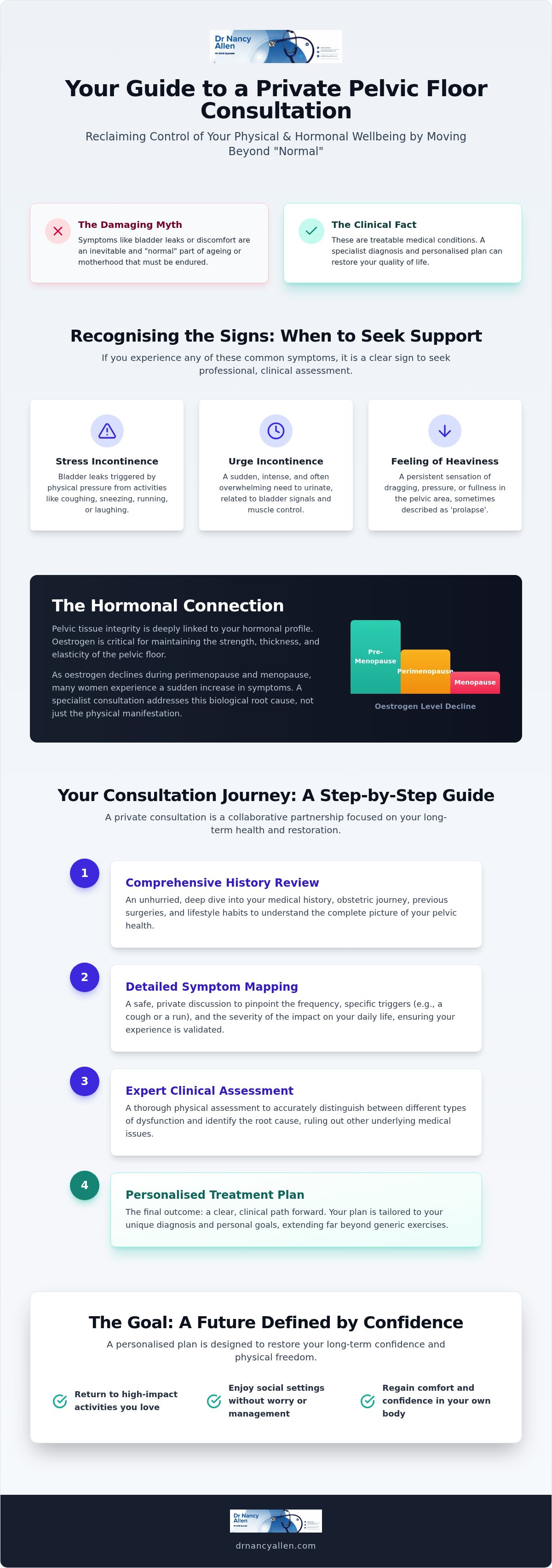
One of the most persistent and damaging myths in women's health is that leaking or pelvic discomfort is a natural tax we pay for ageing or motherhood. This narrative is factually incorrect. Whilst these issues are common, they are never "normal" in a clinical sense. A specialist pelvic floor consultation is vital for moving beyond these misconceptions and reclaiming your quality of life. Clinical assessment is essential because it allows us to distinguish between different types of dysfunction, such as stress incontinence triggered by physical pressure or urge incontinence related to bladder signals. Without this clarity, generic exercises often fail to provide the relief you deserve.
The Silent Struggle: Why Women Wait to Seek Help
Many women endure symptoms for years before seeking a professional opinion. This delay often stems from a mix of social stigma and the internalised belief that their experience isn't "serious" enough for medical intervention. Normalising chronic discomfort or bladder leaks creates a significant barrier to care. When symptoms are ignored, they rarely stay static; instead, they often worsen, leading to reduced mobility and a withdrawal from the activities you love. Seeking a private assessment is an act of self-advocacy. It replaces embarrassment with a clear, clinical path forward, ensuring that your physical health is prioritised rather than managed in silence.
The Hormonal Connection: Menopause and the Pelvic Floor
The integrity of pelvic tissues is deeply linked to your hormonal profile. Oestrogen plays a critical role in maintaining the strength, thickness, and elasticity of the pelvic floor and vaginal tissues. As oestrogen levels begin to fluctuate and decline during the perimenopause and menopause transition, many women notice a sudden peak in symptoms like urgency or a feeling of heaviness. A pelvic floor consultation with a specialist who understands this hormonal overlap is essential for a successful outcome. It ensures that your treatment plan addresses the biological root cause rather than just the physical manifestation. For a broader look at how these changes affect your health, you can explore our Menopause Symptoms Guide to understand the specialist care available for your hormonal journey.
The Private Pelvic Floor Consultation: A Step-by-Step Guide
Entering a clinical space for a pelvic floor consultation shouldn't feel like a rushed or sterile transaction. It's a collaborative partnership focused on your long-term health. We begin with a deep dive into your medical history, covering your obstetric journey, previous surgeries, and current lifestyle habits. We aren't just looking at the present; we're tracing the history of your pelvic health to understand how you arrived at this point. This unhurried conversation ensures that no detail is overlooked, providing the foundation for a truly accurate assessment.
Symptom mapping is a vital part of this process. We'll discuss the frequency of your concerns, the specific triggers—such as a cough, a sneeze, or a run—and the severity of the impact on your daily life. This discussion occurs in a safe, private environment where your experiences are validated. By ruling out other underlying medical causes during this phase, we ensure that your treatment is precisely targeted to the root of the issue.
Preparing for Your Appointment
To get the most from your session, a little preparation goes a long way. You might find it helpful to keep a "bladder diary" for two or three days before your appointment. Record what you drink, how often you visit the loo, and any episodes of leakage. Bring a list of current medications and details of previous treatments, even if they didn't work as expected. Most importantly, think about your primary goal. Whether it's returning to high-impact exercise or simply enjoying a night at the theatre without anxiety, knowing your desired outcome helps us tailor the plan to you.
What Happens During the Physical Examination?
For many women, the physical assessment is the part of the consultation that causes the most anxiety. It's important to know that your dignity and comfort are the absolute priorities. We operate a strict "stop at any time" policy, and the examination is conducted with the utmost gentleness. The clinical purpose is to assess muscle tone, tissue health, and the presence of any prolapse. This physical insight is essential; it tells us whether your muscles are overactive, weak, or lacking coordination. These findings allow us to move past generic "do your Kegels" advice and create a personalised strategy that actually works. If you're ready to move from uncertainty to a clear clinical diagnosis, you can book a specialist assessment to begin your recovery journey.
Choosing the Right Specialist: Why Clinical Expertise Matters
Expertise isn't just about knowledge; it's about the lens through which your symptoms are viewed. A pelvic floor consultation with a specialist GP offers a level of diagnostic depth that generic check-ups often miss. Whilst a standard appointment might focus on isolated symptoms, a specialist assessment considers the systemic interplay of your health. This is particularly vital for women in mid-life, where pelvic health is inextricably linked to hormonal shifts. A clinician who understands this connection can integrate medical interventions, such as local or systemic HRT, into your recovery plan, addressing the biological root causes that exercises alone cannot reach.
Choosing private care ensures that you aren't just a name on a waiting list. It provides the luxury of time, allowing for unhurried discussions where you can share the full scope of your concerns without feeling pressured by a ticking clock. This unhurried pace is essential for building the trust required to discuss sensitive topics, ensuring that every nuance of your experience is captured and validated by a seasoned professional.
GP vs. Physiotherapy: Understanding the Roles
It's helpful to understand how different professionals contribute to your recovery. A specialist GP’s role is foundational; they provide the medical diagnosis, rule out underlying pathology, and have the authority to prescribe necessary medications. They act as the clinical lead in your journey. In contrast, pelvic floor physiotherapists are experts in the physical rehabilitation of the muscles. The most effective results often come from a dual-action approach where your GP and physiotherapist collaborate. By starting with a medical pelvic floor consultation, you ensure that any prescription needs or hormonal imbalances are managed first, creating the optimal environment for physical therapy to succeed.
The Advantage of a Private Consultation
The current healthcare climate often leaves women facing a "postcode lottery" for specialist services, with long waiting lists that can lead to worsening symptoms. Private care offers rapid access to expertise, allowing you to begin your restoration journey immediately. There is also immense value in continuity of care. Having a single expert who understands your medical history and your personal goals provides a sense of security and stability. This model of expert-led clarity is a hallmark of specialist medicine. For instance, our Adult ADHD Assessment Pillar demonstrates how a dedicated, specialist diagnosis can bring life-changing clarity to complex health conditions, a philosophy we apply equally to pelvic health.
Recognising the Signs: When to Seek Professional Support
Identifying the right time to book a pelvic floor consultation often involves recognising the threshold where "minor" inconveniences begin to limit your life. Many women adapt their behaviour to accommodate symptoms, perhaps by wearing dark clothing to hide leaks or avoiding high-impact exercise. Stress Urinary Incontinence, or SUI, is one of the most frequent indicators that the pelvic support system is struggling. If you experience a small leak whilst coughing, sneezing, or lifting, it's a clear signal that the muscles aren't providing the dynamic support your body requires.
Other signs are more internal and harder to describe. You might feel a persistent sense of heaviness or a "dragging" sensation in the pelvic area, which can fluctuate throughout the day or worsen after exercise. These are often the first signs of pelvic organ prolapse. Additionally, if you find yourself planning journeys around the availability of public loos, or if your sleep is frequently disrupted by the urgent need to visit the bathroom, your bladder health deserves a specialist review. Changes in sexual function or physical comfort during intimacy, especially those that coincide with hormonal shifts, are also valid reasons to seek expert clinical care.
Red Flags and Essential Check-ups
Whilst many pelvic health issues are chronic and manageable, certain "red flag" symptoms require more immediate medical attention. If you notice blood in your urine, experience sudden and unexplained pelvic pain, or find a palpable lump, you should seek an urgent assessment to rule out underlying pathology. Beyond these physical triggers, the impact on your mental health is a significant factor. If your symptoms cause you to withdraw from social activities or leave you feeling anxious about your body, a pelvic floor consultation provides the peace of mind that comes from expert validation and a clear, restorative path forward.
Pelvic Health and the ADHD Overlap
There is a significant but often overlooked connection between neurodiversity and pelvic health habits. For women with ADHD, executive dysfunction can make it difficult to maintain consistent hydration or notice the body's early signals that the bladder is full. Sensory processing differences can also mean that the physical sensations of pelvic dysfunction feel particularly intrusive or distressing. A practitioner who understands this overlap can offer tailored support, helping you organise treatment protocols and pelvic floor exercises in a way that respects your neurodivergent brain. This holistic approach ensures that your treatment plan is both effective and sustainable for your specific lifestyle.
If you recognise these signs and are ready to move from managing symptoms to finding a lasting solution, you can book your specialist pelvic floor consultation here to start your recovery.
Restoring Confidence with Dr Nancy Allen
Dr Nancy Allen brings over 25 years of clinical experience to every pelvic floor consultation. Her philosophy is built on the belief that clinical authority and deep empathy must work in tandem to achieve the best patient outcomes. When you seek help for pelvic health, you aren't just looking for a list of exercises; you're looking for a practitioner who understands the nuanced interplay between your physical symptoms, your hormonal health, and your daily quality of life. This seasoned perspective allows for a transition from the initial assessment to a bespoke treatment plan. Every recommendation is tailored to your unique biology and lifestyle, ensuring that the path to recovery is both realistic and effective. This commitment to evidence-based care ensures that every patient receives the highest standard of private medical attention in a supportive environment.
A Patient-Centric Clinical Journey
The journey towards restoration moves away from the "one-size-fits-all" advice that so often fails women. Instead, Dr Allen targets your specific needs by considering the "whole woman" approach. This might involve integrating hormonal support with physical rehabilitation or adjusting your plan to fit the sensory needs of a neurodivergent lifestyle. The focus is on restoring your quality of life and empowering you with the clinical knowledge required to understand your own body. Patients frequently remark on the profound sense of validation they feel during their time with Dr Allen. Receiving a clear diagnosis and a structured way forward provides the mental and emotional clarity that is often missing from traditional medical interactions. By focusing on long-term goals rather than quick fixes, we ensure that your physical freedom is sustained well into the future.
Next Steps: Booking Your Consultation
Taking the first step is often the most significant hurdle in the recovery process. However, accessing specialist care is designed to be a discreet and supportive experience from the very first contact. By booking a pelvic floor consultation, you're making a conscious decision to prioritise your physical freedom and overall wellbeing. This is a private clinical space where your dignity is the absolute priority and your personal goals, whether they involve returning to high-impact sport or improving intimacy, lead the way. Taking action today is the most effective way to ensure a more comfortable and confident tomorrow. The restorative nature of this care means you don't have to settle for merely managing symptoms; you can work towards a genuine resolution. You can access specialist assessments through our secure booking system to begin your journey back to physical confidence.
Reclaiming Your Physical Freedom and Confidence
Restoring your pelvic health is a vital step toward reclaiming the quality of life you deserve. You've seen that symptoms like stress incontinence or physical discomfort aren't inevitable consequences of midlife; they're treatable conditions that respond to specialist clinical care. By addressing the "whole woman," including the critical role of hormonal health, we move beyond generic exercises to find lasting solutions. A private pelvic floor consultation provides the safe, unhurried space needed to map your symptoms and develop a strategy that fits your unique lifestyle.
Dr Nancy Allen offers compassionate, expert-led care for women in midlife, drawing on over 25 years of specialist clinical experience. This dedicated approach ensures you receive personalised treatment plans within days, not months, providing the rapid clarity needed to move forward with confidence. You don't have to navigate these challenges alone or settle for a diminished sense of wellbeing.
Book your private pelvic floor consultation with Dr Nancy Allen today and take the first step toward a future defined by comfort, security, and physical freedom. You deserve to feel like yourself again.
Frequently Asked Questions
What is the difference between a pelvic floor consultation and a smear test?
A smear test is a screening tool for cervical health, whereas this specialist assessment focuses on the structural support provided by your muscles and ligaments. Whilst a smear test looks for abnormal cells, we assess physical function, muscle tone, and symptoms such as bladder leaks or pelvic heaviness. It's a comprehensive review of your physical and hormonal wellbeing rather than a cancer screening procedure.
Do I need a referral from my NHS GP for a private pelvic floor consultation?
No, you don't need a referral from your NHS GP to access this specialist care. As a private practice, we allow patients to book their pelvic floor consultation directly. This direct access bypasses long waiting lists and the "postcode lottery" of regional services, ensuring you receive expert clinical attention and a personalised treatment plan as quickly as possible.
Can I have a pelvic floor consultation if I am on my period?
Yes, being on your period doesn't prevent you from having a consultation. Much of the session involves a detailed discussion of your medical history, symptoms, and hormonal health. If you're comfortable, a physical examination can still take place, or we can focus on the diagnostic conversation and lifestyle mapping, ensuring your journey toward recovery isn't delayed.
Is a pelvic floor consultation painful or uncomfortable?
No, the process shouldn't be painful. We prioritise patient dignity and comfort above all else. Any physical examination is conducted with the utmost gentleness and only with your full consent. We operate a strict "stop at any time" policy, ensuring you remain in control of the session whilst we gather the clinical information needed for your diagnosis.
How long does a specialist pelvic floor appointment usually last?
Specialist appointments are designed to be unhurried and thorough. Unlike the standard ten-minute slots often found in general practice, these consultations typically last between thirty and forty-five minutes. This extra time is essential for a deep dive into your obstetric history, lifestyle, and goals, ensuring that every nuance of your experience is heard and validated by an expert.
What treatments might be recommended after my consultation?
Recommendations are entirely bespoke to your needs. They may include local oestrogen for tissue health, bladder retraining techniques, or specific lifestyle modifications. We often advocate for a dual-action approach that integrates medical management with specialist physiotherapy. This ensures that both the hormonal environment and the physical muscle function are addressed simultaneously for the best possible results.
Can a pelvic floor consultation help with symptoms of prolapse?
Absolutely. A specialist assessment is a crucial step in identifying the grade and type of prolapse you may be experiencing. We focus on non-surgical management, using a combination of hormonal support and physical strategies to improve the "dragging" sensation or heaviness often associated with prolapse. This helps you reclaim your physical freedom without immediately turning to invasive procedures.
Will my private health insurance cover the cost of the consultation?
Coverage depends on your specific provider and policy details. Some insurers cover a private pelvic floor consultation, whilst others may have restrictions. It's best to contact your insurance company directly to verify your level of cover. We provide detailed receipts and invoices that you can use to process your claim if your policy permits reimbursement.


Comments