


How to Help Your Child Stop Skin Picking: A Expert Guide

What do you do when your child picks their skin till it bleeds? It’s understandable to feel alarmed and want the behaviour to stop straight away. A calm response can help you care for the wound without adding shame or pressure.
Skin picking can happen for different reasons. Your child may be reacting to stress, boredom or an uncomfortable skin condition, or may not realise they’re doing it. The behaviour alone doesn’t point to a particular diagnosis. First, tend to any bleeding safely. Then consider what may be happening for your child and seek advice if the injury, distress or impact on daily life concerns you.
This guide explains what to do when skin is bleeding, how to talk with your child without blame, and how to look for possible triggers without making assumptions. You’ll also learn when to contact a GP or another appropriate child-health professional, and what further support may be worth discussing. The aim isn’t to scold or simply distract, but to build a practical, compassionate plan together.
Table of Contents
What do you do when your child picks their skin till it bleeds?
Seeing blood on your child’s skin can be frightening. Pause, speak gently and focus first on the injury rather than the behaviour. If you’re asking, “what do you do when your child picks their skin till it bleeds?”, begin with a calm, practical response. Avoid blame or scolding, as your child may already feel upset or embarrassed.
A picked area that bleeds doesn’t, by itself, mean your child has a disorder. Repeated picking that causes skin lesions can have different explanations, and only a qualified clinician can assess what is happening. For background, see this overview of Excoriation disorder.
This video from the UC Davis MIND Institute discusses ways to support children with body-focused repetitive behaviours:
How to care for a minor picked area
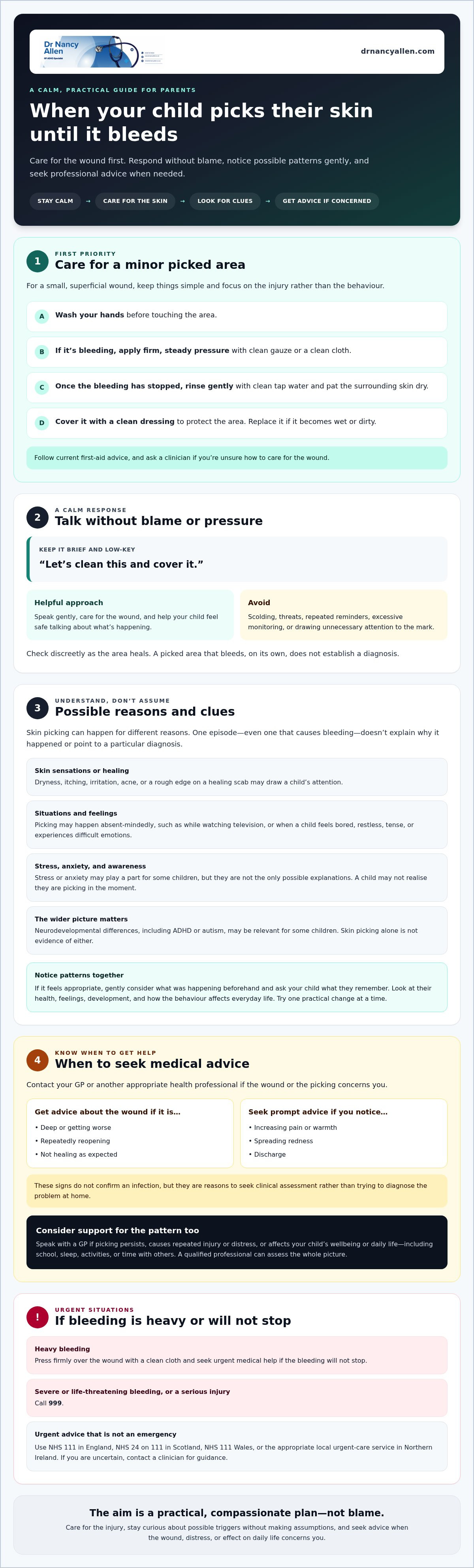
For a small, superficial wound, keep the steps simple:
Wash your hands before touching the area.
If it’s bleeding, apply firm, steady pressure with clean gauze or a clean cloth.
Once bleeding has stopped, rinse gently with clean tap water and pat the surrounding skin dry.
Cover it with a clean dressing to protect the area, replacing it if it becomes wet or dirty.
Follow current first-aid advice and ask a clinician if you’re unsure how to care for the wound. Keep the conversation low-key. You might say, “Let’s clean this and cover it.” Avoid threats, repeated reminders or drawing unnecessary attention to the mark. Check discreetly as it heals, and seek advice if you’re concerned about its progress.
When should a parent seek medical advice?
Contact your GP or another appropriate health professional if the wound is deep, getting worse, repeatedly reopening or not healing as expected. Increasing pain, warmth, spreading redness or discharge can be signs that it needs clinical assessment. These signs don’t confirm an infection, but they are reasons to seek advice promptly rather than trying to diagnose the problem at home.
For heavy bleeding, press firmly over the wound with a clean cloth and seek urgent medical help if it won’t stop. Call 999 for severe or life-threatening bleeding or a serious injury. For urgent advice that isn’t an emergency, use NHS 111 in England, NHS 24 on 111 in Scotland, NHS 111 Wales or the appropriate local urgent-care service in Northern Ireland. If you’re uncertain, contact a clinician for guidance.
Why might a child pick their skin until it bleeds?
Skin picking means touching, scratching or picking at the skin, sometimes repeatedly and hard enough to leave a sore or mark. A child might pick absent-mindedly while watching television, focus on a scab or uneven patch, or do it when they feel restless. One episode, even one that causes bleeding, doesn’t establish a disorder or explain why it happened.
For some children, picking is linked to a particular sensation or situation. Dryness, itching, irritation, acne or a rough edge on a healing scab may draw their attention. Others may notice the behaviour more during boredom, tension or difficult emotions. Stress or anxiety may play a part for some children, but they aren’t the only possible explanations. A child may not be aware they’re picking in the moment.
Neurodevelopmental differences, including ADHD or autism, may be relevant for some children, but skin picking alone isn’t evidence of either. It’s more helpful to consider the wider picture: your child’s health, feelings, development and how the behaviour affects everyday life. Avoid labelling them based on a single behaviour.
When does skin picking become a pattern worth discussing?
Consider whether the behaviour recurs, causes repeated injury or distress, or gets in the way of school, sleep, activities or time with others. These observations can help you decide whether to seek advice, but they can’t determine a diagnosis. A GP or another qualified professional can assess the whole picture and consider whether a skin concern or other factor needs attention.
What might happen before or during the picking?
Gentle curiosity can reveal useful clues without making your child feel watched. If it feels appropriate, notice what was happening beforehand and ask your child what they remember. You might consider:
Time and place: Does it tend to happen during quiet moments, lessons or before bed?
Activity and feelings: Was your child bored, tense, absorbed in a task or seeking comfort?
Skin sensations: Was there itching, dryness, a scab or an area that felt uneven?
What helped: Did a change of activity, a private reminder or help with skin irritation make a difference?
A brief, private note can help you spot patterns, but there’s no need to record every incident or watch your child constantly. Use what you learn to adjust support, not assign blame. If persistent developmental concerns are present beyond skin picking, you could discuss them with a GP and read about child ADHD assessments as one possible avenue for assessment.
How to respond without shame, punishment or escalating the behaviour
It can be hard to stay composed when you notice your child picking, especially if the skin is already sore. Scolding, threats or repeated demands to stop may add distress without helping you understand what prompted the behaviour. Picking may happen automatically, or it may be a response to an uncomfortable sensation or difficult feeling. A child who feels watched or judged might become more anxious or less willing to talk.
Curiosity and safety-focused support are more helpful than blame. Your aim isn’t to force an instant promise to stop, but to protect the skin, keep communication open and explore what might help. If you feel frustrated, take a breath before speaking. A short, neutral response is usually easier for a child to hear than a lecture.
What can you say when you notice your child picking?
Keep your words calm and matter-of-fact. You could ask, “Does that spot hurt?” or “Would you like help covering it?” If your child seems comfortable, try, “Have you noticed what your fingers are looking for?” Then give them time to answer. They may not know, may prefer not to talk, or may communicate more easily through gestures or a later conversation. Respect their age and communication style.
Avoid calling the behaviour naughty, manipulative or attention-seeking. These labels assume a motive you may not know and can make a child feel misunderstood. If they don’t want to discuss it, simply offer help and return to the conversation another time.
Can you reduce opportunities or offer another activity?
Work with your child to make a safer alternative easy to reach. Depending on what they find comfortable, that might mean keeping a fidget item nearby during a quiet activity, offering something to hold in the car, or agreeing on a gentle cue they can choose. Present it as an option, not a punishment or a test. Ask what feels useful, then notice together whether it helps.
If your child is picking at an itchy, dry or irritated area, don’t assume the cause or rely on distraction alone. Ask a GP or another appropriate clinician for advice about the skin. If distress or overwhelm is part of a broader picture, a simple plan for difficult moments may also be useful. See this ADHD meltdown action plan for ideas to consider in that wider context. It isn’t a diagnosis of why your child picks, and skin picking alone doesn’t indicate ADHD.
Build a practical support plan around your child’s skin-picking triggers
A useful plan doesn’t need to be complicated. Start by noticing whether picking tends to happen in particular situations, then talk with your child gently about what they experience. Agree on one small adjustment to try, such as having a preferred hand-held activity available during a quiet routine. After a while, review together whether it made things easier and adapt the plan if it didn’t.
If you’re asking, “what do you do when your child picks their skin till it bleeds?”, useful observations can help you decide what support to try and what to share with a GP. They aren’t proof of a cause or diagnosis. Keep the focus on your child’s comfort and safety, not on catching them in the act.
How can parents spot patterns without making a child feel watched?
If it’s helpful, keep brief, private notes about the context, any possible trigger, the skin’s condition and what response seemed helpful. For example, note that your child picked while reading and had been rubbing an itchy patch, rather than writing judgemental descriptions. Don’t record every movement or use the notes to confront or shame your child. Review them occasionally, ideally together if your child is comfortable, and change one part of the plan at a time.
When speaking with a GP or another appropriate professional, share observations that help explain the wider picture: how often it happens, whether the skin is injured, any skin irritation you’ve noticed and whether it affects your child’s wellbeing or daily routines. Be clear about what you know and what you’re unsure about. A clinician can consider this information alongside your child’s health and development.
How can home and school offer consistent support?
If picking seems linked to school routines, consider whether a discreet conversation with an appropriate staff member might help. Share only what’s relevant, taking your child’s privacy and age into account. You might agree on a quiet, supportive response or an activity, rather than public reminders, punishment or drawing attention to the child’s skin. Keep any approach simple and consistent between home and school.
If the behaviour is persistent, worsening or difficult to manage, ask a GP or relevant child-health professional for guidance. If there are wider, ongoing developmental concerns as well, you can learn about child ADHD assessments; skin picking on its own doesn’t indicate ADHD. For school-related support in that broader context, see this guide to supporting children with ADHD at school.
When to seek professional help for a child who picks their skin
Consider speaking with your GP if skin picking continues, repeatedly breaks the skin, seems to be getting worse or affects your child’s wellbeing or everyday life. You don’t need to wait until you know why it’s happening. A GP can discuss the skin itself, your child’s emotional wellbeing and their wider development, then advise on appropriate next steps.
If you’re asking, “what do you do when your child picks their skin till it bleeds?”, remember that wound care and understanding a repeated behaviour are related but separate concerns. Seek medical advice about wounds that aren’t healing as expected or that worry you. For persistent picking, a GP can help decide whether further assessment or referral is appropriate. The right route may depend on where you live in the UK and your child’s circumstances, so check current local NHS pathways with a healthcare professional.
Which professional can help, and what should you share?
A GP is a sensible starting point if the behaviour persists, causes repeated wounds or raises concerns about your child’s wellbeing. Before the appointment, jot down a few factual details: how long it’s been happening, how often injuries occur, what seems to happen beforehand and whether it affects activities, sleep, school or friendships. Mention any itching, irritation or other skin concerns. You don’t need to arrive with a diagnosis or a perfect record. These details simply give the clinician a clearer picture.
Depending on the assessment, the GP may discuss skin health, emotional factors or developmental context and explain what support or referral options are suitable. Don’t assume that one kind of professional or treatment is right for every child. If the behaviour is causing distress, say so plainly and ask what to do next.
When might a child ADHD assessment be relevant?
Skin picking alone isn’t enough to identify ADHD. It may be worth discussing an assessment if you have broader, persistent concerns about your child’s development, attention, impulsivity or activity levels, and these are affecting daily life. Share the full picture with a GP rather than treating the picking as proof of ADHD.
If wider developmental concerns are present, you can explore child ADHD assessment information. Dr Nancy Allen’s practice offers child ADHD assessments; this is a separate service, not an assessment or treatment for skin picking. If you’re unsure where to begin, a GP can help you consider the most appropriate next step for your child.
Take the next step with calm, informed support
If you’re still wondering, “what do you do when your child picks their skin till it bleeds?”, begin with the immediate need: care for the wound calmly and seek medical advice if it’s deep, worsening or showing possible signs of infection. Then look for patterns with curiosity, not criticism. Picking can have different triggers, and one behaviour alone doesn’t establish a diagnosis.
A gentle, practical plan can help your child feel supported: notice what may be happening before the picking, try one suitable adjustment together and speak with a GP if the behaviour persists, causes repeated injury or affects daily life. A clinician can consider your child’s skin health, wellbeing and wider development before advising on next steps.
If you have wider, persistent concerns about your child’s development, explore child ADHD assessment information from Dr Nancy Allen. The practice offers child ADHD assessments and secure online consultations across the UK. This service is separate from support for skin picking. With patient, non-judgemental care, you can help your child take the next step at their own pace.
Frequently Asked Questions
What should I do immediately if my child picks their skin until it bleeds?
Stay calm, help your child pause safely and follow current first-aid guidance to clean and cover a minor wound. If you’re asking, “what do you do when your child picks their skin till it bleeds?”, focus first on the injury, not blame. Seek clinical advice if it’s deep or worsening. For serious injury or bleeding that won’t stop, call 999. For urgent advice that isn’t an emergency, contact the appropriate NHS 111 service or local health service.
Is skin picking a sign of ADHD in children?
No, skin picking on its own doesn’t mean a child has ADHD. A child might pick because of skin irritation, habit, boredom or distress, amongst other possible reasons. If you also notice broader, persistent developmental concerns that affect everyday life, discuss them with a GP or appropriate clinician. They can consider the whole picture and advise whether an ADHD assessment or another form of support may be relevant.
How can I help my child stop picking their skin?
Respond calmly and avoid repeated demands or punishment, which may add pressure without revealing what’s behind the behaviour. Notice whether picking tends to happen during a particular activity, feeling or skin irritation, and ask your child what they notice. You could agree on a safer hand-held activity to try, then review together whether it helps. If picking continues, causes injury or worries your child, seek advice from a GP or another appropriate professional.
Can skin picking cause an infection?
A break in the skin can become irritated or infected, although an individual wound can’t be assessed from an article. Follow current first-aid guidance to keep a minor wound clean and covered. Ask a clinician for advice if redness spreads or the area becomes increasingly warm, painful or swollen, or you notice discharge. Seek prompt help if the wound is worsening or you’re concerned; contact the appropriate urgent health service for guidance.
Should I punish my child for picking their skin?
No. Punishment or shame is unlikely to show what may be prompting the behaviour and could make your child less comfortable talking about it. Instead, address any injury and use a calm, neutral question, such as, “Would you like help with that sore spot?” You can explore possible patterns together without assuming the picking is deliberate misbehaviour. If it happens repeatedly, causes wounds or causes distress, speak with a GP or suitable professional.
When should I take my child to a GP for skin picking?
Contact a GP if picking keeps happening, repeatedly breaks the skin, causes your child distress or affects everyday activities. You can also ask for advice if you’re uncertain how to care for a wound or concerned about healing. A clinician may consider skin health, emotional wellbeing and developmental context before recommending next steps. If there’s serious injury or bleeding that won’t stop, seek urgent medical help rather than waiting for a routine appointment.
What happens if my child keeps picking the same scab or area?
Repeatedly reopening one area can irritate the skin and delay healing. Follow current first-aid guidance to protect the wound, and avoid scolding or repeatedly drawing attention to it. If useful, gently notice whether a particular sensation or situation tends to come before the picking, without watching your child constantly. Ask a GP or appropriate clinician for advice if the area worsens, doesn’t heal as expected or your child continues to pick it.


Comments