


My ADHD Teen Took Drugs: Practical Steps for Parents

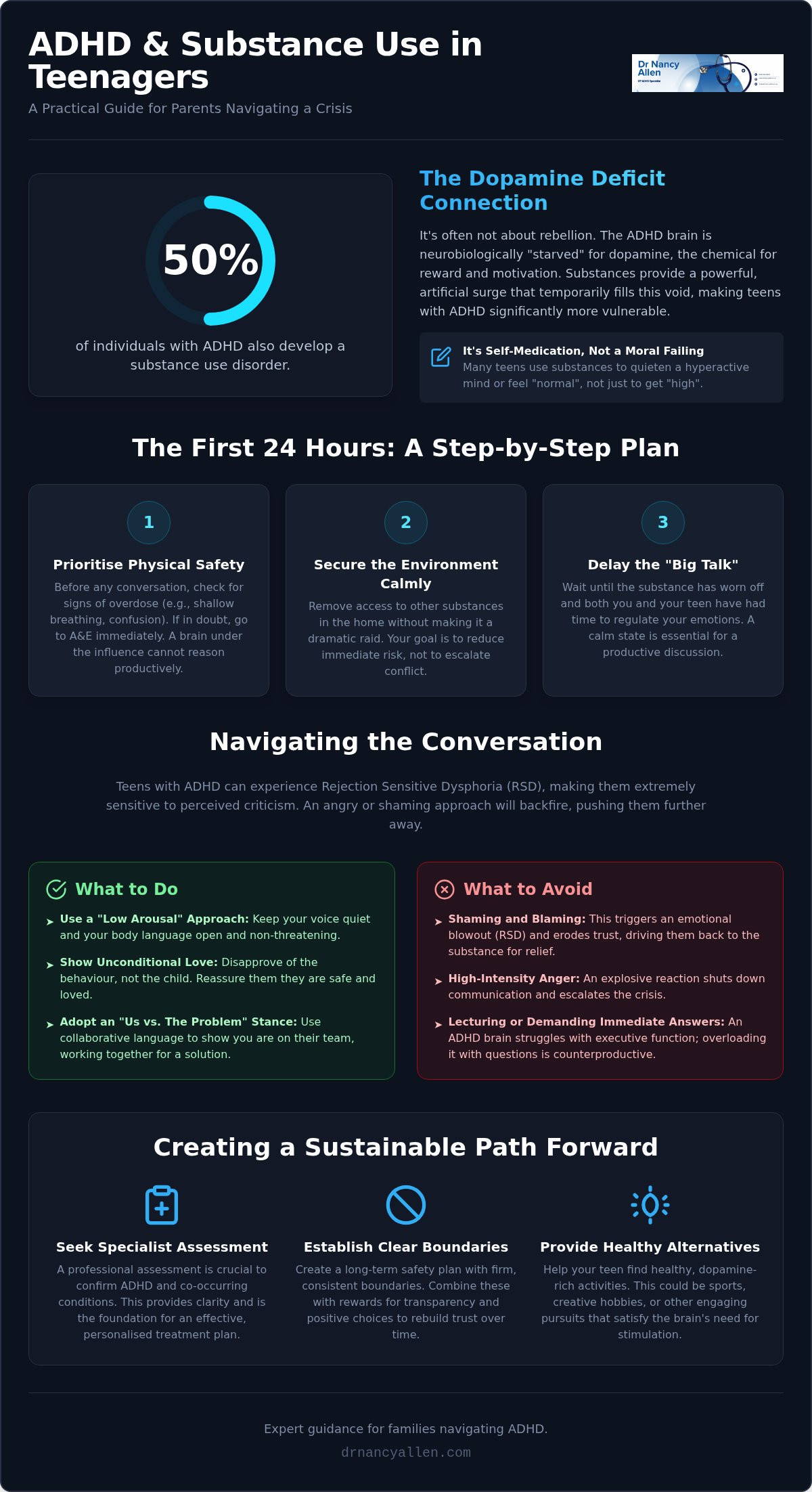
Did you know that up to 50% of individuals diagnosed with ADHD also develop a substance use disorder? It's a staggering figure that highlights a hard truth: your teen's choices might have less to do with rebellion and everything to do with a brain that's desperately seeking the dopamine it lacks. Discovering this is terrifying. You're likely feeling a heavy mix of guilt, fear for their future, and the exhaustion of navigating a home life that feels like a constant battleground. Perhaps you're thinking, 'I've found my ADHD teen has taken drugs – what do I do?' whilst feeling increasingly isolated by lengthy NHS waiting lists for specialist support.
We understand the gravity of this moment and the need for a calm, expert perspective. Dr Nancy Allen provides a steady hand through the panic. You'll discover immediate, evidence-based steps to de-escalate the crisis and understand the biological link between ADHD and substance use. We'll explore how to establish a clear medical and therapeutic plan, focusing on restoration and clarity rather than just discipline. By the end of this guide, you'll have a practical path forward to help your child regain their confidence and health.
Key Takeaways
Learn how to prioritise physical safety and de-escalate emotional blowouts in the critical first 24 hours after discovery.
Understand the neurobiological "starving brain" theory to answer the urgent question: "i have found my adhd teen has taken drugs - what do i do?" by addressing underlying dopamine deficits.
Discover how to use collaborative problem-solving techniques to move from a "me vs. you" conflict to a supportive "us vs. the problem" dynamic.
Explore why a timely specialist assessment and personalised treatment plan are the most effective tools for reducing the risk of long-term substance misuse.
Establish a sustainable long-term safety plan that combines clear boundaries with rewards for transparency and healthy, dopamine-rich alternatives.
Table of Contents
Immediate Crisis Management: What to Do in the First 24 Hours
The moment of discovery is often met with a visceral wave of panic and a thousand racing thoughts. You might find yourself searching frantically for answers, asking, "i have found my adhd teen has taken drugs - what do i do?" Your first priority must be physical safety. Before addressing the behaviour, you must address the biology. Check your child for signs of acute intoxication or overdose, such as shallow breathing, unresponsive pupils, or extreme confusion. Whilst it is tempting to demand answers immediately, a brain under the influence cannot engage in productive reasoning.
Secure the environment with a sense of calm efficiency. Remove access to alcohol, prescription medications, and any other substances in the home. Do this without turning it into a dramatic raid. Your goal is to reduce further risk whilst your own physiological stress response is high. Delay the "Big Talk" until the substance has worn off and you have both had time to regulate your emotions.
Assessing the Immediate Risk
It is vital to differentiate between experimentation, habitual use, and a medical emergency. ADHD brains are often drawn to substances that mimic or boost dopamine. Attention deficit hyperactivity disorder is fundamentally linked to a search for stimulation, which makes teens more susceptible to trying nicotine, cannabis, or illicit stimulants. If your teen exhibits signs of substance-related psychosis, such as hallucinations or severe paranoia, or if they are losing consciousness from an overdose, you must bypass your GP and head straight to A&E immediately.
Managing the ADHD Emotional Blowout
Teens with ADHD are uniquely sensitive to perceived criticism, a trait known as Rejection Sensitive Dysphoria (RSD). If you approach them with high-intensity anger or shame, it can trigger an explosive blowout that shuts down all communication. Shaming an ADHD brain backfires; it increases cortisol and often drives the teen back toward the substance for emotional relief.
Try these techniques to maintain a neutral environment:
Use a "low arousal" approach: Keep your voice quiet and your body language open.
Set short-term boundaries: State clearly, "We aren't discussing this now, but you need to stay in the living room where I can see you."
Maintain parental warmth: You can be disappointed in the choice whilst still showing your child they are safe and loved.
By staying calm, you prevent the situation from escalating into a domestic crisis. This allows you to move from a state of reactive panic to a structured plan for professional support and long-term recovery.
The Dopamine Deficit: Why ADHD Teens Are More at Risk
Understanding why a neurodivergent teenager turns to substances is the first step toward effective intervention. When you are faced with the reality of "i have found my adhd teen has taken drugs - what do i do ?", it helps to view the situation through a clinical lens. The ADHD brain is often described as a "starving brain" because it produces or utilises dopamine less efficiently than a neurotypical one. This chemical is responsible for reward and motivation. Without enough of it, the brain feels a constant, gnawing boredom or restlessness. Drugs often provide an artificial, high-intensity dopamine surge that temporarily fills this void.
Understanding the ADHD Brain Mechanism
The prefrontal cortex is the command centre for decision-making and impulse control. In teenagers with ADHD, this area often matures more slowly, leading to executive dysfunction. This makes it physically harder for them to consider long-term consequences before acting. Many specialists refer to this as "reward deficiency syndrome," where the threshold for feeling satisfied is much higher than average. Research indicates that approximately 25% of adults currently seeking treatment for substance use disorders also meet the criteria for ADHD, demonstrating how deeply these conditions are intertwined. If you are concerned about your child's development, a specialist child ADHD assessment can provide the clarity needed to intervene early.
The Trap of Temporary Relief
Many ADHD teens aren't looking for a "high" in the traditional sense. Instead, they are often self-medicating to feel "normal" or to quieten the internal noise of a hyperactive mind. For instance, cannabis might temporarily slow down racing thoughts, whilst nicotine can provide a brief window of improved focus. This creates a dangerous psychological dependency. However, this relief is a mirage. The following day often brings a "crash and burn" effect, where ADHD symptoms like irritability and lack of focus are significantly worsened.
Traditional "Just Say No" programmes are notoriously ineffective for this group. They rely on the very executive functions, impulse control and future-oriented thinking, that ADHD impairs. Effective support requires a nuanced understanding of ADHD and Substance Abuse, focusing on biological regulation rather than moral judgement. Socially, if a teen feels excluded from academic or sports success due to their symptoms, they may seek acceptance amongst high-risk peer groups where drug use is normalised. Addressing the underlying ADHD is often the most direct route to stopping the cycle of substance misuse.
Navigating the Conversation: Communication Without Conflict
Starting a conversation after discovering drug use is incredibly delicate. If you find yourself asking, "i have found my adhd teen has taken drugs - what do i do?", the answer begins with a fundamental shift in mindset. Move away from the traditional parent versus child confrontation. Instead, adopt a collaborative problem solving approach. This frames the drug use as an external challenge you are tackling together, rather than a moral failing on your teen's part.
It's vital to separate your child's identity from their behaviour. They aren't a "bad kid"; they are a teenager with a complex brain who made a high-risk choice. Validate their struggle by acknowledging that managing ADHD in a neurotypical world is genuinely exhausting. Keep your interactions brief. ADHD brains often struggle with long lectures, so frequent, short, and impactful check-ins are far more effective than marathon discussions.
The Neuro-Affirming Talk
The setting of your conversation matters as much as the words you use. Many neurodivergent teenagers find direct, sustained eye contact during an intense talk to be overwhelming. Utilise "body doubling" by having these discussions whilst walking the dog or driving. This side-by-side positioning reduces the pressure and makes it easier for them to process their thoughts without feeling interrogated. Use phrases that reduce defensiveness, such as: "I'm worried that you're using this to cope with how loud your brain feels lately. Is that what's happening?"
Identifying the Root Cause
To stop the cycle, you must understand what the drug is "doing" for them. Is it helping them focus at school? Is it numbing social anxiety or sensory overwhelm? Helping your teen connect their substance use to their ADHD symptoms is a powerful step toward recovery. As highlighted in research regarding ADHD and Substance Abuse: Risks and Prevention, understanding these specific triggers is the key to finding healthier alternatives.
Establish a "no-shame" policy where honesty about future slips is met with support rather than immediate, explosive punishment. This transparency is the foundation of rebuilding trust. It ensures you are the first person they turn to when they feel they are losing control, rather than hiding their struggle until it becomes a crisis again. Focus on the fact that you are on their team, working toward a quality of life where they don't feel the need to self-medicate.
Professional Intervention: The Role of Assessment and Medication
When you realise "i have found my adhd teen has taken drugs - what do i do ?", your first instinct is often to focus on the substance itself. However, for a neurodivergent child, the drug is frequently a symptom of an underlying, unmanaged struggle. An undiagnosed or under-treated teen is at the highest risk for continued misuse because they are fighting their own biology every day without the right tools. Waiting years for an NHS appointment allows these harmful habits to become ingrained, making rapid professional intervention a clinical necessity rather than a luxury.
The Case for Rapid Private Assessment
Dr Nancy Allen offers a compassionate, evidence-based pathway that bypasses the long delays often found in traditional healthcare settings. Through secure online consultations, a formal diagnosis and a tailored treatment plan can be delivered in as little as 72 hours. This speed is vital when a teen is already experimenting with substances. A comprehensive child adhd assessment provides more than just a label; it offers a roadmap for schools and families to understand the specific triggers for your child's impulsivity. This personalised approach ensures that root causes, such as sensory overwhelm or executive dysfunction, are addressed alongside the substance use.
Medication as a Protective Factor
One of the most persistent myths is that ADHD medication acts as a "gateway" to addiction. The clinical evidence suggests the opposite. When a teen’s dopamine levels are stabilised through controlled, specialist-monitored stimulants, the desperate urge to self-medicate with street drugs often diminishes. There is a fundamental difference between illicit substances and clinical medication, which is carefully titrated to improve function rather than provide a "high".
Ongoing management by a Trusted Expert Guide ensures the treatment remains effective as your teen matures. Proper clinical support can reduce the risk of future substance use disorders by providing the neurological stability your child lacks. If you're ready to move from crisis to clarity, you can book a private child ADHD assessment today to begin their recovery journey and restore peace to your home.
Creating a Long-term Safety Plan and Rebuilding Trust
Recovery is not a linear process. Once the immediate crisis has passed, the focus shifts toward creating a sustainable environment where your child feels safe enough to be honest. If your initial reaction was "i have found my adhd teen has taken drugs - what do i do ?", the long-term answer lies in a structured Safety Contract. This is not a list of punishments. Instead, it's a collaborative agreement that outlines clear consequences for drug use alongside meaningful rewards for transparency and effort. For an ADHD brain, immediate and tangible rewards are far more motivating than distant, abstract goals.
A vital part of this plan involves replacing illicit substances with dopamine-rich alternatives. Since the neurodivergent brain naturally seeks stimulation, you must help your teen find healthy "natural highs". This might include high-intensity sports, creative arts, or niche hobbies that provide the intense focus they crave. Additionally, address the environmental triggers. Academic stress in UK schools can be a significant catalyst for self-medication. Work with the school's SENCO to ensure appropriate adjustments are in place to reduce the sensory and cognitive load that often leads to burnout.
Rebuilding the Parent-Child Bond
It's easy to fall into the trap of constant monitoring. However, to heal, you must move from "policing" back to "parenting". ADHD brains thrive on positive reinforcement. Focus on small wins, such as a day without conflict or a completed homework task, to rebuild their shattered self-esteem. Establish a regular "wellbeing check-in". This is a dedicated time to talk about their feelings and interests, strictly avoiding the topics of drugs or school. It reminds your teen that they are valued for who they are, not just judged for their mistakes.
The Path Forward with Dr Nancy Allen
Parental self-care is not a luxury; it's a necessity. Supporting a neurodivergent teen through a substance crisis is exhausting, and you cannot support them whilst running on empty. Seeking your own support, whether through therapy or parent groups, ensures you have the emotional resilience to remain a steady guide for your child. Ongoing medical management is the final piece of the puzzle. As your teen matures, their treatment plan must evolve to meet new challenges, from GCSEs to entering the workplace.
Professional guidance provides the clarity needed to navigate this journey with confidence. If you're ready to establish a clear medical and therapeutic plan for your family's future, you can Book a private consultation today to secure the expert support your child deserves.
Restoring Clarity and Connection
Discovering that "i have found my adhd teen has taken drugs - what do i do ?" is a profound shock, but it is also the first step toward a more informed way of parenting. By understanding the biological drive for dopamine and fostering a home environment built on collaborative problem solving, you can begin to bridge the gap of trust. Separating your child's identity from their impulsive choices allows for a path of restoration rather than purely disciplinary conflict.
Expert support is vital to stabilise this journey. Dr Nancy Allen offers secure online consultations across the UK, bringing over 25 years of clinical experience to every assessment. You can receive a comprehensive diagnosis and a tailored treatment plan in as little as 72 hours, providing the immediate roadmap your family requires. This rapid intervention ensures that your teen's struggle with substance use doesn't become a permanent obstacle to their well-being.
Book a Private ADHD Assessment for Your Child to move from a state of crisis to a place of confidence and safety. Your child's future is not defined by this moment; with the right specialist care, they can learn to manage their ADHD brain and flourish.
Frequently Asked Questions
Is it common for teenagers with ADHD to try drugs?
Yes, it is significantly more common for neurodivergent teenagers to experiment with substances. Research suggests that up to 50% of people with ADHD will experience a substance use disorder at some point in their lives. This isn't necessarily about rebellion; it's often a biological drive to satisfy a "starving brain" that lacks sufficient dopamine. Understanding this link is the first step toward moving from a disciplinary response to a clinical one.
Can ADHD medication cause my teen to become addicted to other drugs?
No, evidence indicates that appropriate ADHD medication actually reduces the risk of future addiction. By stabilising dopamine levels through controlled clinical stimulants, the brain no longer feels the desperate urge to self-medicate with illicit street drugs. It's important to distinguish between street-bought stimulants and prescribed medication, which is carefully titrated and monitored by a specialist to improve daily functioning and long-term health.
How do I tell the difference between typical teen behaviour and drug use?
Typical teenage behaviour includes moodiness and a desire for privacy, but drug use often presents as a more drastic shift. Look for physical indicators like bloodshot eyes, dilated pupils, or a sudden neglect of personal hygiene. Whilst an ADHD teen may naturally struggle with focus, a sharp decline in school performance or a total change in their social circle may signal that substance use has moved beyond experimentation into a habit.
What are the most common drugs ADHD teens use to self-medicate?
Nicotine and cannabis are the most frequent substances used by ADHD teens to self-medicate. Cannabis is often used to "quieten" a hyperactive mind or aid sleep, whilst nicotine provides a brief, artificial boost to focus. Some may also turn to illicit stimulants to mimic the effects of ADHD medication. Each of these choices is usually an attempt to regulate a brain that feels constantly restless or overwhelmed.
Should I tell the school if I found my teen has taken drugs?
Sharing this information with the school can be a strategic move to support your child's recovery. If you are asking, "i have found my adhd teen has taken drugs - what do i do ?", involving the school's SENCO allows for educational adjustments. Reducing academic pressure or sensory load at school can remove the primary stressors that drive a teen to seek relief through substances in the first place.
How long does a private ADHD assessment take with Dr Nancy Allen?
Dr Nancy Allen prioritises rapid, expert intervention to help families move from crisis to clarity. The entire process, from the initial secure online consultation to a formal diagnosis and tailored treatment plan, can be completed in as little as 72 hours. This fast turnaround is essential for addressing substance use before it becomes an ingrained habit, providing your family with the immediate support needed to restore peace.
Can an ADHD diagnosis help my teen stop using drugs?
Yes, a formal diagnosis is often the turning point in stopping substance misuse. It shifts the narrative from "bad behaviour" to a manageable medical condition. By understanding why they feel the need to self-medicate, your teen can begin evidence-based treatments that provide the neurological stability they were seeking through drugs. A diagnosis offers a clear roadmap for both therapeutic support and potential medication to manage underlying symptoms.
What if my teen refuses to see a doctor or specialist?
If your teen is resistant, try reframing the specialist visit as a way to help them feel more in control of their own mind. Avoid focusing on the drug use as the reason for the appointment. Instead, suggest that an assessment can help with the things they find exhausting, such as lack of focus or emotional blowouts. Emphasise that this is a collaborative effort to improve their quality of life, not a session for judgement.


Comments