


ADHD and Alcohol: Understanding the Link and Managing Risks

What if your evening glass of wine isn't a lack of discipline, but a neurochemical bid for quiet? For many adults, the complex link between adhd and alcohol begins as an instinctive attempt to quiet internal hyperactivity and switch off racing thoughts after a demanding day. You promise yourself you'll stop after one, yet that initial sense of ease quickly slips away when moderation proves frustratingly difficult. By morning, the calm is replaced by crushing rebound anxiety and even heavier executive dysfunction, leaving you trapped in an exhausting cycle of self-blame.
Living through that loop is profoundly draining, yet this behaviour is rooted in dopamine dysregulation rather than moral failure. In this guide, you will uncover why neurodivergent brains lean on alcohol for self-regulation, understand the physiological risks of this pairing, and learn how an accurate clinical assessment can target the root cause to create lasting relief. You'll also discover practical, non-judgemental strategies designed to help you regain genuine cognitive control and emotional stability.
Table of Contents
The Neurological Connection: Why the ADHD Brain Gravitates Toward Alcohol
Executive Dysfunction and the Difficulty of Moderating Alcohol Intake
ADHD Medication and Alcohol: Interactions, Risks, and Clinical Guidance
Practical Strategies for Navigating Alcohol and Regulating Neurodivergence
The Value of Clinical Clarity: Why a Formal ADHD Assessment Changes Everything
The Neurological Connection: Why the ADHD Brain Gravitates Toward Alcohol
Mainstream guidance frequently treats heavy drinking as an isolated behavioural failure or a matter of willpower. In reality, attention deficit hyperactivity disorder is a complex neurodevelopmental condition defined by chronic disruptions in dopamine and noradrenaline signaling within the central nervous system. Because dopamine dictates our experience of reward, motivation, and mental quiet, a brain running on a neurological deficit perpetually scans the immediate environment for chemical stimulation.
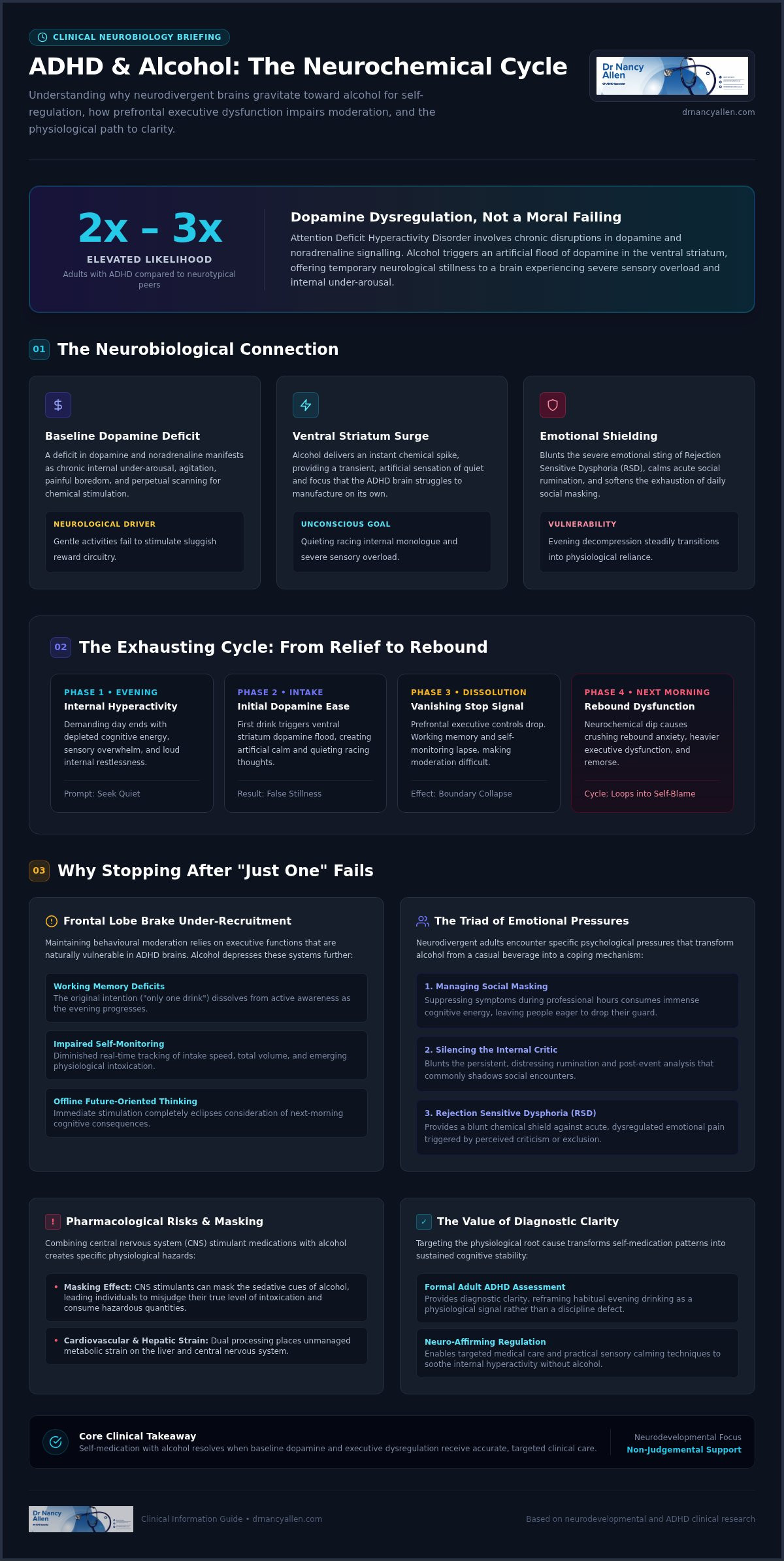
Alcohol triggers a rapid, artificial flood of dopamine in the ventral striatum. For someone living with undiagnosed or unmanaged symptoms, that initial glass provides a temporary sense of neurological stillness that their brain struggles to produce independently. Rather than seeking intoxication for its own sake, many neurodivergent adults turn to alcohol as a form of unconscious self-medication to quiet severe sensory overload, chronic restlessness, and racing internal monologue. This biological interplay explains why the intersection of adhd and alcohol carries an elevated risk: adults with ADHD are roughly two to three times more likely to develop alcohol use disorders compared to neurotypical peers.
To gain further clinical perspective on how these neurobiological mechanisms interact in daily life, watch this short breakdown by Dr Alex George:
The Dopamine Deficit: Seeking Stimulation and Quieting Noise
Low baseline dopamine translates into an exhausting sensation of internal under-arousal, manifesting as persistent physical restlessness, agitation, and painful boredom. While typical activities like reading or a gentle walk struggle to engage this sluggish reward circuitry, alcohol delivers an instant neurochemical spike. Dopamine deficiency acts as a direct biological driver of impulsive intake, making the immediate relief of alcohol profoundly appealing to an under-stimulated brain.
Alcohol as an Unconscious Coping Tool for Emotional Dysregulation
Emotional intensity represents another hidden driver. Many neurodivergent adults experience Rejection Sensitive Dysphoria (RSD), an acute, dysregulated emotional response to perceived criticism or exclusion. Alcohol temporarily dampens this sharp neurological reactivity, offering a blunt chemical shield against painful feelings.
Managing social masking: Suppressing ADHD symptoms during a busy workday demands massive cognitive effort, leaving individuals depleted and eager to drop their guard.
Silencing the internal critic: A drink blunts the persistent rumination that often shadows social encounters.
The transition to dependence: What begins as a practical ritual to decompress after work steadily shifts into a physiological reliance for basic emotional regulation.
Recognising the link between adhd and alcohol removes the weight of personal guilt. It reframes chronic evening drinking as a clear physiological signal that your underlying neurochemistry requires proper, targeted care.
Executive Dysfunction and the Difficulty of Moderating Alcohol Intake
Many adults begin an evening with a clear, firm intention: "I will have just one drink tonight." Yet, an hour later, that boundary has dissolved, often ending with an empty bottle and deep remorse. Generic drinking advice assumes moderation is purely a choice of willpower. In reality, maintaining behavioural limits relies heavily on executive functions, including working memory, self-monitoring, and future-oriented thinking. As detailed in the CDC overview of adult ADHD, these frontal lobe processes represent the very cognitive systems most vulnerable in neurodivergent brains.
Impaired Impulse Control and the Vanishing Stop Signal
The prefrontal cortex acts as the neurological brake system of the brain. In ADHD, this system is naturally under-recruited. When you introduce alcohol, a central nervous system depressant, those already delicate brakes are deactivated almost immediately. The neurological "stop signal" that tells a neurotypical drinker they have reached their limit simply fails to fire.
Working memory also deteriorates under the influence. The recollection of tomorrow morning's deadlines or the physical discomfort of a hangover vanishes from immediate awareness. This dynamic explains why the collision between adhd and alcohol feels so uncontrollable. It is not a moral failing or a lack of personal grit; it is the predictable mechanical breakdown of an impaired prefrontal cortex.
The Hangover Spiral: Dopamine Crashes and Rebound Anxiety
The following morning brings a severe neurochemical rebound. As the body metabolises the remaining alcohol, dopamine drops below its already depressed baseline, while glutamatergic activity spikes. This crash produces intense physical unease, emotional vulnerability, and crippling "hangxiety".
Disrupted sleep architecture: Alcohol suppresses restorative REM sleep, magnifying baseline inattention and mental fog the next day.
Executive paralysis: Simple organisational tasks become insurmountable hurdles under acute cognitive exhaustion.
The temptation to self-soothe: The overwhelming distress and shame often create a powerful urge to drink again by evening just to numb the rebound symptoms.
Interrupting this destructive loop requires clinical insight rather than harsher self-discipline. Investigating the root driver through an Adult ADHD Assessment can provide the answers and medical clarity necessary to dismantle these chronic cycles for good.
ADHD Medication and Alcohol: Interactions, Risks, and Clinical Guidance
Alcohol is sometimes used as improvised self-medication, yet it cannot replicate the targeted, restorative mechanism of approved psychiatric treatments. Rather than stabilising executive function, alcohol introduces volatile neurochemical swings that destabilise brain chemistry. Clinical research exploring the co-occurrence of ADHD and substance use disorders confirms that treating neurodivergence medically significantly lowers the compulsive impulse to drink, yet navigating adhd and alcohol requires a clear understanding of direct pharmacological conflicts.
Stimulants and Alcohol: The Dangers of Blunted Intoxication Signals
Central nervous system stimulants, such as methylphenidate and lisdexamfetamine, elevate dopamine and noradrenaline levels to improve focus and impulse control. However, combining these prescriptions with alcohol creates a deceptive physiological conflict known as the masking effect. Stimulants suppress the natural sedative cues of alcohol, such as drowsiness and physical lethargy, leading individuals to believe they are far more sober than they truly are. Consequently, the risk of consuming toxic volumes of alcohol rises sharply.
Simultaneously forcing the cardiovascular system to accelerate with stimulants whilst alcohol depresses autonomic regulation places immense physiological strain on your heart rate and blood pressure. Certain extended-release formulations are also vulnerable to dose dumping, where exposure to alcohol disrupts the slow-release matrix, flooding the bloodstream with medication far too quickly.
Non-Stimulants and Alcohol: Sedation, Dizziness, and Liver Load
Non-stimulant medications carry distinct risks that warrant equal clinical caution when paired with alcohol:
Alpha-2 adrenergic agonists (guanfacine, clonidine): Because these medications lower sympathetic tone, combining them with alcohol causes profound sedation, hazardous drops in blood pressure, and sudden syncope.
Selective noradrenaline reuptake inhibitors (atomoxetine): Both atomoxetine and alcohol depend on the liver for clearance, increasing metabolic strain while compounding daytime fatigue and cognitive blunting.
Managing the intersection of adhd and alcohol successfully starts with absolute medical transparency. You deserve an open, non-judgemental relationship with your prescribing doctor, enabling you to establish safe lifestyle boundaries while protecting your cardiovascular and psychological well-being.
Practical Strategies for Navigating Alcohol and Regulating Neurodivergence
Standard moderation advice often fails neurodivergent individuals because it demands sheer willpower while ignoring physical neurochemistry. Simply telling an under-stimulated brain to stop reaching for dopamine creates intense friction. Rather than relying on strict deprivation, sustainable change happens when you intentionally replace the regulatory role that alcohol was trying to serve. Managing adhd and alcohol successfully requires building low-friction environments and crafting predictable alternatives for nervous system regulation.
Creating a Dopamine Menu: Healthy Replacements for Evening Unwinding
A "dopamine menu" is a curated list of stimulating or soothing activities categorised by the time and energy they require. When evening restlessness strikes, decision fatigue makes planning impossible. Having pre-selected sensory alternatives removes that cognitive burden entirely.
Sensory disruption: Shock the nervous system out of an agitated state using a brisk cold shower, an acupressure mat, or heavy proprioceptive input from a weighted blanket.
Tactile rituals: Replace the physical habit of holding a drink by stocking the fridge with bitter, complex sparkling tonics or craft kombucha poured into your favourite glassware.
Engaged decompression: Swap passive screen scrolling for tactile hobbies that occupy both hands and mind, such as building complex models, playing an instrument, or sketching.
Social Settings: Sensory Management and Boundary Setting
Busy pubs and loud gatherings are sensory minefields. Neurodivergent individuals frequently drink simply to soften harsh lighting, ambient chatter, and the exhausting effort of social masking. Preparing your sensory toolkit beforehand dramatically reduces that reflex.
Discreet high-fidelity earplugs filter out overwhelming background roar while keeping conversations clear. Schedule regular five-minute sensory retreats outside or in a quiet corridor to let your nervous system decompress. Setting a non-negotiable exit time on your phone before you arrive also protects your cognitive reserves.
When declining drinks, directness prevents uncomfortable debates. Simple, declarative boundaries work best:
"I'm keeping a clear head for early plans tomorrow."
"I'm taking a break from alcohol to reset my sleep."
"I'm sticking to sparkling water tonight, thank you."
Developing practical habits provides immense daily relief, yet chronic self-medication usually points to deeper neurological needs. If you are ready to identify the root causes driving your habits, explore how an Adult ADHD Assessment can provide the clinical answers and ongoing support you need to thrive.
The Value of Clinical Clarity: Why a Formal ADHD Assessment Changes Everything
Lifelong struggles with moderation often leave adults carrying an unfair burden of personal shame. When standard addiction advice urges you to rely on willpower or attend generic support groups, it overlooks the core neurodevelopmental mechanisms that drive compulsive behaviour. Achieving lasting stability requires shifting perspective entirely: your drinking has likely been an unconscious attempt to manage an untreated neurochemical deficit. Gaining clinical validation fundamentally reframes those experiences, replacing regret with genuine self-understanding.
Treating the Root Cause Rather Than the Symptom
Clinical evidence demonstrates that properly identifying and treating neurodivergence dramatically reduces substance misuse. When baseline dopamine and noradrenaline levels are medically stabilised, the relentless craving for artificial, external chemical stimulation subsides. The quiet calm that once seemed achievable only through a glass of wine becomes your day-to-day baseline.
Undergoing a private adult adhd assessment provides an essential diagnostic roadmap. Addressing the physiological root cause dismantles the volatile interplay of adhd and alcohol, breaking the compulsive cycle far more effectively than isolated behavioural interventions ever could.
Compassionate, Accessible Care with Dr Nancy Allen
Seeking specialist support can feel intimidating, particularly when complicated by concerns around alcohol use. Traditional routes often involve years of administrative delays, leaving individuals to manage worsening symptoms alone. With over 25 years of extensive medical experience, Dr Nancy Allen offers a reassuring, patient-centric approach that balances diagnostic rigor with deep validation for your lived reality.
Unhurried clinical care: Every comprehensive evaluation is conducted with warmth and empathy, ensuring you have space to discuss your history without fear of judgement or stigma.
Specialist diagnostic focus: Deep expertise in adult presentations, neurodivergent women, and complex co-occurring coping behaviours guarantees your symptoms are accurately understood.
Timely, nationwide access: Secure online consultations are accessible across the UK, delivering formal diagnoses and tailored management plans in as little as 72 hours.
Understanding your brain's architecture restores self-esteem and provides a clear foundation for the future. You do not have to navigate the cycle of adhd and alcohol in isolation; securing clinical clarity is the decisive first step toward regaining enduring control over your health.
Moving Beyond the Cycle Toward Lasting Calm
Breaking free from chronic evening drinking begins with recognising the biology behind your impulses. Living with ADHD means your nervous system is constantly navigating low baseline dopamine, sensory overload, and executive fatigue. Turning to a drink is not a reflection of weak character; it is an understandable, neurochemical attempt to find quiet. However, continuing to manage the complex friction of adhd and alcohol on your own often deepens next-day anxiety and executive dysfunction, keeping you trapped in needless self-criticism.
Real transformation happens when you address the underlying neurodevelopmental architecture rather than relying on sheer willpower. Backed by over 25 years of medical experience, Dr Nancy Allen provides empathetic, unhurried care designed to validate your lived experience and uncover the root drivers of your daily struggles. Through secure, nationwide virtual consultations, you can access comprehensive diagnostic answers across the UK in as little as 72 hours.
You deserve clarity, compassionate support, and sustainable relief. Take that decisive step forward today and Book an Adult ADHD Assessment with Dr Nancy Allen to build a calm, grounded future on your own terms.
Frequently Asked Questions
Why do people with ADHD often struggle to stop drinking once they start?
Difficulty stopping after one drink stems directly from prefrontal executive dysfunction. The frontal lobe regulates self-monitoring and behavioural inhibition. When alcohol enters the system, it further depresses these already fragile neurological controls. The brain's working memory forgets tomorrow's responsibilities, while the biological "stop signal" fails to register. Consequently, conscious moderation boundaries collapse rapidly once drinking begins.
Can alcohol temporarily relieve ADHD symptoms like restlessness or racing thoughts?
Alcohol briefly soothes racing thoughts by triggering an immediate surge of dopamine while boosting inhibitory GABA neurotransmitters. For someone experiencing chronic under-stimulation or sensory overwhelm, this chemical shift produces a short-lived sense of mental stillness. However, this relief is temporary and deceptive. As the alcohol wears off, internal agitation returns with greater intensity, reinforcing an unhealthy pattern of self-medication.
What happens if you drink alcohol while taking ADHD stimulant medication?
Stimulants blunt the sedative cues of alcohol, creating a hazardous masking effect. You may feel alert and sober even as your blood alcohol concentration climbs to dangerous levels, significantly increasing the risk of alcohol poisoning. Combining stimulants and depressants also places acute mechanical strain on your heart, triggering irregular heartbeats and erratic blood pressure spikes.
Does having untreated ADHD increase the statistical risk of alcohol dependency?
Untreated neurodivergence significantly elevates substance risks. Adults living with unmanaged ADHD are two to three times more likely to develop an alcohol use disorder compared to the general population. Up to 70% of individuals with dual diagnoses report drinking primarily to self-medicate restlessness, chronic sleep problems, and intense emotions rather than seeking recreational intoxication.
How does an adult ADHD assessment help with managing alcohol habits?
An Adult ADHD Assessment identifies whether chronic drinking is driven by baseline neurotransmitter deficits. Receiving an accurate clinical evaluation allows you to target the root neurobiological cause rather than fighting symptoms with willpower alone. With over 25 years of medical experience, Dr Nancy Allen provides private, comprehensive virtual assessments across the UK within 72 hours, delivering tailored treatment plans that naturally reduce compulsive drinking impulses.
Can alcohol make ADHD rebound symptoms and emotional dysregulation worse the next day?
Alcohol severely disrupts your sleep cycle and depletes dopamine stores overnight. As the body metabolises the alcohol, brain chemistry experiences a profound rebound crash. This triggers acute morning "hangxiety", emotional volatility, and severe executive paralysis. The complex friction between adhd and alcohol often leaves individuals feeling cognitively exhausted and far less capable of focusing the following day.
Are non-stimulant ADHD medications safer than stimulants if someone drinks alcohol occasionally?
Non-stimulants carry their own clinical risks and should never be viewed as completely safe with alcohol. Medications like guanfacine dramatically lower blood pressure, which combines with alcohol to cause severe dizziness, fainting, and excessive sedation. Meanwhile, alternatives like atomoxetine place additional metabolic strain on the liver. Any regular alcohol intake must be discussed transparently with your prescribing doctor to prevent adverse reactions.


Comments