


Is It a Mood Disorder or ADHD? Symptoms & Diagnosis Guide

What if the "depression" you’ve been treating for years isn’t actually a chemical imbalance of mood, but a nervous system that simply processes the world at a different frequency? It’s exhausting to feel as though you’re constantly failing at life despite your best efforts. You might feel "broken" or "lazy" because your emotions seem to switch on a dime, leaving you wondering why standard treatments haven’t brought the relief you were promised. This frustration often leads to a single, pivotal question: Is It Really a Mood Disorder, or Is It ADHD?
We understand the despair that comes with feeling unheard or stuck on an endless NHS waiting list whilst your quality of life suffers. You deserve more than a generic label; you deserve validation and an accurate roadmap for your mental health. This guide helps you distinguish between the chronic cycles of mood disorders and the specific emotional dysregulation of ADHD. We will explore how these symptoms overlap amongst adults, including the role of hormonal health, and provide a clear framework for your next specialist assessment, offering a rapid path toward the clarity you’ve been searching for.
Table of Contents
The Great Mimic: Why ADHD is Frequently Misdiagnosed as a Mood Disorder
Decoding Emotional Dysregulation: The Science of the ADHD Brain
Key Differentiators: How to Tell if Your Symptoms Are Episodic or Constant
The Hormonal Wildcard: How Menopause and Menstrual Cycles Complicate the Picture
Seeking Clarity: Navigating the Path to an Accurate Private ADHD Diagnosis
The Great Mimic: Why ADHD is Frequently Misdiagnosed as a Mood Disorder
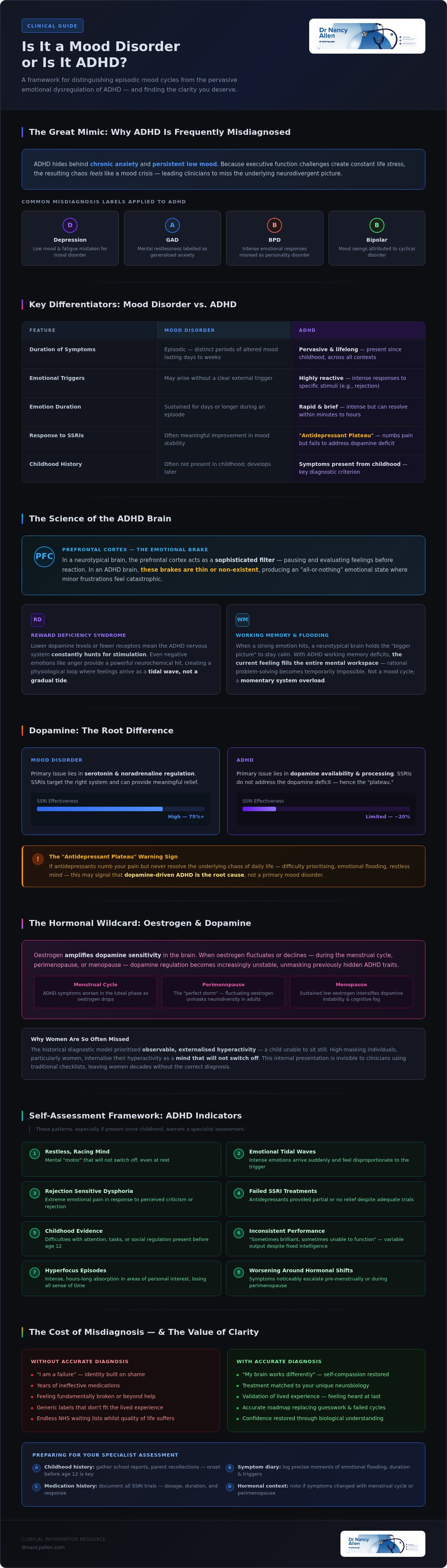
ADHD is a master of disguise. It often hides behind a facade of chronic anxiety or persistent low mood, leading many patients and clinicians to ask: “Is It Really a Mood Disorder — or Is It ADHD?” This overlap occurs because the executive function challenges of ADHD naturally create a life of high stress. When your brain constantly struggles to prioritise tasks or regulate focus, the resulting chaos feels like a mood crisis. For many, this presents as internalised hyperactivity. You don't necessarily feel the need to run; instead, your mind feels like a motor that won't switch off. This mental restlessness is frequently mislabelled as Generalised Anxiety Disorder, yet it doesn't respond to traditional anxiety management because the root cause is a neurodivergent brain seeking stimulation.
The Problem with Traditional Diagnostic Labels
Historically, the medical model prioritised observable behaviours, such as a child’s inability to sit still. This narrow lens meant that high-masking individuals, particularly women, were often overlooked. Instead of an ADHD diagnosis, they were frequently given labels like Borderline Personality Disorder (BPD) due to their intense emotional responses. A holistic assessment is vital here. We must look beyond the surface symptoms to understand the internal experience of the patient. By choosing a specialist GP-led assessment, we can unpick these complex layers and identify the true source of the struggle, moving beyond labels that don't fit.
The Cost of Misdiagnosis: Medication and Self-Esteem
The cost of a wrong label is measured in more than just ineffective prescriptions. Many patients experience the "Antidepressant Plateau," where SSRIs might numb the pain but fail to address the underlying dopamine deficit. Years of failed treatments can leave you feeling fundamentally broken or beyond help. It’s a heavy psychological burden to carry. However, an accurate diagnosis acts as a powerful catalyst for self-compassion. Transitioning from "I am a failure" to "I have a brain that works differently" is the first step in restoring your confidence. Clarity allows you to finally find a treatment plan that works for your unique neurobiology rather than fighting against it.
Decoding Emotional Dysregulation: The Science of the ADHD Brain
The ADHD brain doesn’t just struggle with focus; it struggles with the volume control of human emotion. When individuals ask, “Is It Really a Mood Disorder — or Is It ADHD?”, the answer often lies in the architecture of the prefrontal cortex. This region of the brain acts as a sophisticated filter, helping us pause and evaluate our feelings before we react. In a neurotypical brain, this "braking system" works effectively to dampen sudden impulses. In an ADHD brain, these brakes are often thin or non-existent. This leads to an "all-or-nothing" emotional state where a minor frustration feels like a catastrophic event, not because of a lack of character, but because of a lack of biological regulation.
This intensity is further driven by Reward Deficiency Syndrome. Because the ADHD brain has lower levels of dopamine or fewer receptors to process it, the nervous system constantly hunts for stimulation to reach a baseline of engagement. High-intensity emotions, even negative ones like anger or deep sadness, provide a powerful hit of neurochemical activity. This creates a physiological loop where emotions feel "bigger" and more immediate than neurotypical responses. If you find that your emotions feel like a sudden tidal wave rather than a gradual tide, an Adult ADHD Assessment can provide the neurobiological context you’ve been missing.
Executive Function and Emotional Control
The brain’s executive functions are responsible for managing working memory, which is the mental "sticky note" we use to hold information. When you’re hit with a strong emotion, a neurotypical brain holds onto the "bigger picture" to stay calm. However, ADHD working memory deficits mean that the current feeling fills the entire mental workspace. This is known as "flooding." During a flood, rational problem-solving becomes temporarily impossible because your brain is entirely occupied by the intensity of the moment. It isn’t a mood cycle; it’s a momentary system overload.
Rejection Sensitive Dysphoria (RSD) Explained
RSD is perhaps the most misunderstood aspect of the ADHD experience, yet it’s a primary reason people wonder, “Is It Really a Mood Disorder — or Is It ADHD?” It’s an intense, often physical, emotional pain triggered by the perception of being rejected or criticised. Unlike the slow-burning lows of clinical depression, RSD is sudden and situational. It can mimic the highs of social anxiety or the crushing weight of a depressive episode, yet it often passes as quickly as it arrived once the perceived threat is gone. Because RSD is rooted in neurobiology rather than trauma, standard Cognitive Behavioural Therapy (CBT) often requires significant tailoring to be effective for ADHD brains.
Key Differentiators: How to Tell if Your Symptoms Are Episodic or Constant
To distinguish between these conditions, we must look at the "shape" of your symptoms. Mood disorders are typically episodic, meaning they occur in distinct cycles that last for weeks or months. In contrast, ADHD is a pervasive, lifelong trait. Whilst your environment can make things better or worse, the underlying neurodivergent wiring is always present. If you find yourself asking, “Is It Really a Mood Disorder — or Is It ADHD?”, consider the speed of your emotional shifts. ADHD moods are often "rapid-fire," changing in response to a specific event within minutes. A mood disorder is more like a seasonal shift; it settles in and stays, regardless of what happens in your day-to-day life.
Sleep patterns also provide a vital clue. During a manic episode in Bipolar Disorder, an individual often experiences a significantly decreased need for sleep, feeling fully energised after only two or three hours. The ADHD brain, however, is usually exhausted but simply cannot "switch off." You might lie awake for hours as your mind replays the day’s events or plans future projects. This isn't a lack of a need for sleep; it's a failure of the brain's arousal system to regulate the transition from wakefulness to rest. It is a matter of "can't sleep" rather than "don't need sleep."
Analysing the Timeline of Your Symptoms
One of the most reliable ways to find clarity is to look back at your childhood. Because ADHD is neurodevelopmental, the seeds of the behaviour must have been present before age twelve, even if you were "high-achieving" or used "masking" to hide your struggles. Ask yourself if your mood shifts are always a reaction to something external. ADHD emotions are almost always triggered by a frustration, a rejection, or a sudden change in plans. If your "lows" appear out of nowhere and persist for weeks regardless of your circumstances, a primary mood disorder may be more likely.
The "Tired but Wired" Phenomenon
The ADHD brain often uses "urgency" as a fuel source. Because it lacks a steady supply of dopamine, it creates a state of internalised pressure to get things done. This can look like the high energy of mania, but it feels very different. For a neurodivergent person, relaxation can actually feel physically uncomfortable or even anxiety-inducing. Sitting still without a task feels like a sensory deprivation tank. Recognising this constant hum of restlessness is a key step in answering the question, “Is It Really a Mood Disorder — or Is It ADHD?”, and moving toward a diagnosis that actually reflects your lived experience.
The Hormonal Wildcard: How Menopause and Menstrual Cycles Complicate the Picture
Oestrogen is the secret engine of the female brain. It directly influences how effectively our neurons use dopamine, the neurotransmitter responsible for focus and emotional regulation. When oestrogen levels plummet during the menstrual cycle or perimenopause, the ADHD brain loses its primary support system. This often triggers a crisis that leads women to ask, “Is It Really a Mood Disorder, or Is It ADHD?” For many, it's actually both. ADHD symptoms that were previously manageable through sheer effort or masking suddenly become overwhelming as the hormonal floor drops away. This isn't a failure of willpower; it's a biological shift that requires a specialist's understanding.
This biological connection explains why traditional treatments for depression or anxiety often feel like they're only doing half the job. If your brain is struggling with a dopamine deficiency, antidepressants won't address the core issue. Similarly, whilst HRT is a vital tool for managing physical menopause symptoms, it might not fully resolve the "brain fog" or executive dysfunction if ADHD is the underlying cause. You need a holistic approach that addresses both the hormonal shift and the neurodivergent wiring. Without this double-layered perspective, women are often left in a cycle of ineffective treatments and mounting frustration.
Why Midlife is the Peak Time for ADHD Diagnosis in Women
Midlife often brings a "perfect storm" of increased responsibility and decreased biological resilience. As career demands and family pressures peak, the drop in oestrogen removes the cognitive buffer women have relied on for decades. This isn't just "menopause brain." It's the unmasking of a lifelong condition that was previously hidden by high intelligence or rigid coping mechanisms. Finding a clinician who offers Peri-menopause & Menopause Specialist Care alongside ADHD expertise is essential for unpicking these overlapping symptoms and finding a path to clarity.
Managing the Monthly Cycle
Many women with ADHD also suffer from Premenstrual Dysphoric Disorder (PMDD), a severe form of PMS that causes extreme mood shifts. If you notice your ADHD medication feels less effective during the week before your period, it's likely due to the luteal phase's low oestrogen levels. During this time, the brain's "braking system" is at its weakest, making emotional flooding more likely. Tracking your cycle alongside your symptoms is a powerful tool. It allows you to identify whether your "lows" are a spontaneous mood cycle or a predictable ADHD flare-up tied to your biology. Recognising these patterns is the first step in regaining control over your emotional life.
Seeking Clarity: Navigating the Path to an Accurate Private ADHD Diagnosis
Seeking a diagnosis through traditional routes can often feel like an uphill battle. A standard 10-minute GP consultation is rarely sufficient to unpick decades of complex emotional patterns or answer the nuanced question: “Is It Really a Mood Disorder — or Is It ADHD?” This brevity often leads to the "Antidepressant Plateau" where symptoms are treated on the surface without addressing the neurobiological root. To find true clarity, you need a specialist who has the time to listen to your full story, from your earliest childhood memories to your current daily struggles. This depth is what allows a clinician to distinguish between a primary mood imbalance and the regulatory failures of an ADHD brain.
Preparing for a private assessment involves gathering childhood evidence, such as old school reports or testimonials from family members. These documents help establish the pervasive, lifelong nature of your symptoms. Whilst the NHS currently faces wait times that can stretch into several years, a private assessment offers a much-needed alternative. With a 72-hour turnaround for diagnosis, the focus shifts from waiting in despair to actively building a better quality of life. This speed is essential for mental wellbeing, providing immediate validation after years of uncertainty and self-doubt.
What to Expect During Your Consultation
Moving beyond simple checkboxes, a private consultation is a deep-dive clinical interview. Secure online telehealth has transformed this process, making expert care accessible nationwide from the comfort of your own home. You will discuss your life history and emotional triggers in a supportive, unhurried environment that prioritises your comfort. A private diagnosis is a valid, life-changing medical document that carries the same weight as any other specialist assessment, serving as the professional foundation for your future care and support.
Beyond the Label: Your Life After Diagnosis
Receiving a diagnosis is more than just a label; it's the beginning of a personalised, multi-modal treatment plan. This might include a combination of medication, specialist coaching, and lifestyle adjustments tailored to your specific brain chemistry and hormonal health. It also offers a profound emotional shift. You can finally stop blaming yourself for "laziness" and start understanding your past through a lens of neurodiversity. If you are ready to find the clarity you deserve, you can Book a private ADHD assessment with Dr Nancy Allen for expert, empathetic care.
Reclaiming Your Emotional Clarity
You’ve spent long enough wondering why standard treatments haven't quite reached the heart of your struggle. By understanding the science of emotional dysregulation and the specific ways hormones interact with your neurobiology, you can finally answer the question: “Is It Really a Mood Disorder — or Is It ADHD?” This clarity is the essential first step in moving from a life of constant frustration toward one of balance and self-compassion. You aren't broken; you've simply been navigating a world designed for a different kind of brain without the right map.
You don't have to wait years for the validation you deserve. Dr Nancy Allen offers a supportive, expert-led path to understanding your unique neurobiology. With over 25 years of clinical experience, she provides secure online consultations nationwide, delivering a diagnosis and personalised treatment plan within 72 hours. It's time to stop guessing and start healing. Begin your journey to clarity with a private ADHD assessment and discover the path that finally feels right for you. You deserve to live with confidence and peace of mind.
Frequently Asked Questions
Can you have both ADHD and Bipolar disorder at the same time?
Yes, it's possible to have both conditions simultaneously, which is known as comorbidity. Whilst the symptoms often overlap, such as impulsivity and high energy, they require distinct treatment approaches. A specialist assessment is crucial to unpick these layers. Managing both effectively involves a tailored plan that addresses the episodic nature of Bipolar alongside the constant executive function challenges and emotional regulation struggles of ADHD.
Why was my ADHD missed when I was a child?
Many adults were missed because diagnostic criteria previously focused on "observable hyperactivity" in young boys. If you were high-achieving, quiet, or used "masking" to cope, your internal struggles were likely overlooked. Girls, in particular, often present with inattentive symptoms rather than physical restlessness. You might have been labelled as a "daydreamer" or simply told you weren't "applying yourself" despite your obvious potential and effort.
Is it possible for ADHD to suddenly "start" during menopause?
ADHD is a neurodevelopmental condition that begins in childhood; it doesn't suddenly start in midlife. However, the drop in oestrogen during menopause can "unmask" lifelong symptoms that you previously managed through rigid coping mechanisms. This shift often leads women to ask, “Is It Really a Mood Disorder — or Is It ADHD?” as their cognitive buffer disappears. Specialist menopause care can help manage these overlapping hormonal and neurological changes effectively.
How does ADHD medication differ from antidepressants?
Most antidepressants, like SSRIs, focus on regulating serotonin to improve mood over several weeks. In contrast, ADHD medications typically target dopamine and norepinephrine, which are responsible for focus, motivation, and emotional regulation. These medications often have a more immediate effect on executive function. If you've experienced an "antidepressant plateau," it may be because your brain requires a different neurochemical approach to manage its regulatory "braking system" rather than a serotonin boost.
Will a private ADHD diagnosis be recognised by my employer or the NHS?
A private diagnosis from a qualified specialist is a valid medical document. Most employers recognise it for providing "reasonable adjustments" under the Equality Act to support your productivity. Regarding the NHS, whilst your GP isn't legally mandated to accept a private diagnosis for a "Shared Care Agreement," many will do so if the assessment follows high clinical standards. It's always best to discuss this possibility with your GP beforehand.
What is the difference between ADHD and Borderline Personality Disorder?
Whilst both involve emotional volatility, the root causes differ significantly. Borderline Personality Disorder (BPD) is often characterised by an intense fear of abandonment and unstable relationships. ADHD emotional dysregulation is tied to executive function deficits and the brain's biological "braking system." ADHD symptoms are lifelong and pervasive, whereas BPD symptoms often fluctuate based on interpersonal triggers. An accurate diagnosis ensures you receive the correct therapeutic support rather than generic treatments.
Can diet and lifestyle changes help manage ADHD-related mood swings?
Lifestyle adjustments can certainly support emotional stability, though they aren't a replacement for clinical treatment. Maintaining a protein-rich diet, prioritising consistent sleep, and engaging in regular physical activity can help stabilise dopamine levels. Reducing sensory overload and using organisational tools also lowers the daily stress that often triggers emotional flooding. These changes work best when integrated into a wider, multi-modal plan that includes specialist coaching or medication for long-term success.
How long does a private ADHD assessment take with Dr Nancy Allen?
The process is designed to be thorough yet efficient to reduce your anxiety. Following your secure online consultation, Dr Nancy Allen provides a diagnosis and a personalised treatment plan within 72 hours. This rapid turnaround is a significant contrast to the multi-year waiting lists currently found within the NHS. It allows you to move quickly from a state of uncertainty to a clear, actionable path toward managing your symptoms and reclaiming your confidence.


Comments