


Connective Tissue Disorders and Neurodivergence Explained

What if the chronic joint instability, unyielding fatigue, and sensory overwhelm you have spent years trying to explain are not separate issues, but expressions of the exact same biological blueprint? If you have spent years moving between rheumatologists, neurologists, and mental health clinicians only to face medical dismissal, you already know how exhausting this disjointed journey feels. The reality is deeply validating: current clinical research demonstrates that connective tissue disorders and neuro divergence are intimately linked, sharing common physiological mechanisms rather than simply co-occurring by coincidence.
Living with physical joint instability alongside an easily overwhelmed nervous system can leave you feeling perpetually off-balance. In this guide, you will discover how variations in collagen structure, proprioceptive feedback, and autonomic regulation intersect to shape these complex systemic symptoms. We will examine the physiological pathways bridging hypermobility and neurodivergent processing, providing clear insight into your physical experiences alongside practical, multidisciplinary approaches to help you feel grounded and supported in daily life.
Table of Contents
Defining the Intersection: Connective Tissue Disorders and Neurodivergence
The Biological Mechanisms Connecting Hypermobility and Neurodivergent Brains
The Clinical Triad: Hypermobility, Dysautonomia, and Sensory Overload
Navigating Medical Dismissal, Misdiagnosis, and Gender Disparities
Integrated Clinical Pathways: Assessment, Multidisciplinary Support, and Self-Care
Defining the Intersection: Connective Tissue Disorders and Neurodivergence
For decades, medicine treated the musculo-skeletal system and the central nervous system as separate operational spheres. Clinical research now shows that connective tissue disorders and neuro divergence frequently share a unified physiological foundation. A significant proportion of autistic individuals and those with attention deficit hyperactivity disorder (ADHD) experience systemic joint laxity and structural collagen differences. Recognising this overlap replaces the exhausting confusion of multiple unexplained diagnoses with a clear, validated framework.
The Spectrum of Connective Tissue Conditions
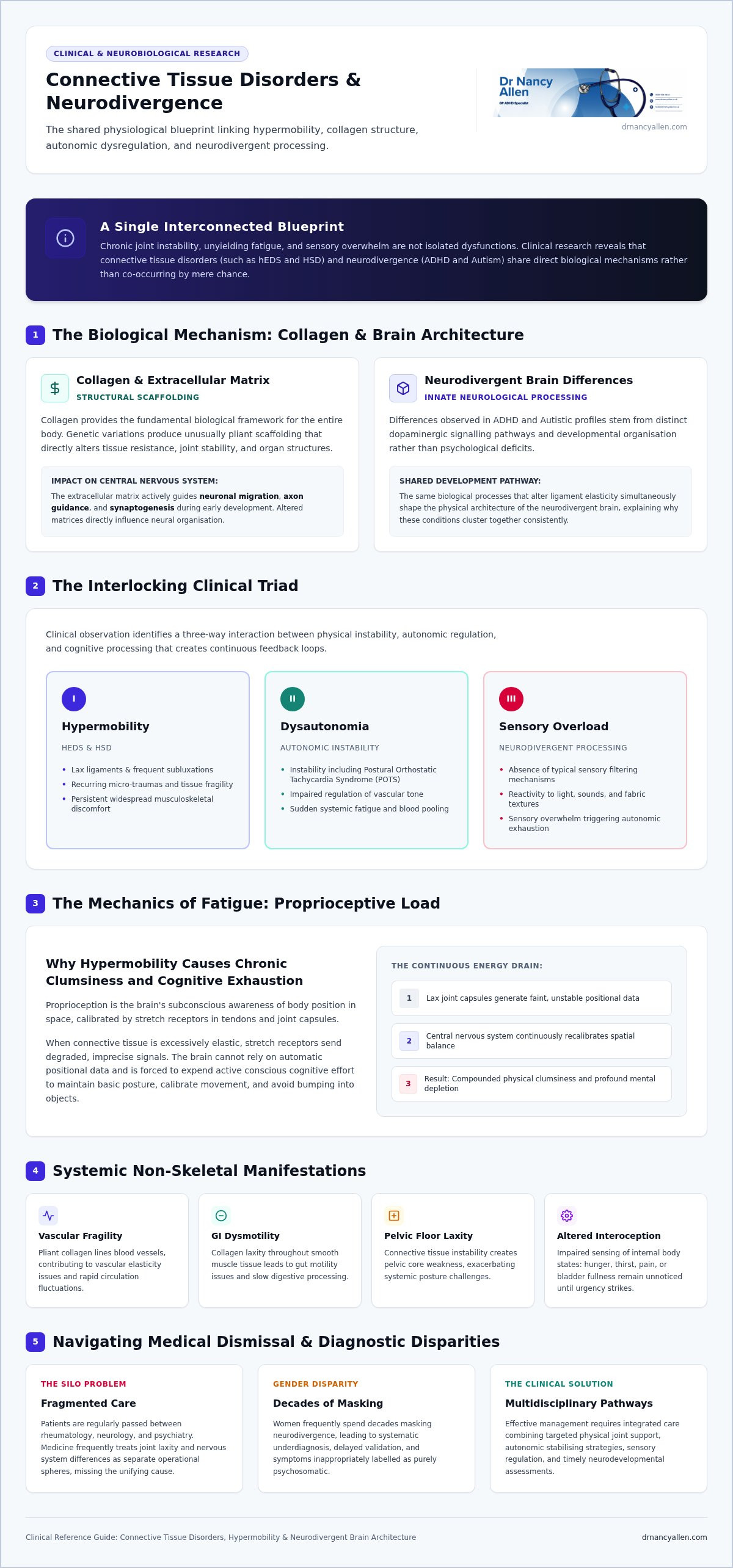
Connective tissue acts as the biological scaffolding for your body, providing strength and elasticity to skin, ligaments, blood vessels, and internal organs. When genetic variations alter collagen production, that scaffolding becomes unusually pliant. Hypermobile Ehlers-Danlos syndrome (hEDS) and Hypermobility spectrum disorders (HSD) represent the most common conditions within this spectrum.
Rather than merely being flexible, individuals navigate frequent joint subluxations, micro-traumas, slow tissue healing, and persistent, widespread musculoskeletal discomfort. Because collagen is present throughout the entire body, these variations also affect non-skeletal systems. They often manifest as vascular fragility, pelvic floor laxity, and gastrointestinal dysmotility, creating deep, systemic physical fatigue.
Recognising the Neurodivergent Profile
Neurodivergence reflects natural, innate neurological differences in processing information, regulating attention, and interpreting the surrounding environment. In adults and children with ADHD, this often presents as executive function challenges, fluctuations in working memory, and emotional dysregulation. These characteristics are rooted in distinct dopaminergic signalling pathways rather than psychological deficits.
Autism and ADHD also share pronounced sensory processing differences. Processing external stimuli requires significant cognitive energy when your nervous system lacks a reliable neurological filter. Common daily experiences include:
Heightened reactivity to bright lighting, high-frequency sounds, and coarse clothing textures
Altered interoception, making it hard to sense hunger, thirst, pain, or bladder fullness until urgency strikes
Sensory overwhelm that triggers sudden cognitive depletion and autonomic exhaustion
When you map hypermobile anatomy onto an already sensitive nervous system, the lived experience changes entirely. Connective tissue disorders and neuro divergence do not simply sit side by side. Instead, the instability of fragile physical joints continuously amplifies sensory distress, which in turn demands continuous, exhausting cognitive adaptation from the brain.
The Biological Mechanisms Connecting Hypermobility and Neurodivergent Brains
Far from being an accidental pairing, modern neurological and genetic research demonstrates why connective tissue disorders and neuro divergence cluster together so consistently. Clinical data shows that neurodivergent individuals are significantly more likely to have a connective tissue disorder than the general population. This shared vulnerability stems from structural development, body awareness mechanics, and autonomic pathways working in tandem.
Collagen, Extracellular Matrix, and Brain Development
Collagen provides the structural scaffolding of the central nervous system. The extracellular matrix guides neuronal migration, axon guidance, and synaptogenesis during early brain development. When genetic variations alter these structural matrices, neural pathways often organise differently. Research suggests that the same biological processes altering joint flexibility simultaneously influence the physical architecture of the neurodivergent brain.
Proprioception, Motor Planning, and Sensory Integration
Proprioception is the subconscious sense of where your body exists in physical space. Joint capsules, tendons, and stretch receptors constantly send signals to the brain to calibrate balance. When connective tissue is excessively stretchy, these signals become muffled and delayed. This mechanical lag creates distinct physical demands:
The brain must recruit visual and conscious cognitive attention simply to keep the body upright and stable.
Unconscious micro-adjustments lead to clumsy movements, frequent bumping into doorframes, and poor motor planning.
Compensatory physical hyper-vigilance depletes daily executive function reserves, intensifying mental exhaustion.
These motor coordination differences and low muscle tone often show up in early developmental milestones, creating lifelong physical fatigue.
The Autonomic Nervous System and Adrenaline Overdrive
Connective tissue lines your vascular tree. When blood vessel walls are unusually compliant, blood pools in the lower extremities upon standing. To prevent cerebral hypoperfusion and fainting, your sympathetic nervous system triggers surges of adrenaline and noradrenaline to constrict the vessels. Exploring the dysautonomia and ADHD connection reveals how these physical surges mirror and exacerbate emotional dysregulation.
Living in constant sympathetic overdrive leaves the body feeling perpetually on edge. This continuous state of fight-or-flight amplifies sensory sensitivity, accelerates burnout, and disrupts restful sleep. If you are struggling to disentangle physical hyper-reactivity from lifelong attentional challenges, pursuing an expert Adult ADHD Assessment can provide meaningful clinical clarity, validating the biological roots of your daily symptoms.
The Clinical Triad: Hypermobility, Dysautonomia, and Sensory Overload
Clinicians increasingly recognise a distinct syndromic cluster uniting joint laxity, autonomic instability, and neurodivergent processing. When discussing connective tissue disorders and neuro divergence, this presentation often expands into what specialists call "the trifecta": hypermobility, dysautonomia, and mast cell activation. Together, these interrelated physiological systems compound sensory sensitivity and drive relentless physical exhaustion.
Postural Orthostatic Tachycardia Syndrome (POTS) and ADHD
Postural Orthostatic Tachycardia Syndrome (POTS) involves an abnormal heart rate surge upon standing, driven by autonomic dysregulation and venous pooling. Common symptoms include lightheadedness, exercise intolerance, gastrointestinal issues, and marked cognitive fog. When blood flow to the brain drops upon upright posture, concentration plummets.
This transient cerebral hypoperfusion can mimic or severely amplify core inattentive ADHD traits. Distraction and mental sluggishness are often aggravated by simple circulatory deficits rather than wandering focus alone. Exploring ADHD and POTS comorbidity provides essential strategies for addressing blood volume and postural stability alongside neurodevelopmental needs.
Mast Cell Activation and Systemic Sensitivity
Mast cells reside in connective tissues throughout your gut, skin, respiratory tract, and central nervous system. In hypermobile bodies, mechanical tissue stretch and autonomic stress frequently trigger inappropriate mast cell degranulation. This releases an excess of histamine and inflammatory cytokines into surrounding tissues.
The resulting systemic reactions can feel unpredictable and disorientating:
Unexplained dermatological flushing, hives, and heightened reactivity to environmental scents or fabrics
Gastrointestinal spasms, food intolerances, and fluctuating baseline gut pain
Neuro-inflammation that triggers chronic migraines, brain fog, and intense nervous system irritability
When systemic inflammation breaches the blood-brain barrier, baseline sensory processing sensitivities escalate, transforming ordinary environments into overwhelming sensory minefields.
Interoceptive Confusion and Chronic Fatigue
Interoception enables you to register internal bodily cues, such as heart rate, hunger, hydration levels, and pain. In neurodivergent individuals with joint laxity, interoceptive signalling is frequently altered or blunted. You might miss early signals of thirst, postural fatigue, or joint hyperextension until sudden nausea, severe muscle spasms, or full-body exhaustion demand attention.
Compounding this confusion is continuous muscle guarding. Because ligaments fail to support the skeleton naturally, surrounding muscles remain in chronic contraction to hold joints in place. This continuous, unconscious muscular recruitment consumes vast amounts of metabolic energy. The debilitating fatigue so frequently reported in connective tissue disorders and neuro divergence is not an imagined complaint; it reflects genuine, continuous somatic work that your body performs simply to remain intact.
Navigating Medical Dismissal, Misdiagnosis, and Gender Disparities
Few clinical journeys carry as much emotional weight as seeking validation for multi-systemic illness. For years, patients navigating the intersection of connective tissue disorders and neuro divergence have been shuttled between rheumatology, neurology, and psychiatry. Their physical instability is frequently branded as psychosomatic, whilst their neurodivergent traits are labelled as emotional instability. Overcoming this pattern begins with understanding how gender bias, compensatory masking, and endocrine shifts obscure accurate diagnoses.
The Masking Burden and Diagnostic Delays
High-masking women often excel at concealing executive dysfunction and sensory overwhelm, forcing themselves to appear composed while quietly managing chronic bodily pain. This constant effort comes at an immense physical cost. When they present to general practice with diffuse musculoskeletal aching, orthostatic intolerance, and profound exhaustion, their distress is often attributed to generalised anxiety, depression, fibromyalgia, or somatisation disorder.
These umbrella labels obscure root causes. A psychiatric referral rarely investigates ligamentous laxity, and a rheumatological consultation rarely assesses attention regulation. Reviewing ADHD in women and hormonal links highlights why so many individuals spend decades searching for coherent clinical explanations before receiving accurate recognition.
The Oestrogen Connection: Joint Laxity and Neurochemistry
Endocrine fluctuations play a central role in both tissue integrity and cognitive function. Oestrogen promotes collagen synthesis, helping to stabilise ligaments and maintain joint architecture. When oestrogen levels fall during the luteal phase of the menstrual cycle, or fluctuate during perimenopause, joint laxity increases noticeably, leaving joints prone to subluxations and micro-trauma.
Crucially, falling oestrogen also reduces central dopamine and serotonin levels. This drop leads to a predictable double impact:
A noticeable worsening of ADHD symptoms, including working memory deficits, brain fog, and executive paralysis
A reduction in pain thresholds alongside increased musculoskeletal instability and physical discomfort
Evaluating hormonal life stages alongside neurodevelopmental health is essential for understanding why physical and cognitive symptoms often surge concurrently.
Advocating for Yourself in Clinical Consultations
Preparing for clinical appointments requires structure. Before entering a consultation, log your symptoms across bodily systems, tracking how physical pain, digestive issues, and sensory overload correlate with hormonal shifts and postural changes. Distinguish clearly between psychological anxiety and the physiological tachycardia that occurs purely when standing.
You deserve clinical care that looks at the complete biological picture rather than fragmented parts. If prolonged public waiting lists have delayed answers about your focus, fatigue, and systemic wellbeing, you can book a comprehensive Adult ADHD Assessment to gain the validation and medical clarity needed to move forward.
Integrated Clinical Pathways: Assessment, Multidisciplinary Support, and Self-Care
Managing the overlap between connective tissue disorders and neuro divergence requires moving away from piecemeal treatments. Lasting stability comes from an integrated, multidisciplinary model that supports your nervous system and your physical body together. By addressing ligamentous instability alongside neurodevelopmental differences, you can step off the exhausting cycle of reactive crisis management and build sustainable daily balance.
The Value of a Comprehensive Neurodevelopmental Assessment
Securing a formal neurodevelopmental diagnosis offers immense relief. It replaces decades of misplaced self-blame with clear physiological context, confirming that your sensory overwhelm, inattention, and fatigue stem from distinct neurological wiring. Tailored treatment strategies help quieten an overactive central nervous system, reducing the chronic sympathetic adrenaline surges that amplify joint pain and muscle guarding.
For those seeking a structured evaluation, consulting an adult ADHD assessment guide provides essential information on what to expect during diagnostic consultations, empowering you to pursue answers with confidence.
Somatic Support, Joint Stability, and Pacing
Traditional fitness recommendations often harm hypermobile bodies. Passive yoga or aggressive flexibility training increases the risk of micro-tears and subluxations in compliant ligaments. Instead, somatic support should prioritise stability, proprioceptive awareness, and energy management:
Hypermobility-informed physiotherapy: Focus on isometric strengthening, closed-chain resistance exercises, and deep core recruitment to build a protective muscular sleeve around loose joints.
Proprioceptive and sensory tools: Utilise medical-grade compression garments, weighted lap pads, and ergonomic seating to supply continuous sensory feedback, reducing the cognitive effort needed to sit upright.
Strategic pacing: Interrupt the neurodivergent "boom-and-bust" cycle. Schedule non-negotiable physical rest breaks before entering severe sensory or musculoskeletal depletion.
A Compassionate, Joined-Up Healthcare Approach
Effective management relies on a collaborative clinical team. Building relationships with an informed physiotherapist, an occupational therapist, and an empathetic medical clinician ensures your care is coordinated rather than fragmented. Across the United Kingdom, Dr Nancy Allen provides private, online clinical consultations grounded in over 25 years of extensive medical practice. Her holistic approach bridges neurodivergence, hormonal transitions, and physical health, delivering tailored diagnostic assessments and comprehensive care plans within 72 hours.
Healing begins with validation. Recognising that connective tissue disorders and neuro divergence interact within a unified biological system allows you to treat your body with patience. With the right clinical guidance and self-care adaptations, you can replace chronic exhaustion with enduring physical and cognitive resilience.
Moving Forward with Comprehensive Biological Clarity
Your multisystemic symptoms are real, interconnected, and biologically explainable. Recognising how connective tissue disorders and neuro divergence interact provides profound validation, transforming how you interpret chronic fatigue, joint instability, and sensory overwhelm. Rather than managing isolated complaints, understanding this neuro-fascial link allows you to care for your body and mind as a unified whole.
You do not have to spend years waiting for answers or navigating disjointed appointments alone. With over 25 years of extensive UK clinical practice, Dr Nancy Allen offers compassionate, evidence-based care that bridges the gap between physical health and neurodevelopmental processing. Through secure, confidential online consultations available nationwide, you can access dedicated diagnostic expertise and receive a personalised, holistic treatment plan within 72 hours.
Clarity brings lasting relief. Take the next step toward validating your lived experience and regaining control over your daily wellbeing: book a comprehensive private assessment with Dr Nancy Allen today.
Frequently Asked Questions
Is there proven scientific evidence linking hypermobile Ehlers-Danlos syndrome to ADHD and autism?
Yes, large-scale clinical studies confirm a strong genetic and epidemiological link between connective tissue disorders and neuro divergence. Recent population-level research demonstrates that individuals with attention deficit hyperactivity disorder (ADHD) and autism spectrum disorder have significantly higher rates of hypermobile Ehlers-Danlos syndrome and generalised joint laxity than neurotypical cohorts. This shared occurrence points to biological overlap rather than a coincidental correlation.
Can joint hypermobility cause brain fog and poor concentration?
Yes, joint hypermobility frequently contributes to cognitive fog through reduced cerebral blood flow and constant somatic strain. When compliant blood vessels permit blood to pool in the lower body, the brain receives less oxygenated blood, especially whilst standing. Additionally, your central nervous system expends substantial cognitive energy merely keeping hypermobile joints stable, depleting mental focus and exacerbating executive dysfunction.
Why do women with hypermobility often receive late ADHD diagnoses?
Women tend to mask their neurodivergent traits by developing complex compensatory habits, which conceals executive difficulties throughout schooling. Furthermore, healthcare professionals often view multisystem physical pain, chronic fatigue, and autonomic tachycardia as signs of depression, fibromyalgia, or generalised anxiety. This clinical misattribution obscures underlying neurodevelopmental patterns, delaying accurate identification until systemic burnout occurs in adulthood.
What type of doctor should I see for hypermobility and neurodivergence?
You benefit most from an integrated, multidisciplinary approach rather than relying on a single specialist. A knowledgeable GP or specialist private doctor provides holistic diagnostic oversight and neurodevelopmental assessments, whilst rheumatologists evaluate joint disease. Partnering these medical consultations with hypermobility-trained physiotherapists ensures your physical instability and sensory regulation receive coordinated, evidence-based care.
Does ADHD medication affect joint pain, hypermobility, or heart rate?
ADHD medications can alter autonomic function and muscle tone. Stimulants may elevate your baseline heart rate and blood pressure, requiring careful monitoring if you also experience postural tachycardia. Conversely, improved executive control often lowers systemic stress, and certain medications reduce inflammatory pain perception. Any pharmacological intervention must be carefully evaluated by a specialist familiar with autonomic sensitivities.
How does collagen deficiency influence the central nervous system?
Collagen provides the structural extracellular matrix that guides brain development, neuronal migration, and vascular tone. When collagen structure is altered in connective tissue disorders and neuro divergence, it impacts blood vessel compliance and structural tissue stability within the craniocervical junction. These alterations affect how sensory feedback transmits to the brain, directly influencing proprioception, balance, and autonomic nervous system regulation.
What physical exercises are safe for neurodivergent people with joint laxity?
Low-impact, closed-chain resistance training and isometric exercises are safest because they strengthen muscles without hyperextending fragile ligaments. Activities such as clinical Pilates, swimming, and targeted resistance band workouts build joint stability and proprioceptive feedback safely. High-impact aerobics, contact sports, and passive, extreme stretching should be avoided to minimise the risk of subluxations and soft tissue strain.


Comments