


Night Sweats in Women: Causes, Triggers, and Clinical Relief

Waking at 3 a.m. drenched in perspiration is not merely an uncomfortable sleep disruption; it is a complex neurovascular response to hormonal instability. When experiencing sudden night sweats women often find themselves questioning why their internal temperature surges so violently, particularly if their monthly menstrual cycles remain regular. Shivering beside damp bedlinen whilst anticipating another day of persistent brain fog and fatigue can easily provoke quiet anxiety that something serious is being overlooked.
Your distress is entirely valid, and you don't have to accept broken rest as an inevitable reality. This guide explains how fluctuating hormones recalibrate the brain's thermoregulatory centre, why nocturnal flushes occur, and when it is essential to seek clinical guidance. We explore the physiological triggers driving temperature spikes, provide a clear framework to distinguish hormonal shifts from medical red flags, and review evidence-based treatments that safely restore calm, restorative sleep.
Table of Contents
What Are Night Sweats in Women and Why Do They Happen?
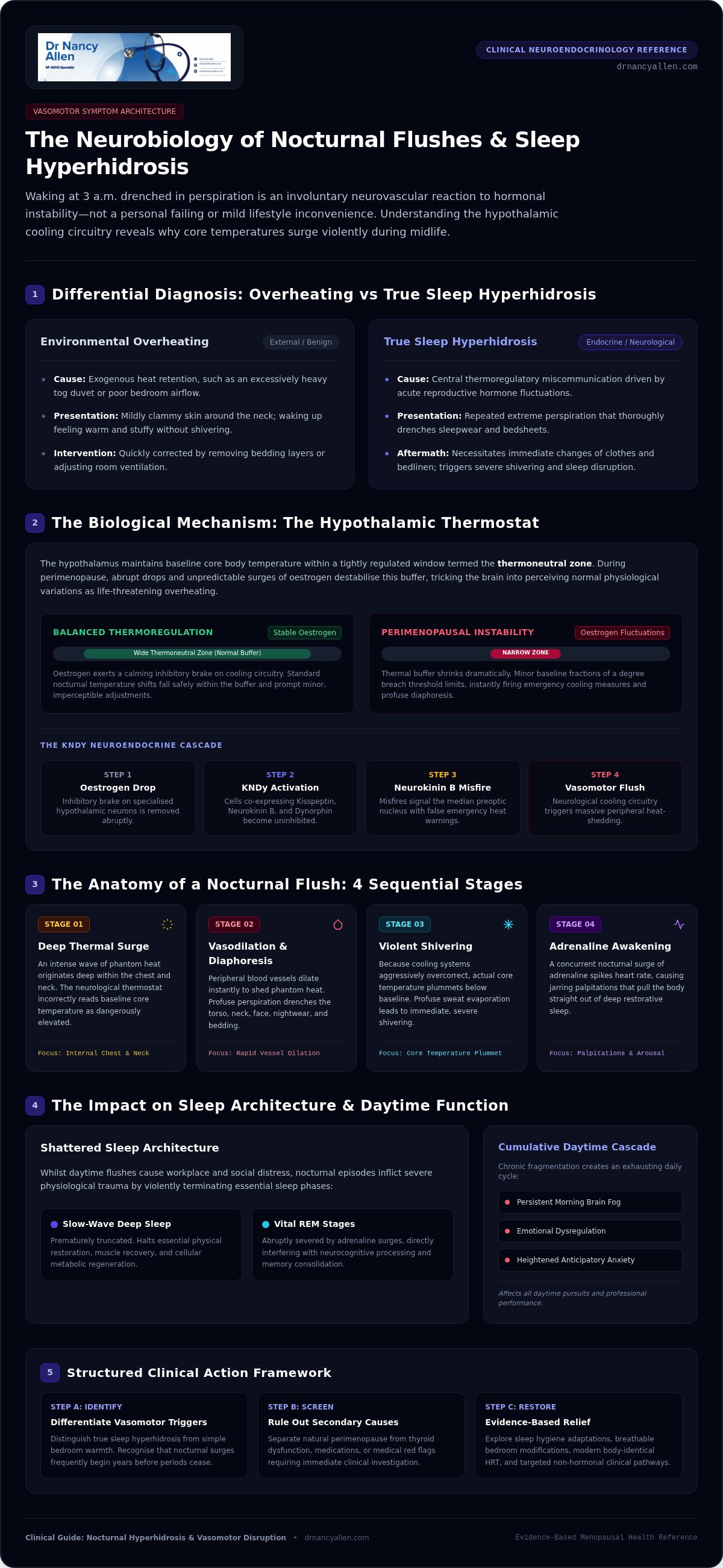
Clinically termed sleep hyperhidrosis, true night sweats involve repeated episodes of extreme perspiration that thoroughly drench your nightwear and bedsheets. This is not simply feeling overly warm under a heavy tog duvet or waking with a mildly clammy neck. When evaluating night sweats women frequently describe waking in a pool of moisture that necessitates an immediate change of clothes, clean linen, and an uncomfortably disrupted night. Experiencing these surges is neither a personal failing nor a minor lifestyle inconvenience; it represents an involuntary neurochemical miscommunication within your body's neurological cooling circuitry.
To visualise how these nocturnal episodes manifest and why they become increasingly prevalent during midlife, watch this helpful clinical discussion:
The Anatomy of a Nocturnal Hot Flush
A nocturnal flush typically begins with a sudden, overwhelming surge of intense heat that originates deep within the chest and neck. As your neurological thermostat misinterprets baseline body temperature as critically elevated, it triggers rapid peripheral vasodilation to disperse the phantom heat. Blood vessels immediately dilate, leading to profuse diaphoresis across the torso, neck, and face. Because your system overcorrects, this drenching perspiration is swiftly followed by violent shivering as your actual core temperature plummets. Concurrently, a nocturnal surge of adrenaline spikes your heart rate, provoking jarring palpitations that pull you straight out of sleep.
Daytime Flushes Versus Nocturnal Drenching
While daytime flushes are undeniably disruptive in workplace or social settings, nocturnal events carry a far more pernicious physiological toll. Involuntary awakenings violently shatter sleep architecture, terminating both restorative slow-wave deep sleep and vital REM stages. Over time, waking up damp and shivering causes cumulative sleep deprivation. This chronic fragmentation rapidly cascades into debilitating morning brain fog, emotional dysregulation, and heightened daytime anxiety. For many women, the distress of anticipating another disrupted night becomes an exhausting cycle that affects every daytime pursuit.
The Biological Mechanism: Hormones, the Hypothalamus, and Thermoregulation
At the core of nocturnal temperature instability lies the hypothalamus, a small yet vital region at the base of your brain that acts as your internal thermostat. In a balanced endocrine environment, this neural centre maintains your core temperature within a tightly regulated window known as the thermoneutral zone. Minor thermal shifts prompt gentle, imperceptible adjustments. However, when fluctuating hormones destabilise hypothalamic signalling, this regulatory buffer shrinks dramatically, tricking the brain into sensing catastrophic overheating from harmless fractions of a degree.
How Oestrogen Fluctuations Narrow the Thermoneutral Zone
During the perimenopausal transition, the unpredictable spikes and sudden withdrawals of oestrogen disrupt normal neurochemical feedback far more than steady, chronically low levels. As this thermoneutral window narrows, even standard nightly physiological shifts activate emergency heat-shedding measures. This mechanism explains why sudden menopause symptoms and nocturnal surges frequently begin years before menstrual bleeding ceases altogether. While sudden nocturnal hyperhidrosis can sometimes stem from an underlying condition or illness, reproductive hormone volatility remains the primary clinical culprit for midlife women.
The Role of KNDy Neurons in Vasomotor Surges
Modern neuroendocrine research reveals that vasomotor episodes originate from specialised brain cells known as KNDy neurons, named for the neuropeptides they co-express: kisspeptin, neurokinin B, and dynorphin. In healthy physiology, oestrogen exerts a calming inhibitory brake on these cells. When circulating oestrogen drops precipitously, neurokinin B neurons misfire uncontrollably, bombarding the median preoptic nucleus with false heat warnings. Vasomotor events are tangible neurological episodes rather than psychosomatic stress responses.
Understanding this biological chain reaction provides profound reassurance. When dealing with debilitating night sweats women deserve clear medical validation and targeted care rather than vague lifestyle platitudes. Booking a calm, unhurried assessment through specialist peri-menopause and menopause care allows you to explore tailored interventions that stabilise these erratic neurochemical pathways and restore predictable nighttime rest.
Primary Causes of Night Sweats in Women: Hormonal and Non-Hormonal
Identifying what initiates nocturnal temperature surges requires separating expected midlife transitions from secondary medical conditions. For most women over thirty-five, reproductive endocrine shifts represent the statistical majority of presentations. Vasomotor symptoms affect approximately 80% of women during midlife, lasting an average of seven to ten years. Understanding how long menopause lasts provides realistic expectations, helping you distinguish benign, progressive transitions from isolated clinical anomalies.
When investigating secondary causes of night sweats, clinicians carefully assess patterns of onset alongside co-occurring physiological signs.
Perimenopause, Menopause, and Premature Ovarian Insufficiency
Nocturnal flushes frequently emerge as an early marker of perimenopause, surfacing whilst menstrual cycles remain entirely regular. In younger menstruating individuals, cyclical night sweats may track the late luteal phase, provoked by the steep premenstrual drop in progesterone. When these drenching episodes emerge in women under forty, thorough clinical evaluation is vital to investigate Premature Ovarian Insufficiency (POI). Hormonal fluctuations often trigger cluster symptoms simultaneously, such as cyclical breast pain and menopause shifts that correlate with erratic ovarian output.
Thyroid Imbalances, Medication Side Effects, and Other Triggers
Non-hormonal variables can imitate or exacerbate reproductive temperature instability through distinct pathways:
Thyroid dysfunction: Both hyperthyroidism and subacute thyroiditis elevate basal metabolic rates, causing persistent heat intolerance and nighttime diaphoresis.
Prescription medications: Antidepressants, particularly selective serotonin reuptake inhibitors (SSRIs) and SNRIs, alter peripheral adrenergic tone, directly provoking nocturnal perspiration in up to 20% of patients.
Metabolic and autonomic factors: Evening alcohol consumption disrupts sleep thermoregulation, nocturnal hypoglycaemia triggers sympathetic adrenaline surges, and prolonged nervous system stress keeps nocturnal cortisol elevated.
Red Flag Symptoms Requiring Urgent Clinical Attention
Whilst hormonal fluctuations account for the vast majority of cases, certain systemic red flags demand prompt medical investigation. Clinicians prioritise ruling out haematological conditions, chronic infections, or autoimmune disorders if your nocturnal drenching coincides with specific warning signs.
When assessing severe night sweats women should seek timely clinical assessment if episodes occur alongside unexplained, unintentional weight loss; a persistent low-grade fever; swollen, painless lymph nodes in the neck, armpits, or groin; or persistent localised bone pain. A thorough differential evaluation ensures serious underlying pathology is confidently excluded.
Practical Strategies for Immediate Relief and Sleep Hygiene
Whilst clinical evaluation is essential to treat the root cause of vasomotor instability, environmental optimisation provides immediate nocturnal comfort. Simple adjustments cannot cure an endocrine imbalance, but they do reduce secondary triggers that push a sensitive hypothalamus over its threshold. When managing severe night sweats women often find that pairing targeted bedtime habits with medical care creates the fastest path to unbroken rest.
Optimising the Sleep Microclimate
Your bedroom environment should support your body's natural nocturnal cooling cycle rather than trap radiating heat:
Target ambient temperature: Keep the bedroom climate between sixteen and eighteen degrees Celsius. Cooler air allows heat to escape the skin surface without inducing shivering.
Select breathable fibres: Replace synthetic polyester with natural linen, organic bamboo, or crisp percale cotton bedding. These materials wick moisture efficiently rather than creating an insulating vapour barrier.
Adopt layered bedding: Use individual, lightweight cellular blankets instead of a single heavy duvet. This allows you to adjust your microclimate instantly during nocturnal awakenings without disturbing your sleeping partner.
Evening Habits and Dietary Adjustments
What you consume in the four hours before bed directly affects nighttime vascular stability. Evening alcohol is a notorious culprit. It relaxes blood vessels and sparks reactive rebound surges during liver clearance, triggering sudden awakenings. Similarly, spicy dishes containing capsaicin stimulate peripheral thermoreceptors, mimicking a fever state. Caffeine consumed after midday can also keep adrenergic pathways heightened, priming your nervous system for an adrenaline surge in the small hours.
Nighttime waking is often compounded by broader cutaneous complaints, such as managing menopause itchy skin, where plummeting oestrogen impairs the epidermal moisture barrier and intensifies sensory discomfort. Establishing a calming wind-down ritual, applying rich emollients to dry skin, and practising physiological sighing helps down-regulate sympathetic tone before you turn out the lights.
If practical bedroom adjustments and dietary refinements are not enough to stop nocturnal waking, it is time to address the underlying neuroendocrine driver. To explore a comprehensive treatment plan tailored to your symptoms, book a consultation with Dr Nancy Allen and take the first decisive step toward restoring peaceful sleep.
Clinical Treatment Options and When to Consult a Specialist
Reclaiming uninterrupted sleep requires evidence-based medical interventions that recalibrate your internal thermoregulatory system. Relying solely on cold water or breathable linen rarely resolves severe vasomotor surges because these adjustments cannot correct the central neurochemical misfiring. For the vast majority experiencing persistent night sweats women find that modern clinical therapies safely restore the hypothalamus's natural set point, bringing rapid and meaningful relief to their quality of life.
Hormone Replacement Therapy (HRT) and Thermoregulatory Stability
Menopause hormone therapy remains the gold-standard, first-line medical intervention for vasomotor symptoms. Replacing declining oestrogen widens the hypothalamic thermoneutral zone back to its healthy physiological range, stopping false heat warnings before they cascade into drenching perspiration. Modern UK clinical practice prioritises body-identical transdermal 17-beta oestradiol, administered via gels, sprays, or adhesive patches. Absorbed directly through the skin, transdermal delivery bypasses the liver entirely, avoiding the heightened clotting risks linked to historical oral formulations. For women with an intact uterus, this is paired with micronised progesterone, a natural compound that protects the endometrium whilst promoting deeper sleep via its calming action on GABA receptors.
Non-Hormonal Pharmacological Therapies
Safe alternatives exist if you have medical contraindications to hormones, such as hormone-sensitive cancers, or simply prefer a non-hormonal route:
Neurokinin-3 receptor antagonists: Targeted non-hormonal medications block the specific brain receptors that stimulate hot flushes, directly moderating the KNDy neural pathway.
Neuromodulating agents: Prescriptions such as gabapentin can significantly quiet nocturnal temperature spikes and reduce nighttime awakenings when taken before bed.
Alpha-2 adrenergic agonists: Medications like clonidine help stabilise vascular tone, diminishing the sudden peripheral flushing response.
Medication reviews: A specialist can review your current prescriptions to adjust or substitute drugs known to induce diaphoresis as a side effect.
The Value of Comprehensive, Unhurried Consultation
Navigating these choices should never feel rushed or dismissive. Before attending an appointment, keep a brief diary recording the frequency of your nocturnal flushes, your sleep patterns, and any changes in your menstrual cycle. Through secure online video consultations across the UK, Peri-menopause & Menopause Specialist Care offers the time and clinical depth needed to unravel overlapping hormonal, sleep, and metabolic patterns. Working collaboratively with an experienced clinician ensures you receive a personalised medical care plan designed to halt nocturnal temperature surges and restore calm, restorative sleep.
Taking Control of Your Sleep and Hormonal Health
Waking soaked in perspiration is neither a personal failing nor an inevitable midlife burden. Nocturnal temperature surges stem from measurable neurochemical miscommunications within the brain's thermostat, which explains why bedroom adjustments alone rarely solve the problem. True relief requires an evidence-based approach that stabilises your internal thermoregulation, whether through modern body-identical hormone therapy or targeted non-hormonal prescriptions.
When facing disruptive night sweats women deserve clear clinical validation and compassionate guidance rather than dismissive advice. Drawing upon over 25 years of dedicated medical experience, Dr Nancy Allen provides private Peri-menopause & Menopause Specialist Care through secure video appointments accessible anywhere across the UK. These consultations create a calm, unhurried space to explore your symptoms thoroughly and establish a treatment plan tailored directly to your biology.
You don't have to accept broken sleep and daytime exhaustion as your new normal. Book a private, comprehensive menopause consultation with Dr Nancy Allen today and take the first confident step toward restoring peaceful, restorative rest.
Frequently Asked Questions
Is it normal to have night sweats every night during perimenopause?
Yes, experiencing nightly episodes is common during the erratic hormonal peaks and troughs of perimenopause. While common, daily drenching sweats shouldn't be accepted as an untreatable burden. When evaluating recurring night sweats women should remember that nocturnal frequency reflects significant hypothalamic instability rather than normal healthy sleep. If waking up multiple times every night leaves you exhausted, seeking a clinical consultation can help restore your endocrine equilibrium.
What is the main difference between night sweats and regular hot flushes?
The primary distinction lies in timing and sleep architecture disruption. Daytime hot flushes are conscious surges of cutaneous warmth accompanied by temporary perspiration and facial reddening. Nocturnal sweats occur during unconscious sleep stages, triggering severe peripheral vasodilation that drenches sleepwear and sheets. This sudden heat dump causes an abrupt adrenaline spike, waking you in a cold shiver and terminating crucial slow-wave restorative sleep cycles.
Can anxiety alone cause women to wake up drenched in sweat?
Yes, nocturnal panic attacks and chronic anxiety can trigger sudden profuse nocturnal sweating. Acute anxiety activates the sympathetic nervous system, causing sudden surges of adrenaline and cortisol that elevate heart rate and induce diaphoresis during the night. However, nocturnal temperature spikes often create secondary health anxiety, making it difficult to separate emotional distress from underlying endocrine fluctuations. A specialist consultation helps isolate whether autonomic stress or ovarian hormone shifts are driving your symptoms.
At what age do hormonal night sweats usually start in women?
Hormonal nocturnal sweats typically begin between ages forty and forty-five during early perimenopause. Many women experience temperature volatility several years before their menstrual cycles become irregular or stop completely. If drenching episodes begin before age forty, they warrant thorough clinical investigation to evaluate for Premature Ovarian Insufficiency (POI) or secondary metabolic drivers. Conversely, onset after age sixty without previous symptoms usually points towards non-hormonal triggers that require careful medical review.
How quickly does hormone replacement therapy stop nocturnal sweating?
Most patients notice a meaningful reduction in nocturnal sweating within two to four weeks of starting therapy. Transdermal oestrogen rapidly widens the hypothalamic thermoneutral zone, quietening overactive neurokinin signalling in the brain. Full symptom resolution and complete sleep restoration generally occur by the three-month mark as hormone levels steady. If nocturnal flushes persist after twelve weeks, your prescribing clinician can fine-tune your transdermal dosage or adjust your micronised progesterone intake to optimise nighttime relief.
When should I be concerned that night sweats indicate an infection or illness?
You should seek urgent medical advice if nocturnal drenching coincides with constitutional red flag symptoms. While midlife night sweats women encounter are predominantly hormonal, non-endocrine pathologies require prompt exclusion. Schedule an immediate GP evaluation if your night sweats accompany unintentional weight loss, persistent low-grade fevers, swollen lymph nodes in the neck or groin, or localised bone pain. A physician can run standard blood panels to rule out occult bacterial infections, haematological disorders, or thyroiditis.
Can lifestyle adjustments alone completely resolve severe nocturnal hot flushes?
Lifestyle modifications provide substantial comfort, but they rarely resolve severe, frequent nocturnal surges on their own. Lowering the bedroom temperature, wearing breathable linen, and cutting out evening alcohol help remove secondary thermal triggers. However, these adjustments cannot override the central neurological miscommunication occurring within the hypothalamus when oestrogen fluctuates. For moderate to severe symptoms, combining environmental sleep hygiene with targeted medical treatments, such as body-identical hormone therapy, provides the most reliable clinical relief.


Comments