


ADHD is a Treatable Condition: A Guide to Management
- Dr Nancy Allen

- 1 day ago
- 11 min read
What if the chronic overwhelm and persistent "brain fog" you experience aren't permanent fixtures of your personality, but manageable symptoms of a misunderstood neurological profile? For many, the journey toward clarity is stalled by years-long NHS waiting lists or the frustration of feeling unheard by generalist healthcare providers. It's natural to feel anxious about the future whilst waiting for answers, yet it's vital to recognise that adhd is a treatable condition that doesn't have to define your limits. You deserve a path forward that validates your experience while providing the clinical expertise necessary for real change.
You likely feel that life shouldn't be this much of a struggle, and you're right. This guide promises to show you how specialist clinical care and bespoke management strategies can transform your daily reality into one of focus and fulfilment. We'll examine the steps toward an accurate diagnosis, the reduction of symptom severity, and how professional insight can help you excel at work and school. By understanding the tools available, you can replace frustration with a renewed sense of hope and a clear plan for your well-being.
Table of Contents
Why ADHD is a Treatable Condition: Moving Beyond the Diagnosis
Many individuals approach a diagnosis with the hope of a "cure", but in the context of neurodivergence, success is measured by effective management and the restoration of quality of life. Understanding that adhd is a treatable condition allows you to move away from the exhausting cycle of "trying harder" and toward the efficacy of "working differently." Clinical intervention isn't about changing your fundamental personality; it's about providing the specific tools to bridge the gap between your innate potential and your daily output. A comprehensive overview of ADHD reveals that whilst the core symptoms are biological, their impact on your life is highly responsive to the right specialist support.
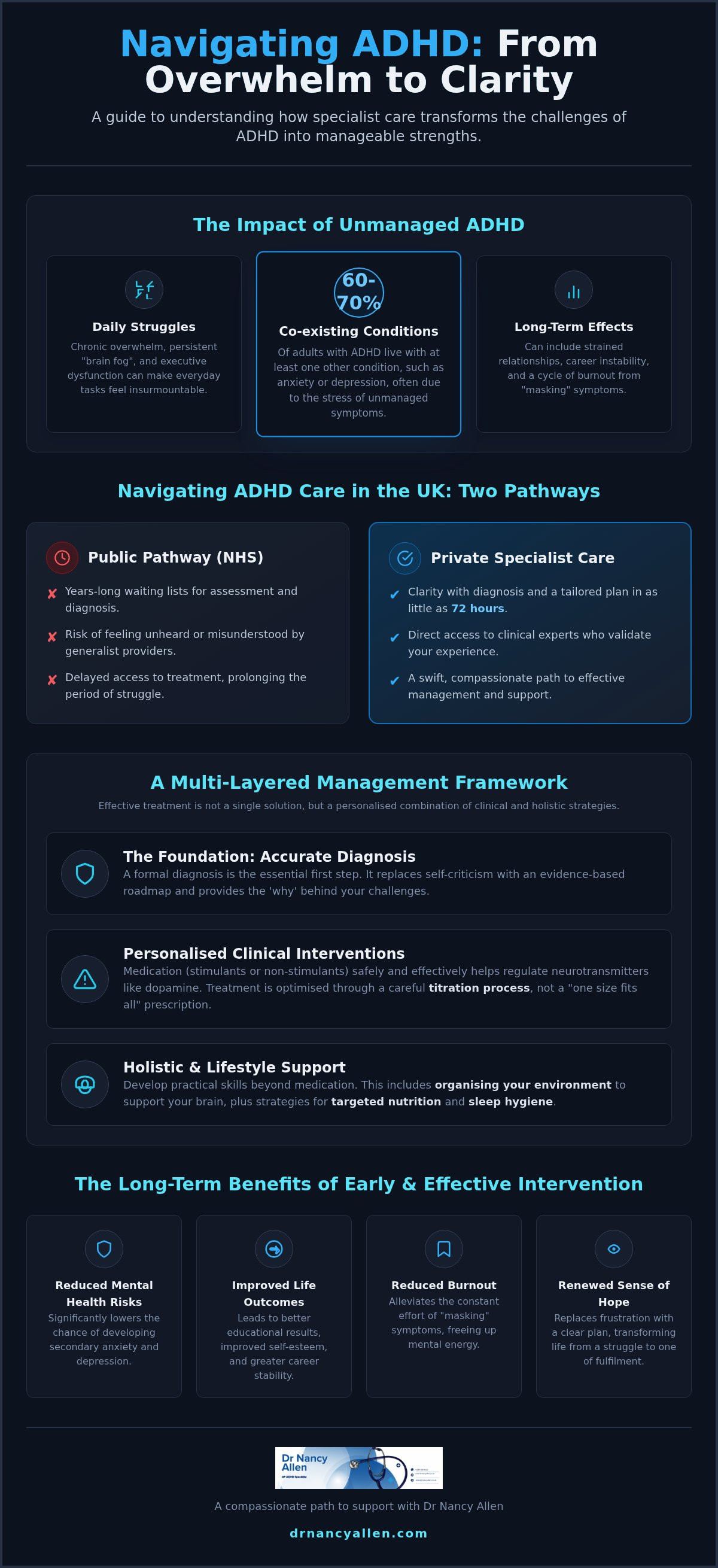
A formal diagnosis serves as the essential foundation for this transformation. It provides the clinical "why" behind years of misunderstood struggles, replacing self-criticism with a clear, evidence-based roadmap. When ADHD remains untreated, the persistent friction of executive dysfunction often leads to more than just missed deadlines. It can manifest as chronic anxiety, strained personal relationships, and a significant decline in career longevity. Statistics suggest that approximately 60 to 70 per cent of adults with ADHD live with at least one co-existing condition, such as depression or anxiety disorders, which often stem from the secondary stress of managing an unsupported neurodivergent brain.
Understanding Neurodiversity as a Treatable Profile
Reframing ADHD as a different way of processing information is a vital part of the therapeutic journey. Specialist care focuses on validating your lived experience whilst targeting the specific mechanics of executive dysfunction. Rather than applying generic productivity tips, clinical management addresses the biological roots of why certain tasks feel insurmountable. This tailored approach ensures that interventions feel supportive rather than restrictive, helping you to organise your life in a way that aligns with your brain's natural rhythm.
The Long-term Benefits of Early Intervention
Intervening early, whether in childhood or later in adult life, significantly reduces the risk of developing secondary mental health challenges. For children, this often translates to improved educational outcomes and a more stable sense of self-esteem. For adults, it frequently leads to better workplace retention and a reduction in the "burnout" that comes from masking symptoms. ADHD is a treatable condition that requires a multi-modal approach. By combining clinical expertise with personalised strategies, you can transform your experience from a daily struggle into a manageable part of a fulfilling, successful life.
Personalised Clinical Interventions: Medication and Beyond
Effective management of ADHD requires a shift away from the idea that a single pill or a generic checklist can solve every challenge. Because every neurodivergent brain is unique, a "one size fits all" approach often leaves patients feeling frustrated and misunderstood. Clinical care must be as nuanced as the individual it serves, balancing biological support with psychological insights and environmental adjustments. Recognising that adhd is a treatable condition means embracing a multi-layered strategy that addresses both the chemistry of the brain and the habits of daily life.
Pharmacological Treatment: Safety and Efficacy
Medication is often a cornerstone of management, yet it remains surrounded by unhelpful myths. Stimulants, the most common form of support, work by increasing the availability of dopamine and norepinephrine in the prefrontal cortex, which helps regulate attention and impulse control. For those who don't respond well to stimulants or have specific health considerations, non-stimulants offer a different pathway by targeting similar neurotransmitters over a longer period. Research into ADHD treatment options shows that these medications are both safe and effective when managed by a specialist.
Optimal results aren't achieved overnight. They require a careful process of titration, where dosages are adjusted based on your feedback and clinical observation. This unhurried, evidence-based approach ensures that you receive the maximum benefit with the fewest side effects. Regular reviews are essential to ensure the treatment continues to align with your changing needs and lifestyle. Understanding that adhd is a treatable condition through pharmacological support can be life-changing for those who have spent years struggling with focus.
Psychological and Behavioural Therapy
Biological support is only one part of the equation. Many adults and children carry years of "ADHD shame," a deep-seated feeling of inadequacy caused by years of struggling to meet neurotypical expectations. Cognitive Behavioural Therapy (CBT) is an invaluable tool for reframing these negative thought patterns. It helps you dismantle the internalised belief that you are "lazy" or "careless," replacing it with a compassionate understanding of your executive function.
Practical strategies are equally important. Therapy sessions often focus on:
Developing personalised systems for time management and organisation.
Improving emotional regulation to handle the "rejection sensitivity" often associated with ADHD.
Providing psychoeducation to family members to foster a supportive home environment.
By combining clinical expertise with these behavioural shifts, you can build a life that honours your strengths. If you're ready to explore how these interventions could work for you, a private ADHD assessment can provide the clarity needed to begin your journey toward a more manageable future.
Navigating ADHD Care in the UK: Private vs. Public Pathways
The current healthcare landscape in the United Kingdom presents a significant challenge for those seeking answers. With over 700,000 people currently on waiting lists for an assessment, the delay between recognising symptoms and receiving support can span several years. Whilst the NHS "Right to Choose" scheme offers a middle ground, even these wait times typically range from 6 to 18 months. This backlog creates a persistent barrier to the fundamental truth that adhd is a treatable condition. Without a timely diagnosis, many individuals remain stuck in a state of chronic overwhelm, unable to access the clinical care that could transform their daily lives.
Choosing a private pathway is often a decision driven by the need for speed, consistency, and direct access to specialists. Private assessments are usually available within 1 to 6 weeks, providing a much faster route to clarity than the 2 to 7 years often cited for standard NHS services. It's essential to ensure your provider is a General Medical Council (GMC) registered specialist. This registration is a mark of clinical authority and is often a prerequisite for your GP to accept a Shared Care Agreement later. Such an agreement allows for ongoing medication to be prescribed at the standard NHS charge, making long-term management more sustainable and affordable.
The Adult Journey to Clarity
For many adults, the realisation that they might have ADHD comes after a lifetime of feeling "different" or misunderstood. The UK system has historically focused on child-centric care, often leaving a gap for those seeking an adult adhd assessment. A private consultation offers an unhurried, empathetic environment where your history is explored with clinical precision. This process isn't just about a label; it's about validating your experience and providing a definitive answer that allows you to finally move forward with a sense of relief and purpose.
Supporting Children in the UK Education System
For parents, a timely diagnosis is often the key to unlocking essential school-based support. A formal clinical report is a vital tool when applying for an Education, Health and Care Plan (EHCP), ensuring that the school provides the necessary adjustments for your child's success. Identifying needs during critical developmental windows prevents the academic and social fallout that often accompanies untreated symptoms. Alongside clinical care, implementing holistic strategies for managing symptoms at home can provide a stable foundation for your child's growth. Because adhd is a treatable condition, early intervention ensures that a child's unique neurodivergence becomes a manageable part of their identity rather than a source of distress.
Holistic Strategies for Managing Symptoms Daily
Whilst clinical interventions provide the biological and psychological foundation for change, daily management is where long-term progress is sustained. Recognising that adhd is a treatable condition means understanding that your environment can either hinder or help your neurological profile. By building a personalised toolkit of physical and digital aids, you can reduce the cognitive load required to navigate your day. These strategies aren't meant to replace clinical care, but rather to complement it by creating a world that works with your brain instead of against it.
Environmental and Lifestyle Adjustments
Managing sensory overload is often the first step in creating an ADHD-friendly space. Reducing visual clutter at home and using noise-cancelling technology in the workplace can significantly lower the background "noise" that drains your focus. Many find success with the "body doubling" method, which involves working alongside another person to increase accountability and task completion. Consistent, structured routines serve as an external scaffold for the ADHD brain, reducing the cognitive load required to navigate daily transitions.
Lifestyle factors like sleep hygiene and nutrition also play a critical role in dopamine regulation. A lack of restorative sleep can mimic or worsen ADHD symptoms, making it harder for medication or therapy to be effective. Prioritising a protein-rich diet and regular movement can help stabilise energy levels and improve cognitive clarity. These small, daily choices form a supportive network that makes your symptoms feel far more manageable over time.
The Hormonal Connection: ADHD and Menopause
For many women, the intersection of hormonal health and neurodiversity is where they first realise that adhd is a treatable condition. Oestrogen plays a vital role in the production and regulation of dopamine; when levels begin to fluctuate during perimenopause and menopause, executive function often declines. This can lead to a sudden "worsening" of symptoms, such as increased forgetfulness or heightened emotional dysregulation, which many mistake for early-onset dementia or simple "ageing."
It's very common for women to seek a formal diagnosis for the first time during midlife as their previous coping mechanisms begin to fail. Integrating menopause management with ADHD treatment is essential for holistic wellbeing, ensuring that both hormonal and neurological needs are met simultaneously. If you've noticed your symptoms becoming more challenging during this life stage, seeking specialist menopause and ADHD care can provide the insight and restoration of confidence you deserve.
A Compassionate Path to Support with Dr Nancy Allen
Seeking professional help shouldn't be an additional source of stress in an already overwhelmed life. The philosophy of care at this practice is built on the fundamental belief that adhd is a treatable condition when clinical expertise is paired with genuine, empathetic validation. With 25 years of clinical experience, Dr Nancy Allen provides a steady hand through the assessment process, ensuring you feel heard and understood from your very first contact. This approach moves away from the sterile, detached feel of traditional institutions, opting instead for a partnership that prioritises your unique journey and well-being.
Waiting years for an answer can be detrimental to your mental health and career stability. To address the significant delays found in other pathways, this practice offers assessments and treatment plans in as little as 72 hours. This rapid turnaround is designed to provide immediate relief and a clear path forward, replacing months of uncertainty with clinical clarity. Consultations are conducted via secure online platforms, allowing you to access specialist care from the comfort and privacy of your own home, regardless of where you are in the UK. This accessibility ensures that high-quality, personalised support is never out of reach.
What to Expect During Your Consultation
Your journey begins with a thorough, unhurried assessment of your history and current symptoms. Rather than a rushed checklist, the consultation is a detailed dialogue that uses validated rating scales and comprehensive psychological evaluation to build a complete picture of your neurodivergent profile. We discuss various treatment options openly, ensuring your preferences and life goals are at the heart of the resulting plan. This collaborative process ensures that the management strategy feels sustainable and empowering rather than imposed.
Taking the Next Step Toward Clarity
Booking an initial assessment for yourself or your child is a straightforward process designed to reduce the anxiety of seeking help. Beyond the initial diagnosis, you'll receive ongoing support to refine your treatment plan and ensure your strategies remain effective as your circumstances change. Whether you're navigating the complexities of adult life or seeking support for a child's educational journey, professional insight is the key to unlocking potential. If you're ready to transform your experience, you can book your private ADHD assessment with Dr Nancy Allen today and begin the transition toward a more focused and fulfilling life.
Embracing a Future of Clarity and Focus
Reclaiming your life from chronic overwhelm starts with the fundamental understanding that adhd is a treatable condition. Throughout this guide, we've explored how a combination of specialist clinical care, tailored interventions, and holistic lifestyle adjustments can transform your daily experience. Whether you're navigating the complexities of midlife hormonal changes or seeking a timely diagnosis for your child, the right support replaces years of frustration with a clear, actionable roadmap for the future.
By choosing a private pathway, you sidestep the years-long wait times that so often hinder progress. Dr Nancy Allen provides unhurried, compassionate consultations with a unique expertise in the intersection of hormonal health and neurodiversity. With diagnosis and treatment plans available in as little as 72 hours, you can move rapidly from a state of uncertainty to a place of confidence and validation. You don't have to navigate this journey alone; expert guidance is ready to help you thrive.
Begin your journey to clarity with a private ADHD assessment
Frequently Asked Questions
Is ADHD really a treatable condition for adults?
Yes, adhd is a treatable condition for adults. Success is measured by effective management and the restoration of quality of life rather than a "cure." Treatment typically involves a combination of pharmacological support and Cognitive Behavioural Therapy (CBT) to address executive dysfunction. By tailoring these interventions to your specific career goals, you can significantly reduce the "brain fog" and overwhelm that often accompany the condition.
How long does it take to see results from ADHD treatment?
Results depend on the chosen intervention. Stimulant medications can often produce noticeable improvements in focus within the first few days of the correct dosage. However, behavioural changes and the benefits of psychological therapy typically require several weeks of consistent practice. This unhurried approach ensures you build new, sustainable habits that last a lifetime.
Can I manage ADHD without taking medication?
Medication isn't the only path. You can manage symptoms through environmental adjustments, structured routines, and specialised coaching. Many individuals find success by organising their workplace to reduce sensory input or using "body doubling" to maintain productivity. Whilst medication is a powerful tool, it's just one part of a wider toolkit that includes nutrition and sleep hygiene.
What is the most effective treatment for ADHD in children?
For children, the most effective management usually involves a multi-modal approach. This integrates clinical care with school-based support and behavioural therapy. An Education, Health and Care Plan (EHCP) can also ensure the classroom environment is supportive. Clinical expertise ensures that any treatment plan is developmentally appropriate and responsive to the child's unique needs.
Why are ADHD symptoms sometimes worse in women during menopause?
Oestrogen levels drop during menopause, which directly impacts dopamine regulation. Because oestrogen supports neurotransmitter function, its decline can lead to a sudden escalation in executive dysfunction and emotional volatility. It's important to remember that adhd is a treatable condition at any life stage. Integrating menopause management with neurodivergent care can restore your clarity and confidence.
How do I get a private ADHD diagnosis in the UK?
To secure a private diagnosis, book a consultation with a GMC-registered specialist. In this practice, we offer a streamlined process that provides a diagnosis and treatment plan in as little as 72 hours. This bypasses the years-long NHS waiting lists. These consultations are conducted via secure online platforms, making specialist expertise accessible across the UK from the comfort of your home.
What happens if I leave my ADHD untreated?
Leaving ADHD untreated often leads to chronic stress and a persistent sense of failure. Research indicates that up to 70 per cent of adults with untreated symptoms live with co-existing conditions like anxiety or depression. Over time, this can lead to career burnout, financial difficulties, and significant strain on personal relationships as the individual struggles to meet neurotypical expectations.
Are online ADHD assessments as valid as in-person ones?
Online ADHD assessments are clinically valid. They follow the same NICE guidelines as in-person consultations and are conducted by qualified specialists. The use of validated rating scales ensures a high level of diagnostic accuracy. Many patients actually find the online format less stressful, as it allows them to discuss their history from a familiar and comfortable environment.


Comments