


Rejection Sensitivity Disorder: ADHD & Emotional Health
- Dr Nancy Allen

- 1 day ago
- 12 min read
Have you ever experienced a minor critique or a perceived social slight as a literal, physical pain? For those living with ADHD, the agony of rejection sensitivity disorder is far from a personality flaw or a lack of resilience. It is an overwhelming emotional response that can leave you feeling perpetually on edge, whilst you constantly "mask" your true self or engage in people-pleasing just to stay safe from the next perceived blow. You aren't imagining the intensity of these moments, and you certainly aren't alone in feeling misunderstood by a world that tells you to "just toughen up."
This article explores why rejection feels so visceral for neurodivergent individuals and provides the clinical validation you've been seeking. You will discover how specialist support can help you manage these intense responses and learn how a private ADHD assessment can be the first step toward reclaiming your confidence. By understanding the neurological framework behind your emotions, you can move from a state of constant social anxiety toward a life of greater clarity and self-compassion.
Table of Contents
What is Rejection Sensitivity Disorder (RSD)?
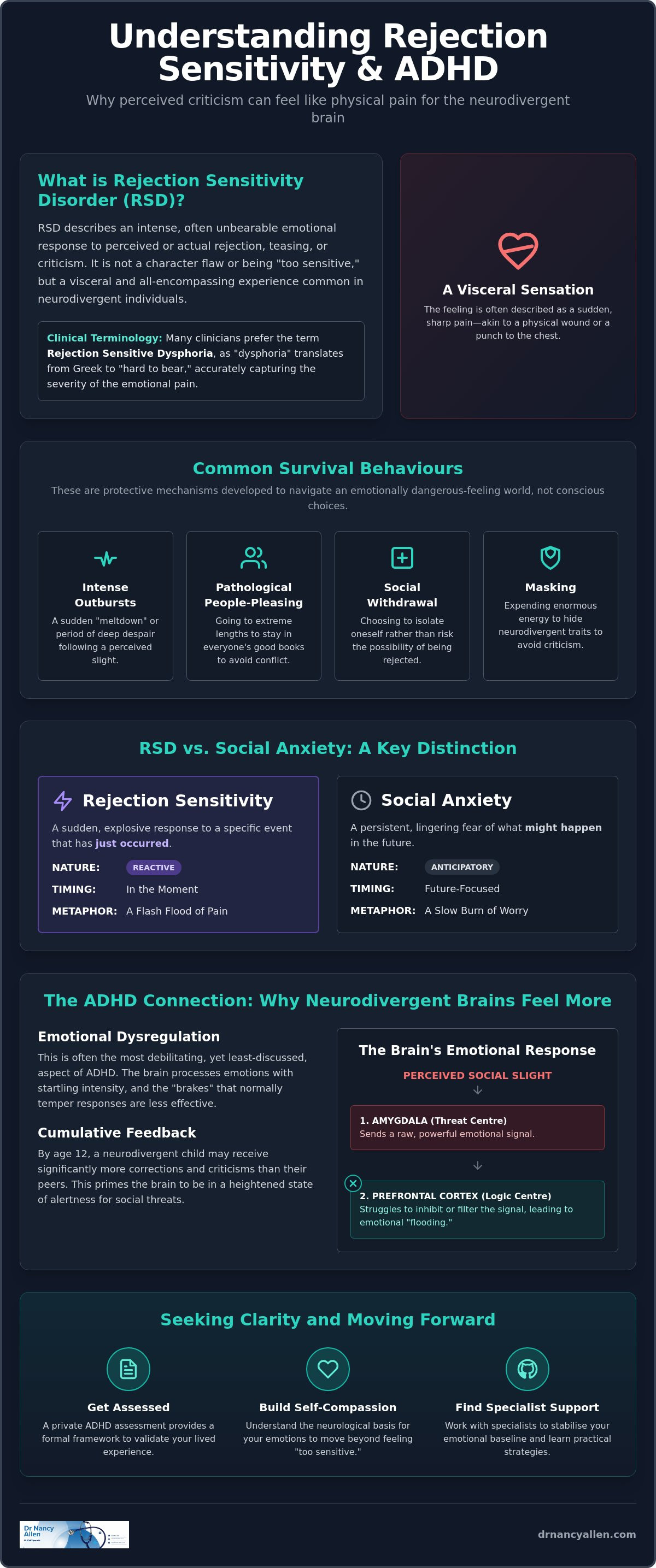
Rejection sensitivity disorder describes an intense, often unbearable emotional response to perceived or actual rejection, teasing, or criticism. It isn't merely a case of being "thin-skinned" or overly sensitive. For those living with neurodivergent conditions like ADHD, this experience is visceral and all-encompassing. Whilst the term "disorder" is frequently used by patients seeking clarity, many clinicians prefer the term "dysphoria," which literally translates from Greek as "hard to bear." This distinction is important because, although it isn't currently recognised as a standalone diagnosis in the DSM-5, it remains a core feature of the lived experience for many.
The sensation is often described as a sudden, sharp pain, almost like a physical wound or a punch to the chest. Historically, similar emotional patterns were identified using terms like Hysteroid dysphoria, highlighting that the medical community has long observed this specific type of extreme emotional vulnerability. When it strikes, the brain's ability to process logic or perspective is momentarily bypassed, leaving the individual in a state of raw, unmediated emotional agony.
Common Symptoms and Behaviours
Living with this level of sensitivity often leads to the development of protective behaviours. These aren't choices, but survival mechanisms designed to navigate a world that feels emotionally dangerous. Common signs include:
Intense emotional outbursts: A sudden "meltdown" or period of deep despair following a perceived slight.
Pathological people-pleasing: Going to extreme lengths to stay in everyone's good books to avoid any potential conflict.
Social withdrawal: Choosing to isolate rather than risk the possibility of being rejected by peers or colleagues.
Masking: Expending enormous energy to hide neurodivergent traits, ensuring you don't stand out in a way that might invite criticism.
The Difference Between RSD and Social Anxiety
It's easy to confuse these two experiences, but they operate differently within the brain. Social anxiety is typically anticipatory; it's the persistent, lingering fear of what might happen in the future. You might worry for weeks about an upcoming presentation or a party. In contrast, rejection sensitivity disorder is reactive. It's a sudden, explosive response to a specific event that has just occurred. Whilst anxiety is a slow burn of worry, RSD is a flash flood of pain. Recognising this difference is vital for effective management, as the strategies used to calm a persistent worry often fail to address the sudden neurological storm of an RSD episode.
The ADHD Connection: Why Neurodivergent Brains Feel More
Emotional dysregulation is often the most debilitating, yet least discussed, aspect of living with ADHD. Whilst official diagnostic criteria frequently focus on attention spans and hyperactivity, the internal reality for many is defined by a brain that processes emotions with startling intensity. Research indicates that a vast majority of adults with ADHD experience this type of emotional over-reactivity. This deep-seated connection is why Rejection Sensitive Dysphoria and ADHD are so frequently linked in clinical discussions. For the neurodivergent individual, the "brakes" that usually temper emotional responses are often less effective, leading to a state where feelings aren't just felt; they are endured.
The prefrontal cortex acts as the brain's executive command centre, responsible for logic and impulse control. In an ADHD brain, this region often struggles to inhibit the raw signals sent from the amygdala, the area responsible for processing threats and emotions. When you perceive a social slight, your brain may fail to filter that information, leading to an immediate sense of "flooding." This neurological setup is further complicated by an interest-based nervous system. Because ADHD brains are driven by connection and novelty rather than just "importance," the threat of losing social approval feels like a direct threat to your primary source of dopamine and stability. Seeking a specialist ADHD assessment can provide the necessary framework to understand whether your emotional intensity is a neurological trait rather than a character flaw.
A lifetime of negative feedback also plays a significant role. By the time a neurodivergent child reaches age 12, they may have received significantly more corrections and criticisms than their neurotypical peers. This cumulative trauma creates a heightened state of alertness. Over time, the brain becomes primed to spot rejection before it even happens, turning rejection sensitivity disorder into a defensive, albeit painful, crouch against the world.
Neurobiology and Emotional Regulation
When the brain's emotional centres are overwhelmed, the sensation is one of being "flooded." This makes it incredibly difficult to self-soothe or gain perspective in the heat of the moment. Because executive functions are tied to emotional control, the same mechanisms that make it hard to organise a desk also make it hard to organise a response to criticism. The result is an emotional experience that feels out of proportion to the event, yet entirely real to the person experiencing it.
The Cycle of Masking and Burnout
Many individuals spend years "masking," which involves carefully monitoring their behaviour and suppressing their natural traits to avoid being judged or rejected. This constant vigilance is exhausting. Masking is essentially a survival strategy that often backfires into chronic burnout, as the energy required to "act normal" leaves little room for actual living. Suppressing your rejection sensitivity disorder symptoms doesn't make them disappear; it simply pushes the emotional toll deeper, eventually leading to total exhaustion and social withdrawal.
Hormones and Neurodiversity: The Impact of Life Stages
Hormonal fluctuations aren't just about physical symptoms; they are deeply intertwined with how our brains process emotion. For individuals with ADHD, the transition into perimenopause or menopause can feel like a sudden loss of previously reliable coping mechanisms. This happens because oestrogen plays a critical role in the synthesis and transport of dopamine. When oestrogen levels begin to fluctuate and eventually decline, the already precarious dopamine balance in an ADHD brain is further disrupted. This biochemical shift often causes a significant spike in the intensity of rejection sensitivity disorder, making social interactions that were once manageable feel fraught with potential pain. Validating this experience is essential, as many people in midlife feel they are "suddenly" becoming more sensitive or less resilient without understanding the neurological driver behind it.
ADHD and the Menopause Transition
Many women find that their ADHD symptoms, which they may have masked successfully for decades, become impossible to ignore in their 40s or 50s. It's a "double hit" where the cognitive fog of menopause meets the executive dysfunction of ADHD. Understanding the clinical nuances of Managing Rejection Sensitive Dysphoria is essential during this stage. Whilst Hormone Replacement Therapy (HRT) can be transformative, it often needs to be paired with ADHD-specific support to address the unique emotional dysregulation that oestrogen alone cannot fix. What might look like "typical" menopausal mood swings are often episodes of exacerbated rejection sensitivity, triggered by the brain's reduced capacity to filter social feedback and maintain emotional stability.
Navigating Neurodiversity in the Workplace
In a professional setting, these internal shifts can have a profound impact on confidence and career progression. A standard performance review or a casual comment from a manager can be perceived as a devastating personal failure rather than constructive feedback. This isn't a lack of professionalism; it's a neurological response that makes team meetings and collaborative projects feel like emotional minefields. When teams don't understand the mechanics of emotional intensity, the resulting misunderstandings can lead to burnout or premature resignation. Creating an inclusive culture is vital for retaining neurodivergent talent. Managers and leadership teams can benefit from corporate wellbeing talks to better understand how to support employees through these challenges. By acknowledging the reality of rejection sensitivity disorder in the office, organisations can move away from a culture of fear and toward one of psychological safety and genuine productivity.
Living with Rejection Sensitivity: Strategies for Management
Managing rejection sensitivity disorder requires more than just willpower or "thick skin." Common advice like "don't take it personally" fails because it ignores the physiological nature of the response. For a neurodivergent brain, the pain is as real as a physical wound. Effective management starts with levelling the playing field. This often involves clinical support, where medication can help regulate the sudden emotional spikes that characterise the condition. By stabilising the neurological baseline, you gain the precious seconds needed to apply cognitive strategies before the emotional flooding takes over.
Creating a rejection recovery plan is a vital proactive step. When you feel that familiar wave of agony, having a pre-set list of actions reduces the cognitive load of deciding what to do. This might include stepping away from a workplace meeting or silencing notifications for an hour to allow the nervous system to settle. Building a supportive environment is equally crucial. This means surrounding yourself with colleagues and friends who understand your neurodiversity, reducing the frequency of triggers through clear communication and psychological safety. If you are struggling to find this balance, you can book a private ADHD consultation to discuss a personalised management plan.
Practical Coping Mechanisms
The "Wait and Validate" technique is particularly effective for navigating daily triggers. Instead of fighting the pain, you acknowledge it: "I am feeling an RSD flash right now, and it is painful." You then commit to waiting at least twenty minutes before responding to the trigger. Sensory grounding also helps pull the brain out of an emotional spiral. Using cold water on your face or holding a weighted object can force the nervous system to prioritise physical sensations over emotional ones. Communicating these needs to those around you isn't a sign of weakness; it's a professional and personal boundary that protects your wellbeing.
Therapeutic Approaches and Support
Traditional talk therapy can sometimes feel frustrating for those with RSD because the issue isn't always a distorted thought but a raw neurological reaction. Seeking a therapist who specialises in neurodiversity ensures that your sessions focus on practical management rather than just abstract analysis. Peer support groups can also be transformative, as they strip away the shame that often accompanies these intense reactions. Professional validation can be the first step toward healing, providing the clinical context you need to stop blaming yourself for your brain's wiring. Understanding that your reactions have a neurological basis allows you to replace self-criticism with effective, evidence-based support.
Seeking Clarity: The Path to an ADHD Diagnosis
Seeking a formal diagnosis is often the turning point where personal shame is replaced by a clear clinical strategy. Whilst self-recognition is a powerful first step, an official assessment provides the necessary framework to make sense of a lifetime of experiences. It moves the conversation away from perceived personality flaws and toward a biological understanding of how your brain processes the world. For those struggling with rejection sensitivity disorder, this validation is frequently life-changing. It offers a definitive explanation for the physical pain of social slights and provides a legitimate basis for requesting the support you deserve in both your personal and professional life.
A private medical consultation for ADHD is a thorough and unhurried process. Unlike the often-strained resources of public health pathways, a private assessment allows for a deep dive into your history, current challenges, and emotional patterns. A holistic approach is particularly beneficial, especially for women, as it considers the intersection of neurodiversity and hormonal health. By looking at the complete picture, a specialist can determine if your symptoms are being exacerbated by life stages like perimenopause, ensuring that your treatment plan is as accurate and effective as possible. This clarity unlocks access to targeted treatments and formal workplace adjustments that can significantly reduce daily friction.
The Private Assessment Journey
The speed and accessibility of private care are major factors for those who feel they are at a breaking point with their emotional health. In many cases, you can move from your initial enquiry to a full diagnosis and treatment plan within 72 hours. This rapid turnaround is vital for restoring a sense of control. Secure online consultations mean that patients across the UK can access specialist expertise from the comfort of their own homes, removing the additional stress of travel. For a more detailed look at the process, you may find our guide to an adult adhd assessment a helpful resource as you prepare for your consultation.
Personalised Treatment and Ongoing Care
Effective management of ADHD and rejection sensitivity disorder requires a nuanced, personalised touch because a "one size fits all" approach rarely works for complex neurodivergent needs. Your journey doesn't end with a diagnosis; it begins with a collaborative relationship with a specialist GP who understands the intricacies of your care. From fine-tuning medication to providing evidence-based lifestyle strategies, ongoing support ensures that your treatment evolves alongside your needs. Reclaiming your quality of life starts with this professional clarity, allowing you to build a future based on self-compassion and expert insight.
Reclaiming Your Emotional Wellbeing
Living with the weight of rejection sensitivity disorder often feels like navigating a world without a protective layer; every social interaction carries the risk of visceral, physical pain. By understanding that this intensity is rooted in your brain's unique wiring and influenced by hormonal shifts, you can finally move away from self-blame. Clinical validation isn't just about a label. It's about gaining the practical tools to stabilise your emotional baseline and communicate your needs with confidence.
You don't have to navigate this journey alone. Dr Nancy Allen offers compassionate, patient-centric care with specialist expertise in the complex overlap between ADHD and menopause. You can receive a comprehensive assessment and a personalised treatment plan within 72 hours, providing the clarity you need to move forward. Book a private ADHD assessment with Dr Nancy Allen today to begin your path toward emotional stability. Reclaiming your quality of life is possible, and that transformation starts with expert support.
Frequently Asked Questions
Is rejection sensitive dysphoria a real disorder?
Rejection sensitive dysphoria is a descriptive clinical term rather than a standalone diagnosis in official manuals like the DSM-5. However, it represents a very real neurological phenomenon experienced by a significant majority of adults with ADHD. Whilst clinicians often categorise it under the broader umbrella of emotional dysregulation, the physical and emotional pain described by patients is a documented reality of neurodivergent brain structure and function.
Can you have RSD without having ADHD?
Whilst rejection sensitivity disorder is most commonly associated with ADHD, it can also be experienced by individuals with other neurodivergent conditions, such as autism. It is fundamentally linked to how the brain processes social information and emotional stimuli. If you experience these symptoms without an ADHD diagnosis, it may be helpful to explore a broader neurodiversity assessment to understand the underlying cause of your emotional intensity and reactivity.
Does ADHD medication help with rejection sensitivity?
Yes, ADHD medications can be highly effective in managing the intensity of these emotional responses. Both stimulants and certain non-stimulants help by "levelling the playing field," allowing the prefrontal cortex to better regulate the sudden emotional spikes sent from the brain's emotional centres. This doesn't remove the emotion entirely but provides the necessary cognitive space to process the feeling before it becomes an overwhelming "flooding" sensation.
How do I explain my rejection sensitivity to my partner?
Explain to your partner that your brain processes social rejection or criticism as a literal, physical pain rather than just a hurt feeling. You might describe it as a sudden "emotional allergy" or a neurological "short circuit" that temporarily bypasses your logic. Sharing clinical resources can help them understand that your reaction isn't a choice or a lack of resilience, but a symptom of your neurodivergent wiring.
What is the difference between RSD and BPD (Borderline Personality Disorder)?
The primary difference lies in the duration and trigger of the emotional response. In rejection sensitivity disorder, the pain is usually a sudden, intense reaction to a specific event that resolves relatively quickly once the trigger passes. Borderline Personality Disorder typically involves a more persistent fear of abandonment and longer-lasting periods of emotional instability. A specialist assessment is vital to distinguish between the two, as the management strategies differ significantly.
Can menopause make rejection sensitivity worse?
Yes, hormonal transitions such as perimenopause and menopause can significantly exacerbate rejection sensitivity. As oestrogen levels decline, dopamine production—which is already precarious in the ADHD brain—drops further, making it harder to regulate emotions. Many women find that symptoms they previously managed through "masking" become much more intense during midlife, requiring a combined approach that addresses both neurodiversity and hormonal health.
How is RSD diagnosed in the UK?
In the UK, rejection sensitivity is typically identified as part of a comprehensive ADHD assessment rather than as a standalone diagnosis. During a private consultation, a specialist GP or psychiatrist will evaluate your emotional history alongside other core symptoms of neurodiversity. This thorough process ensures that your emotional dysregulation is understood within the context of your overall brain health, allowing for a more accurate and supportive management plan.
Are there specific workplace adjustments for RSD?
Practical workplace adjustments can include requesting that constructive feedback is delivered in writing rather than in sudden meetings. You might also benefit from "buffer time" after performance reviews or the ability to work from home following high-stress social interactions. Inclusive employers who understand neurodiversity can help create a psychologically safe environment that reduces the frequency of triggers and prevents the exhaustion associated with constant emotional masking.


Comments