


ADHD and Anger: Strategies for Emotional Dysregulation

Imagine the moment a minor irritation escalates into a flash of white-hot rage, leaving you standing amongst the emotional wreckage of a strained conversation with your child or partner. You didn't intend to lose your temper, yet the shame spiral that follows feels just as debilitating as the outburst itself. If you've ever felt truly out of control during these sudden storms, it's important to understand that this isn't a failure of character. There is a well-documented clinical link between ADHD and anger, rooted in the brain's physiological difficulty in "braking" intense emotions.
We recognise how exhausting it is to live with this constant unpredictability. This article will provide the validation you've been seeking by explaining the biological basis of emotional dysregulation. You'll learn practical tools to help you pause before reacting, whilst discovering how a specialist assessment can offer the clarity needed to transform your daily life. We'll outline a clear path toward professional support, ensuring you have the tailored strategies required to regain your emotional steady hand and restore confidence in your most valued relationships.
Table of Contents
Why ADHD and Anger Often Go Hand in Hand
Many people still view ADHD through a narrow lens of distracted children or hyperactive adults. However, for many, the most disruptive symptom isn't a lack of focus, but the intense, sudden volatility of their moods. The link between ADHD and anger is frequently overlooked in clinical settings, yet it's often the primary reason individuals seek a private assessment. This isn't about being an "angry person"; it's about a neurodivergent brain that processes emotions with an all-or-nothing intensity that can feel impossible to manage without the right support.
Typical anger management techniques, such as counting to ten or "taking a deep breath," often fail those with ADHD. These strategies assume a level of emotional lead time that simply doesn't exist for a neurodivergent person. By the time you've reached "two," the emotional floodgates have already opened. Understanding what is emotional dysregulation? helps clarify that this isn't a failure of character or a lack of willpower. Instead, it's a physiological challenge in modulating the volume of one's feelings, leading to reactions that often feel disproportionate to the situation at hand.
The Difference Between Irritability and ADHD Rage
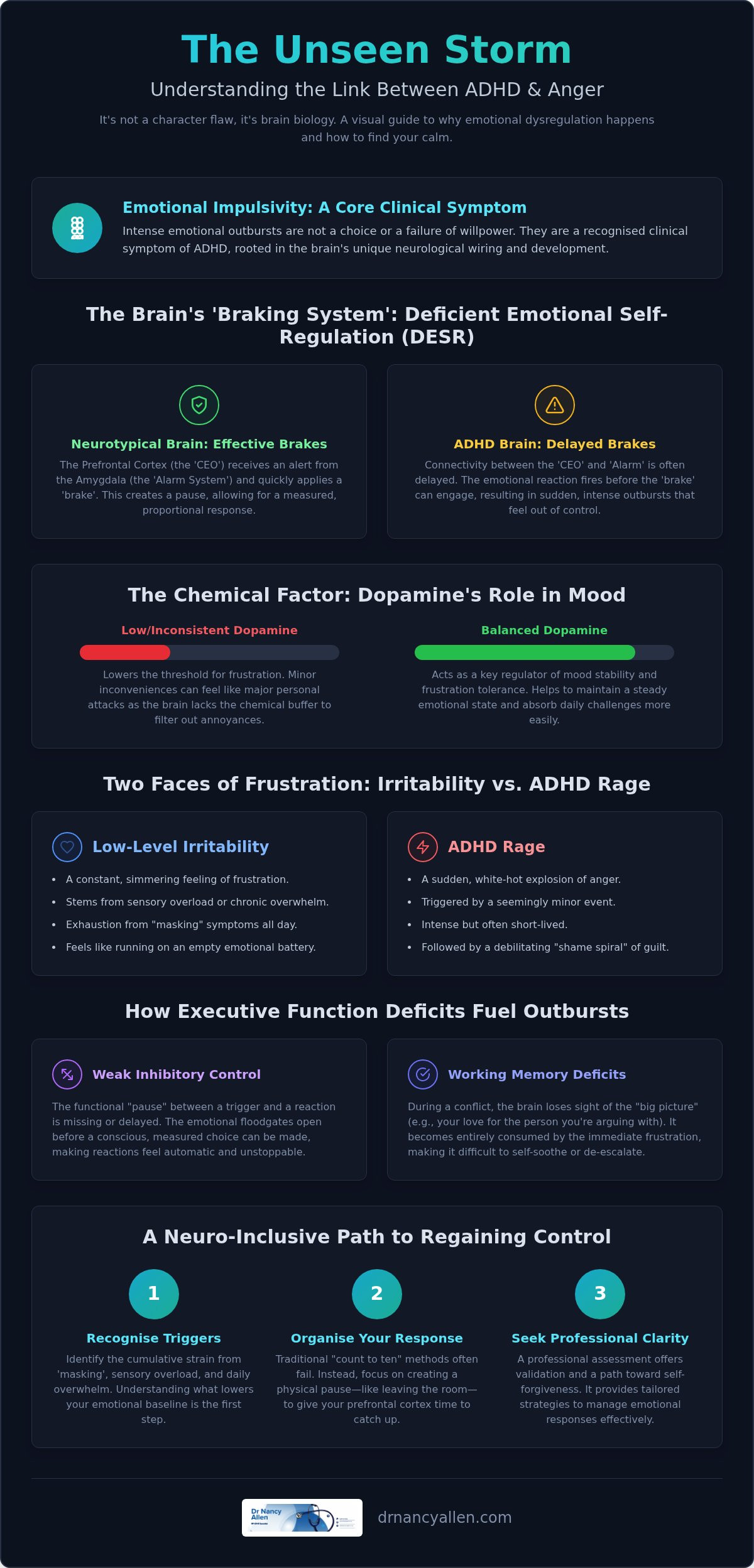
It's helpful to distinguish between the low-level irritability that simmers throughout the day and the sudden explosion often called "ADHD rage." Irritability often stems from sensory overload, chronic overwhelm, or the exhaustion of "masking" symptoms to fit into neurotypical environments. In contrast, ADHD rage is a white-hot response to a minor trigger. These outbursts are usually short-lived but intense. Once the storm passes, it's almost always followed by a profound "shame spiral," where the individual feels intense guilt for a reaction they couldn't seem to stop, further damaging their self-esteem and relationships.
How Executive Function Deficits Impact Emotional Control
The root of this struggle lies in executive function, specifically inhibitory control. In a neurotypical brain, there's a functional "pause" between a provocation and a reaction. This momentary gap allows the brain to evaluate the situation and choose a measured response. In the ADHD brain, this inhibitory "brake" is often delayed or less effective. Additionally, deficits in working memory mean that during a conflict, you might lose sight of the "big picture," such as your love for the person you're arguing with. The brain becomes entirely consumed by the immediate frustration, making it incredibly difficult to self-soothe once the emotional trigger has been pulled. This is why ADHD and anger are so intrinsically linked; the brain's hardware for emotional regulation is simply wired differently.
The Biological Basis of Emotional Dysregulation
To move beyond the shame of emotional outbursts, it's essential to understand that your brain's hardware is functioning differently. In clinical terms, this is often described as Deficient Emotional Self-Regulation (DESR). DESR is the brain's inability to modulate the intensity of emotional expressions. Whilst most people can instinctively turn down the volume on a rising tide of frustration, those living with ADHD often find the volume dial is either stuck at zero or turned up to maximum. Research into the biological basis of emotional dysregulation suggests that this isn't just a behavioural choice but a reflection of how the brain matures. The physical "braking system" in the prefrontal cortex typically develops more slowly in neurodivergent individuals, meaning the ability to inhibit a reaction is physically less robust.
Dopamine plays a pivotal role in this process. This neurotransmitter is responsible for far more than just focus; it's a key regulator of mood stability and frustration tolerance. When dopamine levels are inconsistent, the threshold for irritation drops significantly, making daily life feel like a series of obstacles. This makes the link between ADHD and anger particularly potent. Small inconveniences that others might dismiss can feel like major personal affronts because the neurodivergent brain lacks the chemical buffer needed to maintain a steady emotional state and filter out minor annoyances before they trigger a response.
The Role of the Prefrontal Cortex and Amygdala
Think of the prefrontal cortex as the brain's logical "CEO" and the amygdala as its "alarm system." In a typical brain, the CEO quickly reviews the alarm and decides if a reaction is necessary. However, neurodivergent brains often show delayed connectivity between these two centres. This lag means the amygdala can effectively hijack your system before the logical centre has even logged the event. For many, "thinking before speaking" isn't just a suggestion they're ignoring; it's a physiological challenge that their internal wiring isn't currently equipped to handle in the heat of the moment. This lack of inhibitory control makes reactions feel instantaneous and uncontrollable.
Hormonal Fluctuations and ADHD: The Perimenopause Link
For women, the relationship between ADHD and anger is often complicated by hormonal shifts that affect brain chemistry. Oestrogen is closely linked to dopamine production and sensitivity. As levels begin to decline during perimenopause, ADHD symptoms that were previously manageable can suddenly become overwhelming. This intersection of "menopause rage" and neurodivergent dysregulation is a common reason why many women only seek a diagnosis in midlife. They find that their usual coping mechanisms no longer hold, and the emotional storms become more frequent and intense. If you've noticed a sudden shift in your ability to manage your moods, a specialist ADHD assessment can provide the clarity you need to understand the interplay between your hormones and your neurodiversity.
Identifying the Triggers of ADHD-Related Anger
Understanding the link between ADHD and anger requires looking beyond the moment of the outburst to the events that preceded it. Often, an emotional explosion is the result of a slow, cumulative build-up rather than a single isolated event. For many adults, "masking" plays a significant role. This is the process of consciously or unconsciously suppressing neurodivergent traits to fit into social or professional environments. Whilst masking might help you navigate a workday, it is incredibly draining. By the time you return home, your emotional reserves are depleted, making you far more susceptible to "after-school restraint collapse," where even a minor domestic frustration can trigger a disproportionate response.
Transitions and interruptions are also primary triggers. The ADHD brain often enters a state of "hyperfocus," and being suddenly pulled out of this state can feel physically jarring. It isn't just a matter of being annoyed; it's a cognitive shock that the brain's executive functions struggle to process. Tracking these patterns is a vital step in regaining control. When you begin to predict which situations cause the most friction, you can move from a state of constant reaction to one of proactive preparation. Recognising these patterns helps remove the element of surprise that often fuels the intensity of an outburst.
Sensory Overload and Environmental Stressors
Sensory processing issues are frequently at the heart of emotional volatility. When your environment is too loud, too bright, or too cluttered, your brain is constantly working overtime to filter out irrelevant stimuli. This reduces your "emotional bandwidth," leaving very little room to handle the normal stresses of life. This leads to the "final straw" phenomenon. The reason a small comment from a partner causes a major reaction isn't the comment itself; it's the fact that your system was already at 95% capacity due to sensory overload. Creating a "low-arousal" environment, such as using noise-cancelling headphones or dimming lights, can significantly increase your daily tolerance levels.
Rejection Sensitive Dysphoria (RSD) and Social Conflict
A particularly intense trigger for ADHD and anger is Rejection Sensitive Dysphoria (RSD). This is an extreme emotional sensitivity to the perception of being rejected, criticised, or falling short of expectations. For someone with RSD, a minor piece of feedback can feel like a devastating personal attack. To protect against this intense pain, the brain often defaults to a defensive "fight" response. This manifest anger serves as a shield, but it often pushes loved ones away and creates a cycle of conflict that erodes trust. Recognising RSD as a neurological response rather than a character flaw is often the first step in healing relationship dynamics and developing healthier communication strategies.
Practical Techniques to Organise Your Emotional Response
Transitioning from a reactive state to a proactive management strategy is the most effective way to address the intersection of ADHD and anger. For many, the traditional advice to "just take a breath" feels dismissive because it ignores the speed at which neurodivergent impulsivity takes hold. Instead of relying on internal willpower, which is often compromised during an emotional storm, we focus on externalising the "pause." This means creating physical or environmental cues that interrupt the escalation before it reaches a point of no return.
Effective communication with your support network is equally vital. Discussing your triggers and your plan for management whilst you are in a calm, regulated state allows your loved ones to become partners in your progress rather than targets of your frustration. By explaining that a sudden need for space is a tool for safety rather than a form of rejection, you can preserve the trust in your relationships whilst you work through these challenges. It's about building a shared language that acknowledges the biological reality of your experience.
Immediate Grounding Tools for 'Heat of the Moment' Rage
When you feel the physical signs of rising rage, you need a sensory interruption to break the amygdala's hold. A "cold water shock", such as splashing your face with freezing water, can trigger the mammalian dive reflex. This naturally lowers your heart rate and forces a nervous system reset. Similarly, the "Five Things" exercise helps re-engage the prefrontal cortex by asking you to name five things you can see, four you can touch, three you can hear, two you can smell, and one you can taste. These aren't just distractions; they are physiological tools to ground you in the present moment. If these fail, a pre-agreed "time-out" should be used. This isn't a punishment; it's a strategic withdrawal to a safe space until your logical brain can come back online.
Long-term Lifestyle Adjustments and Cognitive Strategies
Regulation isn't just about what you do during a crisis; it's about raising your baseline tolerance. Regular physical exercise is essential, as it helps regulate dopamine levels and provides a healthy outlet for pent-up frustration. Sleep hygiene is another non-negotiable factor. Even minor sleep deprivation can significantly increase irritability and reduce inhibitory control the following day. Developing a personalised management plan with a specialist is the most reliable way to integrate these habits into a sustainable routine. If you're ready to move beyond the shame of emotional outbursts and regain control, booking a professional ADHD assessment is the first step toward a tailored solution that respects your unique neurobiology.
Navigating the Path to Clarity and Support
Living with the volatility of ADHD and anger often leaves a trail of regret and strained connections. For many, a formal diagnosis is the most powerful tool for self-forgiveness because it provides the clinical evidence needed to stop viewing yourself as a "bad person" and start understanding yourself as someone with a "struggling brain." This shift in perspective is transformative. Clinical validation replaces years of confusion with immediate clarity, allowing you to move away from the frustration of failed self-help and toward evidence-based strategies that respect your unique neurobiology.
Working with a specialist GP who possesses dual expertise in both ADHD and hormonal health ensures that your care is cohesive and comprehensive. Midlife can often exacerbate emotional symptoms, making it vital to have a practitioner who understands how these factors intersect. You aren't just managing symptoms in isolation; you're addressing the complex interplay of neurodiversity and biology with a steady, expert hand. This collaborative approach focuses on restoration rather than just symptom management, prioritising your long-term quality of life.
The Importance of Clinical Validation Through Assessment
What should you expect from a comprehensive adult ADHD assessment? It is a thorough, unhurried process designed to provide a complete picture of your neurobiology and personal history. One of the greatest benefits of choosing a private assessment is the rapid access to specialist care. With a 72-hour turnaround for diagnosis and treatment plans, the period of diagnostic anxiety is kept to an absolute minimum. This process doesn't just look for ADHD; it carefully uncovers co-existing conditions like anxiety or depression, which frequently coexist with ADHD and anger, ensuring that every aspect of your wellbeing is addressed.
Personalised Treatment Plans for Emotional Stability
A diagnosis is the beginning of a restoration of confidence and a path toward long-term emotional stability. Your treatment plan shouldn't be a generic list of instructions. Instead, it should be a holistic blend of medication, where appropriate, tailored lifestyle adjustments, and compassionate support. This multi-layered strategy is designed to create a more resilient emotional baseline. When your brain has the chemical and structural support it needs, those "white-hot" moments of rage become less frequent and far more manageable. You can finally reclaim your sense of self and begin the rewarding work of repairing and strengthening your most valued relationships.
Reclaiming Your Emotional Steady Hand
Understanding the physiological roots of emotional dysregulation is the first step toward breaking the cycle of shame. We've explored how the ADHD brain's internal braking system differs and how identifying specific triggers like sensory overload or RSD can transform your daily experience. By moving from reactive outbursts to proactive management, you can begin to restore the relationships that matter most. A formal diagnosis acts as a vital bridge between feeling out of control and understanding the biological reality of your struggling brain, offering the validation you deserve.
If you're ready to gain definitive clarity and move forward, you can book a private ADHD assessment with Dr Nancy Allen. With over 25 years of clinical experience, Dr Allen provides compassionate, expert care through secure online consultations nationwide. You'll receive a specialist diagnosis and a tailored treatment plan within 72 hours, avoiding lengthy wait times whilst gaining the practical tools needed to manage ADHD and anger effectively. You don't have to navigate these emotional storms alone; professional support offers a clear, structured path toward a calmer and more confident future.
Frequently Asked Questions
Is anger a formal symptom of ADHD in the UK?
Anger is not currently listed as a core diagnostic symptom of ADHD in the UK. However, clinicians widely recognise emotional dysregulation as a fundamental aspect of the neurodivergent experience. Whilst the official criteria focus on inattention and hyperactivity, the difficulty in modulating emotional intensity is a primary reason many adults seek a private assessment. Understanding this distinction helps patients move away from self-blame and toward an accurate biological understanding of their struggles.
What is the difference between ADHD rage and bipolar disorder?
The primary difference lies in the duration and triggers of the emotional shifts. ADHD rage is typically episodic, sudden, and short-lived, often occurring as an immediate reaction to a specific trigger or frustration. In contrast, Bipolar Disorder involves distinct periods of mania or depression that last for days or weeks at a time. A specialist assessment is essential to distinguish between these conditions, as they require very different clinical management strategies and treatment plans.
Can ADHD medication help with anger and irritability?
ADHD medication can be highly effective in reducing anger and irritability by improving the brain's inhibitory control. By regulating dopamine levels, these treatments help strengthen the internal "braking system" that allows for a pause before a reaction occurs. Many patients report that medication increases their emotional bandwidth, making them less susceptible to the sudden outbursts associated with ADHD and anger. This pharmaceutical support often makes other cognitive strategies much easier to implement.
Why does my ADHD anger seem to get worse during my period or menopause?
This occurs because oestrogen plays a vital role in dopamine production and sensitivity within the brain. When oestrogen levels drop during your menstrual cycle or perimenopause, your brain's ability to regulate mood and focus is significantly compromised. This hormonal shift effectively turns down the volume on your cognitive control, making emotional dysregulation more intense. Specialist care from a practitioner experienced in both ADHD and menopause is crucial for managing these complex intersections effectively.
How can I explain my ADHD outbursts to my partner without making excuses?
Start by explaining that your outbursts have a biological basis rather than being a choice or a character flaw. Use the term "emotional dysregulation" to describe the physiological difficulty in pausing a reaction. It's helpful to clarify that whilst ADHD is the reason for the behaviour, it isn't an excuse to avoid responsibility. Sharing your management plan and asking for their support in identifying triggers can help transform a source of conflict into a collaborative effort.
Is ADHD rage more common in men or women?
Research suggests that emotional dysregulation affects both men and women, though the presentation of ADHD and anger can differ. Men may be more likely to exhibit externalised aggression, whilst women often internalise their frustration or "mask" their symptoms until they reach a breaking point. Because women are frequently diagnosed later in life, they may have a longer history of the shame spiral. Both genders benefit equally from tailored, neuro-inclusive management strategies.
Can children with ADHD also experience these intense anger episodes?
Yes, children with ADHD frequently experience intense emotional episodes, which are often misinterpreted as simple "naughty" behaviour or tantrums. In reality, these are manifestations of a developing brain struggling with inhibitory control and sensory processing. Recognising these as episodes of dysregulation rather than defiance allows parents to respond with empathy and structured support. Early intervention through a child ADHD assessment can provide families with the tools needed to manage these outbursts before they impact school life.
What should I do if I feel an ADHD rage attack coming on?
The most effective immediate action is to physically remove yourself from the triggering environment. Use a pre-agreed phrase with those around you to signal that you need a "strategic time-out" to regulate. Engaging in a sensory interruption, such as splashing your face with cold water or performing a grounding exercise, can help reset your nervous system. By creating this physical distance, you give your logical brain the necessary time to come back online and regain control.


Comments