


12 ADHD Symptoms at Work: Signs You May Need an Assessment

Have you ever wondered why you're utterly exhausted by mid-afternoon whilst your colleagues seem to be coasting through their to-do lists? You might feel like you're working twice as hard just to stay level, constantly fearful that someone will eventually "find you out" as incompetent. If you're struggling with inconsistent productivity or chronic burnout, it's vital to recognise that these aren't moral failings or a lack of discipline. Identifying the 12 Symptoms at work that might suggest you have ADHD is the first step toward understanding how your brain actually functions in a professional setting.
We understand that seeking help can feel daunting, but you deserve a career that doesn't leave you depleted. This article explores how adult ADHD presents in the office, from subtle executive function hurdles to the significant impact of hormonal changes. You'll learn how to distinguish between typical workplace stress and clinical symptoms, alongside actionable strategies to manage your workload. We also outline the path to gaining a private assessment, which can provide a treatment plan in as little as 72 hours, helping you move from daily frustration to professional clarity and restored confidence.
Table of Contents
Beyond Procrastination: Understanding ADHD in the Professional Sphere
Adult ADHD isn't merely a struggle with focus or a tendency to misplace car keys. Clinically, Adult attention deficit hyperactivity disorder is defined as a persistent, life-long pattern of inattention, hyperactivity, or impulsivity that significantly disrupts daily functioning. In the workplace, this often translates to a disconnect between an individual's obvious intelligence and their actual output. Whilst many people associate the condition with restless children, the reality for adults is often an internalised sense of chaos that impacts every email, meeting, and deadline.
Many professionals reach their thirties or forties before realising their struggles have a neurological basis. They've spent years building elaborate systems, using calendars, reminders, and sheer willpower to "pass" as neurotypical. However, as responsibilities grow or life circumstances change, these coping mechanisms often buckle. It's at this point that people begin searching for the 12 Symptoms at work that might suggest you have ADHD, seeking validation that their difficulties aren't a result of poor character or situational workplace stress.
The Executive Function Gap at Work
Think of executive function as the "CEO of the brain." This cognitive system is responsible for organising tasks, managing time, and regulating emotions. When this CEO is under-resourced, the entire organisation suffers. For an employee with ADHD, this manifests as a significant gap in working memory and task initiation. You might know exactly what needs to be done; you may even have the skills to do it brilliantly. Yet, the mental engine simply won't turn over. This "paralysis" is a hallmark of the condition, making simple administrative tasks feel like climbing a mountain whilst your brain refuses to engage.
Why High Achievers Often Go Undiagnosed
It's a common misconception that ADHD prevents professional success. Many high achievers use their high IQ to compensate for executive function deficits during the early stages of their careers. They might work late into the night to catch up or rely on the adrenaline of a last-minute deadline to find focus. This "high-functioning" state is often fuelled by persistent anxiety, which masks the underlying ADHD. As they move into senior roles with less structure and more complex demands, the mental load becomes unsustainable. Recognising the 12 Symptoms at work that might suggest you have ADHD helps high achievers understand that their "breaking point" is actually a sign that their brain requires a different kind of support, rather than simply more discipline.
12 Symptoms at Work That Might Suggest You Have ADHD
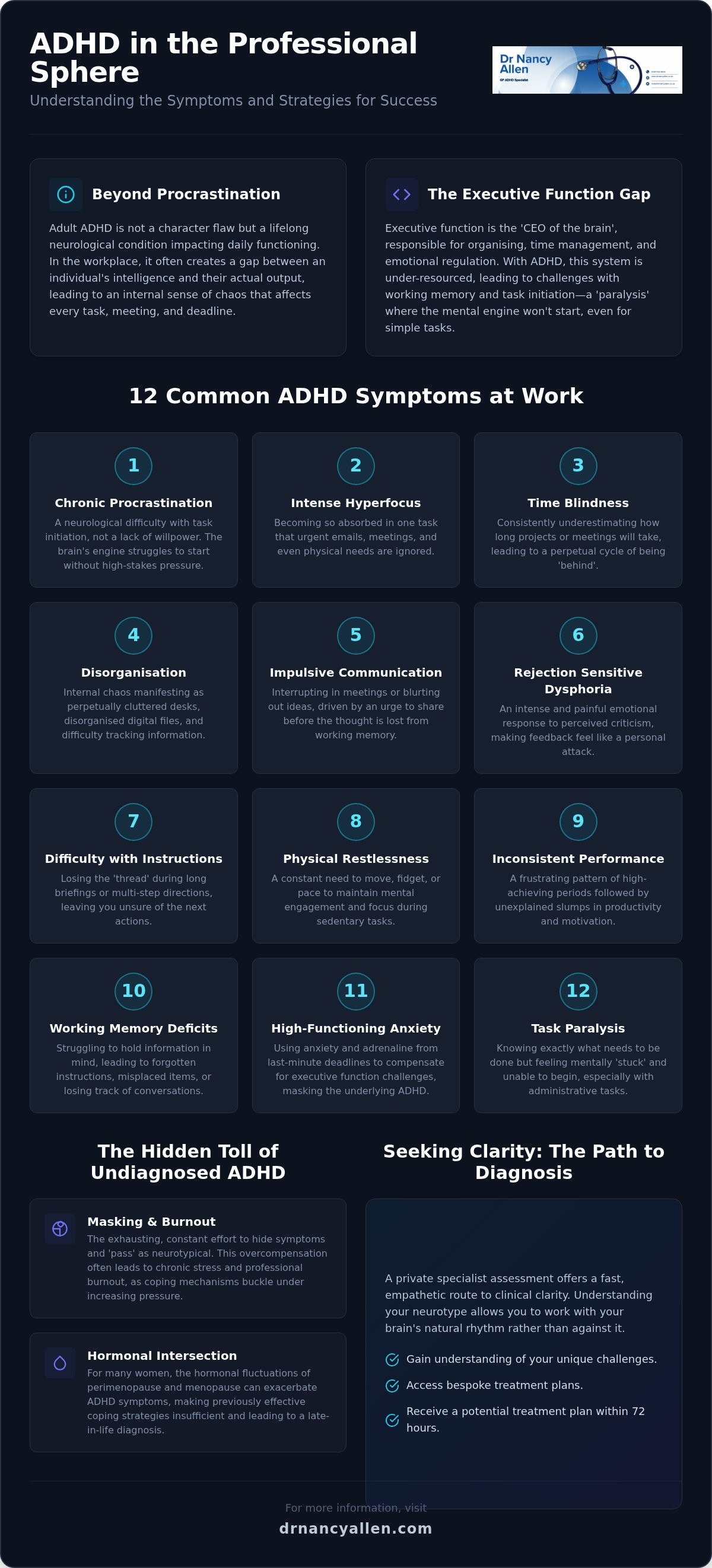
Recognising the 12 Symptoms at work that might suggest you have ADHD involves looking past surface-level distractions to the underlying patterns of neurological regulation. It's about the "why" behind the struggle. For many, chronic procrastination is the most visible sign. This isn't a lack of willpower; it's a neurological difficulty with task initiation where the brain's engine simply won't turn over without a high-stakes deadline. Conversely, you might experience hyperfocus, getting so "lost" in a single task that you ignore urgent emails or even basic physical needs. Whilst this can feel productive, it often feeds into time blindness. You might consistently underestimate how long a meeting or project will take, leading to a perpetual cycle of being "behind" despite your best efforts. This internal chaos often manifests externally as disorganisation, where digital filing systems or physical desks remain perpetually cluttered.
Interpersonal and Communication Symptoms
The social landscape of the office often highlights different facets of neurodivergence. You might find yourself interrupting in meetings, driven by an impulsive urge to share an idea before your working memory loses it. This can be paired with Rejection Sensitive Dysphoria (RSD), an intense emotional response to perceived criticism that makes a manager's feedback feel like a personal attack. Following multi-step instructions also becomes a hurdle; you might lose the "thread" during long briefings, leaving you unsure of the next steps. Physical restlessness is another key indicator. You may feel a constant need to move, fidget, or pace during desk time just to keep your brain engaged with the work at hand.
Focus and Consistency Challenges
Consistency is often the greatest professional hurdle for those with undiagnosed ADHD. You likely experience an "all or nothing" productivity cycle, where intense bursts of work are followed by periods of total exhaustion. During these peaks, careless mistakes can slip through, such as overlooking crucial details in reports despite multiple proofreads. This often leads to an avoidance of mentally taxing tasks, where you push back complex projects in favour of "busy work" that offers a quicker dopamine hit. Finally, chronic forgetfulness, like missing appointments or losing essential items like work passes, can create a sense of professional shame. If you recognise these 12 Symptoms at work that might suggest you have ADHD, a private ADHD assessment can provide the validation and support you need to thrive.
The Hidden Toll: Burnout, Masking, and the Menopause Overlap
Masking is the invisible labour of neurodivergence. In a professional setting, it involves the exhausting effort of pretending to be neurotypical; suppressing fidgets, mimicking social cues, and over-preparing to compensate for memory gaps. Whilst this might help you "fit in" for a while, it carries a heavy price. The constant cognitive load leads to chronic fatigue and, eventually, profound professional burnout. You aren't just tired from the work itself; you're depleted by the performance of being someone you aren't. This mental exhaustion is often what finally prompts individuals to look closer at the 12 Symptoms at work that might suggest you have ADHD.
For many women, this performance becomes impossible to maintain during perimenopause. There's a critical biological link between declining oestrogen and dopamine regulation in the brain. As oestrogen levels drop, ADHD symptoms that were previously managed through sheer willpower often become unmanageable. This is frequently the catalyst for seeking an adult adhd assessment. It's not that you've suddenly developed a new condition; it's that your brain's chemistry has changed, making the 12 Symptoms at work that might suggest you have ADHD far more visible and disruptive than they were in your twenties or thirties.
Hormonal Shifts and Cognitive Fog
The transition through menopause introduces "brain fog," which significantly overlaps with executive dysfunction. This combination can make you feel as though you're losing your professional edge. You might find it harder to organise your thoughts, maintain your working memory, or initiate complex projects. A dual approach is essential here. Addressing hormonal health alongside neurodiversity ensures that you aren't just treating a symptom, but understanding the holistic picture of your cognitive well-being. Recognising this intersection is a speciality of our practice, where we combine 25 years of clinical experience to provide clarity.
The Psychological Impact of the "Lazy" Label
Years of undiagnosed struggle often leave a legacy of internalised shame. You might have spent decades calling yourself "lazy," "flaky," or "unfocused" when you were actually working harder than your colleagues just to stand still. Empathetic validation in a clinical setting is the first step toward healing. Moving from self-criticism to self-advocacy allows you to request the adjustments you need without guilt. We understand that when you reach this point, you need answers quickly. Our secure online consultations allow for a thorough evaluation, with treatment plans often provided within 72 hours to help you move from shame to professional restoration.
Practical Workplace Adjustments and Support Strategies
Transitioning from identifying the 12 Symptoms at work that might suggest you have ADHD to implementing practical solutions is an empowering shift. It involves moving away from the "try harder" mentality toward a "work differently" approach. For many, the physical office environment is the first hurdle. Open-plan spaces can be sensory minefields. Using noise-cancelling headphones or booking "quiet zones" for specific hours can provide the mental sanctuary required for deep focus. Similarly, the social dynamics of communication often need a slight reframe. Verbal briefings are notoriously difficult for those with executive function challenges; requesting a summary email after every meeting ensures that the "thread" of a project is never lost.
Technology and collaborative strategies also play a vital role. "Body doubling", the simple act of working alongside a colleague or even a virtual partner, provides a subtle form of external accountability that helps maintain momentum. Meanwhile, leveraging modern tools like AI transcription software for meetings allows you to engage in the conversation without the cognitive strain of simultaneous note-taking. Project management platforms can act as an external "brain," holding the details that your working memory might otherwise drop. If you have recognised the 12 Symptoms at work that might suggest you have ADHD, these tools are not just "hacks" but essential professional equipment.
Managing Your Internal Environment
Traditional time management often fails the neurodivergent brain because it ignores the role of dopamine. The Pomodoro technique is a helpful starting point, but you might find that longer cycles, such as 50 minutes of work followed by a 10-minute break, better accommodate your natural hyperfocus. Breaking large, intimidating projects into "micro-tasks" is another powerful strategy. Each completed sub-task provides a small dopamine hit, making the next step feel more achievable. It's also wise to organise your workday around your "peak focus" windows. If you're most alert at 8:00 am, protect that time for your most complex work rather than wasting it on administrative emails.
Advocating for Yourself at Work
In the UK, the Equality Act 2010 provides a legal framework for neurodivergent employees, requiring employers to implement "reasonable adjustments." This can include flexible working hours, a dedicated quiet space, or specialist software. Discussing your needs with HR or your line manager is a proactive step toward professional sustainability. You may also be eligible for "Access to Work" grants, which are government-funded and can pay for specialist ADHD coaching or equipment tailored to your specific role. If you are ready to secure the formal diagnosis required to unlock these legal protections and specialist support, book a private ADHD assessment to gain clinical clarity within days.
Seeking Clarity: The Path to a Private ADHD Diagnosis
For many, the realisation that they resonate with the 12 Symptoms at work that might suggest you have ADHD is followed by a sense of urgency. Unfortunately, current data shows that NHS waiting times for an assessment can range from two to seven years in England, a delay that can feel like an insurmountable barrier to professional support. A private GP assessment offers a faster, more thorough alternative, prioritising your need for continuity of care. Instead of a detached medical process, our approach focuses on the human element of medicine, ensuring you feel heard and validated from the very first interaction.
Our secure online consultations are designed to reduce the anxiety often associated with seeking specialist help. This isn't a sterile interrogation; it's a comprehensive, evidence-based conversation that looks at your whole history, not just your recent workplace struggles. We understand that once you decide to seek help, waiting weeks for a result only adds to the cognitive load. This is why we provide clinical clarity and support with a 72-hour turnaround for diagnosis and treatment plans. This speed allows you to move quickly from a state of confusion to one of informed action, providing the validation that your struggles are neurological rather than a lack of discipline.
The Dr Nancy Allen Approach
With 25 years of clinical experience, Dr Nancy Allen combines deep medical expertise with a compassionate, patient-centric tone. Our national UK coverage via telehealth means you can access specialist care from the comfort of your own home, removing the logistical stress of travel. A formal diagnosis does more than just label your experience; it provides the "user manual" for your own brain. It allows you to understand why you react to certain professional pressures and how to harness your unique cognitive profile. By identifying the 12 Symptoms at work that might suggest you have ADHD, you gain the insight needed to stop overcompensating and start thriving.
Next Steps for Your Professional Future
Moving beyond the assessment involves a tailored management strategy that respects your individual circumstances. For many women, this includes an integrated look at how menopause symptoms might be amplifying your ADHD traits. By addressing both neurodiversity and hormonal health, we create a sustainable path forward. This clinical clarity allows you to reclaim your confidence and your career trajectory. You'll no longer be "masking" your struggles; instead, you'll be managing them with expert-backed strategies that allow your true professional capabilities to shine without the constant threat of burnout.
Reclaiming Your Professional Confidence
Navigating the corporate world with an undiagnosed neurological condition is an exhausting endeavour. By identifying the 12 Symptoms at work that might suggest you have ADHD, you've already taken the most significant step toward professional restoration. You now understand that your struggles with task initiation, time blindness, or the "all or nothing" productivity cycle aren't character flaws. They are signs of a brain that requires a different set of tools to thrive. This clarity is especially vital for women, where the intersection of hormonal shifts and executive dysfunction can make previously manageable traits feel overwhelming.
You don't have to wait years for the support you deserve. Dr Nancy Allen provides expert, secure online consultations across the UK, specialising in the complex connection between ADHD and menopause. We offer clinical validation and bespoke treatment plans within 72 hours, allowing you to move from burnout to a sustainable, empowered career trajectory. It's time to stop masking and start working with your brain's natural rhythm. Book your private ADHD assessment with Dr Nancy Allen today and begin the journey toward lasting clarity. Your professional future is bright; you simply need the right guide to help you navigate it.
Frequently Asked Questions
Can I be successful at work and still have ADHD?
You can absolutely be successful whilst having ADHD. Many high achievers use their intelligence to compensate for executive function deficits, often reaching senior positions before their coping mechanisms begin to fail. This is frequently why professionals only start noticing the 12 Symptoms at work that might suggest you have ADHD later in their careers. Success doesn't negate the neurological struggle; it often just masks it until the mental load becomes unsustainable.
How long does a private ADHD assessment take in the UK?
Whilst NHS waiting lists currently range from two to seven years, a private assessment is significantly faster. At our practice, we prioritise clinical efficiency alongside empathetic care, providing a diagnosis and a personalised treatment plan within as little as 72 hours. The initial secure online consultation typically lasts between 60 and 90 minutes, allowing for a thorough exploration of your history and current workplace challenges without the unhurried pressure of traditional clinical settings.
Will my employer find out if I get a private diagnosis?
Your employer will not be notified of your diagnosis unless you choose to disclose it yourself. Private medical consultations are strictly confidential. Many professionals decide to share their diagnosis later to access "reasonable adjustments" under the Equality Act 2010, but this remains entirely your choice. A private assessment provides the clarity you need to understand your own brain first, giving you the agency to decide how and when to involve your workplace.
Is ADHD medication the only way to manage symptoms at work?
Medication is a powerful tool for many, but it is certainly not the only way to manage neurodivergence in a professional setting. Effective management often involves a holistic approach, including specialised coaching, environmental adjustments, and leveraging technology. Understanding the 12 Symptoms at work that might suggest you have ADHD allows you to implement targeted strategies, such as body doubling or task-chunking, which can significantly improve your productivity and reduce the risk of chronic burnout.
Why are my ADHD symptoms suddenly worse in my 40s?
For many women, ADHD symptoms intensify in their 40s due to the perimenopause and the associated drop in oestrogen. Oestrogen plays a crucial role in dopamine regulation; as levels fluctuate or decline, previously managed executive function hurdles can become overwhelming. This hormonal shift often strips away the effectiveness of long-held coping mechanisms. We specialise in this specific intersection, ensuring that your treatment plan addresses both your neurological profile and your hormonal health.
What are "reasonable adjustments" for ADHD in a UK office?
Under the Equality Act 2010, UK employers must provide "reasonable adjustments" to support staff with disabilities, which includes ADHD. Common examples in an office environment include providing noise-cancelling headphones, allowing for flexible working hours, or creating dedicated "do not disturb" zones. Other adjustments might involve receiving written instructions after verbal briefings or using specialised project management software. These changes are designed to level the playing field, allowing your skills to shine without being hindered by environmental barriers.
Can I get an ADHD diagnosis online?
Yes, you can receive a legally recognised and clinically robust ADHD diagnosis via a secure online consultation. We provide national coverage across the UK through telehealth, allowing you to discuss your experiences from a comfortable and private environment. This modern approach is just as thorough as an in-person assessment but removes the logistical stress and sensory overwhelm often associated with travelling to a traditional clinic, making the path to clarity much more accessible.
What is the difference between ADHD and workplace stress?
Workplace stress is typically situational and improves when the external pressure is removed. In contrast, ADHD is a chronic, lifelong neurological condition. Whilst stress can certainly mimic executive dysfunction, ADHD symptoms persist across different roles and life stages, regardless of the current workload. If you find that your struggles with focus and organisation remain constant even during quieter periods, it is a strong indicator that you are dealing with neurodivergence rather than temporary burnout.


Comments