


Is Your ADHD Medication Dose Too High? Key Signs

One new symptom doesn’t prove your ADHD medication dose is too high. If you’re asking, “How Do I Know Whether My ADHD Medication Dose Is Too High”, it’s understandable to want a clear answer, especially after a dose increase or when changes begin to affect sleep, mood or daily life. Feeling unusually wired or emotionally flat, a racing heart, marked irritability, appetite loss or severe insomnia may be worth discussing. None confirms on its own that your dose is excessive. Your prescriber can consider the pattern, its timing and the benefits you’re experiencing.
This article explains possible warning signs, other factors that might affect how you feel, and what to record before speaking with your prescriber. It also covers when to seek urgent medical help and why you shouldn’t change your dose without clinical advice.
Dr Nancy Allen is a private GP with more than 25 years of clinical experience. Through secure online consultations across the UK, she provides personalised ADHD treatment planning. A clinical conversation can help explore your concerns in context, rather than relying on a symptom checklist alone.
Table of Contents
How can you tell if your ADHD medication dose may be too high?
A change is worth discussing with your prescriber, but it doesn’t prove that your ADHD medication dose is too high. A symptom can have several explanations, so the pattern matters more than any single sign. Effects can vary with the medicine and formulation, the person taking it, dose timing and stage of treatment.
If you’re wondering, “How Do I Know Whether My ADHD Medication Dose Is Too High”, look for new or worsening changes and consider how they affect you. Don’t try to diagnose yourself from a list.
This video describes one person’s account of taking too high a dose. Experiences differ, so use it as a prompt for discussion rather than a way to assess your own dose.
Which physical or emotional changes are worth noting?
Possible concerns include reduced appetite, difficulty sleeping, restlessness, anxiety, irritability or changes in mood. You might feel unusually tense, emotionally flat or unlike yourself. Behaviour changes, such as finding it harder to settle, may also be relevant. These are examples, not a diagnostic checklist: they can occur for reasons unrelated to medication, and their presence alone doesn’t establish that a dose is excessive. For general background, read about the side effects of methylphenidate. Effects differ between medicines.
Notice physical changes too. Palpitations or a noticeably faster heartbeat are worth reporting, particularly if new or persistent. Seek urgent medical help for severe or rapidly worsening symptoms. If you think someone is in immediate danger, call 999.
Why does timing matter when symptoms appear?
Write down when a change began and whether it appears after a dose, later in the day or at another consistent time. Note whether it started after beginning treatment or a prescribed increase, or was present beforehand. This timeline can help your prescriber consider a possible relationship, though it can’t prove one.
Medicines differ in how long their effects last and how they may feel as a dose takes effect or wears off. Don’t assume that one timing pattern applies to every ADHD medicine. Include the prescribed dose time and formulation in your notes, and follow your prescriber’s instructions rather than changing the schedule yourself.
In brief: Persistent, troublesome or marked new effects warrant a review with your prescriber. A cluster or pattern can be useful to discuss, but symptoms alone can’t confirm that your dose is too high.
How ADHD medication titration helps find a suitable dose
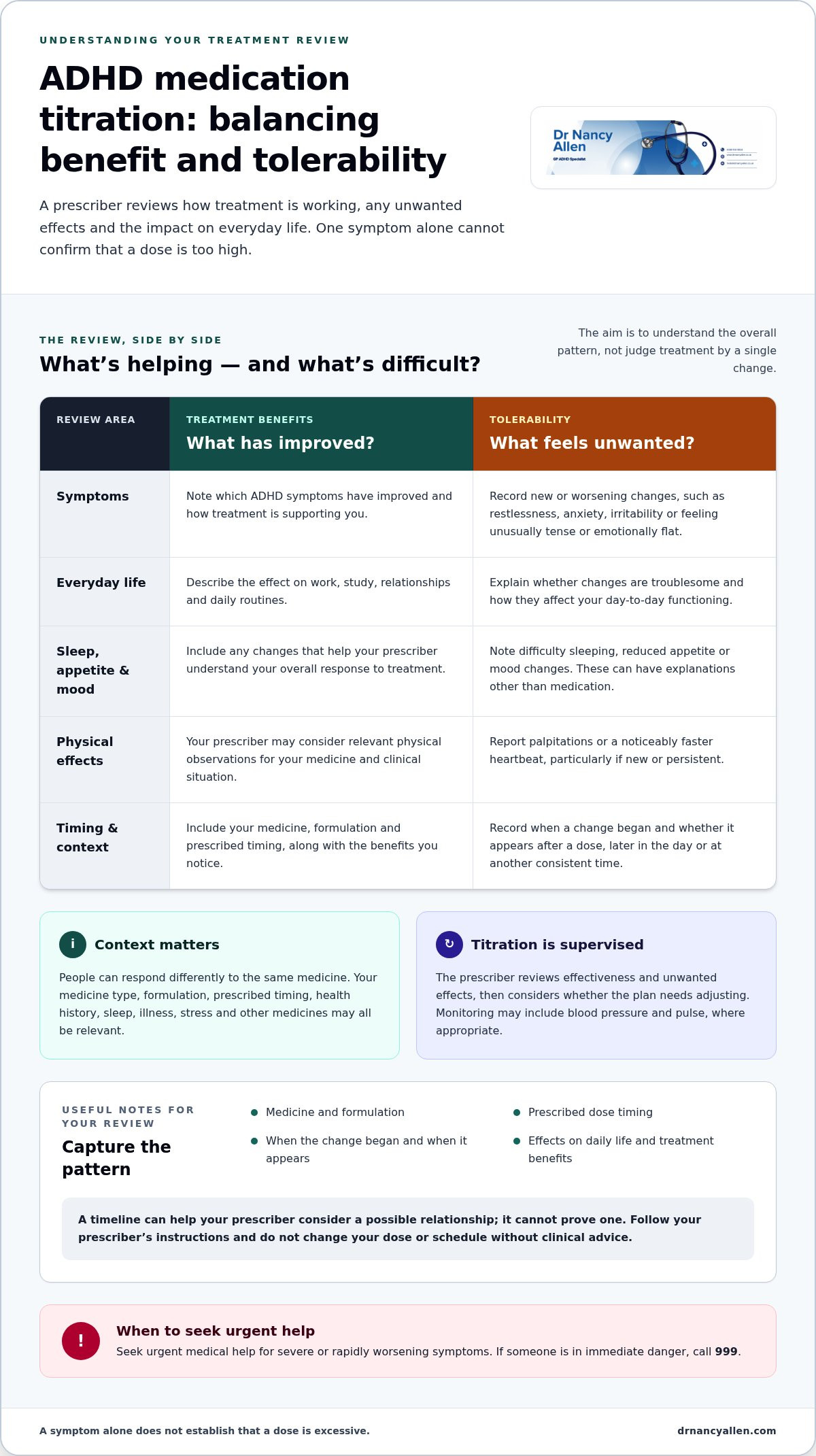
Titration gives a prescriber a structured way to assess how ADHD treatment is working and whether the plan needs adjusting. It isn’t simply a matter of increasing a dose until symptoms improve. The prescriber considers the benefits, unwanted effects and impact on everyday functioning, then reviews the overall balance with you.
ADHD medication titration is a clinician-supervised process of reviewing treatment response and adjusting the plan when appropriate to find a suitable balance of benefit and tolerability.
The right approach depends on the specific medicine, your clinical history and how you respond. NICE guidance recommends monitoring ADHD medication for both effectiveness and adverse effects. For relevant medicines, pulse and blood pressure are checked before and after dose changes and during ongoing care. The monitoring needed depends on the treatment and your circumstances.
What does a prescriber monitor during titration?
Your account of treatment is central to the review. Share which symptoms have improved, whether unwanted effects have appeared, and how both are affecting work, study, relationships or daily routines. Information about sleep, appetite and mood can help put changes in context. Your prescriber may also consider relevant physical observations, including blood pressure and pulse, where appropriate for your medicine and clinical situation.
Keep review appointments and report notable changes if you’re concerned, rather than waiting until the next scheduled discussion. Clear notes about when effects occur can help your prescriber interpret them. Resources such as the Child Mind Institute’s overview of signs of a high medication dose may help you describe a concern, but they can’t determine what’s right for you.
Why is there no single right ADHD medication dose?
People can respond differently to the same medicine, and dose decisions aren’t based on one factor alone. Medicine type, formulation and prescribed timing can all influence how treatment feels, alongside your health history, the benefits you notice and any side effects. A symptom or dose that suits someone else isn’t a reliable guide to your own treatment.
If you’re asking, “How Do I Know Whether My ADHD Medication Dose Is Too High”, a review of your response over time is more informative than comparing doses. Broader context matters too: an adult ADHD assessment guide explains how an individual’s history and needs inform assessment and care. A conversation with your prescriber can help make sense of persistent concerns. Dr Nancy Allen provides personalised ADHD care through secure online consultations across the UK. Learn more about ADHD assessment and care.
Could something other than a high dose explain how you feel?
Yes. A new or worsening symptom may be related to medication, but it can also have another explanation or more than one contributing factor. Stress, disrupted sleep, illness and other medicines may all affect how you feel. Continuing ADHD symptoms don’t, by themselves, show that a dose is too low or too high. A prescriber can review the full pattern without assuming a cause.
This comparison can help you organise what you’ve noticed. It isn’t a way to diagnose a side effect or interaction yourself.
How can timing and sleep complicate the picture?
Keep a simple record of sleep, prescribed dose timing, when a symptom starts and how long it lasts. Note any changes in your routine or health as well. Poor sleep can affect wellbeing and concentration, so it’s useful context to raise with a clinician, not proof of a medication effect. If sleep is a prominent concern, read this guide to ADHD and sleep.
Can medication type or formulation affect the experience?
Yes. Medicines and formulations can differ in how they release medication and how long their effects last. This can shape when benefits or unwanted effects are noticed, but the pattern alone won’t identify the cause. Don’t change your medicine or formulation based on timing observations. Share them with your prescriber. For more context, see the guide to methylphenidate release ratios.
If you’re asking, “How Do I Know Whether My ADHD Medication Dose Is Too High”, consider the whole picture: what changed, when it happens, how sleep and health have been, and whether daily life is affected. These details can make a clinical review more useful without requiring you to work out the cause alone.
What should you do if you think your ADHD dose is too high?
You don’t need to work out the cause of a change before asking for advice. A clear record can help your prescriber assess what’s happening and decide what review is appropriate.
Record what you’ve noticed. Note the medicine and formulation, prescribed dose and timing, when the symptom began, how long it lasts, how severe it feels and how it affects everyday activities.
Contact your prescriber. Explain what has changed and when. If you can’t reach them and the concern needs urgent advice, use NHS 111.
Follow clinical advice. Don’t stop, increase, reduce or otherwise change a prescribed dose without advice from your prescriber.
Attend the review. Bring your notes and discuss the benefits as well as any difficulties, so the treatment plan can be considered in context.
What information should you prepare for a medication review?
A brief symptom diary can be enough. Include dose times, symptom onset and duration, changes over time, sleep and the effect on work, study or home life. List your prescribed medicines and any recent changes, including other treatments, so the clinician can consider the wider picture. For a child, share specific, age-appropriate observations from home or school, such as changes in sleep or ability to manage everyday routines. These details inform a discussion; they don’t diagnose the cause.
When should you seek urgent medical help?
Contact your prescriber promptly about persistent or troublesome effects. For urgent medical advice that isn’t an immediate, life-threatening emergency, NHS 111 can help direct you to appropriate care. Seek urgent medical assessment for severe or rapidly worsening symptoms. Call 999 or go to A&E for an immediate, life-threatening emergency, for example severe difficulty breathing, collapse or loss of consciousness. Don’t wait for a routine medication review in an emergency.
Asking “How Do I Know Whether My ADHD Medication Dose Is Too High” is a reason to seek an individual assessment, not to adjust treatment alone. A clinical conversation can help put symptoms, benefits and relevant health context together. Dr Nancy Allen provides personalised ADHD care through secure online consultations across the UK. Explore personalised ADHD care.
How can a personalised ADHD medication review help?
A medication concern can be difficult to interpret on your own. A clinician can consider symptoms alongside the benefits you’re getting, how treatment is affecting daily life, any side effects and relevant health context. That broader view moves the conversation beyond a single symptom or dose number.
What can an individualised review consider?
A review may look at your treatment timeline, symptom notes, prescribed medicine and formulation, dose timing, changes in sleep or health, and the priorities that matter most to you. For example, you might want to discuss whether treatment is helping with concentration whilst making sleep or appetite harder to manage. Sharing what is working as well as what is troubling you gives the clinician a fuller picture.
Medicine-specific decisions depend on a clinician’s assessment and current guidance. A review may clarify whether a pattern needs further attention, but it doesn’t guarantee that your dose or medicine will change. Raising concerns is a constructive part of collaborative care, not a sign that you’ve done anything wrong. Keep taking your medicine as prescribed unless your prescriber advises otherwise.
How to take a clear next step
If concerns persist, arrange a review with your prescribing clinician and bring a concise record of what you’ve noticed. Explain what has changed, when it happens, how it affects you and what you hope treatment will help you do. You don’t need to arrive with a conclusion about whether the dose is too high.
If you’re still asking, “How Do I Know Whether My ADHD Medication Dose Is Too High”, a personalised clinical conversation can help put your experience in context. Dr Nancy Allen is a private GP specialising in ADHD assessment and care, with more than 25 years of clinical experience. Her secure online consultations are available across the UK, with personalised treatment planning shaped around individual needs. A consultation offers space to discuss your concerns; it cannot promise a particular diagnosis, medication change or outcome.
For supportive, individualised ADHD care, explore ADHD consultations with Dr Nancy Allen.
Take your concerns to a clinician
There isn’t one symptom that proves your ADHD medication dose is too high. Changes in mood, sleep, appetite or physical wellbeing are worth discussing, but timing, other medicines, stress, sleep disruption and illness may also help explain how you feel. A clinician can consider these factors alongside the benefits you’re getting and how treatment affects daily life.
If you’re asking, “How Do I Know Whether My ADHD Medication Dose Is Too High”, keep a brief record of changes and share it with your prescriber. Don’t stop, increase or reduce your prescribed dose without clinical advice. A personalised review may clarify what’s contributing to your concerns, though it can’t guarantee a particular medication change or outcome.
Dr Nancy Allen brings more than 25 years of clinical experience to ADHD assessment and care, with personalised treatment planning and secure online consultations available across the UK. If you’d value a considered conversation about your ADHD care, explore personalised ADHD consultations with Dr Nancy Allen. Your concerns deserve to be heard, and taking them to a clinician is a constructive next step.
Frequently Asked Questions
What are the signs that an ADHD medication dose may be too high?
Possible signs include troublesome changes in appetite or sleep, feeling unusually restless, anxious or irritable, or noticing changes in mood or physical wellbeing. The pattern and timing can be useful, especially if symptoms started after beginning treatment or a prescribed dose change. None of these signs proves the dose is too high. Other factors can contribute, so discuss persistent or marked changes with your prescriber.
Can ADHD medication cause anxiety or irritability if the dose is too high?
Anxiety or irritability may occur with ADHD medication and can be a reason to discuss whether treatment is suiting you. These feelings can also relate to stress, sleep disruption, illness or other medicines, so they don’t confirm that the dose is too high. Note when they began, whether they relate to dose timing and how they affect daily life, then share this information with your prescriber.
Should I stop taking my ADHD medication if I think the dose is too high?
Don’t stop, reduce, increase or otherwise change your prescribed dose without clinical advice. Contact your prescriber to explain what you’re experiencing and ask what to do next. If you can’t reach them and need urgent medical advice, contact NHS 111. For severe symptoms or an immediate, life-threatening emergency, call 999 or go to A&E. Follow the advice of a healthcare professional who can assess your situation.
How do I know whether ADHD medication side effects are serious?
Side effects deserve prompt attention if they’re persistent, troublesome, marked or getting worse. Seek urgent medical assessment for severe or rapidly worsening symptoms. If you’re unsure what to do and it isn’t an immediate, life-threatening emergency, contact your prescriber or NHS 111 for advice. Call 999 or go to A&E if there’s an immediate threat to life, such as collapse or severe difficulty breathing.
Can the right ADHD medication dose still cause side effects?
Yes. A dose that provides helpful symptom support may still cause unwanted effects. The aim of treatment is a useful balance between benefit and tolerability, not necessarily the complete absence of every side effect. Tell your prescriber what you’re experiencing and how it affects your routine, alongside any improvements you’ve noticed. They can review the overall picture and advise you. Don’t adjust your dose on your own.
How long does it take to find the right ADHD medication dose?
There isn’t a fixed timeline. Finding a suitable dose can take several weeks, with the pace depending on the medicine, your response, any side effects and the prescriber’s review plan. Titration involves monitoring how treatment is working and considering adjustments when appropriate. Attend planned reviews and share changes as they happen. If you’re concerned during the process, contact your prescriber rather than waiting or changing the dose yourself.
What should I tell my prescriber if my ADHD dose feels too high?
Describe the medicine and formulation, prescribed dose and timing, what you’ve noticed, when it began and how long it lasts. Explain how severe the change feels and whether it affects sleep, work, study or daily activities. Mention other medicines or recent health changes too. Ask what the safest next step is. These details help your prescriber consider the pattern without relying on one symptom to identify the cause.



Comments