


10 Purchases That Could Improve Your ADHD

The right purchase can make everyday tasks feel more manageable, even though no product can solve every ADHD-related challenge. The 10 purchases that could improve your ADHD routines include organisation and focus apps, noise-cancelling headphones, nutritious food and carefully considered supplements, alongside practical tools for planning and reminders. Their value lies in supporting daily habits, not in replacing personalised care.
If staying organised, focusing or remembering everyday tasks takes extra effort, it makes sense to look for useful support. The key is choosing options that fit your needs and are simple enough to use consistently.
This guide looks at how apps, headphones, food, supplements and other practical purchases may support focus and daily routines, and what to consider before spending money. It also explains their limits, so you can approach each option with realistic expectations.
Table of Contents
1. Supplements and potential interactions
Supplements can seem like a straightforward purchase when ADHD symptoms affect focus, memory or daily function. Omega-3, vitamin B6 and mineral products are not interchangeable, though. Their effects depend on what you take, your health and any medicines you use. Food sources can also contribute nutrients without adding another supplement to your routine.
Before starting a supplement, discuss it with a healthcare professional, particularly if you take ADHD medication or have a health condition. Supplements can interact with medicines and medical conditions. If considering minerals, check for a deficiency first through appropriate blood tests. Vitamin B6 contributes to the production of serotonin, norepinephrine and dopamine, but that role alone doesn’t show that extra B6 will improve ADHD symptoms.
Omega-3 fatty acids are found in fatty fish, walnuts, flaxseed and chia seeds. These foods may support cognitive function and help reduce inflammation in the brain. Some recommendations suggest at least 1,000 mg of omega-3 fatty acids per day for adults and children. Treat that figure as a reason to discuss your diet and supplement plans with a professional, not as a personal prescription.
Herbal products and other natural remedies shouldn’t replace ADHD medication or medical treatment. Evidence about their effectiveness and safety is limited. Caffeine may also affect ADHD medication, so notice whether coffee or energy drinks seem to worsen unwanted effects. Discuss changes intended to ease symptoms before making major dietary changes or starting supplements.
Everyday habits can also support wellbeing alongside clinical care. According to The researchers who conducted the cited exercise research, the UK Chief Medical Officers' Physical Activity Guidelines, on GOV.UK, state adults should try to be active every day and aim for at least 150 minutes of physical activity over a week, through a variety of activities. Walking, cycling and active household tasks are examples of varied movement.
Mindfulness training is another non-purchase option to consider. A feasibility study of mindfulness training for adults and adolescents with ADHD used an 8-week programme, according to The researchers who conducted the cited feasibility study. This is a study format, not proof that mindfulness will suit everyone. It can still help you weigh structured practice against buying a supplement.
Weighted blankets, fidget tools and other sensory products may suit personal comfort, but shouldn’t be treated as proven ADHD treatments. A common rule of thumb is choosing a weighted blanket around 10% of the user’s body weight. Comfort and ease of movement matter when considering whether it suits your needs.
For any supplement, record the product, dose and start date, then note any changes or side effects. This gives a healthcare professional clearer information when reviewing your medication, diet and symptoms together.
2. Apps for routines, lists, passwords, meditation, notes and reminders
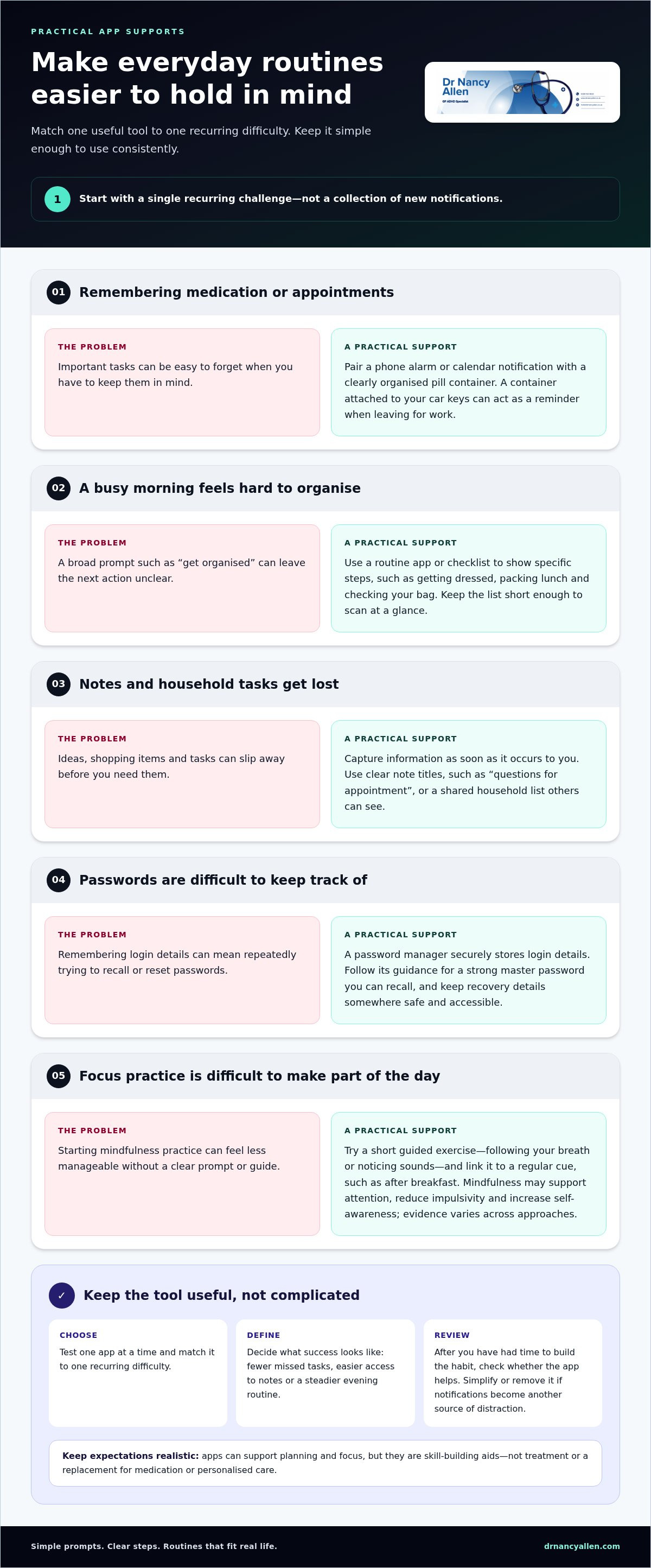
A useful app reduces how much you need to remember. Start with one recurring difficulty, such as forgetting appointments, misplacing notes or overlooking household tasks. Choose a tool that addresses it directly and use it consistently before adding features. If the app becomes another source of notifications, simplify it or remove it from your routine.
For medication reminders, pair a phone alarm or calendar notification with a clearly organised pill container. For example, attaching the container to your car keys can remind you to take medication when leaving for work. Choose a reminder that fits your routine and follow the medication instructions you’ve been given.
Routine apps can break a busy morning into visible steps, such as getting dressed, packing lunch and checking your bag. Set reminders for specific actions rather than broad prompts like “get organised”. Checklists give tasks a clear endpoint, while recurring reminders bring regular jobs back to your attention. Keep the list short enough to scan at a glance.
For lists and notes, capture information as soon as it occurs to you. A phone note can hold shopping items, while a shared household list lets others see what needs doing. Writing things down may help people with ADHD retain information. Use clear titles, such as “questions for appointment”, so you can find the right note when you need it.
Password managers securely store login details, reducing the need to remember passwords or repeatedly reset them. Follow the manager’s guidance to create a strong master password you can recall. Keep recovery details somewhere safe and accessible. These tools support organisation, but don’t replace good digital security habits.
Meditation apps offer guided sessions that can make mindfulness easier to practise. Mindfulness meditation may support attention, reduce impulsivity and increase self-awareness. Start with a short guided exercise, such as following your breath or noticing sounds, and choose a regular cue, like after breakfast. Evidence varies across approaches, so treat an app as a skill-building aid, not a treatment or a replacement for medication.
To choose well, test one app at a time and decide what success looks like: fewer missed tasks, easier access to notes or a steadier evening routine. Review its usefulness after you’ve had time to build the habit. If ADHD symptoms continue to disrupt daily life, ADHD-related clinical support can help you consider a more personalised next step.
3. Apps for time management, organisation, focus and money
A calendar app can turn deadlines into visible actions instead of details you have to remember. The best choice is one you’ll open and update, whether that’s a phone calendar, paper planner or both. Start by adding an appointment or deadline, then build the habit of entering them regularly. Set alerts for events that are easy to overlook, and leave time between tasks for transitions.
For focus, try the Pomodoro Technique: work for 25 minutes, then take a short break. A basic timer can help you start and stop without repeatedly checking the clock. For reading, divide a chapter into manageable sections and use each work period for one section. If the timer creates pressure, adjust the routine to suit the task rather than forcing a method that distracts you.
Which ADHD-friendly planners, calendars and reminder apps work best? Usually, it’s the simplest tool that makes tasks visible and sends reminders where you’ll notice them. A calendar, checklist or timer can support organisation, but an app alone doesn’t treat ADHD symptoms.
UK productivity app costs depend on whether you choose a free version, a paid plan or optional premium features. Compare what’s included and whether the tools solve a real problem before starting a subscription.
Money apps can make spending easier to review by grouping transactions and showing upcoming bills. Set a regular time to check your balance, such as after a weekly food shop, and add reminders for payment dates to your calendar. Keep the system manageable: a simple spending list may be more useful than several dashboards you rarely open.
What products can help adults manage ADHD symptoms at home and work? A phone calendar, visual timer, task list and labelled storage can support routines in both settings. At your desk, keep current work visible in one tray and move completed papers to a separate folder.
What desk and home organisation products can reduce ADHD-related clutter? Try drawer dividers, a small inbox tray, hooks by the door and clear, labelled boxes. Give everyday items a consistent home, such as keys on a hook and work papers in the tray. For children with ADHD, picture labels can make the system easier to follow without relying on reading. At home or work, tackle one area at a time; a large clear-out can be harder to sustain when clutter feels overwhelming.
Choose one tool, define the task it should support, and fit it into your existing routine. If planning remains difficult despite practical systems, ADHD-focused therapy can help develop organisation skills and strategies for everyday demands.
4. Noise-cancelling headphones
Background noise can make it harder to stay with a task, especially in a busy office, classroom or shared home. Among the 10 purchases that could improve your ADHD, noise-cancelling headphones may help reduce outside noise and support concentration. They can be useful for adults who find nearby conversations, traffic or household activity distracting during focused work.
Visual timers and headphones address different barriers. Headphones can reduce competing sounds, while a visual timer makes a work period easier to see. Try combining them for one defined activity, such as reading a report or completing paperwork. This creates a clear start and finish without expecting either tool to manage every aspect of attention.
Headphones differ in how they reduce sound. Active noise cancellation uses technology to reduce certain background sounds, while passive isolation comes from the physical fit around your ears. Comfort matters if you’ll wear them for an extended task. Try them in your usual setting, such as a shared workspace, and notice which sounds remain distracting.
Choose headphones to suit the activity rather than wearing them automatically. At home, they might soften television noise while you sort paperwork. At work, they could reduce nearby conversation during a writing task. Choose a level of sound reduction that still lets you notice someone speaking directly to you, especially in shared spaces.
A simple comparison can show whether headphones help you stay on task. Before you start, write down one task, such as preparing a meeting agenda. Work until the task or planned session ends, then note whether fewer interruptions helped. Try the same activity in a quieter setting another time. Comparing the experiences can help you decide whether the purchase suits your needs.
You can also combine headphones with a visual timer to give focused work a defined boundary. For example, set the timer before beginning a piece of writing, then take a break when it ends. If the timer’s alert distracts you, choose a quieter signal or stop it once your session finishes. A headphone set can be one of the 10 purchases that could improve your ADHD when it supports a specific activity without adding extra demands.
Headphones can change your sound environment, but they don’t replace ADHD treatment or prescribed medication. Supplements address a different concern and need separate consideration, especially as they can interact with medication or health conditions. Be clear about the purpose: if noise disrupts concentration, try headphones for a defined task and notice whether they make it easier to continue.
5. Nutritious meals, protein and snacks
Meal and snack preparation can be a practical purchase if busy days lead to skipped meals or last-minute choices. A simple food shop, lunch box and reusable snack container can make nourishing options easier to reach. A diet featuring whole foods, including fruit, vegetables and lean proteins, may help reduce ADHD symptoms, but food doesn’t replace medical treatment.
Regular mealtimes can support blood sugar levels, focus and attention. Try building breakfast, lunch and dinner into your routine, and keep a suitable snack handy between meals. For example, pack yoghurt and fruit for work, or prepare chopped vegetables before a busy afternoon. A visible food plan can also help children see what’s available without repeated decisions.
Protein-rich foods offer practical choices for meals and snacks. Examples include eggs, lean meat, fish, beans and nuts. Protein influences neurotransmitters such as dopamine, so you might add eggs to breakfast, beans to a packed lunch or nuts to an afternoon snack. Choose foods that suit your preferences, access and dietary needs rather than treating any one ingredient as an ADHD remedy.
To make meals easier to organise, build a short shopping list around familiar dishes. Include a protein source, fruit or vegetables, and easy snacks. Keep lunch containers together in one cupboard, and put the list somewhere you’ll see it before shopping. For children, offering a small selection of familiar options can make meal planning more manageable without turning food into a daily argument.
Food colourings and preservatives are sometimes thought to increase hyperactive behaviour in children, but evidence is limited and the issue remains controversial. Avoid broad restrictions based on a single concern. If you suspect a particular food affects symptoms, record meals and behaviour, then discuss the pattern with a healthcare professional. If trying an elimination diet, remove one suspected trigger food at a time rather than several foods together.
Exercise and eating are both part of everyday wellbeing, but neither should be framed as a cure for ADHD or a reason to blame someone for their symptoms. Food-related anxiety can make restrictive rules especially difficult for children and adults. Keep changes gradual: choose one practical aim, such as eating lunch regularly, and review whether the routine is manageable.
If attention or impulsivity concerns persist across home, school or other settings, a Child ADHD Assessment can help clarify whether ADHD may be contributing. A structured assessment is a more appropriate next step than relying on restrictive diets or supplements to explain ongoing difficulties.
Dr Nancy Allen: Adult ADHD Assessment
Dr Nancy Allen’s Adult ADHD Assessment can help clarify whether ADHD may explain ongoing difficulties with focus, organisation or daily tasks. Consider it when apps, reminders and other practical tools aren’t enough to make these challenges manageable, or when you want a clearer understanding of your experiences.
Dr Nancy Allen offers secure online consultations to patients across the United Kingdom, providing diagnoses and personalised treatment plans within as little as 72 hours. An assessment can help you understand your needs and consider appropriate next steps, rather than relying on purchases alone to address ongoing difficulties.
If you’d like to explore an assessment, contact Dr Nancy Allen.
Choose one change and build from there
Your next step doesn’t need to be a complete routine overhaul. Pick one recurring difficulty and try one practical change, then notice what makes the task easier or harder. A brief note about when the tool helps can show you what suits your daily life. The 10 purchases that could improve your ADHD are starting points for personalising your environment, not a checklist you need to complete.
If ongoing attention or organisation difficulties leave you looking for a clearer explanation, Dr Nancy Allen offers Adult ADHD Assessment and Child ADHD Assessment. She also provides Peri-menopause & Menopause Specialist Care, which may be relevant when changing symptoms and concentration concerns overlap.
An assessment can help put your experiences into context and support a considered next step. Contact Dr Nancy Allen to explore whether an assessment is right for you. Start with the change that feels manageable, and give yourself room to find the support that fits.
Frequently Asked Questions
Can ADHD Tools Help?
Yes, practical tools can make specific tasks easier by reducing distractions, memory demands or decision steps. A calendar can make deadlines visible, dictation can capture an idea quickly, and headphones may reduce disruptive background noise. These tools support daily functioning; they don’t treat ADHD itself. Try one during a task you find difficult, and keep using it if it genuinely makes that task easier to complete.
How to Choose the Right ADHD Tool?
Start with the task that causes the most friction, then choose one tool designed to address it. For example, use voice notes if ideas disappear before you can write them down, or a visual checklist if you lose track of a multi-step job. Consider how much setup it needs, whether you’ll notice its prompts and whether it fits your usual environment. A simple tool you use regularly may suit you better than one with lots of features.
What should people with ADHD consider before buying supplements or sleep products?
Before buying supplements, consider your medicines, health conditions and the possibility of nutrient deficiencies. Supplements can interact with medicines and medical conditions. Discuss planned changes with a healthcare professional, particularly before starting a supplement or making a major dietary change. For sleep, consider whether a product supports a workable routine. A screen-free wind-down and consistent bedtime, for example, may be more useful starting points than assuming a purchase will resolve sleep difficulties.
Which purchases for ADHD have evidence of benefit, and which are unproven or risky?
Tools with a clear practical purpose, such as reminders, timers and headphones that reduce background noise, may support specific daily tasks. That doesn’t mean they treat ADHD. Evidence for natural supplements is limited, and supplements can interact with medicines or health conditions. Be cautious of products promising to cure ADHD or replace prescribed treatment. Weigh each purchase by its purpose, potential risks and whether it helps with a recurring difficulty.
What are the best ADHD medication reminder devices and pill organisers?
A phone alarm or calendar notification paired with a clearly organised pill container may help. A smartwatch can also provide reminders, and attaching the container to your car keys may prompt you to take medication when leaving for work.



Comments