


Managing Your Child's Behaviour: Practical Support Guide

Updated: 9 hours ago
What if difficult behaviour is not simply something to stop, but a signal that your child needs help with something they can’t yet explain? If you’ve found yourself asking, “what do you do when your child has bad behaviour?”, you’re not alone. Repeated arguments, outbursts or refusals can leave you feeling overwhelmed and unsure whether to set a consequence, offer reassurance or give your child space.
It’s understandable to want a quick answer, especially when tensions are high. But behaviour can have different causes, and one incident or pattern doesn’t, on its own, explain what is going on. Looking for possible triggers doesn’t mean accepting behaviour that is unsafe or hurtful. Clear, consistent boundaries can sit alongside curiosity and compassion.
This guide explores practical ways to respond calmly in the moment, notice patterns without jumping to conclusions, and decide when extra support may help. Challenging behaviour does not automatically mean your child has ADHD or another condition.
Table of Contents
What does “bad behaviour” mean, and what should parents notice first?
Why might a child show challenging behaviour? Look beyond the surface
What should you do when your child has bad behaviour? Stay calm and hold boundaries
How can you reduce repeated behaviour at home and work with school?
When should you seek professional help for your child’s behaviour?
What does “bad behaviour” mean, and what should parents notice first?
Repeated shouting, refusing, hitting or walking away can be exhausting and worrying, especially when the same conflict keeps returning. If you’re asking “what do you do when your child has bad behaviour?”, pause before deciding what the behaviour means. You can set a boundary while staying curious about what happened.
“Bad behaviour” is a judgement, not a precise description. It can make it harder to separate an action that needs addressing from the child themselves. Behaviour alone can’t tell you what your child intended, what they may need or whether there’s an underlying difficulty. Describe what you saw before deciding what it means.
This TED talk offers one perspective on meeting difficult behaviour with compassion:
Describe the behaviour without labelling the child
Swap labels such as “naughty” or “defiant” for observable details: “She shouted ‘no’ and pushed the book off the table when I asked her to stop playing.” This doesn’t excuse behaviour that is hurtful or unsafe. It helps you address the action and set a clear boundary without defining your child by a difficult moment. For a broad overview of child discipline methods, consider how guidance can teach as well as respond to behaviour.
Look for patterns before choosing a response
Make brief, neutral notes about what happened, where, who was present and what followed. Include the time, transitions, demands and any changes to routine, but treat these as clues to explore, not proof of a cause. Notice whether similar situations arise at home, school or elsewhere. Patterns across settings may be useful context to discuss with your child’s school or a professional.
For example, you might record that on several weekdays your child shouted and left the table shortly after being asked to stop a game and get ready to leave. That doesn’t establish why it happened, but it gives you something specific to discuss and observe. Looking for patterns can help you respond thoughtfully instead of reacting to each incident in isolation.
Why might a child show challenging behaviour? Look beyond the surface
There isn’t one explanation for behaviour that feels difficult. A child may struggle to express discomfort, confusion or strong feelings, or become frustrated when something feels hard. A transition, tiredness, a change in routine or a stressful event may also be worth considering. These are possibilities to explore, not a checklist for diagnosing your child or proof of what caused an incident.
Context matters. Shouting might happen when a child is asked to stop an enjoyable activity, while a similar outburst at another time could have different contributing factors. Before responding, consider what happened just beforehand: Was there a sudden change, an unclear instruction, a difficult demand or a sign your child needed help communicating? Information about causes of behaviour problems can offer further perspectives, but it can’t determine what is happening for an individual child.
Consider unmet needs, stress and the immediate context
Try to notice what your child might have been experiencing without assuming you know. They may not yet have the words to explain discomfort, worry or confusion. Once they’re settled, you could gently ask, “Was something difficult just before we left?” Sleep, sensory experiences and stress may be relevant areas to explore, but observations alone don’t establish a cause. Keep notes and look for patterns over time.
Behaviour can prompt useful questions, but it can’t establish a diagnosis.
When ADHD or other additional needs may be worth exploring
Consider seeking professional advice if a pattern persists, affects everyday life or is noticeable in more than one setting, such as at home and school. A single difficult day or behaviour cannot show that a child has ADHD. If recurring demands are a particular source of difficulty, this guide to demand avoidance and practical support may help you consider what to observe and discuss.
Keep the focus on the whole picture: what happens, how often, where it occurs and how it affects your child. If ADHD is one possibility and concerns continue, a child ADHD assessment may help clarify those concerns. Dr Nancy Allen offers child ADHD assessments. Check the current assessment scope and consultation details to decide whether this route is right for your family.
What should you do when your child has bad behaviour? Stay calm and hold boundaries
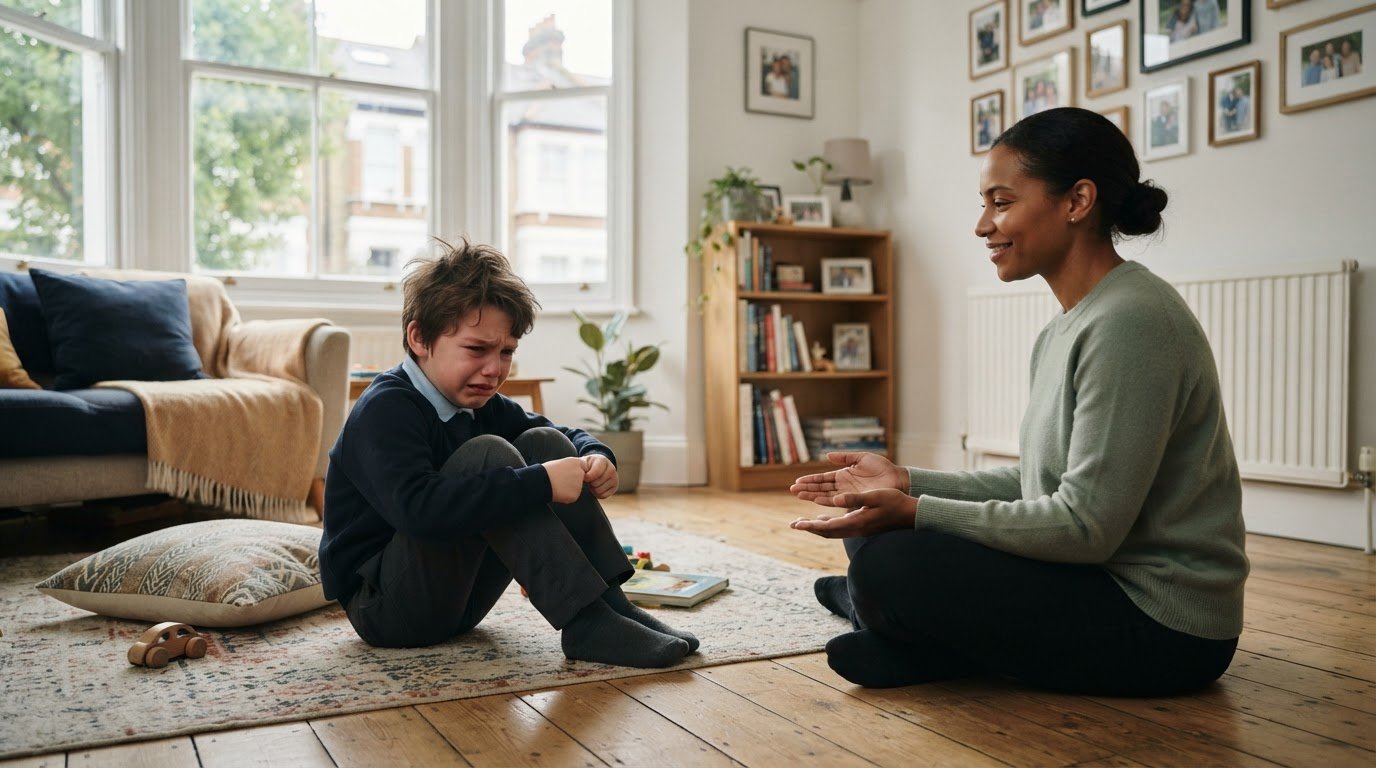
In the middle of an outburst, it can be hard to think clearly. If you’re asking “what do you do when your child has bad behaviour?”, focus first on making the moment safer and calmer rather than trying to teach a lesson straight away. Understanding your child’s feelings doesn’t mean removing limits. You can respond to feelings with empathy while being clear about which actions aren’t acceptable.
Try this sequence: steady yourself, protect safety, use a few calm words, then return to the issue once your child is more settled. Simple language and a predictable response can keep the focus on what needs to happen next.
De-escalate first, then teach and problem-solve
Pause and take a slow breath before speaking. Use a quiet, steady voice and one short instruction at a time. If it’s safe and appropriate, reduce demands or stimulation, for example by moving to a quieter space or pausing a non-urgent request. Long explanations, repeated questions and insisting on an apology during peak distress can add pressure. Wait until you’re both calmer to talk through what happened and what could help next time.
Respond to unsafe behaviour while preserving connection
If your child is hitting, throwing objects or putting someone at risk, prioritise immediate safety. Calmly interrupt the action and create space or move other people away if you can do so safely. State the limit simply, then offer a safer alternative:
“I won’t let you hit. You can stamp your feet here.”
“The toy stays on the floor. You can tell me you’re angry.”
This is a boundary, not a rejection of your child. You can acknowledge the feeling, such as “I can see you’re upset”, while making clear that hurting someone or damaging things isn’t allowed. Keep any consequence brief, predictable and related to the behaviour where possible. Avoid threats you can’t follow through on or escalating into an argument. These can make it harder to focus on safety and repair.
Once everyone is settled, revisit the incident with curiosity. Briefly name what happened, restate the limit and practise a safer response together. The ADHD meltdown action plan offers further strategies to consider. If you have persistent concerns about your child’s behaviour, you can also learn about child ADHD assessments as one possible next step when ADHD is a consideration.
How can you reduce repeated behaviour at home and work with school?
Once you’ve noticed a recurring difficulty, resist the urge to change everything at once. A small, consistent plan makes it easier to see what may help and gives your child clearer expectations. If you’re asking “what do you do when your child has bad behaviour?”, begin with one situation that regularly causes tension, then compare what happens at home and school.
Create a small, realistic plan for recurring difficulties
Choose one specific behaviour, such as shouting when it’s time to leave the house. Briefly note what happens beforehand and what follows. Agree on a calm, predictable boundary and a practical alternative your child can try, such as asking for one more minute or choosing which shoes to put on. Where it suits your family, try a familiar routine, advance notice or a clear instruction. Praise the action you want to encourage specifically: “You put your shoes on when I asked. Thank you.”
Keep the plan manageable and review it with curiosity. If the situation remains difficult, consider whether the expectation, timing or support needs adjusting. That doesn’t mean you or your child have failed. It gives you useful information about what to try next.
Share observations with school and other carers
Ask school what staff notice before and after the behaviour, what responses they’ve tried and whether anything seems to make the situation easier. Share relevant observations without making assumptions, and agree what information is appropriate to share about your child. A simple comparison can help you spot similarities and differences:
These are examples to adapt, not assumptions about your child. Record what actually happens and discuss possible adjustments with the adults who know your child in each setting. If support at school is relevant, read this guide to supporting children with ADHD at school.
If persistent concerns affect everyday life and ADHD is one possibility, a child ADHD assessment may help clarify what is contributing. Explore child ADHD assessments as one possible next step, and check the current assessment scope and consultation details.
When should you seek professional help for your child’s behaviour?
Consider seeking professional advice if the behaviour continues, affects your child’s everyday life or is causing persistent concern at home, school or elsewhere. You don’t need to wait until things feel unmanageable. A conversation with your GP or your child’s school can help you think through what you’re seeing and what support or next steps may be appropriate. For tailored guidance on family dynamics and attachment-focused strategies, parenting counselling services such as theprojectofyou.com.au can also provide valuable support.
Routine concerns and immediate safety risks need different responses. If someone is in immediate danger, call 999. For a safeguarding concern that isn’t an immediate emergency, contact your child’s GP or the relevant local authority children’s services for advice. A professional assessment is not an emergency service.
Prepare for a conversation with a professional
Specific examples can make it easier to explain what’s happening. Note when the behaviour occurs, what tends to happen beforehand, how it affects daily activities and what response seems helpful. Include your child’s strengths, interests and what they enjoy, as well as observations from school or other carers. You could ask:
What different factors might help explain this pattern?
What should we observe or try next?
What support options are appropriate, and who can provide them?
These notes don’t need to be formal or exhaustive. They’re a starting point for a conversation, not a test you or your child have to pass.
Consider an ADHD assessment without assuming the answer
Challenging behaviour alone doesn’t establish ADHD. If concerns persist and ADHD is one possibility, an assessment may help clarify whether it could be relevant. It’s one possible route, not the only explanation or next step. Seeking advice is a way to understand your child’s needs, not evidence that you’ve done something wrong as a parent.
Dr Nancy Allen is a private GP with over 25 years of clinical experience and offers child ADHD assessments, with secure online consultations available across the UK. An assessment can help explore persistent concerns, but no diagnosis or outcome can be assumed in advance. Before arranging one, check the current assessment scope and consultation details.
If you’re considering this option, you can explore child ADHD assessment and clinical support. Asking for guidance is a thoughtful step towards understanding what may help your child and family.
Take the next step with confidence
When you’re wondering “what do you do when your child has bad behaviour?”, remember that one difficult moment doesn’t define your child or reveal its cause. Describing what you observe can help you notice patterns, while a calm response can maintain a clear boundary and keep connection intact. Small, consistent adjustments at home and communication with school may also help you understand what your child needs.
If concerns persist or affect everyday life, professional advice can help you explore possible explanations. An ADHD assessment is one option when ADHD is a concern, not an assumption based on behaviour. Dr Nancy Allen offers child ADHD assessments, with secure online consultations available across the UK. Check the current assessment and consultation details to decide whether this is a suitable route for your family.
Explore child ADHD assessment and clinical support if you’re considering professional input. Asking for guidance isn’t a judgement of your parenting. It’s a thoughtful step towards understanding your child and finding a way forward together.
Frequently Asked Questions
What should I do first when my child behaves badly?
Start by checking that everyone is safe, then use a calm voice and a short, clear instruction. If you’re wondering “what do you do when your child has bad behaviour?”, try not to decide what it means while emotions are high. Once your child is calmer, describe what you saw, discuss the boundary and consider what was happening beforehand. A brief note about the situation can help you recognise whether similar moments are recurring.
Should I punish my child for bad behaviour?
Focus on a clear, proportionate response rather than punishment intended to frighten or shame. A boundary can explain what must stop and what your child can do instead, such as, “I won’t let you throw the toy. You can put it down or ask me for help.” If a consequence is needed, keep it predictable and related to the action. Later, help your child consider how to repair harm and what to try next time.
How do I stay calm when my child is having a meltdown?
Give yourself a moment to pause, breathe slowly and lower your voice. During intense distress, use fewer words and avoid lengthy explanations or demands for an apology. If it’s safe, reduce noise, pressure or other stimulation, and allow space while staying available. You don’t need to feel perfectly calm to respond steadily. If you feel close to losing control, make sure your child is safe and seek help from another trusted adult where possible.
Can bad behaviour be a sign of ADHD in a child?
Behaviour alone can’t show that a child has ADHD. Restlessness, difficulty following instructions or strong reactions can have different contributing factors, and one incident or difficult day isn’t enough to draw a conclusion. If concerns persist, affect daily life or appear in more than one setting, discuss them with a suitable health professional. A child ADHD assessment may be one option when ADHD is a concern, without assuming the assessment’s outcome.
When should I seek professional help for my child’s behaviour?
Consider seeking advice if behaviour persists, affects everyday activities or is causing ongoing concern at home, school or elsewhere. You can speak with your GP or your child’s school and share specific examples, including what tends to happen beforehand and what seems to help. Include your child’s strengths too. You don’t need to wait until you have a complete explanation. Professional guidance can help you think through possible next steps.
What should I do if my child’s behaviour is putting someone at risk?
Prioritise immediate safety. Calmly interrupt harmful actions, create space and move other people away if you can do so safely. Use clear words, such as, “I won’t let you hit.” If anyone is in immediate danger or needs urgent assistance, call 999. This is different from arranging a routine assessment or seeking advice about a continuing behaviour concern. For non-emergency concerns, contact your GP or the appropriate local support service.
How can I work with my child’s school about their behaviour?
Ask for a calm conversation with the relevant member of staff and compare specific observations rather than relying on labels such as “disruptive”. Find out what tends to happen before and after the behaviour, what responses have been tried and what staff notice helps. Share relevant information from home while respecting your child’s privacy. Agree on one practical approach to try across settings, then review together whether it is useful and what might need adjusting.


Comments