


ADHD Medication UK: Stimulant vs Non-Stimulant Guide

Updated: 23 hours ago
You may have spent months waiting for an NHS review, only to be handed a prescription for a medication you've never heard of, wondering if it's the same as the "Adderall" you see discussed online. It's completely understandable to feel overwhelmed by the terminology or the fear of side effects like insomnia and appetite loss. Understanding the choice between stimulant vs non stimulant meds avaialbe in the uk can feel like trying to solve a complex puzzle without the box lid, especially when UK brand names like Elvanse or Concerta don't always match the American labels we encounter in digital spaces.
This guide provides the clinical clarity you need to understand your options and restore your confidence as you begin your treatment journey. You'll discover the key differences between these two medication categories, learn how they can be tailored to your unique lifestyle, and see how a personalised approach can bridge the gap between immediate symptom relief and long-term well-being. We'll also look at how these treatments interact with hormonal changes, ensuring you have a steady hand to guide you through every stage of your care.
Table of Contents
Understanding the ADHD Medication Landscape in the UK
The UK approach to ADHD care is structured to provide safety and efficacy through evidence-based protocols. When considering Stimulant vs non stimulant meds avaialbe in the uk, it's helpful to view them as different tools in a clinician's kit. Stimulants are typically the first-line recommendation for adults, whilst non-stimulants serve as a vital second-line option for those who don't tolerate stimulants well or have specific health considerations. This hierarchy is underpinned by the National Institute for Health and Care Excellence (NICE) guidelines, which ensure every patient receives a standardised level of care. Seeking a private adult adhd assessment is often the most efficient way to begin this journey, as it allows for a detailed exploration of your symptoms without the long delays often found elsewhere.
The Mechanism of Action: How They Affect the Brain
ADHD is fundamentally linked to how the brain manages neurotransmitters, specifically dopamine and norepinephrine. Stimulants work by increasing the availability of dopamine at the synapses, providing immediate support for executive function and focus. In contrast, non-stimulants focus on improving how the brain receives these chemicals over a more sustained period. For a comprehensive ADHD medication management overview, it helps to understand that these drugs don't change your personality. Instead, they level the playing field. There is a common misconception that stimulants cause agitation; however, for the neurodivergent brain, they often produce a calming effect, reducing the internal noise that makes daily tasks feel insurmountable.
UK Licensing and Regulation in 2026
All ADHD medications in the UK are strictly regulated by the Medicines and Healthcare products Regulatory Agency (MHRA). You might notice that certain medications popular in the US, such as Adderall, are not routinely prescribed here. This is because UK clinicians often prefer Lisdexamfetamine or Methylphenidate due to their specific release profiles and clinical evidence within the British population. Once a diagnosis is confirmed, you'll enter a titration phase. This is a collaborative process where we carefully adjust the dose to find your sweet spot. This personalised approach is crucial when deciding between Stimulant vs non stimulant meds avaialbe in the uk, as it ensures the treatment aligns with your specific neurobiology and lifestyle needs.
Stimulant Medications: The UK First-Line Approach
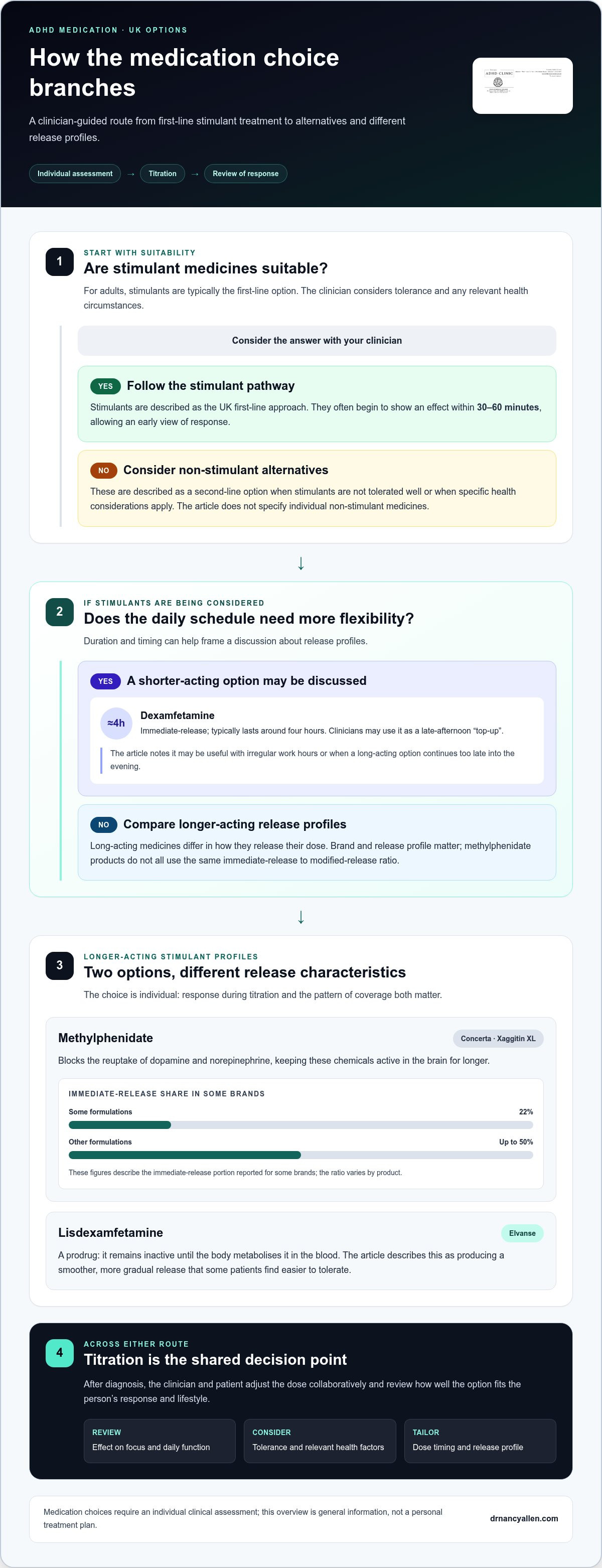
Stimulants are the most effective first-line treatments according to the NICE guidelines for ADHD diagnosis and management in the UK. They are generally categorised into two main groups: Methylphenidate and Amphetamines. When weighing up Stimulant vs non stimulant meds avaialbe in the uk, it's helpful to remember that stimulants are fast-acting, often showing results within thirty to sixty minutes. This rapid response allows for a clear assessment of efficacy during the early stages of your treatment journey.
Methylphenidate vs Lisdexamfetamine
Methylphenidate, found in brands like Concerta and Xaggitin XL, works by blocking the reuptake of dopamine and norepinephrine, keeping these chemicals active in the brain for longer. Lisdexamfetamine, known in the UK as Elvanse, takes a different path. It's a prodrug, which means it remains inactive until your body metabolises it in the blood. This process leads to a smoother, more gradual release that many patients find easier to tolerate. For a deep dive into the technical specifications and how these chemicals differ, you can read our detailed guide on Lisdexamphetamine vs Methylphenidate. Choosing between them often depends on your personal metabolic rate and how your body responds to the initial titration.
Release Profiles and Ratios
Not all long-acting medications are created equal. It's a common surprise to learn that not all methylphenidate medications have the same ratio of immediate-release to modified-release beads. Some brands might release 22% of the dose immediately, whilst others release as much as 50%. This ratio dictates how you feel during your morning commute versus a late-afternoon meeting. Modified-release capsules are specifically designed to mitigate the "rebound effect", which is the sudden dip in mood or focus that can occur as medication wears off. By tailoring these schedules to your professional or academic day, we can create a stable foundation for your productivity. If you're ready to explore these options through a clinical lens, a private Adult ADHD Assessment can help identify the most suitable path for your neurobiology.
Dexamfetamine remains a vital option for those who need more granular control over their daily schedule. Unlike the long-acting prodrug Elvanse, Dexamfetamine is immediate-release and typically lasts around four hours. Clinicians often use it as a "top-up" in the late afternoon to extend the benefits of a morning dose without interfering with sleep. This flexibility is particularly useful for individuals with irregular work hours or those who find that long-acting options persist too late into the evening. Understanding Stimulant vs non stimulant meds avaialbe in the uk means recognising that stimulants offer this high level of customisation for your daily life.
Non-Stimulant Alternatives: When Stimulants Aren’t Suitable
Whilst stimulants offer rapid relief, they aren't always the right fit for every neurobiology. When comparing Stimulant vs non stimulant meds avaialbe in the uk, non-stimulants provide a steady, 24-hour therapeutic effect that doesn't rely on the peaks and troughs associated with traditional stimulants. Atomoxetine, often known by the brand name Strattera, is the most frequently prescribed non-stimulant in British clinical practice. It's particularly valued for providing consistent symptom coverage throughout the day and night, making it an excellent choice for those who find the "crash" of stimulants difficult to manage.
Another key option is Guanfacine, marketed as Intuniv. Clinicians often turn to this when stimulants cause excessive side effects like severe appetite loss or tics. It's helpful to remember that non-stimulants require patience. Unlike the immediate impact of Methylphenidate, these medications involve a build-up period, often taking four to six weeks to reach full efficacy. This gradual approach is often safer for individuals with cardiovascular concerns or a history of substance sensitivity. You can find a detailed breakdown of NHS ADHD treatment options in the UK to see how these fit into the broader care framework.
How Non-Stimulants Work Differently
These medications target norepinephrine receptors directly. This helps improve executive function and focus without the sharp spike in dopamine. For a full mechanism breakdown, you can read our guide to non-stimulant ADHD medication. Beyond focus, non-stimulants are often superior for emotional regulation. They can be life-changing for patients struggling with rejection sensitive dysphoria (RSD), as they help dampen the intense emotional noise that often accompanies ADHD, providing a sense of calm stability that lasts until the next morning.
Addressing Co-occurring Conditions
Non-stimulants are a strategic choice for patients with complex health profiles. For instance, they are often better tolerated by those living with both dysautonomia and ADHD. Stimulants can sometimes exacerbate a high heart rate or conditions like POTS, whereas non-stimulants like Guanfacine can actually help lower blood pressure. This makes them a vital tool for managing ADHD symptoms whilst prioritising your overall physical well-being and sleep quality. Choosing between Stimulant vs non stimulant meds avaialbe in the uk isn't about which is "stronger", but which aligns most safely with your body's unique requirements.
Comparing Stimulants and Non-Stimulants: A Decision Framework
Choosing between Stimulant vs non stimulant meds avaialbe in the uk involves more than just comparing efficacy. It's about matching a medication's profile to your daily rhythm and physical health. The most striking difference is the speed of onset. Stimulants typically begin working within thirty minutes, providing a clear window of focus. Non-stimulants, however, require a patient build-up over four to six weeks. This gradual approach creates a steady baseline of support that doesn't "wear off" in the evening, which is often a priority for those who need symptom management around the clock.
Side effect profiles also differ significantly. Stimulants may cause a sense of "jitteriness" or suppressed appetite in some, whilst non-stimulants are more likely to cause initial drowsiness or digestive changes. Interestingly, the impact on ADHD and sleep is not always what you'd expect. Whilst stimulants are technically wake-promoting agents, many patients find they sleep better on them because the medication quiets the internal "brain chatter" that prevents rest. Regardless of the choice, regular monitoring of heart rate, blood pressure, and weight remains a standard safety requirement for all UK prescriptions.
The Hormonal Connection: Menopause and ADHD
For women, the choice of medication is often inextricably linked to hormonal health. Oestrogen plays a critical role in dopamine production and reception. As oestrogen levels fluctuate during perimenopause and drop during menopause, many women find their usual stimulant dose becomes less effective. This hormonal shift can exacerbate executive dysfunction and brain fog. Understanding ADHD in women requires a clinician who can identify when a change in medication type or a dose adjustment is needed to account for these biological transitions. If you're struggling to manage symptoms alongside hormonal changes, you can book a specialist menopause and ADHD consultation to create a more supportive treatment plan.
Combination Therapy: Stimulant and Non-Stimulant Together
In some clinical scenarios, we may recommend "layering" medications. This combination therapy uses a non-stimulant to provide a "floor" of emotional stability and baseline focus, whilst a stimulant provides a "ceiling" for high-demand tasks. This dual-prescription protocol can be particularly effective for patients who experience a severe "crash" as stimulants wear off or for those who need the emotional regulation benefits of a non-stimulant alongside the cognitive boost of a stimulant. Safety is paramount here; dual protocols require careful titration and frequent reviews to ensure the two medications are working harmoniously without increasing the side-effect burden.
Your Private Titration Journey with Dr Nancy Allen
Receiving a diagnosis is a significant milestone, but it's only the beginning of your path toward clarity. The next stage involves a partnership to identify which treatment aligns with your unique neurobiology. The choice between stimulant vs non stimulant meds avaialbe in the uk isn't merely about following a checklist; it's about finding your "sweet spot." This is the point where your symptoms are managed effectively without your daily life being disrupted by side effects. We don't simply prescribe the most common or cost-effective option. Instead, we prioritise a personalised approach that respects your history, your lifestyle, and your specific goals for treatment.
The Titration Process: What to Expect
Titration is the clinical process of finding the lowest effective dose with the fewest side effects. This phase is handled with care and precision, typically involving weekly check-ins to monitor how you're feeling. We move at a slow and steady pace, allowing your body time to adjust to each small change. During these consultations, we look closely at the nuances of stimulant vs non stimulant meds avaialbe in the uk to see which provides the most stable support for your executive function. It's a collaborative effort where your feedback is the most valuable data we have. We adjust the dose or the timing based on your real-world experiences, ensuring the medication works for you, rather than you having to work around the medication.
Once we've identified the right medication and dose, and you've remained stable for a period of time, we can begin the process of a Shared Care Agreement (SCA). This allows your care to be transitioned back to your GP, who can then take over the responsibility for your prescriptions at NHS rates. This transition ensures that your long-term treatment remains sustainable and integrated into your primary healthcare records. We provide all the necessary documentation and clinical evidence to make this handover as smooth as possible for both you and your doctor.
Restoring Quality of Life
The true measure of successful treatment goes far beyond improved focus at a desk. When we find the right balance, the impact ripples through your relationships, your self-esteem, and your sense of agency. The first few months of treatment often provide a period of profound validation as you realise that many of your past struggles were not character flaws, but biological challenges. This clinical support is most effective when combined with a holistic approach. We work with you to identify necessary workplace adjustments and lifestyle changes that complement your pharmacological treatment.
Finding the right path requires a steady hand and clinical expertise. If you're ready to move toward a more focused and balanced life, we're here to guide you through every step of the process. Book your private ADHD consultation with Dr Nancy Allen today to begin your personalised journey toward well-being.
Empowering Your Path to Clarity
Choosing the right treatment is a deeply personal process that balances clinical evidence with your lived experience. Whether you require the immediate cognitive support of first-line stimulants or the steady, 24-hour coverage of non-stimulant alternatives, the objective remains the same: a life defined by focus rather than frustration. Navigating the choice between stimulant vs non stimulant meds avaialbe in the uk is most effective when guided by a clinician who understands the nuances of your neurobiology, including the significant impact of hormonal fluctuations.
Dr Nancy Allen offers a supportive, expert-led environment where diagnosis and treatment plans are typically available within 72 hours. As a specialist in the ADHD-menopause connection, she provides national online consultations designed to restore your confidence and well-being without the delay of traditional waitlists. You don't have to manage these complexities alone. Book a Private ADHD Consultation for Personalised Medication Advice and take the first step toward a more balanced future. You deserve a treatment journey that prioritises your unique needs and empowers you to thrive.
Frequently Asked Questions
Are stimulants more effective than non-stimulants for adult ADHD?
Stimulants are generally considered the most effective first-line treatment for the majority of adults, with a response rate of around 70% to 80%. However, effectiveness is highly individual. If you experience significant side effects or have specific health contraindications, a non-stimulant might be the more effective choice for your lifestyle. The goal is to find a treatment that offers the best symptom control with the fewest disruptions to your daily well-being.
Can I switch from a stimulant to a non-stimulant medication easily?
Switching is certainly possible, but it must be managed carefully by your clinician. Because stimulants work immediately and non-stimulants take weeks to build up, we often use a cross-tapering approach. This ensures you don't experience a total loss of symptom control during the transition. Your specialist will guide you through this process, monitoring your mood and focus levels as your body adjusts to the new medication profile whilst ensuring your safety.
What are the most common side effects of ADHD meds in the UK?
For stimulants, common side effects include a reduced appetite, dry mouth, and occasional sleep disturbances. Non-stimulants like Atomoxetine may cause nausea or fatigue during the first few weeks of treatment. When weighing up stimulant vs non stimulant meds avaialbe in the uk, it's helpful to remember that most side effects are temporary. They usually subside once your body becomes accustomed to the medication and we find your ideal therapeutic dose during titration.
Is it safe to take ADHD medication if I have a heart condition?
Safety is our primary concern, and a heart condition doesn't automatically rule out medication. Whilst stimulants can increase heart rate, non-stimulants like Guanfacine may actually lower blood pressure. We perform detailed cardiovascular screenings and regular monitoring of your vitals during titration. If a stimulant is deemed too risky for your specific condition, we'll explore non-stimulant alternatives that provide cognitive support without putting undue strain on your heart or circulatory system.
How long does it take for non-stimulant ADHD medication to start working?
Patience is essential when starting a non-stimulant protocol. Unlike stimulants, which provide focus within an hour, non-stimulants like Atomoxetine require a build-up period. You might notice subtle improvements in your emotional regulation after two weeks, but the full therapeutic impact on your focus and executive function typically takes four to six weeks. We'll have regular check-ins during this time to monitor your progress and manage any early side effects as they arise.
Will I have to stay on ADHD medication for the rest of my life?
Medication use is a personal choice rather than a permanent requirement. Some individuals use treatment to navigate specific challenges, such as university or a demanding new job, whilst others prefer consistent long-term support. We conduct annual reviews to discuss your symptoms and goals. Many patients find that medication provides the stability needed to implement lifestyle changes and coping mechanisms, which may eventually lead to a supervised reduction in dosage or a break.
Can I get a private prescription and then move to the NHS?
This is a common path for many of our patients. Once you are stable on your medication after private titration, we can request a Shared Care Agreement with your GP. If accepted, your GP will take over the prescribing, allowing you to pay standard NHS prescription charges. This transition bridges the gap between the speed of private assessment and the long-term affordability of the NHS, ensuring your care remains sustainable and integrated.
Does ADHD medication interact with HRT for menopause?
There is no known direct contraindication between ADHD medications and Hormone Replacement Therapy. In fact, they often work well together. Since oestrogen supports dopamine production, HRT can sometimes improve the efficacy of your ADHD treatment. We specialise in this hormonal overlap, ensuring that your stimulant vs non stimulant meds avaialbe in the uk are carefully balanced with your HRT to manage both your neurodivergent symptoms and menopausal changes effectively and safely.



Comments