


ADHD in Women: Recognising the Signs, Masking, and the Hormonal Connection

Updated: 2 hours ago
Why does it feel like you're failing at "adulting" whilst everyone else seems to manage the daily grind with effortless ease? If you've spent years feeling chronically exhausted by the simple act of existing, you're not alone. Many find that adhd in women is frequently misdiagnosed as anxiety or depression because the symptoms are often internalised. This happens because your struggle manifests as a quiet, private battle, hidden far beneath the surface of a busy life and a professional exterior.
It's exhausting to constantly mask your symptoms just to fit in. You deserve to understand that your brain simply works differently. Your struggles aren't a reflection of your character, and you're not failing. In this article, we'll examine why this condition is so often overlooked, how hormonal shifts can intensify your symptoms, and the clear path toward a life-changing private assessment. We'll also provide practical strategies to help you manage executive dysfunction and restore your confidence in your own abilities.
Table of Contents
Understanding ADHD in Women: Why the Signs Are Frequently Missed
ADHD is fundamentally a neurodevelopmental condition. It isn't a choice, a lack of willpower, or a personality flaw. At its core, the condition involves complex differences in how the brain regulates dopamine and manages executive function. This "command centre" of the brain is responsible for everything from time management and focus to emotional regulation and impulse control. When these systems don't function typically, the result is a brain that processes the world with a unique, often exhausting intensity.
The diagnostic gap between genders remains a significant hurdle. Research suggests that while males are typically identified between the ages of 11 and 22, the average age of diagnosis for women falls much later, often between 16 and 28. This discrepancy exists because the traditional DSM-5 criteria were historically based on observations of hyperactive young boys. Because the unique ways adhd in women presents were largely ignored, many girls grew up without the support they needed, often believing their struggles were simply personal failings.
The Internalised Experience of Female ADHD
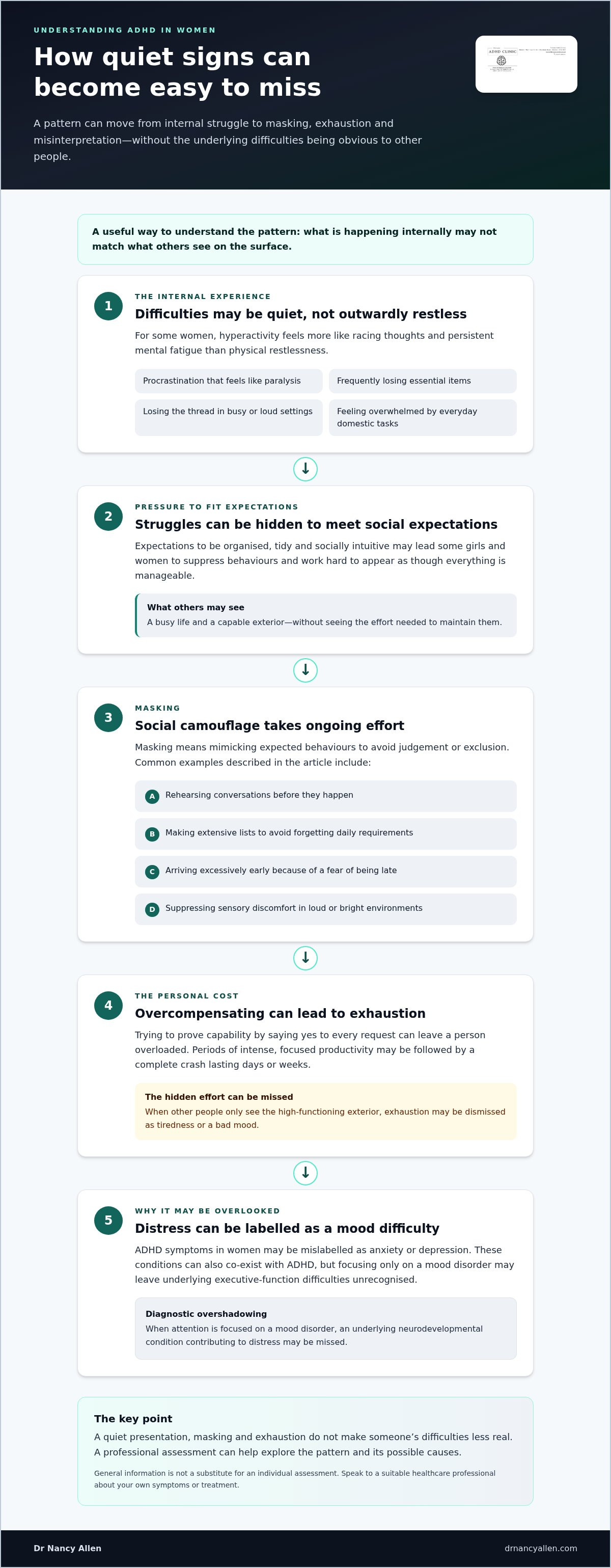
For many women, hyperactivity doesn't look like physical restlessness or "running on a motor." Instead, it feels like an internal storm of racing thoughts that refuses to shut down. This internalised hyperactivity is often invisible to others, manifesting instead as chronic mental fatigue. Spotting adhd in women requires looking past the surface and identifying "quiet" symptoms that disrupt daily life, such as:
Chronic procrastination that feels like physical paralysis.
Frequently losing essential items like keys, phones, or important documents.
Difficulty following the thread of a conversation in busy or loud environments.
A persistent sense of being overwhelmed by "simple" domestic tasks.
Social conditioning plays a powerful role in hiding these traits. Society expects girls to be naturally organised, tidy, and socially intuitive. To meet these standards, many women learn to suppress their natural behaviours from a young age, a process that requires immense cognitive effort and often leads to burnout later in life.
Common Misdiagnoses: Anxiety, Depression, and Bipolar
Without a specialist's insight, ADHD symptoms are frequently mislabelled as mood disorders. It's common for women to spend years being treated for anxiety or depression with very little success. While these conditions can co-exist with ADHD, treating the anxiety alone is often ineffective because it doesn't address the underlying executive dysfunction that is causing the stress in the first place. When the root cause is missed, the patient remains trapped in a cycle of struggle and self-blame. In many cases, it is also helpful to explore how other challenges, such as those detailed by the Women’s Mental Health Specialist, can overlap with neurodivergence to create a complex clinical picture.
Diagnostic overshadowing occurs when a healthcare professional focuses so heavily on a mood disorder that they fail to recognise the underlying neurodevelopmental condition driving the patient's distress.
Masking is often described as a "social camouflage." For many, it's the exhaustive process of mimicking neurotypical behaviours to avoid judgment or exclusion. Whilst this might help a woman blend in at a dinner party or a board meeting, the internal cost is immense. This constant performance leads to a "people-pleasing" trap, where you might find yourself saying "yes" to every request just to prove you are capable, even when your internal systems are already overloaded. You are overcompensating for perceived failures by being "too" helpful, sacrificing your own well-being to maintain a façade of competence.
This cycle inevitably leads to ADHD burnout. You might experience periods of intense, hyper-focused productivity, only to crash completely for days or weeks afterwards. Because the world only sees the "high-functioning" version of you, your eventual collapse is often dismissed as mere tiredness or a bad mood. Over time, this creates a profound sense of being a fraud. You aren't failing; you're simply exhausted from running a neurotypical operating system on neurodivergent hardware. If you feel you are nearing this breaking point, seeking a professional assessment can be the first step towards unmasking with confidence.
Social Conditioning and the 'Perfect Woman' Myth
Common masking behaviours used to hide these struggles include:
Rehearsing social interactions or conversations multiple times before they happen.
Obsessive list-making to prevent forgetting basic daily requirements.
Arriving excessively early for appointments to compensate for a chronic fear of being late.
Suppressing sensory discomfort in loud or bright environments to avoid appearing "difficult" to others.
Workplace Challenges and Career Impact
In a professional setting, the struggle with time management and administrative "life admin" can create a glass ceiling. You might be brilliant at big-picture strategy but find yourself stalled by the inability to file expenses or manage a complex calendar. This often leads to a fear of being "found out," causing many women to avoid promotions they are more than qualified for. Employers can play a vital role here by supporting adhd staff through simple adjustments to the physical office or communication styles. When the environment is adjusted to suit the brain, the need for exhausting masking often diminishes, allowing your natural talents to take centre stage.
The Hormonal Connection: ADHD, Oestrogen, and Menopause
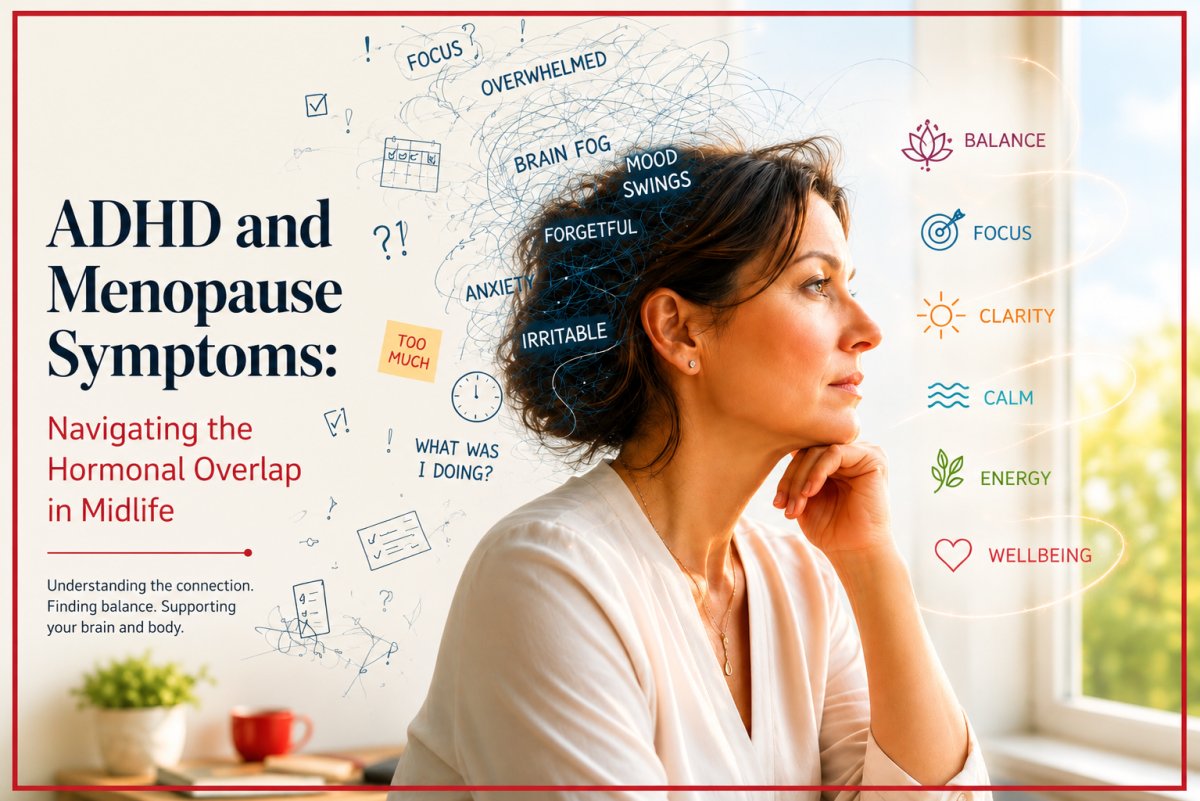
Because of this connection, symptoms often "explode" during major life transitions such as puberty, pregnancy, and perimenopause. For those navigating the complexities of reproductive health during these times, ah! fertility nutrition provides specialist nutritional therapy designed to support the body through these significant life stages. The "brain fog" commonly associated with the change of life can be indistinguishable from ADHD related cognitive struggles, leading to significant confusion. It's vital to consult a specialist who understands the nuances of menopause symptoms and how they intersect with neurodiversity. Without this dual perspective, clinicians may incorrectly attribute all struggles to hormones, leaving the underlying neurodivergence unaddressed.
Perimenopause: The Tipping Point for Late Diagnosis
To better understand the broader hormonal landscape, Living Well Dallas provides resources on how progesterone and other key hormones impact cognitive health and brain fog during this transition.
Many women only seek an adult adhd assessment when they reach their 40s or 50s. Up until this point, they may have successfully managed their traits through sheer effort and meticulous "scaffolding." However, as oestrogen begins its permanent decline during perimenopause, these coping mechanisms often crumble. What was once a manageable quirk becomes an overwhelming barrier to daily functioning. In these cases, a combined treatment plan involving both Hormone Replacement Therapy (HRT) and ADHD medication can be transformative, as each addresses a different part of the physiological puzzle.
Sleep Disruptions and the ADHD Brain
Sleep is frequently the first casualty of the hormonal-ADHD intersection. There's a high prevalence of insomnia amongst neurodivergent individuals, and research into why the adhd brain struggles to sleep points to a delayed circadian rhythm and a mind that refuses to quieten. This is often compounded by revenge bedtime procrastination, where overstimulated women stay up late to reclaim a sense of personal agency after a day of masking.
When you add hormonal night sweats and temperature dysregulation to an already restless ADHD brain, it creates a "perfect storm" of chronic fatigue. This lack of restorative sleep further depletes dopamine levels, making it even harder to manage adhd in women the following day. Breaking this cycle requires a holistic approach that recognises both the neurological and hormonal drivers of restlessness.
Navigating the Path to a Private ADHD Diagnosis
For many seeking a diagnosis for adhd in women, the traditional route through local health services can feel like an insurmountable barrier. Long waiting lists often span several years, leaving individuals in a state of limbo whilst their symptoms continue to impact their quality of life. Appointments are often available within days. One of the primary benefits is the ability to work with a specialist who understands the gender-specific nuances of neurodivergence. You aren't just looking for a tick-box exercise. You're seeking a clinician who recognises how your personal history and hormonal health intersect. It's also vital to understand your legal standing. In the UK, you might wonder is adhd a disability? Recognising it as such under the Equality Act 2010 can unlock essential support and reasonable adjustments in the workplace.
What to Expect During a Private Consultation
A thorough assessment is much more than a simple questionnaire. It involves a detailed clinical interview where your life experiences are heard and validated by an expert. Specialists look closely at your developmental history and often request observer reports from people who knew you in childhood or see you in your current daily life. This isn't about proving a deficit or seeking a label for its own sake. It's about gaining the clarity you need to move forward. Modern secure online consultations allow you to undergo this process from the comfort of your own home, which is particularly helpful for those who find clinical environments overstimulating. If you're ready to start this journey, you can book a private ADHD assessment to receive the expert insight you deserve.
Understanding Treatment Options and Titration
If a diagnosis is confirmed, the next phase is often titration. This is the careful, supervised process of finding the right medication and dosage for your specific brain chemistry, which is a vital step in managing adhd in women effectively. You might discuss the differences between lisdexamphetamine vs methylphenidate, which are common stimulant options used to improve focus and reduce internal restlessness. For those who may have underlying health concerns or simply don't respond well to stimulants, non-stimulant adhd medication provides an effective alternative. Once you're stable on your medication, many private specialists work with your GP through a Shared Care agreement. This allows your regular doctor to take over the prescribing at standard NHS rates, ensuring your long-term care remains both accessible and sustainable.
Dr Nancy Allen offers secure online and in-person consultations, with appointments often available within days.
Dr Nancy Allen brings over 25 years of clinical experience as a GP to her specialist practice, creating a unique bridge between general medicine and the specific complexities of neurodiversity. This extensive background allows her to look beyond the surface, identifying how various health factors interact with your neurological profile. Her approach is built on the fundamental understanding that adhd in women is not merely a collection of symptoms but a deeply personal lived experience that requires both clinical precision and profound empathy. By specialising in both ADHD and menopause management, she offers a holistic clinical perspective that addresses the whole person, ensuring that hormonal influences are never ignored during the diagnostic process.
Speed of care is a cornerstone of this patient-centric philosophy. For many, the years spent wondering "why" have already been long enough. Dr Nancy Allen offers secure online and in-person consultations, with appointments often available within days. This rapid turnaround is designed to reduce the period of uncertainty and allow you to begin the process of restoration as quickly as possible. This efficiency does not come at the cost of depth; rather, it reflects a dedication to providing the clarity and insight required to move forward with confidence.
A Supportive Environment for Neurodivergent Women
Traditional medical settings can often feel sterile or detached, which is particularly challenging for women who may have already felt dismissed by the healthcare system. Dr Allen’s practice opts for a tone that is warm and reassuring, ensuring you feel genuinely heard from your very first interaction. The value of being understood by a specialist who recognises the nuances of the female journey, from social masking to the impact of life transitions, cannot be overstated. Secure online consultations provide a comfortable, accessible way to seek help from the safety of your own home. You can book an initial consultation through the secure online platform, taking the first step towards a life-changing understanding of your brain.
Restoring Confidence and Quality of Life
For individuals whose personal journey also involves exploring their gender identity, the Gender Identity Center offers specialised therapy to help navigate these complex intersections between neurodiversity and gender.
The transition from a state of chronic shame to one of empowered self-understanding is often the most significant outcome of a specialist assessment. Many women spend decades internalising their struggles, believing they are simply "not trying hard enough" or are "failing" at adult life. Moving toward a diagnosis of adhd in women allows you to replace that internalised critic with a compassionate, evidence-based perspective. A tailored management plan provides the practical strategies needed to improve your quality of life, whether that means better focus at work or more ease in your domestic environment. It's never too late to seek clarity. Understanding that your brain simply works differently is the key to building a future that celebrates your strengths whilst supporting your challenges.
For those seeking a supportive environment to implement these changes, Michelle McMillan offers personalised therapy strategies tailored for women and families.
Embracing Clarity and Moving Forward
Moving from a life of chronic overwhelm to one of empowered self-understanding is a journey that begins with validation. You've seen how adhd in women often remains hidden behind a mask of high-functioning competence, only to be exacerbated by the natural shifts in oestrogen during perimenopause. Recognising that your brain simply works differently is the first step toward reclaiming your quality of life and shedding the weight of decades of self-blame.
You don't have to navigate this path alone. Dr Nancy Allen provides a compassionate, patient-centric approach that combines over 25 years of clinical experience with specialist expertise in both neurodiversity and hormonal health. Appointments are often available within days.
Book your private ADHD assessment with Dr Nancy Allen today and start the next chapter of your life with confidence. It's never too late to understand your own story and build a future that works with your brain, not against it.
Frequently Asked Questions
Can I have ADHD if I was 'gifted' or did well at school?
Yes. High intelligence often allows girls to develop sophisticated coping mechanisms that mask executive dysfunction during their early years. You might have thrived in the structured school environment only to find that the unstructured demands of adulthood, such as managing a career or a home, cause your systems to fail. Success in education doesn't negate the internal struggle or the immense cognitive effort required to maintain that level of performance.
Is it common for ADHD symptoms to get worse during menopause?
It is very common because oestrogen levels drop significantly during perimenopause and menopause. Since oestrogen helps regulate the production and sensitivity of dopamine, this decline can make previously managed traits feel completely unmanageable. Many women find that their "brain fog" is actually an intensification of underlying ADHD. Specialist care that understands both hormonal health and neurodiversity is essential for navigating this transition with confidence. To learn more about clinical hormone therapy and metabolic health from specialists such as Dr. Renato Lobo, read more.
How do I tell my GP that I think I have ADHD as an adult woman?
Start by presenting a prepared list of your symptoms and, more importantly, how they impact your daily functioning. Focus on specific examples of impairment in your work, home life, or relationships rather than just a list of traits. Mentioning your childhood history and any family patterns can also be helpful. Whilst you don't always need a GP referral for a private assessment, keeping them informed is vital for future Shared Care arrangements.
What is the difference between ADHD and just being 'busy' or 'stressed'?
The primary difference lies in the persistence and origin of the symptoms. Stress is usually a reaction to external pressures and typically subsides when those pressures are removed. ADHD is a lifelong neurodevelopmental condition that remains present even during quiet periods. Whilst everyone feels busy, those with adhd in women experience a chronic inability to regulate attention and executive function regardless of their external circumstances or stress levels.
Do I have to take medication once I have a diagnosis?
The assessment process is thorough but designed to be efficient. Appointments are often available within days. This rapid turnaround is designed to minimise the anxiety of waiting for answers. The consultations themselves are unhurried, ensuring you have ample time to discuss your experiences and feel heard by a specialist who understands your journey.
Will my private diagnosis be recognised by the NHS?
Yes, a diagnosis from a qualified specialist using recognised clinical criteria is a valid medical record. Most GPs will accept a private diagnosis, especially when it's provided by a clinician with Dr Allen's extensive experience. This recognition is particularly important if you wish to enter a Shared Care agreement. This is where the NHS takes over the prescribing of your medication at standard rates after your initial titration period is complete.
What are the most common signs of ADHD in adult women?
Common signs of adhd in women often involve internalised restlessness and executive dysfunction rather than physical hyperactivity. You might experience chronic procrastination, difficulty finishing tasks, and sensory overload in busy environments. Emotional dysregulation and a persistent sense of being overwhelmed by "life admin" are also frequent indicators. Many women find they've spent years masking these traits to meet social expectations of being organised, nurturing, and constantly "together."

Comments