


ADHD and Menopause Symptoms: Navigating the Hormonal Overlap in Midlife

Updated: 2 hours ago
Oestrogen acts as the essential biological scaffolding for the ADHD brain; when those levels begin to fall, the neurodivergent struggle often becomes visible for the first time. For many women, midlife brings a bewildering surge in executive dysfunction and a sense that their once-reliable coping mechanisms are simply crumbling. You might feel as though you're losing your mind, particularly when your usual medication feels less effective than it used to. Understanding the link between adhd and menopause symptoms is the first step in reclaiming your cognitive clarity. Research from 2025 indicates that over 54% of women with ADHD experience debilitating perimenopausal symptoms, which is significantly higher than their neurotypical peers.
It's easy to feel dismissed when health professionals attribute these profound changes to mere ageing or stress, yet your experience is rooted in biology rather than a lack of willpower. You deserve to know that your struggle is valid and deeply felt. This article explains how fluctuating hormones impact your neurodiversity and provides a clear framework for navigating these unique midlife challenges. We'll examine why symptoms often intensify during this transition and how accessing a specialist who understands both fields can help you regain the clarity and confidence you deserve.
Table of Contents
The Hormonal Connection: Why ADHD Symptoms Surge During Menopause
To understand why midlife can feel like a sudden cognitive collapse, we must look at the profound synergy between oestrogen and dopamine. Oestrogen acts as a form of biological scaffolding for the brain, enhancing the production of dopamine and ensuring that receptors remain sensitive to its signals. For many women, this scaffolding has quietly supported their executive functions for decades. It allowed them to manage undiagnosed ADHD through sheer effort and environmental structure, often without ever realising their brain worked differently.
As we enter perimenopause, this internal support system begins to oscillate. Whilst the eventual state of menopause is defined by consistently low hormone levels, the years leading up to it are often a chaotic rollercoaster. These unpredictable hormonal fluctuations of menopause are particularly punishing for the neurodivergent brain. When oestrogen levels plummet, dopamine levels follow, creating a "double whammy" effect that causes previously manageable adhd and menopause symptoms to flare with newfound intensity. The scaffolding doesn't just lean; it starts to crumble.
The Role of Oestrogen in Brain Chemistry
Oestrogen is a powerful modulator of the prefrontal cortex, the region of the brain responsible for focus, impulse control, and emotional regulation. In women, ADHD often presents as an "internalised" struggle, characterised by racing thoughts and chronic overwhelm rather than physical hyperactivity. As oestrogen levels drop, the brain's ability to process information efficiently is compromised, making it harder to filter out distractions or regulate moods. The decline of oestrogen directly impairs dopamine neurotransmission, serving as the primary catalyst for the sudden intensification of midlife ADHD symptoms.
Why Masking Fails in Midlife
Masking is the subconscious process of hiding ADHD traits to fit into neurotypical social and professional structures. It requires an immense amount of cognitive energy, acting like a background programme that never stops running. In midlife, the cumulative load of career progression, raising children, and caring for ageing parents meets the sharp decline of hormonal support. The cognitive energy required to "perform" neurotypicality simply runs out.
This is the point where the masking strategy finally fails. The emotional impact of this transition is significant. Women who once felt capable and in control may suddenly find themselves unable to remember simple appointments or focus on basic tasks. It's not a failure of character. It's a biological shift where the mental energy required to mask ADHD traits simply exceeds the brain's dwindling resources, leaving many feeling exposed and overwhelmed for the first time in their lives.
Identifying the Overlap: Common ADHD and Menopause Symptoms
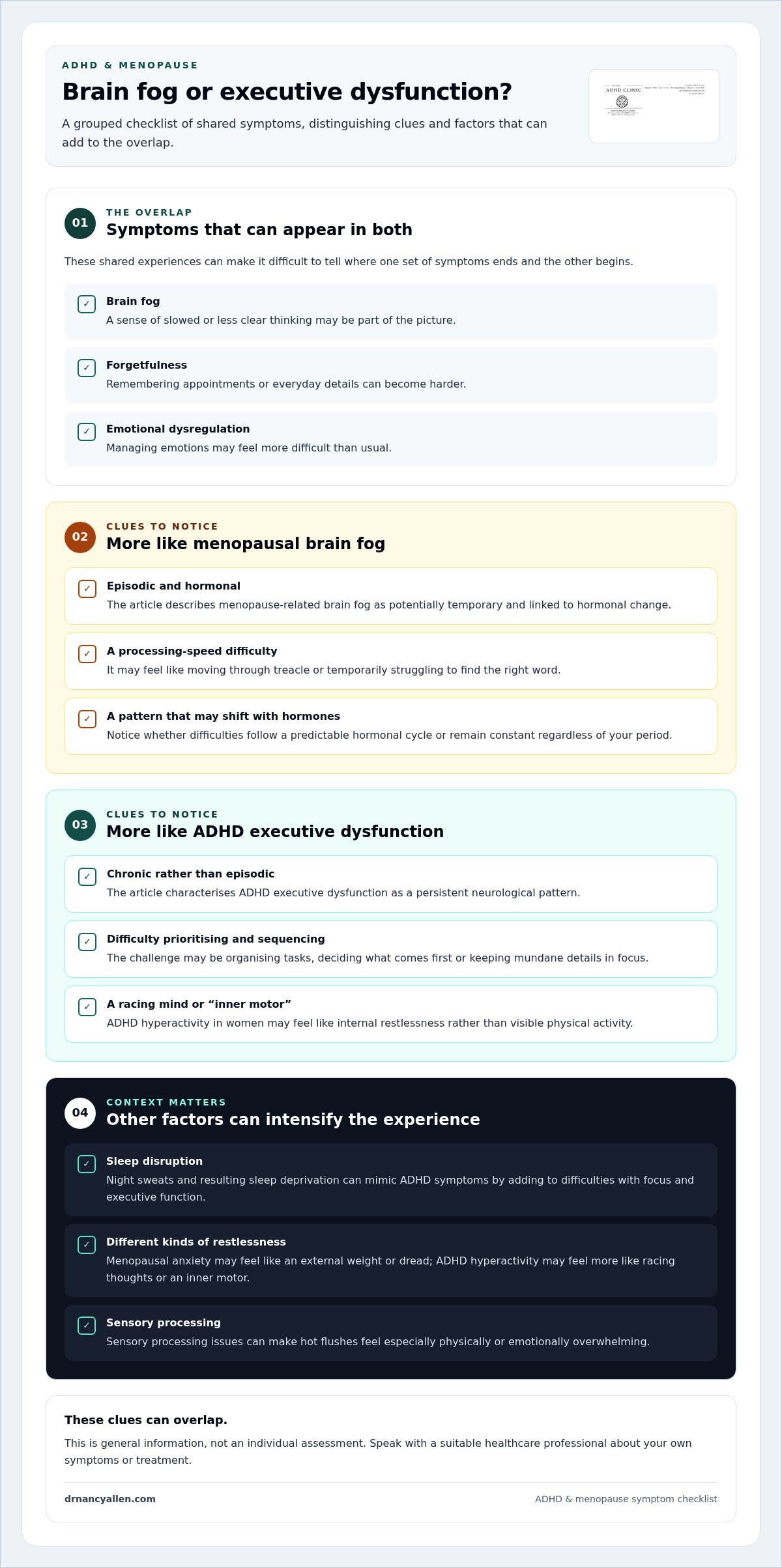
The symptoms of perimenopause and ADHD often present as mirror images, making it difficult to discern where one ends and the other begins. Core challenges such as brain fog, persistent forgetfulness, and emotional dysregulation are common to both. For many women, this overlap creates a confusing clinical picture. Many report a significant worsening of ADHD symptoms during this period, finding that strategies which once worked are no longer sufficient to manage daily life. If you're struggling to untangle these symptoms, an Adult ADHD Assessment can provide the clarity you need to move forward.
Distinguishing between the two requires a nuanced look at the nature of the cognitive struggle. Menopause brain fog is typically episodic and hormonal; it feels like moving through treacle or a temporary inability to find the right word. In contrast, ADHD executive dysfunction is chronic and neurological. It's less about "fog" and more about an inability to prioritise, sequence tasks, or maintain focus on mundane details. Whilst menopause might introduce new cognitive hurdles, it often acts as a magnifying glass for pre-existing ADHD traits that were previously kept under control.
Internal restlessness is another area of significant overlap. Menopausal anxiety often feels like a heavy, external weight or a sense of impending dread. ADHD hyperactivity in women, however, usually manifests as a racing mind or an "inner motor" that won't switch off. When these two forces combine, the result is a state of profound exhaustion. ADHD can also intensify the physical experience of menopause. For example, the sensory processing issues common in neurodivergent individuals can make hot flushes feel physically aggressive or emotionally overwhelming rather than just uncomfortable.
Brain Fog vs. Executive Dysfunction
It helps to view brain fog as a processing speed issue, whilst executive dysfunction is a prioritisation issue. If you're tracking your symptoms, notice if they follow a predictable hormonal cycle or remain constant regardless of your period. It's also vital to consider sleep. Menopausal night sweats cause chronic sleep deprivation, which mimics ADHD symptoms by further depleting the brain's executive reserves. A specialist can help you determine if your struggle is a temporary hormonal dip or a lifelong neurological pattern that has reached a tipping point.
Emotional Regulation and Rejection Sensitivity
Hormonal irritability is often reactive and tied to oestrogen dips. ADHD-related emotional impulsivity is more about the speed and intensity of the response. Women with ADHD frequently experience Rejection Sensitive Dysphoria (RSD), an intense emotional pain triggered by perceived criticism. During menopause, falling oestrogen levels can lower your emotional "floor," making RSD episodes feel more frequent and harder to recover from. This biological vulnerability explains why neurodivergent women often report more severe psychosocial symptoms during the perimenopausal transition than their neurotypical peers.
The Late-Diagnosis Phenomenon: Why Midlife Often Reveals ADHD
For decades, the clinical blueprint for ADHD was based almost exclusively on the behaviour of hyperactive young boys. This historical bias meant that an entire generation of women, whose symptoms often manifested as internalised inattentiveness or over-compensation, was systematically overlooked. Many of these women reached midlife believing they were simply not trying hard enough or were naturally scattered. It is only when they encounter how hormonal changes during menopause can affect ADHD that the underlying neurodiversity becomes impossible to ignore. The intersection of adhd and menopause symptoms acts as a catalyst, bringing lifelong patterns to the surface in a way that can no longer be masked.
This tipping point occurs when the escalating demands of the sandwich generation, including managing high-pressure careers, supporting teenage children, and caring for ageing parents, collide with the loss of hormonal support. Whilst you may wonder if these struggles are just a normal part of getting older, it's vital to recognise that ADHD is a neurodevelopmental condition, not a side effect of age. Ageing might exacerbate the challenges, but it doesn't create the neurological wiring. If you have spent decades wondering why you seem to struggle more than others with the logistics of daily life, midlife is often the moment the answer finally reveals itself.
The Burden of the "Undiagnosed" Label
Living for forty years without a diagnosis often carries a heavy psychological price. You may have spent a lifetime internalising labels like lazy, unreliable, or too emotional. Receiving a diagnosis in midlife provides a profound new lens through which to view your entire history. It transforms your narrative from one of personal failure to one of biological reality. This validation is more than just a label; it's a clinical tool that allows for the restoration of self-esteem and the beginning of targeted, effective support for adhd and menopause symptoms.
Navigating Private Care in the UK
The current landscape for ADHD assessments in the UK is challenging, with NHS waiting lists often stretching into several years. For a woman in the midst of a perimenopausal crisis, this delay can be devastating to her career and mental well-being. Choosing a private ADHD assessment offers a path to immediate clarity. Accessing specialist care that understands the female presentation of neurodiversity ensures that your symptoms aren't dismissed as just hormones or stress, but are instead addressed with the clinical precision they require.
Navigating Treatment: Managing Hormones and Neurodiversity Together
Managing the intersection of adhd and menopause symptoms requires a clinical approach that addresses both neurological and hormonal needs simultaneously. The "Gold Standard" for care involves a dual strategy: stabilising hormonal fluctuations whilst providing targeted ADHD management. For many women, Hormone Replacement Therapy (HRT) acts as a way to "bring back the floor." By restoring oestrogen levels, HRT provides the necessary biological foundation for ADHD medications to function effectively again. Without this hormonal stability, many find that their usual stimulant or non-stimulant treatments feel increasingly unreliable.
Effective treatment also requires a degree of flexibility. If you are still menstruating, your requirements for ADHD medication may shift significantly during the luteal phase of your cycle when oestrogen naturally dips. A specialist can help you navigate these nuances, perhaps by adjusting your dosage during specific weeks to compensate for the loss of hormonal support. This personalised approach ensures you aren't left struggling when your biology shifts. If you're ready to create a tailored management plan, exploring Peri-menopause & Menopause Specialist Care is a vital next step.
Hormone Replacement Therapy (HRT) and the ADHD Brain
Transdermal oestrogen, delivered via patches or gels, is often the preferred choice for women with ADHD. It provides a steady, consistent release that avoids the peaks and troughs associated with oral tablets, which is essential for maintaining cognitive stability. The choice of progesterone is equally important. Many neurodivergent women react poorly to synthetic progestogens, which can exacerbate mood swings or "brain fog." Micronised progesterone is often better tolerated, providing the necessary protection without the negative psychological side effects. It's important to remember that HRT is not a cure for ADHD; instead, it restores the baseline required for other treatments and strategies to work.
Lifestyle Adjustments for the Neurodivergent Menopause
Non-medical strategies play a supportive role in managing the midlife transition. Traditional advice like "just use a planner" often fails the ADHD brain, especially when menopausal fatigue sets in. Instead, focus on strategies that respect your neurological wiring:
Dopamine-Friendly Nutrition: Prioritise protein-rich meals, especially in the morning. Amino acids like tyrosine are the precursors to dopamine, which is essential for focus and motivation.
Body Doubling: Use virtual or in-person body doubling sessions to tackle administrative tasks that feel overwhelming due to executive dysfunction.
Sleep Hygiene: Manage the "wired but tired" state by addressing menopausal night sweats and using sensory-friendly bedding to reduce the physical discomfort that disrupts rest.
Sensory Management: Recognise that your sensory thresholds may be lower. Reducing background noise or choosing soft fabrics can prevent the sensory overload that often mimics or worsens ADHD irritability.
Seeking Specialist Support: Your Path to Clarity with Dr Nancy Allen
Finding a healthcare professional who understands the intricate relationship between adhd and menopause symptoms can be the difference between continuing to struggle and finally finding a path forward. Dr Nancy Allen offers a rare level of expertise as a private GP specialising in both menopause care and ADHD. With 25 years of clinical experience, she serves as a trusted expert guide for women navigating this complex midlife transition. By addressing these two areas in tandem, she ensures that your treatment is cohesive, ensuring that your hormonal health and neurodiversity are managed as part of a single, unified plan.
One of the most significant barriers to care in the UK is the length of waiting lists for an NHS assessment, which can often span several years. For a woman whose career or family life is currently being impacted by escalating symptoms, such a delay is often untenable. Dr Nancy Allen offers secure online and in-person consultations, with appointments often available within days. This rapid access to specialist insight provides the immediate clarity required to begin your recovery without the prolonged anxiety of a waiting list.
A Compassionate, Evidence-Based Approach
Clinical authority and deep-seated empathy are at the heart of Dr Allen’s practice. She understands that by the time many women seek a private assessment, they have already spent years feeling dismissed or being told their struggles are simply a result of stress or ageing. Her approach is designed to validate your experience through a holistic lens. This involves looking beyond cognitive traits to consider your wider health, including pelvic health and hormonal stability. The goal is a seamless transition from feeling scattered and overwhelmed to feeling supported by a clear, evidence-based medical strategy.
Taking the First Step
Accessibility is a cornerstone of this specialist service. Secure online consultations are available across the UK, allowing you to discuss your history and challenges from the comfort and privacy of your own home. This national reach is particularly beneficial for those whose executive dysfunction makes navigating complex travel or long-distance appointments feel insurmountable. When preparing for your assessment, it is helpful to document how your symptoms have evolved over time and any specific patterns you have noticed in relation to your hormonal cycle.
Ready to regain your clarity? Book your private ADHD assessment with Dr Nancy Allen today.
Reclaiming Clarity and Control in Midlife
Navigating the intersection of adhd and menopause symptoms is a complex journey, but it is one you do not have to take alone. We have explored how the loss of oestrogen destabilises the neurodivergent brain, often revealing ADHD for the first time in midlife. Recognising that your struggle is biological rather than a personal failing is the first step toward reclaiming your quality of life. By combining stabilising hormonal therapy with targeted ADHD management, you can restore the cognitive scaffolding that feels lost.
You deserve a clinical partner who understands both the neurological and hormonal nuances of this transition. Dr Nancy Allen provides a unique dual expertise, offering secure online consultations across the UK with a focus on deep empathy and clinical precision. Appointments are often available within days. Book a Specialist Consultation with Dr Nancy Allen today to begin your journey toward restoration. You don't have to settle for feeling scattered; support is available to help you thrive in this next chapter.
Frequently Asked Questions
Can menopause cause ADHD-like symptoms in women who never had it before?
Menopause does not cause ADHD; it is a lifelong neurodevelopmental condition that begins in childhood. However, the decline in oestrogen can create "ADHD-like" symptoms, such as forgetfulness and lack of focus, in neurotypical women. For those with undiagnosed ADHD, these hormonal shifts act as a magnifying glass. They amplify pre-existing traits until they become unmanageable, leading many women to seek help for adhd and menopause symptoms for the first time.
Why does my ADHD medication feel like it stops working during my period or perimenopause?
Your ADHD medication may feel less effective because oestrogen plays a vital role in dopamine signalling. When oestrogen levels plummet during your period or perimenopause, the brain's dopamine levels follow. Since most ADHD medications work by increasing or maintaining dopamine, they have less "raw material" to work with during these hormonal dips. Adjusting your dosage or stabilising your hormones with HRT can often help restore the effectiveness of your treatment.
Is it possible to be diagnosed with ADHD for the first time at 50?
It is absolutely possible and increasingly common to receive an ADHD diagnosis at 50 or older. Many women manage their symptoms for decades through high-effort "masking" and rigid routines. When the perimenopausal transition begins, the cognitive load of hormonal changes makes these strategies impossible to maintain. A specialist assessment looks back at your childhood and adult life to identify the lifelong patterns that define an ADHD diagnosis.
How do I know if I have brain fog or ADHD?
Distinguishing between the two involves looking at the history and nature of your struggles. Menopause brain fog is usually episodic and tied to hormonal fluctuations; it often feels like a temporary clouding of thought. ADHD executive dysfunction is a chronic, lifelong pattern of difficulty with prioritising and organising tasks. If you've always felt "different" or struggled more than others with life's logistics, ADHD is likely the underlying cause.
Can I take HRT and ADHD medication at the same time?
You can take HRT and ADHD medication concurrently under specialist supervision. In fact, many clinicians consider this the "Gold Standard" for managing adhd and menopause symptoms in midlife. HRT stabilises your oestrogen levels, which creates a reliable biological foundation. This restores the floor for your brain chemistry, allowing your ADHD medication to work more consistently and effectively throughout your cycle, rather than failing during hormonal dips.
What are the most common signs of undiagnosed ADHD in menopausal women?
Common signs include a sudden inability to manage previously easy administrative tasks and intense emotional reactions. You might experience heightened Rejection Sensitive Dysphoria or a sense of internalised hyperactivity that feels like a motor that won't stop. Many women report they feel they are losing their mind because their usual coping mechanisms, which worked for decades, have suddenly and completely failed them under the pressure of hormonal decline.
How does a private ADHD assessment differ from an NHS one in terms of speed?
The primary difference is the speed of access to specialist care. Whilst NHS waiting lists for an adult ADHD assessment can currently stretch to several years, a private assessment offers a significantly faster pathway. Dr Nancy Allen offers secure online and in-person consultations, with appointments often available within days. This rapid turnaround is vital for women in crisis who need immediate support to maintain their careers.
Does oestrogen really affect dopamine levels in the brain?
Oestrogen is essential for the healthy functioning of the dopamine system in the brain. It promotes the synthesis of dopamine and increases the sensitivity of the receptors that receive it. When oestrogen levels are high, the brain's executive functions typically feel sharper and more stable. As levels decline during menopause, this support is withdrawn, leading to the cognitive and emotional challenges that characterise the significant overlap between hormones and neurodiversity.



Comments