


Trick or Treat ADHD Style: A Calm Halloween Guide

A calmer Halloween starts with a simple plan, not a perfect one. Children should take their ADHD medication as usual; if the timing raises questions, speak with their healthcare professional rather than changing it yourself. An ADHD-friendly trick-or-treat plan can make the evening more predictable while leaving room for breaks.
It’s understandable to want your child to enjoy the excitement while anticipating possible challenges, such as noise, waiting, costume discomfort or difficulty stopping an activity. Planning ahead can make these moments easier to manage without expecting the evening to follow the schedule exactly.
This guide covers comfortable costume choices, a simple route and schedule, transitions, planned breaks and medication questions. It also offers ways to make Halloween manageable if your child prefers a quieter alternative or wants to finish early.
Table of Contents
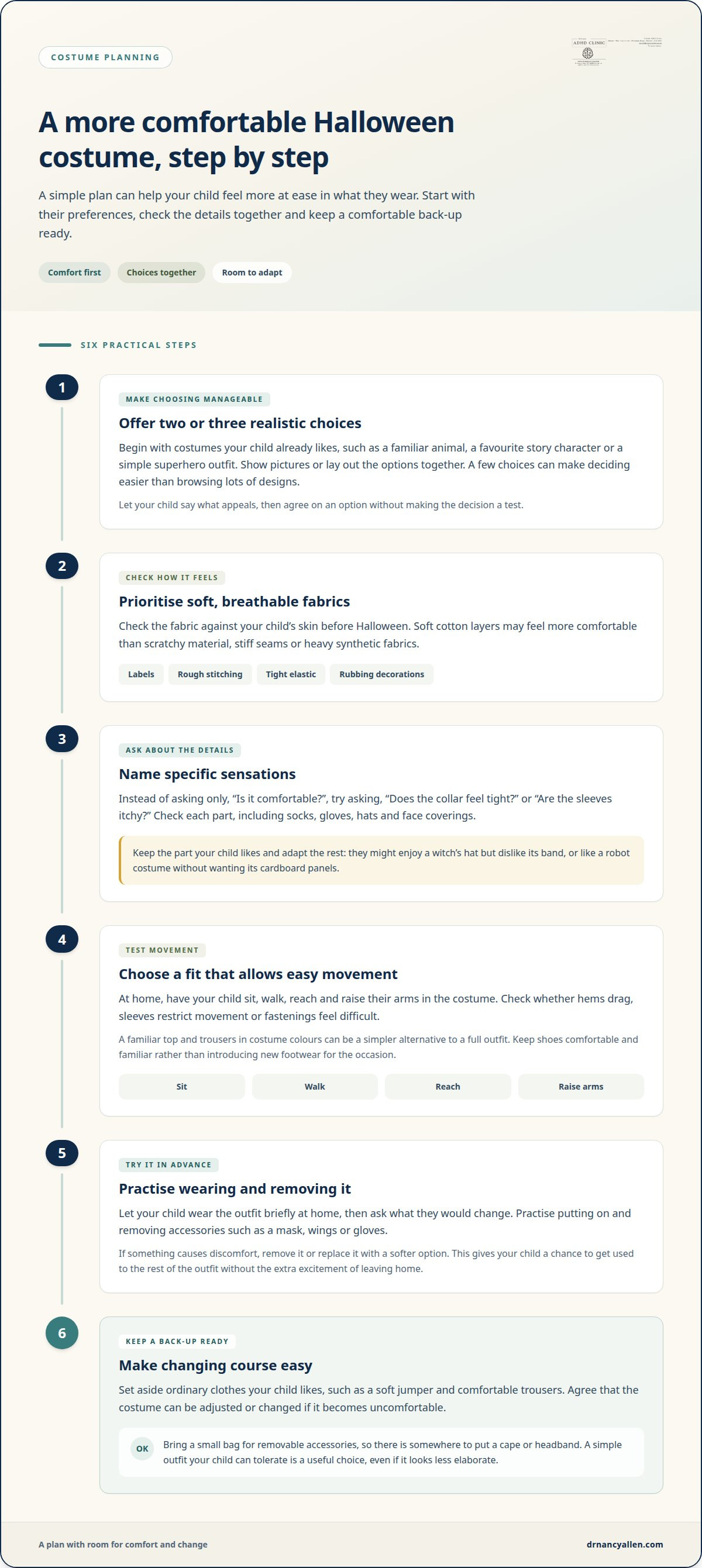
Choosing comfortable, sensory-friendly costumes
Offer two or three realistic choices. Start with costumes your child already likes, such as a familiar animal, favourite story character or simple superhero outfit. Show pictures or lay out the options together. A few choices can make deciding easier than browsing a crowded shop or scrolling through endless designs. Let your child say what appeals, then agree on an option without turning the decision into a test.
Prioritise soft, breathable fabrics. Check how the fabric feels against your child’s skin before Halloween. Soft cotton layers may feel more comfortable than scratchy material, stiff seams or heavy synthetic fabrics. Look out for labels, rough stitching, tight elastic and decorations that rub. If a cape or dress-up top feels irritating during a short try-on, it may be harder to tolerate during an evening out.
Ask about specific sensations. Instead of asking only, “Is it comfortable?”, name possible irritants: “Does the collar feel tight?” or “Are the sleeves itchy?” Check each part, including socks, gloves, hats and face coverings. Your child might enjoy a witch’s hat but dislike its band, or like a robot costume without wanting its cardboard panels. Keep the preferred element and adapt the rest.
Choose a fit that allows easy movement. At home, have your child sit, walk, reach and raise their arms in the costume. Check whether hems drag, sleeves restrict movement or fastenings feel difficult. A familiar top and trousers in costume colours can be a simpler alternative to a full outfit. Keep shoes comfortable and familiar instead of introducing new footwear for the occasion.
Try the outfit before Halloween evening. Let your child wear it briefly at home, then ask what they would change. Practise putting on and removing accessories such as a mask, wings or gloves. If an item causes discomfort, remove it or replace it with a softer option. This gives your child time to get used to the rest of the outfit without the extra excitement of leaving home.
Prepare a practical back-up. Set aside ordinary clothes your child likes, such as a soft jumper and comfortable trousers. Agree that the costume can be adjusted or changed if it becomes uncomfortable. Bring a small bag for removable accessories, so there’s somewhere to put a cape or headband. A simple outfit your child can tolerate is a useful choice, even if it looks less elaborate.
How can I help my hyperactive child trick-or-treat safely?
Choose a quieter route, stay alongside your child and agree on safety rules before leaving. A familiar plan, a trusted adult and a calm place to return to can make the outing feel more manageable.
Choose quieter trick-or-treating locationsChoose a familiar street or a small group of homes rather than a busy event with loud music and long queues. Going earlier may help your child avoid peak crowds. Keep the route brief, with places to pause or turn back easily. Avoid adding stops once your child is tired or finding the noise difficult.Before setting off, show your child the route on a simple map or describe landmarks, such as a post box or corner shop. Agree where you’ll stop and which way you’ll return. If even a quieter street feels busy, head home or take a break somewhere calm instead of pressing on.
Review safety rules and stay togetherGo with your child if they aren’t ready to trick-or-treat independently. Review the safety rules at least once before leaving, using clear examples: stay beside your adult, wait before crossing a road, and don’t enter someone’s home. Ask your child to tell you the plan back in their own words, so you can spot anything that needs explaining.Stay close enough to guide your child at doorways and crossings. Agree on a simple signal, such as holding your hand when they want to stop. A visible meeting point can help if you’re briefly separated in a crowd, but it doesn’t replace staying together. Make it clear that your child can ask to leave at any time.
Plan for noise and sensory breaksIf crowds or sudden sounds are difficult, bring noise-cancelling headphones or ear defenders. Try them at home first and check that your child can still hear your instructions. A short break away from a busy pavement may help. Choose a quieter spot to pause together rather than expecting your child to push through discomfort.Prepare a cosy space at home before you leave. Soft lighting, a familiar snack, sensory toys or headphones can make it easier to pause after returning. Tell your child where the space is and that they can use it if the outing feels overwhelming. This gives them a clear option besides carrying on or feeling they’ve spoiled the evening.
Offer inclusive treats at homePrepare a small selection of treats for visiting children, including a non-food option such as stickers or pencils. Keep items in their original packaging and let children choose without pressure. Don’t make a child explain why they don’t want a particular sweet. A simple “Would you prefer this or that?” gives them room to decide.If your child would rather stay home, they could help hand out treats from the doorway or take turns with another adult. Agree on a quiet place where they can retreat between visitors. Keep the doorbell and decorations manageable for your household, and let your child step away whenever the activity becomes too much.
Planning a simple schedule and managing transitions
A clear plan can help your child understand what happens next. Use a written or visual schedule, then explain how the evening will end.
Plan a simple scheduleWrite the main activities in order, using words or pictures your child understands. Include getting dressed, eating, trick-or-treating, returning home and settling for bed. Add an expected time and place for each activity, plus a snack if helpful. Keep the plan visible, for example on the fridge, and refer to it before moving between activities.Make the schedule realistic. If several changes are tiring for your child, leave out optional stops rather than filling every part of the evening. Explain what might change, such as finishing early if the street gets too busy. Showing both the main activity and its ending can make the transition home less unexpected.
Choose a short, familiar routeMap a short route through streets your child already knows, such as a nearby loop past familiar homes. Mark the starting point, turning point and way back. Keep it simple enough to explain before leaving. Avoid adding unfamiliar streets or extra visits on the spur of the moment, as new surroundings can make it harder to predict what comes next.Use recognisable landmarks, such as a park entrance or a neighbour’s gate, to show progress. Tell your child which landmark signals the return journey. If the route feels too busy or your child is getting tired, follow the agreed way home rather than extending the outing.
Prepare for transitionsGive a clear reminder before each change, using the schedule as a visual cue. For example, say, “After this house, we’re walking back to the park entrance.” Then point it out on the map. Pairing a short explanation with a visible marker can make the next step easier to understand than an unexpected instruction to leave.Use the same transition wording throughout the evening. If your child is finishing a treat or activity, explain what happens immediately afterwards. Avoid adding a new stop while they’re getting ready to go home. A consistent sequence, such as coat on, shoes on, then walk home, makes the change more concrete.
Make bedtime predictableKeep usual mealtimes and bedtime routines as much as possible around Halloween. Before leaving, explain the bedtime plan, including returning home, changing clothes and choosing a familiar book. A clear ending separates the excitement outside from the quieter routine that follows. Avoid adding another activity once your child has started winding down.At home, dim the lights and offer a familiar item, such as a favourite blanket or book. Keep the next steps simple and in their usual order. If your child needs time to settle, reduce noise and conversation rather than adding new demands. Familiar routines can signal that Halloween activities have finished.
Should my child take their ADHD medication on Halloween?
Medication decisions should follow your child’s individual treatment plan, not a routine borrowed from another family. If trick-or-treating affects the usual timing, discuss the plan with their healthcare professional before making any changes.
Use your child’s individual medication plan. Halloween may change the evening’s timing, but that alone isn’t a reason to alter medication. Follow the plan agreed for your child, and don’t skip, add or move a dose independently. What’s appropriate depends on their prescribed treatment and circumstances, not on the activity itself.If the usual schedule seems difficult to coordinate with an outing, contact your child’s healthcare professional. Explain when you expect to leave and return, and ask how the existing plan applies. They can consider the timing in light of your child’s treatment. Don’t rely on another child’s routine or online advice to make an individual medication decision.
Use a visual schedule to explain the evening. Add your child’s existing medication routine to a simple Halloween plan, alongside getting ready, the outing and returning home. Use words, drawings or picture symbols your child recognises. The schedule can show what happens next, but it isn’t a way to decide or change medication.Show the schedule before activities begin, then refer to it as the evening moves from one stage to another. For example, point to the next picture when it’s time to put on shoes or leave a gathering. If plans change, explain what’s different and update the schedule together. A clear visual sequence can help your child understand the evening.
Explain ADHD in respectful, age-appropriate language. Tell your child that people’s brains can work in different ways, and ADHD is one name for differences that affect attention, activity or impulse control. Keep the explanation simple and responsive to their questions. For example, explain that a reminder or written plan can help some children know what comes next.Make clear that ADHD isn’t a reason to exclude someone from Halloween activities. Children can enjoy the evening in different ways, including shorter outings or quieter choices. Avoid calling a child naughty or difficult because they need support. Talk about helpful adjustments, such as a visual reminder, a pause or a trusted adult nearby.
Prepare for medication questions without pressure. If your child asks why they take medication, listen first and answer plainly. You might explain that it’s part of the plan discussed with their healthcare professional. Don’t promise that medication will make Halloween easier or make it a condition for joining in.For questions about timing, effects or concerns, note what you’ve noticed and raise it with your child’s healthcare professional. Keep the Halloween plan focused on practical support, including clear expectations and manageable activities. This separates conversations about treatment from choices about costumes, treats or family activities.
Taking planned breaks and creating alternative traditions
Choose one or two meaningful activities instead of trying to fit everything in. Plan breaks and a quieter option before the evening begins.
Take planned breaksPlan a pause before your child becomes overwhelmed. Agree on a quiet place, such as home or a calm room nearby, and explain how to get there. A short break might involve sitting together, having water or using a familiar sensory toy. Don’t pressure your child to return straight away.Notice changes in your child’s behaviour, such as becoming unusually quiet, distressed or unable to continue. A tantrum may involve anger or frustration; a meltdown can be a response to feeling overwhelmed. Either way, first reduce demands. Move away from the triggering noise or crowd, offer space, and consider heading home if a break isn’t helping.
Choose calmer alternatives to door-to-door trick-or-treatingChoose a Halloween activity your child can enjoy without visiting lots of homes. For example, decorate pumpkins together, make a small indoor treasure hunt or watch a favourite Halloween film. Offer a choice between a couple of ideas instead of presenting a long list. Agree on what the activity involves and when it will finish.If your child still wants to dress up, they could wear the costume at home for a family photo or a pretend parade through the living room. They might help hand out treats from the doorway if visitors feel manageable. Make it clear they can stop, and don’t frame staying home as missing out or failing to celebrate.
Keep the evening focused. Choose one or two activities that matter most to your child, such as carving a pumpkin and sharing a story. Leave other activities for another day rather than rushing between plans. A smaller celebration can still feel special when your child helps choose the details, such as a themed snack or favourite decoration.Tell your child about the alternative plan before Halloween evening. If the outing becomes overwhelming, explain the change simply: “We’re going home for a quiet break.” Avoid negotiating a new activity while your child is distressed. Returning to a familiar plan can make the next step easier to understand.
Make the tradition flexible for next time. After Halloween, talk together about what felt enjoyable and what was difficult. Use specific examples, such as enjoying the pumpkin activity or finding a noisy street too much. Keep what worked for another occasion and adjust what didn’t. Your family’s tradition can change as your child’s preferences and needs change.Let your child help shape the choice. They might prefer handing out treats, decorating indoors or joining a short outing another year. The aim isn’t to copy someone else’s celebration. It’s to create an experience your child can enjoy, with room to pause or finish early.
Dr Nancy Allen: Adult ADHD Assessment
Dr Nancy Allen offers Adult ADHD Assessment for adults seeking a clearer understanding of persistent attention, organisation or impulsivity difficulties. For parents concerned about a child’s experiences beyond one busy Halloween evening, her Child ADHD Assessment provides an opportunity to explore symptoms, history and circumstances in an individual consultation. An assessment can help clarify whether ADHD may explain a broader pattern and support discussion of appropriate next steps. Seasonal excitement alone does not establish ADHD; consider whether concerns appear in everyday life, too. Dr Nancy Allen takes an individualised approach, discussing relevant information and options together. For an assessment or further information about her approach, you’re welcome to visit Dr Nancy Allen’s website.
Carry a calmer approach beyond Halloween
One evening can offer useful insight into the support your child finds helpful, but it can’t define them. Notice what also helps with everyday routines, and share those observations when discussing ongoing concerns. Keeping Halloween fun and calm while trick-or-treating with a child with ADHD can help you understand their needs, but it isn’t a measure of how well they managed the night.
For questions beyond seasonal planning, Dr Nancy Allen offers Adult ADHD Assessment and Child ADHD Assessment. She also provides Peri-menopause & Menopause Specialist Care. An individual assessment can explore symptoms, history and circumstances to support a discussion about appropriate options. General information can’t replace advice tailored to someone’s situation.
If you’d like to discuss an assessment or care, contact Dr Nancy Allen. Take the next step at a pace that feels right for you and your family.
Frequently Asked Questions
Does sugar make ADHD symptoms worse on Halloween?
Sugar does not cause ADHD. Children may respond differently to sweet treats, so notice your child’s response rather than assuming sweets explain a change in behaviour. Excitement, tiredness, noise or a disrupted routine can also affect how the evening feels. If you’re concerned, note the circumstances and discuss ongoing patterns with a suitable healthcare professional rather than drawing conclusions from one Halloween.
What are good ADHD-friendly Halloween snacks or treats?
Choose familiar snacks your child already enjoys, such as cheese cubes, fruit slices, popcorn or an oat bar. Offer them alongside Halloween sweets if they suit your child’s usual eating preferences. Set expectations about when treats will be eaten before the evening gets busy, and let your child know which snacks are available. Check food packaging for ingredients relevant to your child’s dietary needs.
What Halloween routines and preparation help children with ADHD feel less overwhelmed?
Prepare one or two parts of the evening in advance, such as laying out the costume or practising how to ask for a treat. A simple “first, then” reminder can make a change easier to follow: first finish dinner, then get dressed. Keep familiar mealtimes where possible and avoid adding activities at the last moment. A clear plan B can help if plans change.
How can I plan a short, low-stress trick-or-treat route for a child with ADHD?
Choose a short loop near home with familiar landmarks, then decide in advance where you’ll turn back. Consider the route’s pavements, road crossings and likely crowds, not just how many doors it passes. Agree on a simple signal for stopping, such as your child saying “pause”. If the route gets too busy, head back the familiar way instead of searching for a new street.
What sensory-friendly Halloween costume ideas work well for children with ADHD?
Build a costume around clothes your child already likes, then add one comfortable detail, such as a themed jumper, soft cape or fabric headband. This may feel easier than wearing a full outfit with several unfamiliar pieces. Face paint is optional, not essential. Let your child choose which accessories to wear, and keep ordinary clothes available if they decide they’d rather change.
How can parents manage excitement, impulsivity and road safety while trick-or-treating?
Stay close, particularly near driveways, parked cars and road crossings. Before approaching a road, agree that your child will stop beside you and wait for your instruction. Keep directions brief and consistent, such as “stop, hold hands, then cross together”. If excitement makes it hard to pause or stay alongside you, move away from the road and take a calm break before deciding whether to continue.
What are ADHD-friendly alternatives to door-to-door trick-or-treating?
Try a small celebration without repeated doorways, crowds or waiting. Your child could make paper decorations, choose a Halloween story for family reading or help arrange a display in a window. A familiar friend joining at home may make the activity social without requiring a busy outing. Let your child choose between a couple of options, and keep the activity easy to end.
How can I prepare a child with ADHD for waiting, sharing sweets and handling changes of plan?
Practise a short turn waiting at home with a game, and explain what your child can do while they wait, such as holding their treat bag. Discuss sharing in advance without insisting they give away sweets they’ve collected. If plans change, use a clear phrase such as “The plan has changed; we’re going home now.” Then offer one manageable next choice, such as a snack or quiet activity.

Comments