


HRT for Urinary Incontinence: How Hormone Therapy May Affect Bladder Control

Hormone therapy can ease some menopause-related urinary symptoms, but systemic HRT may worsen stress leaks for some people. That means HRT for urinary incontinence is not a straightforward yes-or-no decision: its effects depend partly on the treatment type and the symptoms being addressed.
It’s understandable to connect bladder changes with falling oestrogen. During perimenopause and menopause, changes to the tissues around the bladder and urethra can contribute to urgency, frequent urination or leakage. Stress urinary incontinence, which causes leaks when you cough, sneeze, laugh or exercise, deserves particular attention because systemic HRT may not help and could worsen symptoms for some people.
This article explains how hormonal changes may affect bladder control, what is known about systemic HRT and vaginal oestrogen, and why the distinction matters. It also explores other approaches to stress leaks, helping you have a clearer discussion with a healthcare professional about symptoms and treatment options suited to your circumstances.
Table of Contents
Recognising urinary symptoms during menopause
Bladder changes and vaginal discomfort can occur together around menopause, but they are not interchangeable symptoms. Describing each separately can help a clinician consider appropriate assessment and treatment.
Vulval and vaginal changes
Vulval or vaginal dryness, irritation and soreness can make everyday activities uncomfortable. These symptoms may occur alongside urinary changes, but one does not establish the cause of the other. For example, external soreness and leakage during exercise are separate concerns to describe during an appointment.
Note where irritation occurs, what seems to trigger it, and whether it persists. A clinician can consider whether menopause-related tissue changes may be involved and whether another explanation needs assessment. Mentioning urinary symptoms alongside discomfort gives a fuller picture without assuming one treatment will address both.
Vaginal oestrogen and HRT
Local vaginal oestrogen is applied to the vaginal area, while systemic HRT acts throughout the body. These terms describe different ways of using hormone treatment, not interchangeable products. The distinction matters when discussing vaginal discomfort or urinary symptoms, as treatment choices depend on the symptoms and personal medical history.
Vaginal oestrogen may be discussed for menopause-related vaginal symptoms. It should not be assumed to treat every kind of urine leakage. A clinician can consider whether local treatment is relevant, alongside other options and any systemic HRT already being used.
Available vaginal oestrogen treatments
Vaginal oestrogen is prescribed as a local treatment, but this section does not give a definitive list of NHS product forms. The specific preparation and instructions depend on the prescription and the person’s circumstances. A prescriber or pharmacist can explain how to use the selected product and where to find its patient information.
Ask about the available option during an NHS consultation, including how it is applied and what follow-up is appropriate. This keeps advice specific to the product actually prescribed, rather than relying on a general list that may not match individual circumstances.
Effects and use for urinary symptoms
Vaginal oestrogen may be considered when urinary symptoms occur alongside menopause-related vaginal symptoms, but its effect on leakage can vary. Stress leaks, urge leaks and mixed symptoms are not the same problem. Follow the product instructions supplied with a prescription, and ask the prescriber or pharmacist if the directions are unclear.
There is no single time to benefit that applies to every preparation and person. Ask the prescriber what changes to monitor and when to review symptoms. Possible effects and risks depend on the prescribed product; discuss concerns and read its patient information. If you have a history of breast cancer, raise this with a clinician before starting vaginal oestrogen, so your medical history can inform the discussion.
Arrange an assessment with a GP or suitable specialist if leakage is new, persistent, worsening or disrupting daily activities. Pain, blood in urine, or symptoms that may indicate infection also warrant medical advice. Explain when leakage happens, any associated vaginal symptoms, and whether you use hormone treatment. This helps the clinician assess the pattern instead of treating every symptom as a menopause effect.
Oestrogen decline and urinary symptoms
During perimenopause and menopause, declining oestrogen can affect the bladder, urethra and surrounding pelvic tissues. These changes may contribute to urinary symptoms, but they don’t mean every leak has the same cause. For example, leakage during a cough differs from a sudden urge to urinate. Noting when symptoms occur gives a clinician useful context and helps distinguish possible bladder-control patterns.
Oestrogen supports the health of tissues around the urinary tract. As levels fall, these tissues may become less resilient, while changes in pelvic support can affect how well the bladder and urethra function. The urethra carries urine out of the body, so changes nearby may affect continence. This is one reason urinary symptoms can begin or change around menopause, alongside vaginal or vulval symptoms.
Some people notice needing the toilet more often, waking to urinate, or feeling urgency that is difficult to defer. Overactive bladder describes urgency, sometimes accompanied by leakage. Estimates vary, with overactive bladder affecting between 1 in 3 and 1 in 10 women. A sudden urge followed by leakage differs from a small leak during lifting, laughing or coughing. Describing that difference can help clarify the symptom pattern.
Changes to the bladder and urethra can also make urination more frequent or urgent and increase susceptibility to urinary infections. Burning, discomfort or a sudden change in toilet habits may need assessment rather than being assumed to reflect menopause alone. For instance, new urgency alongside pain differs from a familiar pattern of leakage during exercise. A clinician can consider infection and other possible explanations.
Oestrogen decline is one potential contributor, not a complete explanation for every bladder symptom. Pelvic floor strength, previous pregnancies, general health and other urinary conditions can also matter. The symptom itself helps guide the discussion: stress leakage occurs with pressure, while urge leakage follows a compelling need to pass urine. Some people experience both patterns, known as mixed incontinence.
A fluid diary can help describe urgency and urination patterns. Record drinks, toilet visits, leakage episodes and possible triggers. Note whether symptoms follow caffeine, occur overnight or appear during activities such as walking. This information can help a GP assess what is happening and discuss suitable next steps. Persistent, worsening or disruptive urinary symptoms deserve assessment, particularly when accompanied by pain or signs of infection.
Stress urinary incontinence
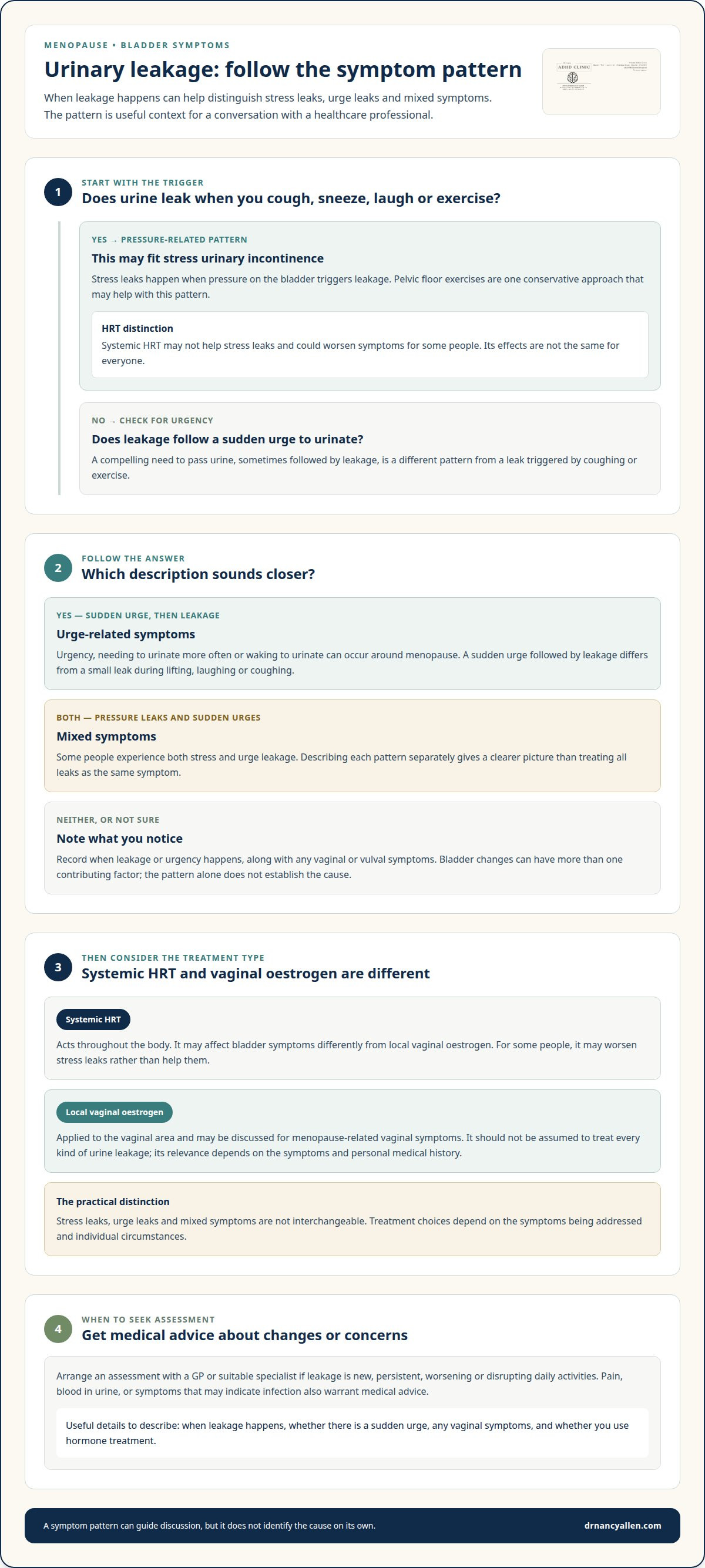
Stress urinary incontinence means urine leaks when pressure on the bladder rises. Coughing, sneezing, laughing, lifting or running can trigger it. The leakage may be a few drops or enough to interrupt exercise. It differs from urge incontinence, where a sudden, intense need to urinate comes first. Some people experience both patterns, so describing what happens before each leak can help clarify symptoms.
Pelvic floor muscles support the bladder and help control urine flow. Pregnancy and childbirth, ageing, obesity, and current or past smoking can contribute to bladder weakness. Menopause-related tissue changes may also play a part, but they are not the only explanation. For example, a leak during a cough suggests pressure-related symptoms; leaking after a sudden urge suggests a different pattern. A GP can assess symptoms and consider other causes.
Systemic HRT is not a guaranteed treatment for stress leaks. In the Women’s Health Initiative, women taking oestrogen alone who had no incontinence at baseline had an increased risk of stress incontinence of 2.15 at 1 year. Some women taking systemic HRT may experience higher stress-incontinence risk and worsening bladder symptoms than women taking placebo. This evidence makes it important to discuss bladder symptoms alongside menopause symptoms when considering HRT for urinary incontinence.
That finding does not mean everyone taking HRT will develop leakage, or that treatment should be stopped without advice. The Women’s Health Initiative analysis assessed symptoms at baseline and 1 year after hormone therapy began. Its findings concern the women studied and do not predict an individual’s experience. If leaks start or worsen after treatment changes, note the timing and discuss it with the prescriber before changing treatment.
Pelvic floor muscle exercises can help urinary incontinence, and supervised pelvic floor rehabilitation is a conservative treatment option. A physiotherapist can assess whether the muscles contract and relax correctly, then guide a suitable exercise programme. The aim is to improve support and control during activities such as coughing or lifting. Technique matters: repeatedly tightening the wrong muscles may not address the problem. A clinician can help determine whether specialist physiotherapy is appropriate.
For people who are overweight, moderate weight loss of 5-10% has been shown to reduce urinary-incontinence episodes. This is one possible part of a broader plan, not a substitute for assessment. A GP can consider leakage patterns, medical history, smoking, weight and any link with HRT. If symptoms persist despite conservative approaches, further treatment options can be discussed under specialist guidance. The right next step depends on what is causing the leaks and how they affect daily life.
Hormonal changes during perimenopause and menopause
Perimenopause can bring changing hormone levels before periods stop, while menopause marks a longer-term change in ovarian hormone production. Oestrogen affects tissues in the vagina, bladder and urethra, so urinary symptoms may shift during this transition. For example, someone may first notice needing the toilet more often, then experience urgency or leakage. These changes can affect comfort and daily routines, but their timing alone cannot identify the cause.
Lower oestrogen can weaken tissues and muscles in the pelvic area that support the bladder and urethra. When that support changes, holding urine may become harder. The urinary tract can also become more sensitive, contributing to urgency or frequent urination. These effects may appear alongside vaginal dryness or discomfort, although each symptom can have a different explanation.
Changes in the bladder and urethra can make a person more prone to urinary infections. Infection symptoms may include discomfort when passing urine, a sudden change in urgency, or needing the toilet more often. Menopause may contribute to tissue changes, but it does not establish that an infection is present. A new or worsening pattern deserves clinical assessment, particularly if symptoms feel different from usual.
Hormonal change is only one factor in bladder control. Pelvic floor function, previous pregnancies, general health and medicines can also influence symptoms. For instance, urgency without leakage differs from leaks during exertion, while some people experience both. This distinction matters because the symptom pattern helps guide assessment and discussion of suitable treatment options.
A symptom record can make changing patterns easier to explain. Note when urgency or leakage happens, whether it wakes you at night, and how it affects activities. Include relevant changes, such as starting a medicine or experiencing vaginal discomfort. A fluid diary can also record drinks and toilet visits, helping a clinician consider whether symptoms relate to bladder habits, hormonal changes or another cause.
Hormone therapy is not a single treatment with identical effects throughout the body. Systemic HRT and local vaginal oestrogen differ in where they act, so their potential role depends on the symptoms being treated. A decision about HRT for urinary incontinence should consider the type of leakage, other menopause symptoms, medical history and current medicines. Discuss bladder changes when reviewing menopause treatment, rather than focusing only on hot flushes or sleep.
Assessment can also consider symptoms beyond bladder control. For example, persistent urgency alongside vaginal discomfort may call for discussion of both urinary and menopause-related concerns. A GP can review the timing, pattern and impact of symptoms, and consider other explanations such as infection. Describing what has changed, when it began and which activities are affected helps make the conversation more focused.
Does vaginal oestrogen help stress, urge or mixed urinary incontinence?
Vaginal oestrogen acts locally on tissues around the vagina and urinary tract. It can improve vaginal moisture and elasticity, and may support bladder function. This gives it a potential role when urinary symptoms occur alongside menopause-related tissue changes. It is not, however, a universal treatment for every type of leakage. The distinction between stress, urge and mixed symptoms remains important.
Urge incontinence involves a sudden, intense need to urinate, sometimes followed by leakage. Local oestrogen may help some urinary symptoms, including overactive bladder symptoms in postmenopausal women. For example, someone experiencing urgency alongside vaginal discomfort may discuss both symptoms when considering treatment. Relief from vaginal dryness does not necessarily mean urgency or leakage will also resolve, so consider each change separately.
Stress incontinence involves leaks during activities that put pressure on the bladder, such as coughing or exercise. Evidence for vaginal oestrogen as a treatment for urinary leakage is less clear. One report states there is no good evidence that topical oestrogen alone benefits urinary incontinence. This does not rule out treating vaginal symptoms at the same time, but it cautions against assuming local treatment will stop stress leaks.
With mixed incontinence, both urgency-related and pressure-related leaks occur. A symptom record can help distinguish them: note whether leakage follows a sudden urge, a cough, or both. The pattern matters because vaginal oestrogen’s potential benefit for urinary symptoms does not establish it as a complete treatment for mixed leakage. A clinician can consider vaginal symptoms alongside bladder symptoms when discussing options.
Research findings are not entirely consistent. A Cochrane review described perceived improvement or cure with oestrogen alone compared with placebo, while noting that larger trials were needed. By contrast, the report also states there is no good evidence that topical oestrogen alone benefits urinary incontinence. These findings underline the difference between reported improvement and strong evidence for treating leakage itself.
The Women’s Health Initiative urinary-incontinence analysis included 23,296 women. Its findings concern a particular study population and do not show how an individual will respond to local vaginal treatment. They also cannot be used to assume that every form of oestrogen has the same effect. Treatment discussions should distinguish local vaginal oestrogen from systemic HRT and consider which symptoms are most troublesome.
For a balanced discussion of menopause symptoms and treatment options, arrange a menopause care consultation. Include the type of leakage, any vaginal symptoms and current hormone treatment in the conversation. That context helps focus the discussion on whether local treatment, another approach, or assessment of a different cause is relevant.
Vaginal oestrogen is used locally on tissues around the vagina and urinary tract. Discuss it with a clinician alongside your urinary symptoms. It may help some symptoms, but it is not a complete treatment for every type of leakage.
Dr Nancy Allen
Dr Nancy Allen offers menopause consultations and HRT reviews for people seeking an individual discussion about menopause symptoms and treatment. If bladder changes have appeared alongside other menopause symptoms, a consultation can help you review your history, current treatment and questions about HRT. You can discuss relevant options and whether further assessment is appropriate. Bring up the type of leakage, when it occurs, and any vaginal or urinary symptoms, as these details help focus the conversation. General information cannot replace an assessment of your circumstances. To discuss menopause symptoms or HRT, contact Dr Nancy Allen.
Choose a next step that fits your priorities
Deciding whether to use HRT for urinary incontinence involves more than focusing on leakage alone. Consider which symptoms affect your daily life most, what you hope treatment will address, and how those priorities relate to your wider menopause care. A clear conversation about benefits, possible drawbacks and alternatives can help you make an informed decision that reflects your circumstances.
You don’t need to wait until symptoms feel overwhelming before raising them. If bladder changes are affecting exercise, sleep, work or confidence, discuss them with a suitable healthcare professional. Bring questions about treatment and explain what you would most like to improve. The right approach depends on your symptoms, health history and preferences.
For an individual discussion about menopause symptoms and treatment options, contact Dr Nancy Allen. A thoughtful conversation can help you feel clearer about what to consider next.
Frequently Asked Questions
HRT and Incontinence: Can Hormone Therapy Affect Bladder Control?
Yes. Hormone therapy can affect bladder symptoms, and systemic HRT and local vaginal oestrogen may have different effects. The Women’s Health Initiative examined urinary symptoms among women using systemic hormone therapy. Its results describe the study participants, not what will happen to any one person. If bladder symptoms change after starting or adjusting HRT, note when they changed and discuss this with the prescriber before altering treatment.
How common is incontinence in women?
Urinary incontinence affects up to half of adult women. This estimate covers different types and levels of leakage, so it cannot indicate the cause or expected course of one person’s symptoms. For a useful discussion, consider how often leakage occurs and whether it affects activities such as exercise, work or travel. A GP can use this context when assessing symptoms and discussing next steps.
What can put me at higher risk of urinary incontinence?
Obesity and current or past smoking can increase the risk of bladder weakness. Menopause-related changes may also contribute, but risk factors alone cannot identify why an individual experiences leakage. For example, symptoms during physical activity may follow a different pattern from leakage associated with urgency. Mention relevant health history and when symptoms occur during an assessment, so the discussion considers more than one possible influence.
What other treatments are available for urinary incontinence?
The NHS describes treatment options that may include pelvic floor muscle exercises, physiotherapy and lifestyle changes, depending on the type of symptoms. A clinician may also suggest a fluid diary to help identify patterns. If non-surgical approaches are unsuitable or have not helped, specialist care may consider procedures. For example, treatment discussions may differ for leaks during exertion and leakage following sudden urgency.
Can HRT help urinary incontinence in women?
Local vaginal oestrogen may help some menopause-related urinary symptoms, while systemic HRT is a different treatment. It is not appropriate to assume either will resolve every type of leakage. The NHS can assess symptoms and discuss suitable treatment options. If considering HRT, explain which symptoms you want to address, any existing treatment and relevant medical history. This helps frame the discussion around your circumstances rather than a general expectation.
What does the evidence say about systemic HRT and urinary incontinence?
In the Women’s Health Initiative, the relative risk of any urinary incontinence at 1 year was 1.39 among women taking oestrogen plus progestin who had no incontinence at baseline. The relative risk of urge incontinence was 1.15, and that increase was not significant. These findings describe the participants and treatment studied; they cannot predict an individual’s response or establish what will happen to you.
What other treatments for urinary incontinence are available on the NHS?
NHS treatment options can include pelvic floor muscle exercises, physiotherapy and lifestyle approaches, with the choice informed by the symptoms. A fluid diary can help show patterns to discuss during assessment. If conservative treatments are unsuitable or have not worked, a specialist may consider procedures. The NHS approach is not one fixed pathway for everyone; the type of leakage, health history and effect on daily life help shape the discussion.
Does HRT make urinary incontinence worse or increase the risk of developing it?
Systemic HRT may increase the risk of some urinary symptoms for some women. In the Women’s Health Initiative, the increased risk of stress incontinence at 1 year was 2.15 for women taking oestrogen alone who had no incontinence at baseline. This study result is not an individual prediction. If leakage changes after HRT begins, discuss the timing and symptoms with the prescriber before making treatment changes.



Comments