


The Risks of Untreated ADHD: Why Seeking Support Matters

What if the persistent burnout you're experiencing isn't a sign of weakness, but a signal that your brain is working twice as hard just to keep pace? For many adults, the risk of not treating ADHD isn't just a matter of misplaced keys or missed deadlines; it's a cumulative weight that impacts every facet of physical and emotional health. You've likely spent years "masking" or pushing through the fog, only to find yourself feeling like an underachiever despite your immense effort and dedication.
It's exhausting to feel as though you're constantly falling short of your own potential whilst others seem to navigate life with ease. You'll discover the profound neurological and emotional consequences of leaving ADHD unaddressed, including its impact on personal relationships and long-term wellbeing. This article examines the link between ADHD and other health issues, providing you with a structured path toward an expert assessment and the clarity you deserve to restore your confidence.
Table of Contents
Beyond the Label: Why the Decision to Not Treat ADHD Carries a Heavy Price
The Neurological and Psychological Toll of Chronic ADHD Dysregulation
Navigating the Lifecycle: How Untreated ADHD Impacts Career, Finances, and Family
Identifying the Tipping Point: When 'Coping' Becomes Burnout
Reclaiming Clarity: The Benefits of a Private ADHD Assessment and Personalised Care
Beyond the Label: Why the Decision to Not Treat ADHD Carries a Heavy Price
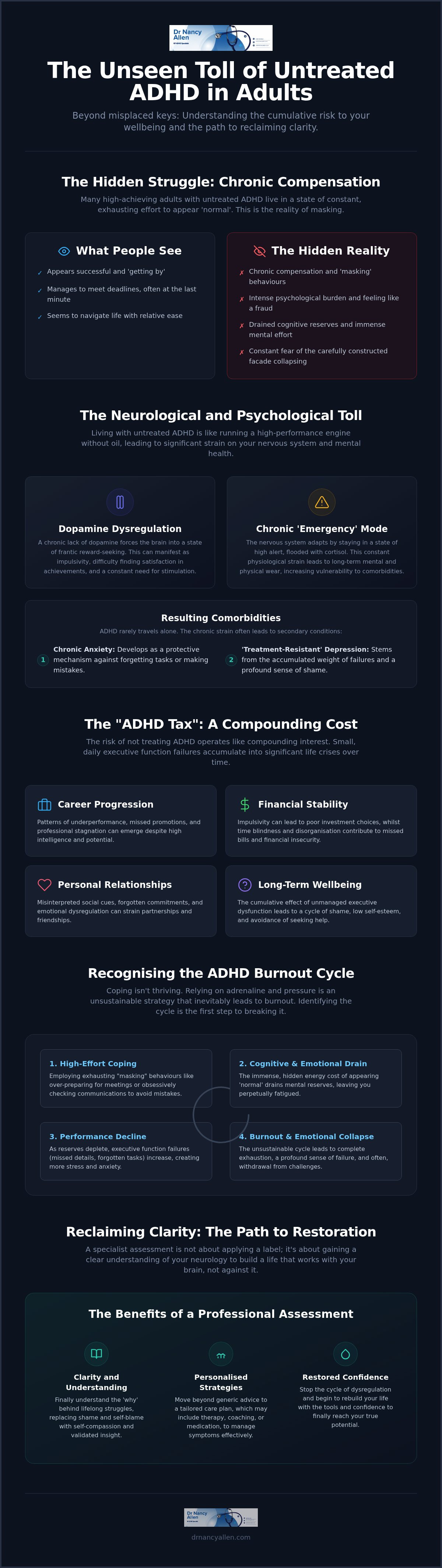
For many, living with Attention deficit hyperactivity disorder whilst remaining undiagnosed feels like swimming against a relentless tide. We often view 'untreated' as a simple absence of medication, yet it's more accurately described as a state of chronic compensation. High-achieving adults often develop elaborate, exhausting systems to hide their symptoms, a process known as masking. This internalised struggle creates a heavy psychological burden, as the individual feels like a fraud, constantly terrified that their carefully constructed facade will eventually collapse under the pressure of daily life.
Delaying an assessment often stems from a fear of being labelled or the stigma associated with neurodiversity. However, the risk of not treating ADHD operates like compounding interest on a debt. Small, daily executive function failures, such as a missed bill, a forgotten appointment, or a misinterpreted social cue, don't stay small. Over years, these minor oversights accumulate into significant life crises, affecting career longevity, financial security, and personal stability. The weight of these accumulated failures often leads to a profound sense of shame that further prevents people from seeking the help they need.
To better understand how these unaddressed symptoms impact development and long-term wellbeing, watch this helpful video:
The Myth of 'Surviving' Without Treatment
There's a critical distinction between 'coping' and 'thriving' in a neurotypical world. Whilst you might be 'getting by' in your professional life, the hidden energy cost of appearing 'normal' is immense. Masking behaviours, like over-preparing for meetings to avoid losing focus or obsessively checking emails to ensure nothing is missed, drain your cognitive reserves. This constant state of high alert is unsustainable. When you rely solely on adrenaline and last-minute pressure to perform, you aren't managing your condition; you're simply delaying clinical burnout. Trying harder isn't a viable solution when the underlying neurological machinery requires a fundamentally different approach.
The Cost of Inaction: A Lifecycle Perspective
Untreated symptoms don't disappear with age; they merely change shape as responsibilities increase. In childhood, this might look like academic underperformance or emotional outbursts. By adulthood, these patterns evolve into professional stagnation and financial instability. Impulsivity might lead to poor investment choices, whilst poor time management can result in missed promotions or strained relationships. The risk of inaction is the cumulative effect of unmanaged executive dysfunction. By addressing these patterns through a private ADHD assessment, you can stop the cycle of dysregulation and begin to rebuild your life with clarity and confidence.
The Neurological and Psychological Toll of Chronic ADHD Dysregulation
Living with an unmanaged neurodivergent brain is often like running a high-performance engine without enough oil. The chronic lack of dopamine doesn't just affect your ability to focus on a spreadsheet. It forces the brain into a state of constant, frantic reward-seeking. This neurological deficit often manifests as impulsivity or an inability to find satisfaction in daily achievements. Over time, the nervous system adapts by staying in a state of 'emergency', flooded with cortisol to compensate for the lack of natural stimulation. This physiological strain is a primary component of THE RISK OF NOT TREATING ADHD, leading to long-term wear on your mental resilience and physical wellbeing.
Comorbidities: When ADHD Invites Other Challenges
Many adults find that their primary struggle isn't the ADHD itself, but the secondary conditions that follow in its wake. Chronic anxiety often develops as a protective mechanism against executive dysfunction. If you've spent decades forgetting tasks or missing vital details, your brain stays hyper-vigilant to avoid further mistakes. This state of high alert can lead to what clinicians call 'treatment-resistant' depression, where standard therapies fail because the underlying ADHD remains unaddressed. These complications of adult ADHD often include severe sleep disorders, as a racing mind prevents the transition into restful sleep. Without professional support, it's common for individuals to turn to self-medicating with caffeine, nicotine, or alcohol just to regulate their internal state.
Hormonal Health and the Neurodivergent Brain
For women, the neurological toll is uniquely tied to hormonal health specialist care. Oestrogen plays a vital role in modulating dopamine levels within the brain. As oestrogen fluctuates and eventually declines during perimenopause, ADHD symptoms that were previously 'managed' through high-effort masking often become debilitating. This explains why many women only seek an Adult ADHD Assessment in their 40s or 50s. They haven't suddenly developed the condition; rather, their biological buffer has disappeared. Ignoring the intersection of hormones and neurobiology significantly increases the risk of not treating ADHD during this vulnerable life stage. Recognising these patterns is the first step toward reclaiming a sense of calm and restoring your cognitive confidence.
Navigating the Lifecycle: How Untreated ADHD Impacts Career, Finances, and Family
ADHD is a systemic condition that permeates every aspect of an individual's lifecycle. It doesn't remain confined to the mind; it spills over into bank balances, professional reputations, and the quiet moments shared with loved ones. THE RISK OF NOT TREATING ADHD often presents as a series of 'unforced errors' that, over time, erode your sense of agency and stability. When executive dysfunction remains unaddressed, the simple mechanics of daily life become sources of chronic stress rather than routine background tasks.
Financial consequences are often the most immediate and punishing results of this dysregulation. This is frequently termed the 'ADHD tax', the literal cost of impulsivity and forgetfulness. It includes late payment fees, forgotten subscriptions, and the high price of 'convenience' purchases made when planning fails. For parents, the challenge is doubled. Managing a household requires a high level of executive function to coordinate schedules, meals, and domestic chores. Whilst struggling with your own internal chaos, the invisible labour of parenting can feel like an insurmountable mountain, leading to a home environment that feels reactive rather than nurturing.
The 'ADHD Tax' in the Workplace
In a professional context, the cost is often measured in missed opportunities and professional stagnation. Many neurodivergent adults experience 'bore-out', where a lack of stimulation leads to a sharp drop in performance, often resulting in frequent job changes. This pattern can damage your professional credibility, as colleagues may misinterpret a struggle with time management as a lack of dedication or professionalism. The emotional impact of being told you 'have so much potential' whilst consistently failing to meet it is profound. It fosters a deep-seated fear of failure that can prevent you from applying for promotions or pursuing the career path you truly desire.
Interpersonal Risks and Social Isolation
Relationships often bear the heaviest burden of unmanaged symptoms. Partners may perceive forgetfulness or distractibility as a lack of care or respect, leading to chronic conflict and relationship volatility. This breakdown in communication is a significant factor in THE RISK OF NOT TREATING ADHD, as it can lead to social isolation and the loss of vital support networks. Many individuals also struggle with rejection sensitivity, which causes them to withdraw from friendships to avoid the perceived pain of criticism. Seeking a formal assessment provides essential validation, helping both you and your loved ones understand that these behaviours are neurological rather than intentional choices.
Identifying the Tipping Point: When 'Coping' Becomes Burnout
Maintaining a facade of normalcy is a high-stakes game that eventually reaches a breaking point. For many years, you may have successfully relied on high-octane stress and last-minute adrenaline to meet your obligations. However, this reliance on crisis-mode functioning is unsustainable. When your internal resources are finally depleted, the fragile structure of your daily life begins to crumble. This transition from "masking" to total collapse represents a significant part of THE RISK OF NOT TREATING ADHD, as the brain simply loses its ability to compensate for the underlying neurological gaps.
This collapse often follows a predictable cycle of ADHD burnout. It starts with periods of intense hyperactivity or hyperfocus where you feel you can conquer any task, only to be followed by a sudden, total emotional and physical exhaustion. You find yourself unable to perform even the simplest chores, such as answering a text or washing a dish. This isn't laziness; it's a physiological shutdown. Often, it takes a major life crisis, like a breakdown in a marriage or a formal warning at work, for individuals to realise that their "coping" was actually a slow-motion collision with their own limits.
The Physical Toll of Mental Effort
The strain on your nervous system isn't purely psychological. An "always on" brain that never reaches a state of rest frequently manifests in chronic physical ailments. You might experience persistent tension headaches, digestive issues, or unexplained muscle pain amongst other stress-related illnesses. Over time, this constant state of hyper-vigilance can mirror the patterns seen in chronic fatigue syndrome. Burnout is the body's way of demanding the support the brain has been denied. If you don't listen to these early warning signs, your body will eventually make the decision for you by forcing a period of prolonged inactivity.
The Turning Point: Moving from Fear to Clarity
Reaching this threshold is often the catalyst for change. Whilst it feels like a failure, this tipping point is actually an invitation to reframe your experience. A formal diagnosis shouldn't be viewed as a badge of shame or a limiting label. Instead, think of it as a user manual for your specific neurological wiring. Understanding how your brain processes information and rewards provides immediate emotional relief and removes the crushing weight of self-blame. The first step towards recovery is reading our adult adhd assessment guide to understand how professional clarity can transform your quality of life. Once you have an accurate map of your mind, you can stop fighting against your nature and start working with it. To begin your journey toward restoration, you can book a private consultation today.
Reclaiming Clarity: The Benefits of a Private ADHD Assessment and Personalised Care
The decision to seek professional help is often met with the daunting reality of public healthcare waiting lists. In England, the current waiting time for an NHS ADHD assessment ranges from two to seven years, a period of time that many in crisis simply do not have. This "Cost of Waiting" significantly compounds THE RISK OF NOT TREATING ADHD, as it forces individuals to remain in a state of clinical limbo whilst their symptoms continue to erode their quality of life. Dr Nancy Allen provides a compassionate alternative, combining clinical authority with a deeply empathetic, patient-centric approach that prioritises your need for immediate answers.
Our approach is built on 25 years of clinical experience, focusing on the human element of medicine rather than just the diagnostic criteria. By offering a 72-hour turnaround for diagnosis and treatment plans, we provide a vital intervention that can prevent a professional or personal crisis from escalating further. This rapid response allows you to move from the exhaustion of "masking" to the empowerment of understanding, ensuring that your path to restoration begins within days rather than years.
The Speed of Private Clinical Care
A rapid assessment provides the immediate validation necessary to begin the healing process. For those already overwhelmed by busy schedules or the cognitive load of ADHD, our secure online consultations remove the logistical barriers that often prevent people from seeking support. During a comprehensive private medical consultation, you aren't just another name on a list. You're given the time and space to explore your history with a specialist who understands the nuances of neurodiversity. This unhurried, thorough process ensures that you leave with a clear path forward and a restored sense of confidence in your future.
A Holistic Path to Wellbeing
Managing ADHD effectively requires looking beyond simple medication. We believe in a holistic path that integrates neurodivergent support with other vital areas of health, particularly the intersection of ADHD and hormonal shifts. For many women, symptoms become unmanageable during perimenopause, making it essential to combine ADHD management with specialist menopause care. This integrated strategy ensures that every facet of your wellbeing is considered, from neurological regulation to hormonal balance. By choosing evidence-based support and expert guidance, you can finally reclaim the clarity you've been missing. Book a private ADHD assessment with Dr Nancy Allen today to begin your journey toward a more structured and fulfilling life.
Restoring Your Potential Through Professional Clarity
Leaving neurodiversity unaddressed is a heavy burden that impacts your health, career, and closest relationships. As we've explored, THE RISK OF NOT TREATING ADHD extends far beyond simple forgetfulness; it's a systemic factor that can lead to chronic burnout and emotional dysregulation. By choosing to move beyond the internalised struggle, you aren't just seeking a label. You're gaining a comprehensive understanding of your neurological wiring that allows you to stop masking and start thriving.
With over 25 years of clinical experience, Dr Nancy Allen offers a supportive environment where your experience is validated through evidence-based care. Whether you're navigating the complexities of the workplace or managing the specific challenges of the ADHD-menopause overlap, rapid intervention is essential. We provide diagnosis and treatment plans within 72 hours, ensuring you don't have to endure years on a waiting list whilst your wellbeing suffers. Secure your path to clarity with a private ADHD assessment and begin the journey of reclaiming your confidence. You don't have to manage this alone; expert guidance is ready to help you build a more structured, fulfilling life.
Frequently Asked Questions
Is it too late to treat ADHD if I am already in my 40s or 50s?
It's never too late to seek a diagnosis, and many adults find profound relief in their 40s or 50s. This life stage often brings increased responsibilities that make existing symptoms harder to manage without support. For women, hormonal shifts during perimenopause can exacerbate executive dysfunction. A formal assessment provides the clarity needed to navigate these years with greater ease, restoring confidence that may have been eroded by decades of unexplained struggle.
Can untreated ADHD cause permanent damage to my brain or health?
Whilst ADHD itself doesn't cause structural brain damage, the physiological toll of chronic stress is significant. Living in a state of constant emergency keeps your system flooded with cortisol, which can contribute to long-term health issues like hypertension or chronic fatigue. Addressing the condition reduces this systemic strain. By managing the underlying neurobiology, you allow your nervous system to exit a state of hyper-vigilance and begin a process of restoration.
What if my symptoms are actually just anxiety or the 'menopause brain fog'?
It's very common for ADHD to be misdiagnosed as simple anxiety or attributed solely to menopause brain fog. These conditions frequently coexist and overlap in their clinical presentation. A specialist assessment is designed to untangle these complex threads, looking at your history from childhood through to the present. Understanding whether your symptoms are primary ADHD or secondary to hormonal changes is essential for creating an effective, personalised management plan.
How much does a private ADHD assessment cost compared to the 'ADHD tax' of inaction?
Whilst a private assessment requires an initial investment, it's often lower than the cumulative cost of the "ADHD tax" over time. This hidden cost includes late payment fees, impulsive purchases, and lost earnings from professional stagnation. Beyond the financial aspect, the emotional cost of chronic burnout and strained relationships is immense. Investing in professional clarity provides a foundation for long-term stability, helping you avoid the expensive and exhausting cycle of unmanaged executive dysfunction.
Can I manage ADHD without medication if I get a diagnosis?
Yes, medication is only one tool amongst many for managing neurodiversity. A diagnosis provides the necessary clarity to implement effective lifestyle adjustments, environmental changes, and psychological strategies. Many individuals choose a holistic path that includes specialist coaching, nutritional support, and hormonal management. The goal of an assessment is to provide you with all available options and the clinical insight needed to make informed decisions about the care that best suits your lifestyle.
What happens if I choose to continue not treating my ADHD?
Choosing to remain undiagnosed means accepting THE RISK OF NOT TREATING ADHD, which typically involves a cycle of chronic compensation and eventual burnout. Without support, executive dysfunction often leads to professional stagnation and persistent relationship conflict. Over time, the internalised shame of failing at routine tasks can evolve into treatment-resistant depression or anxiety. Seeking help breaks this cycle, replacing a life of reactive coping with one of proactive, informed management and self-compassion.
How quickly can I get a diagnosis and start a treatment plan privately?
We prioritise speed and empathy, offering a 72-hour turnaround for your diagnosis and treatment plan following your initial consultation. This rapid process is designed to prevent a life crisis from escalating whilst you wait for answers. Unlike public healthcare routes that can take several years, our private service ensures you receive expert guidance and a clear path forward within days. This allows you to begin implementing life-changing strategies and restoring your quality of life immediately.
Will an ADHD diagnosis affect my insurance or employment status in the UK?
In the UK, an ADHD diagnosis is protected under the Equality Act 2010, which requires employers to make reasonable adjustments for neurodivergent staff. A formal diagnosis often strengthens your position at work, as it allows you to access specific support and legal protections. Regarding insurance, you should check your specific policy terms, but many people find that a diagnosis helps them manage their health more effectively, leading to better long-term outcomes and stability in all areas of life.


Comments