


Optimising ADHD Medication: Protein and Hydration Guide

Could what you eat and drink change how ADHD medication feels day to day? Understanding the importance of protein and hydration, and why a high-protein breakfast and electrolyte balance are often discussed in relation to medication efficacy and physical side effects, can help put the topic in perspective. Food and fluids support general wellbeing, but they are not a guaranteed way to improve how medication works or prevent side effects.
It’s understandable to look for practical ways to feel steadier while taking medication. Protein provides nourishment, while electrolytes help regulate fluid balance and support muscle and nerve function. Hydration also matters for kidney health, but more fluids or electrolyte supplements are not automatically better for everyone.
This guide explains what electrolytes are, how protein and hydration support the body, and why kidney health is part of the picture. It also covers what to consider if you notice physical effects while taking ADHD medication, and when an individual medication review may help clarify your options.
Table of Contents
Effects of electrolytes on muscles and nerves
Muscles and nerves rely on electrical signals, and electrolytes help those signals work. Sodium, potassium, calcium and magnesium are charged minerals involved in muscle contraction and nerve communication. Sodium supports nerve and muscle function, while potassium helps cells, the heart and muscles work properly. Magnesium also supports muscle and nerve function. These minerals have connected, but distinct, roles.
Muscles need to contract and then relax. Electrolyte disturbances can disrupt this process, sometimes causing cramps, twitching, weakness or fatigue. Nerve signals also depend on mineral movement across cell membranes. Dizziness, confusion, nausea or an irregular heartbeat can accompany a substantial imbalance. These symptoms can have other causes, so a cramp alone cannot identify an electrolyte problem.
Protein supports muscle repair and growth by supplying amino acids, the building blocks used to make muscle proteins. In a study of young adult men after resistance exercise, 20 g of whey protein every three hours produced a greater muscle protein synthesis response over 12 hours than the same total amount in smaller, more frequent or larger, less frequent doses. This measured recovery after exercise, not ADHD medication efficacy.
That distinction matters. Protein contributes to healthy muscles, but a high-protein breakfast has not been established as a way to make ADHD medication work better or prevent physical side effects. Eating regularly can provide nourishment; protein timing for muscle recovery is a separate question. Yoghurt with oats is one example of a protein-containing breakfast, though food choices should suit individual needs.
Does eating protein change the absorption or effectiveness of common medications? It depends on the medicine. Food can affect how some medicines are absorbed, but protein does not have one universal effect. Don’t assume a protein-rich meal will improve or reduce the effectiveness of every medicine.
Which medicines should be taken with food or on an empty stomach, and where can UK patients check? Follow the instructions for the specific medicine, because food requirements vary. Check its patient information leaflet or ask a pharmacist or prescriber if the instructions are unclear.
Can dehydration affect medication absorption, blood pressure, kidney function, or side effects? Dehydration can affect fluid levels and contribute to dizziness or changes in how someone feels. It can also place strain on kidney function. Its effect on a particular medicine depends on the medicine and the person’s health, so don’t change your dose or fluid intake without clinical guidance.
Water and a balanced diet provide most people with everyday fluids and minerals. Extra electrolyte products are not automatically beneficial; the need depends on factors such as heavy sweating, illness and personal health. If new muscle symptoms appear alongside a medication change, note when they occur and discuss them with a suitable healthcare professional.
Fluid balance inside and outside cells
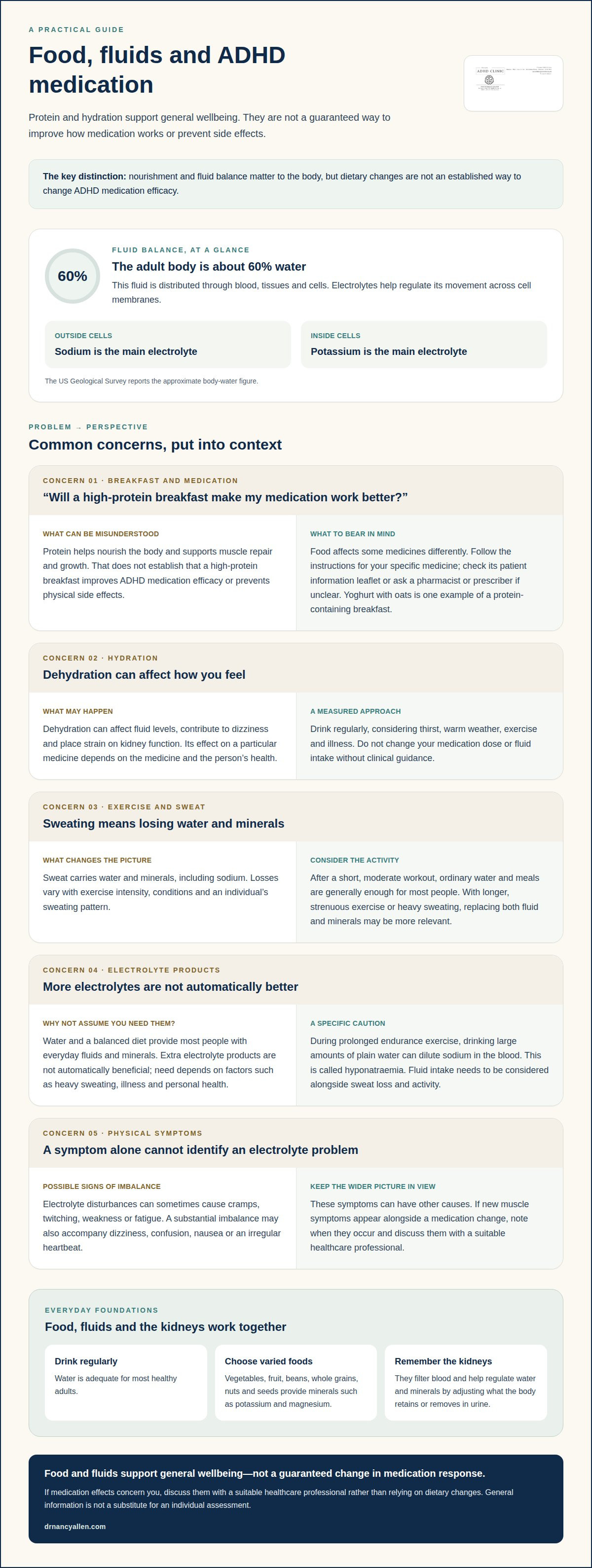
The US Geological Survey says an adult human body is about 60% water. This fluid is distributed through blood, tissues and cells rather than sitting in one reserve. Keeping its amount and mineral content balanced helps cells maintain their normal conditions. Electrolytes are charged minerals that help regulate fluid movement across cell membranes, while sodium is the main electrolyte outside cells and potassium is the main one inside.
This distinction helps explain how fluid balance works. Water shifts between compartments in response to dissolved substances, including sodium and potassium. When fluid or mineral levels change, the balance inside and outside cells changes too. The body regulates this through processes involving the kidneys, circulation and thirst. After sweating, drinking fluids and eating a usual balanced meal help replace losses.
Exercise affects fluid balance because sweat carries water and minerals out of the body. Sodium is among the minerals lost in sweat, and the amount varies with exercise intensity, conditions and a person’s sweating pattern. After a short, moderate workout, ordinary water and meals are generally enough for most people. Longer, strenuous exercise or heavy sweating can make replacing both fluid and minerals more relevant.
Drinking large amounts of plain water during prolonged endurance exercise is not always helpful. It can dilute sodium in the blood, a problem known as hyponatraemia. Fluid intake needs to be considered alongside sweat loss and activity. Sports drinks or electrolyte products may suit particular situations, but they are not a daily requirement for everyone.
For day-to-day hydration, drink regularly and consider factors such as warm weather, exercise, illness and thirst. Water is adequate for most healthy adults, while food and fluids together supply electrolytes. A varied diet including vegetables, fruit, beans, whole grains, nuts and seeds provides minerals such as potassium and magnesium. These everyday choices support general wellbeing, but do not guarantee a change in medication response.
Protein and hydration matter for general health, but a high-protein breakfast or electrolyte balance is not an established way to improve ADHD medication efficacy or reduce physical side effects. Protein contributes to nourishment, while hydration helps maintain fluid levels. If medication effects concern you, discuss them with a suitable healthcare professional rather than relying on dietary changes.
The kidneys filter blood and help regulate water and minerals, adjusting how much the body retains or removes in urine. Vomiting, diarrhoea, heavy sweating, some medicines, or drinking too little or too much can disrupt that balance. Anyone with a kidney condition or specific fluid advice should follow their clinician’s guidance rather than adopting a general hydration target.
If questions about ADHD symptoms sit alongside concerns about daily routines or treatment, an adult ADHD assessment can provide an opportunity to discuss your history and circumstances.
Electrolytes and their role in the body
Electrolytes are minerals that carry an electrical charge when dissolved in water. Sodium, potassium, calcium, chloride and magnesium are familiar examples. Their charge helps cells maintain electrical differences across their outer membranes, supporting processes such as nerve signalling and muscle contraction. The body also uses electrolytes to regulate fluid levels, blood pressure and chemical reactions. Each mineral has a distinct role, so the total amount alone does not describe the overall balance.
Some electrolytes have additional roles. Calcium helps build and maintain bones and teeth, while phosphate works alongside it. Bicarbonate helps keep the blood’s acid-base balance within a normal range. Sodium contributes to fluid regulation, and potassium helps cells, the heart and muscles function. These systems interact, but taking extra minerals does not necessarily improve how they work. Most people get electrolytes through everyday food and drink.
Food examples make these sources easier to picture. Potassium is found in bananas, potatoes, spinach and avocados. Nuts, seeds, whole grains and legumes provide magnesium. Dairy foods, leafy greens and fortified cereals can supply calcium. A varied diet can therefore provide several minerals without relying on sports drinks or supplements. Individual needs can differ, particularly with some health conditions or medicines, so these food examples are not a personal prescription.
Protein has a different role. Digestion breaks it into amino acids, which the body uses to build and maintain tissues. Protein also contributes to enzymes, hormones and other molecules involved in normal body processes. Amino acids support muscle repair and growth after activity. Eggs, dairy foods, beans, pulses, fish and meat are examples of protein-containing foods. A high-protein breakfast can be one way to include protein, but it is not a proven way to make ADHD medication more effective.
Protein and electrolytes are not interchangeable. Eating protein does not replace minerals lost through heavy sweating, and an electrolyte drink does not provide the amino acids needed for muscle tissue. A meal such as eggs with wholemeal toast offers protein alongside carbohydrate; adding spinach provides potassium. This combination can support general nourishment, but its value depends on the overall diet and circumstances, not a special medication-enhancing effect.
Some minerals occur in foods as positive or negative ions, but this chemistry does not make any food automatically harmful. What matters is the body’s balance and its ability to absorb, use and remove nutrients. The kidneys help regulate mineral levels, while the digestive system absorbs nutrients from food. Persistent vomiting or diarrhoea, for example, can disrupt fluid and mineral levels. In that situation, specific medical advice is more appropriate than self-prescribing supplements.
Risks of excessive electrolyte intake
Electrolytes support normal body processes, but taking more is not automatically beneficial. Excess sodium can raise blood pressure, while excessive potassium can disturb heart rhythm. Too much calcium or magnesium may cause kidney problems, nausea or confusion. These risks matter because supplements can add concentrated minerals beyond those obtained through ordinary eating.
Salt is another source of sodium. The recommended maximum is 6 g of salt per day, and most people in the UK already consume more. High sodium intake can also increase calcium loss in urine, which may contribute to kidney stones. People managing high blood pressure or kidney disease should be particularly careful about adding salty drinks or supplements.
Plain water can also cause harm in the wrong circumstances. During endurance exercise, drinking a large amount without replacing sodium can dilute its concentration in the blood, causing hyponatraemia. This is a risk associated with prolonged activity, not a reason to add salt to everyday drinks. For most healthy adults, water and a balanced diet meet routine hydration and electrolyte needs.
What UK NHS guidance recommends for hydration, protein intake, and managing medication side effects?NHS advice includes oral rehydration solution for vomiting or diarrhoea; protein needs and medicine instructions depend on individual circumstances. Discuss troublesome medication side effects with the prescriber or a pharmacist rather than changing treatment independently.
Can excessive protein, water, or electrolytes cause harm, especially with kidney or heart conditions? Yes. Kidney disease can affect how the body handles fluids and minerals, while excess water during endurance exercise can dilute blood sodium. High sodium can affect blood pressure, and excess potassium can cause dangerous heart rhythms.
Protein guidance also depends on health and age. The National Kidney Foundation recommends that people with chronic kidney disease who are on dialysis increase their protein intake to recommended daily requirements. This illustrates why a general high-protein target may not suit everyone with kidney disease. Anyone concerned about protein intake should consider their overall health, diet and clinical advice.
For older adults, some guidance, including that from the British Geriatrics Society, suggests a daily intake of 1 to 1.2 g of protein per kilogram of body weight to help maintain muscle. This is not a universal target for every adult, especially where kidney disease affects dietary needs. A post-workout protein food, such as yoghurt, can be part of a meal, but supplements are not essential for everyone.
Rather than adding electrolyte products or sharply increasing protein, consider the reason first. Vomiting, diarrhoea, heavy sweating, kidney disease and medicines can all affect fluid or mineral balance. The right response depends on the cause and the person’s health, not simply on how much of a supplement or drink they use.
Kidney health and electrolyte balance
Your kidneys help maintain the balance of water and minerals in your blood. They filter waste and adjust how much water, sodium, potassium and magnesium leaves in urine. This regulation supports stable fluid levels and normal nerve and muscle activity. If kidney function changes, the body may retain or lose minerals differently, so a general hydration or supplement routine may not suit everyone.
Fluid and electrolyte levels can shift for several reasons. Vomiting, diarrhoea and heavy sweating remove water and minerals. Some medicines and health conditions can also affect balance, while drinking too little or too much may add strain. For example, someone recovering from a stomach illness may need different support from someone exercising in hot weather. The cause and symptoms help determine what assessment is appropriate.
Possible signs of an imbalance include fatigue, dizziness, muscle weakness, nausea or confusion. These symptoms can have other causes and cannot establish a kidney problem on their own. A clinician may use blood tests to measure electrolytes and assess kidney function. An electrolyte panel measures the main minerals in the blood; an anion gap test can help assess electrolyte imbalance and blood acidity. Results are considered alongside symptoms, medicines and health history.
Management depends on which mineral is affected, whether its level is high or low, and the underlying cause. A deficiency may need replacement by mouth or, in some cases, through a vein. Severe imbalance can require specialist treatment, including dialysis to remove excess substances. These are clinical decisions, not reasons to start electrolyte tablets or restrict fluids without advice.
Protein intake also needs individual consideration in kidney disease. The National Kidney Foundation recommends that people with chronic kidney disease who are on dialysis increase their protein intake to recommended daily requirements. This does not mean everyone with kidney disease should increase protein. Kidney health, dialysis status, nutritional needs and other conditions all influence the appropriate approach.
For adults, recovery after illness or exercise also depends on adequate nourishment, not a single nutrient. Foods such as eggs, dairy, beans and fish provide protein, while vegetables, pulses, nuts and whole grains contribute other nutrients. A high-protein breakfast may help someone include protein in their diet, but it is not a proven way to improve ADHD medication efficacy or protect the kidneys.
If you have kidney disease, take medicines that affect fluid balance, or notice persistent symptoms, discuss your intake and treatment with a suitable healthcare professional. For adults seeking a broader review of ADHD symptoms and circumstances, arrange an adult ADHD assessment.
Dr Nancy Allen
Dr Nancy Allen can help adults and families explore ADHD concerns through an individual assessment. Food, fluids and electrolyte balance are part of general wellbeing, but they cannot replace an assessment or determine whether medication is suitable.
An Adult ADHD Assessment or Child ADHD Assessment may be a useful next step when attention, impulsivity or activity levels are affecting everyday life. A consultation considers symptoms, history and personal circumstances to discuss appropriate options. If you already take ADHD medication and have concerns about physical effects, speak with your prescriber or another suitable healthcare professional before changing your dose, diet or fluid intake.
Make your next step a clearer one
Understanding how protein, hydration and electrolyte balance relate to ADHD medication can help you ask more focused questions, but food and fluids cannot determine whether treatment is right for you. If you notice a change in how you feel, keep a simple record of when it happens, your medication timing, meals and drinks. This can give you and your healthcare professional a clearer starting point for discussing possible causes.
Don’t change your dose or begin electrolyte supplements to manage a side effect without appropriate clinical advice. The importance of protein and hydration, and how they may relate to medication efficacy and physical side effects, depends on your circumstances, health and prescribed medicine. An individual assessment can help make sense of symptoms and discuss appropriate options with care.
If you’d like to discuss ADHD concerns or an assessment for yourself or your child, contact Dr Nancy Allen. A thoughtful conversation can be a constructive next step.
Frequently Asked Questions
What are electrolytes?
Electrolytes are minerals with an electrical charge when dissolved in body fluids. Sodium, potassium, calcium, chloride and magnesium are examples. The body uses them in processes including nerve signalling, muscle activity and fluid regulation. Their roles differ, so one mineral cannot replace another. Potassium-rich foods include potatoes and spinach, while nuts and seeds provide magnesium as part of a varied diet.
Who might benefit from electrolyte drinks?
Electrolyte drinks may be useful during prolonged, intense exercise, particularly when sweating heavily. Someone taking part in a long-distance run, for example, may lose more fluid and minerals than someone completing a short, gentle walk. These drinks are not a routine requirement for everyone. People with kidney, heart or blood-pressure conditions should be cautious with concentrated products, since added minerals or sodium may not suit their health needs.
What are the benefits of a high-protein breakfast, and what evidence supports them?
A protein-containing breakfast can include foods such as eggs, yoghurt or beans. Protein supplies amino acids used to maintain body tissues, including muscle. Evidence about protein and muscle recovery after resistance exercise does not show that a high-protein breakfast improves ADHD medication efficacy or prevents side effects. Breakfast choices can support general nourishment, but medication effects need to be considered separately.
How much protein should a healthy breakfast contain?
There is no single breakfast amount that suits every healthy adult. Needs depend on the overall diet, activity, age and health, so a breakfast figure alone cannot establish whether daily intake is appropriate. A practical meal might combine eggs with toast, or yoghurt with oats and nuts. People with kidney disease or other dietary restrictions should seek personalised advice before deliberately increasing protein or using supplements.
What are the signs and health risks of dehydration and electrolyte imbalance?
Possible signs include unusual tiredness, dizziness, weakness, nausea, muscle cramps, confusion or an irregular heartbeat. These symptoms can have other causes, so they do not confirm dehydration or an electrolyte problem. A severe imbalance can be dangerous, and a clinician can assess symptoms and arrange blood tests where appropriate. Seek urgent help for severe or rapidly worsening symptoms, particularly confusion or an irregular heartbeat.
When do electrolyte drinks help, and how do they compare with water for everyday hydration?
For most healthy adults, water is suitable for everyday hydration, and electrolyte drinks are not routinely needed. They may help replace losses during prolonged, strenuous exercise or heavy sweating. Vomiting or diarrhoea is different: the NHS recommends oral rehydration solution to replace fluid and salts. Sports drinks, electrolyte products and rehydration solutions have different purposes, so choose according to the situation rather than using them interchangeably.



Comments