


Non-Stimulant ADHD Medication: A Guide to How They Work

Updated: 11 minutes ago
What if the most effective way to manage your ADHD isn't a stimulant at all? For many, the standard treatment path feels like a relentless rollercoaster of intense focus followed by an exhausting evening crash that leaves you drained and irritable. You might worry that medication will dull your vibrant personality or disrupt your sleep, especially if you've tried traditional stimulants and found they simply didn't suit your unique physiology. It's common to feel frustrated when the "gold standard" doesn't work for you, but your experience is entirely valid, and this is your guide to non-stimulant ADHD medication and how they work.
These treatments offer a sophisticated, 24-hour alternative that supports your brain without the volatile peaks and troughs often associated with other options. We'll explore the specific neurochemistry behind these medications and how they provide a steady, reliable foundation for your daily life. By the end of this article, you'll have the clarity needed to discuss these options with confidence, ensuring your treatment path aligns with your personal health goals and restores your sense of balance. Whether you're seeking to avoid the stimulant crash or need a gentler approach to symptom management, understanding these alternatives is the first step toward a more sustainable way of living.
Table of Contents
What is Non-Stimulant ADHD Medication?
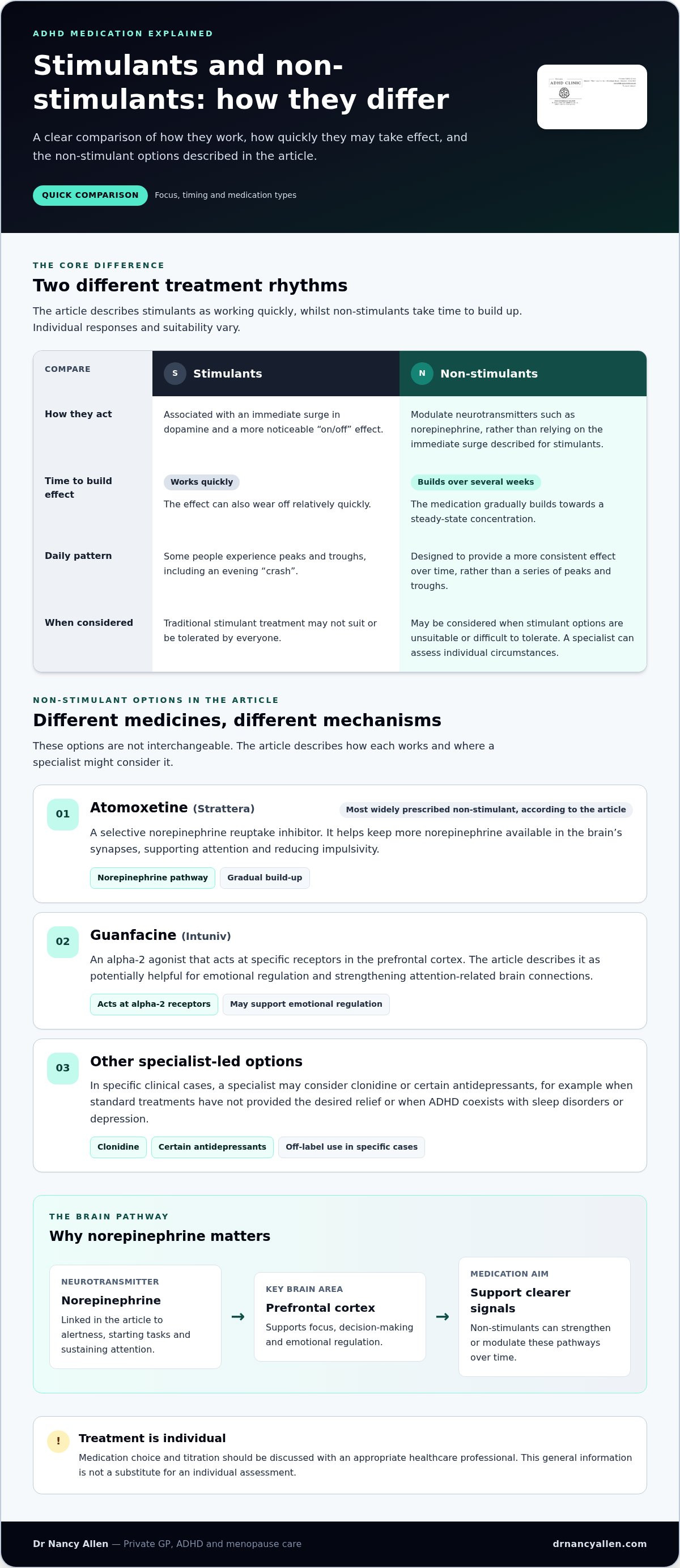
Non-stimulant ADHD medications represent a sophisticated shift in how we approach neurodivergent care. They don't rely on the immediate surge of dopamine that defines traditional stimulant treatment. Instead, they modulate neurotransmitters like norepinephrine to create a calmer, more consistent state of focus. This is your guide to non stimulant ADHD medication and how they work to provide a stable foundation for those who find traditional options unsuitable or difficult to tolerate.
Historically, ADHD treatment in the UK focused almost exclusively on stimulants. However, as our understanding of the adult ADHD brain has deepened, non-stimulants have moved from being a secondary option to a respected first-line choice. Specialists often recommend these medications for individuals who experience high levels of anxiety, have a history of cardiovascular concerns, or simply cannot tolerate the evening crash that often follows stimulant use. They offer a way to manage symptoms without the intensity that some patients find overwhelming.
The Core Difference: Stimulants vs Non-Stimulants
The most striking distinction lies in the rhythm of the medication. Stimulants operate on an "on/off" basis; they work quickly but leave the system just as fast. Non-stimulants require patience as they build up a steady-state concentration in your bloodstream over several weeks. This gradual process ensures that the therapeutic effect remains constant throughout the day and night, providing a seamless experience rather than a series of peaks and troughs. Because they don't produce a rapid euphoric effect, non-stimulants aren't classified as Schedule 2 controlled drugs, which often makes the prescription and pharmacy process much simpler for patients.
Common Non-Stimulant Names in the UK
Several options are currently available to UK patients, each with a unique mechanism for supporting cognitive function:
Atomoxetine (Strattera): This is the most widely prescribed non-stimulant. It works as a selective norepinephrine reuptake inhibitor, helping to improve attention and reduce impulsivity by keeping more norepinephrine available in the brain's synapses.
Guanfacine (Intuniv): Originally used to treat high blood pressure, this medication proved highly effective for ADHD. It's particularly helpful for managing emotional regulation and the intense sensitivity to perceived criticism known as rejection sensitive dysphoria.
Off-label alternatives: In specific clinical cases, a specialist might consider medications like Clonidine or certain antidepressants. These are used when standard treatments haven't provided the desired relief, especially when ADHD coexists with sleep disorders or depression.
How Non-Stimulant ADHD Medications Work in the Brain
The prefrontal cortex serves as the brain's executive suite, responsible for managing focus, decision-making, and emotional regulation. In an ADHD brain, this "CEO" often struggles to maintain control because the chemical signals required for communication are either too weak or disappear too quickly. Non-stimulants work by strengthening these signals over time, providing the structural support your brain needs to function with greater clarity. This section serves as your guide to non stimulant ADHD medication and how they work within these delicate neural pathways.
Rather than providing a sudden surge of energy, non-stimulants act more like a precision volume control. Whilst stimulants tend to "amp up" the primary signal, non-stimulants focus on turning down the background noise. By reducing the static of intrusive thoughts and external distractions, these medications allow the brain's natural focus to emerge. This steady approach leads to long-term neuroplasticity, where the brain gradually adapts to a more organised way of processing information. Understanding these complex mechanisms is essential, and a professional ADHD assessment can determine which neurochemical pathway requires support in your specific case.
The Power of Norepinephrine
Norepinephrine is a vital neurotransmitter that governs alertness, task initiation, and our ability to sustain attention. For many adults with ADHD, a lack of available norepinephrine results in a persistent "brain fog" that makes starting even simple chores feel monumental. Atomoxetine, the most common non-stimulant in the UK, functions as a selective norepinephrine reuptake inhibitor. It prevents the brain from prematurely "vacuuming up" this chemical, ensuring a higher concentration remains available for your brain cells to use. The result is a smoother transition into tasks and a noticeable reduction in the mental friction that usually precedes productivity.
Alpha-2 Agonists: A Different Path
Medications like Guanfacine take a slightly different route by directly mimicking the effects of norepinephrine at specific receptors in the prefrontal cortex. This process essentially "plugs the leaks" in the brain's communication lines, strengthening the connections that help us stay calm and composed. Because this mechanism has a soothing effect on the central nervous system, it's particularly effective at dampening the "fight or flight" response. This makes it an excellent choice for individuals who experience ADHD alongside tics or high levels of anxiety, as it fosters focus without the jittery side effects that can sometimes accompany other treatments.
Why Choose a Non-Stimulant? Benefits and Considerations
Choosing a treatment path is a deeply personal decision that balances clinical necessity with your daily reality. Whilst stimulants are often the first port of call, they don't suit every lifestyle or biology. Non-stimulants offer a distinct advantage through their 24-hour coverage, providing a stable neurochemical foundation that doesn't disappear when the working day ends. This consistency is a cornerstone of your guide to non stimulant ADHD medication and how they work to support you through early morning routines and evening responsibilities alike.
One of the most significant benefits is the absence of the "rebound effect". Many patients on stimulants describe a sharp decline in mood and focus as their medication wears off, often referred to as the evening crash. Non-stimulants eliminate this volatility. Because they maintain a steady level in your bloodstream, you avoid the irritability and exhaustion that can disrupt family life or personal downtime. This makes them an excellent option for those who require support that lasts beyond a standard eight-hour window, and it simplifies prescription management as these are not controlled substances.
Addressing the Stimulant 'Crash' and Sleep
It's a common misconception that all ADHD medications interfere with rest. In reality, non-stimulants can often improve sleep patterns by quietening the evening hyperactivity that keeps the mind racing. When your brain isn't struggling with a sudden drop in dopamine, it becomes easier to transition into a restful state. This is particularly relevant for those who struggle with ADHD and sleep, as the medication provides a gentle "volume down" effect on intrusive thoughts. By maintaining this balance, patients are often less prone to revenge bedtime procrastination, as they feel more in control of their evening choices and less compelled to "reclaim" time through late-night scrolling.
Medical Reasons for Choosing Non-Stimulants
Anxiety and Depression: Non-stimulants don't typically exacerbate feelings of jitteriness or the "on edge" sensation that stimulants can trigger in anxious patients.
Tic Disorders: For those with Tourette’s or chronic tics, non-stimulants are less likely to increase the frequency or severity of motor movements.
Personal Preference: Some individuals simply prefer the more "natural" feeling of non-stimulants, which offer a gentle clarity rather than the intense, driven focus sometimes associated with other treatments.
Ultimately, the goal is to find a medication that fits seamlessly into your life, respecting both your mental and physical well-being whilst providing the clarity you deserve. For an example of a practice that prioritises this level of integrated care, you can learn more about Acceptance Pathway Psychiatry PLLC.
What to Expect: Titration and Side Effects
Starting a new treatment path is often met with a mix of hope and apprehension. Unlike the "quick fix" often associated with stimulant treatment, non-stimulants require a commitment to the long game. This phase is known as titration. It's the process of finding the optimal dose where your symptoms are managed with the fewest possible side effects. This is your guide to non stimulant ADHD medication and how they work through a "low and slow" approach, ensuring your body has ample time to adjust to the neurochemical changes without feeling overwhelmed.
You won't feel the full benefits overnight. It typically takes between 4 and 8 weeks for these medications to reach their full therapeutic efficacy. During this initial phase, regular monitoring of your blood pressure and heart rate is standard practice. This ensures your cardiovascular system remains stable as the medication builds up in your system. This methodical pace allows your specialist to observe how your unique physiology responds, making precise adjustments to your personalised plan as needed.
The Importance of Patience in Treatment
Patience is your greatest ally during the first month of treatment. You might not notice a dramatic shift in focus immediately, but you should look for subtle improvements in your executive function. Perhaps you find it slightly easier to start a task you've been avoiding, or you notice your thoughts feel less cluttered whilst you're in a meeting. Tracking these small wins in a journal helps you and your specialist gauge progress during your reviews. Consistency is key; taking your dose at the same time every day is crucial for maintaining a steady-state level in your bloodstream and avoiding fluctuations in your symptoms.
Managing Potential Side Effects
Most people experience some mild adjustment effects during the early stages, such as nausea, fatigue, or a dry mouth. These are usually temporary and subside as your body adapts to the medication. To manage nausea, try taking your medication with a substantial meal rather than on an empty stomach. Staying well-hydrated throughout the day often alleviates dry mouth and can help with the initial feelings of tiredness. It's vital to distinguish between these transient symptoms and more serious concerns. If you notice significant mood changes or overwhelming fatigue that doesn't lift after the first few weeks, book a follow-up consultation to discuss adjusting your titration schedule. We're here to ensure the process feels safe and supportive every step of the way.
A Holistic Approach to ADHD Management
Medication is a powerful catalyst for change, but it's rarely the complete solution on its own. True clarity comes from viewing treatment as one essential tool amongst many in your management toolkit. By combining pharmacological support with tailored behavioural strategies and lifestyle adjustments, you create a robust framework that respects the complexity of your neurodivergence. This concluding section of your guide to non stimulant ADHD medication and how they work explores how an integrated approach leads to more sustainable, long-term success.
Focusing solely on the brain's chemistry without considering the wider context of your life can leave gaps in your care. For many adults, the journey is influenced by biological factors that traditional medical models often overlook. A truly personalised plan considers how your environment, sleep hygiene, and physical health interact with your ADHD symptoms. Achieving this level of insight starts with a thorough adult ADHD assessment, which serves as the foundation for every clinical decision that follows.
ADHD and the Hormonal Connection
The intersection of neurodivergence and hormonal health is a critical area of focus in modern specialist care. Oestrogen plays a pivotal role in the production and regulation of neurotransmitters; when levels drop during perimenopause or the menopause, ADHD symptoms often become significantly more pronounced. This hormonal shift can make previous coping mechanisms feel inadequate or exhausting. Dr Nancy Allen specialises in this overlap, recognising that non-stimulants can be a preferred choice during these life stages due to their stabilizing effect on the nervous system. Rather than battling the fluctuations of your cycle, an integrated plan works in harmony with your body’s changing needs.
Next Steps in Your Journey
Taking the first step toward a diagnosis is a profound act of self-advocacy. In the UK, national wait times can be extensive, but private care offers a path to clarity within days. Understanding your rights is also a vital part of this process, including the legal question of is ADHD a disability under the Equality Act. This knowledge empowers you to seek necessary adjustments in the workplace, ensuring your environment supports your new treatment path.
Your journey toward a more organised life doesn't have to be a solitary one. With over 25 years of clinical experience, our practice is dedicated to providing the expert guidance you need to move forward with confidence. If you're ready to explore a treatment plan that prioritises your holistic well-being, you can book a consultation to begin your assessment. Clarity is within reach, and we're here to help you find the path that feels right for you.
Finding Your Path to Sustainable Clarity
For readers interested in how community-based healthcare models operate elsewhere, you can check out Quality Comprehensive Health Center to see their approach to providing accessible health services.
Choosing a treatment path is about more than just managing symptoms; it's about reclaiming your quality of life through a sustainable and balanced approach. This has been your guide to non stimulant ADHD medication and how they work to provide a steady, 24-hour foundation for your focus. By understanding the patient titration process and the vital role of neurochemistry, you can move forward with the confidence that your care is tailored to your specific medical needs rather than a one-size-fits-all solution.
Dr Nancy Allen brings over 25 years of clinical experience to every consultation, ensuring that your unique neurobiology and hormonal health are at the heart of your treatment plan. Appointments are often available within days. If you're ready to explore how a holistic approach can transform your daily experience, book your private ADHD assessment with Dr Nancy Allen today. You don't have to navigate this journey alone; expert guidance and a clearer future are just a consultation away.
Frequently Asked Questions
Are non-stimulant ADHD medications as effective as stimulants?
Non-stimulants are highly effective, although they operate differently from stimulants. Whilst stimulants are often considered the first line of treatment due to a rapid response, your guide to non stimulant ADHD medication and how they work reveals they offer comparable long-term symptom control. They are particularly beneficial for individuals who experience severe side effects or have specific medical contraindications. Your specialist will help determine the most effective path based on your unique neurobiology and health history.
How long does it take for non-stimulants to start working?
You should expect a gradual onset of benefits rather than the immediate shift seen with stimulants. It typically takes between four and eight weeks for these medications to reach their full therapeutic potential. This period allows the active ingredients to build a steady-state level in your bloodstream, providing a consistent foundation for your focus. Patience is essential during this phase, as subtle improvements in your daily executive function usually emerge before the full effect is felt.
Can I take non-stimulants and stimulants together?
Combination therapy is a recognised clinical approach where a non-stimulant is prescribed alongside a stimulant. This strategy can be particularly useful for patients who need the immediate boost of a stimulant during the working day but require the 24-hour coverage that a non-stimulant provides. By using both, specialists can often lower the dose of each, potentially reducing side effects whilst maintaining a stable baseline of symptom management throughout the evening and night.
Do non-stimulants for ADHD cause weight loss or gain?
Non-stimulants generally have a more neutral impact on weight compared to stimulants, which are well-known for significant appetite suppression. Some patients may experience mild weight changes due to initial side effects like nausea or a temporary decrease in appetite during the titration phase. However, these effects usually subside as the body organises its response to the medication. It's important to monitor your habits and discuss any significant changes with your specialist during your reviews.
Are non-stimulants safer for the heart than stimulants?
Non-stimulants are often preferred for individuals with cardiovascular concerns because they don't typically cause the same rapid increase in heart rate or blood pressure as stimulants. Whilst they are generally considered a gentler option for the heart, regular monitoring remains a standard part of your care. This ensures that your physiological response remains within a healthy range, providing peace of mind as you establish a personalised and sustainable long-term treatment plan for your neurodivergence.
Can I stop taking non-stimulant medication abruptly?
You should never stop taking non-stimulant medication without first consulting your specialist. Because these medications build up in your system over several weeks, stopping abruptly can lead to a return of symptoms or uncomfortable withdrawal effects. A structured tapering plan is usually required to allow your brain chemistry to adjust safely. Your guide to non stimulant ADHD medication and how they work emphasises the importance of a managed transition to ensure your emotional well-being throughout the process.
What happens if I miss a dose of my non-stimulant medication?
If you miss a dose, you should take it as soon as you remember, provided it isn't close to the time for your next scheduled dose. If you're nearing your next dose, it's best to skip the missed one and continue with your normal routine. Never double your dose to make up for a missed one, as this can increase the risk of side effects. Consistency is the most effective way to maintain stable neurochemical levels.
Will non-stimulants help with my anxiety as well as my ADHD?
Many patients find that non-stimulants are particularly helpful for managing co-occurring anxiety. Unlike stimulants, which can sometimes exacerbate feelings of jitteriness or physical tension, non-stimulants tend to have a more calming effect on the nervous system. By regulating norepinephrine, these medications can reduce the "fight or flight" response, helping you feel more composed whilst also improving your focus. This makes them an excellent choice amongst those whose ADHD is complicated by persistent worry.



Comments