


Halloween with Child ADHD: A Parent's Survival Guide

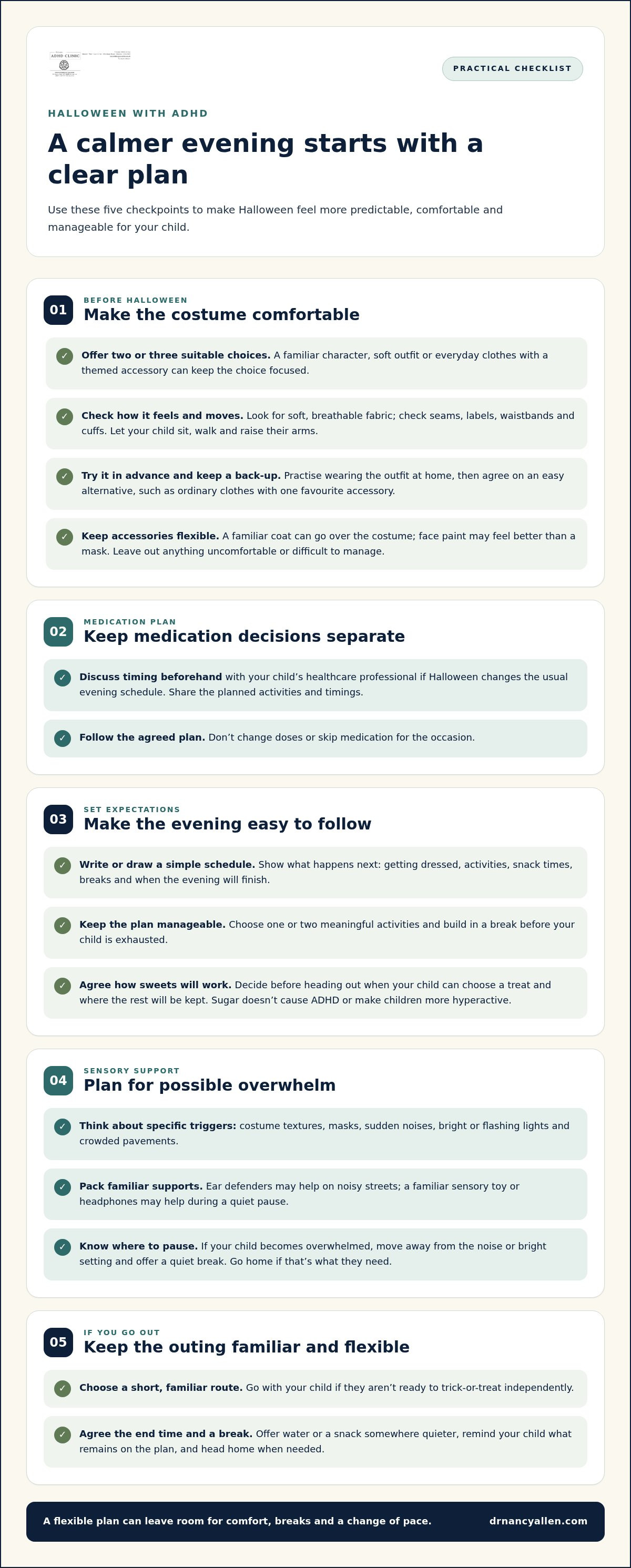
Sugar doesn’t cause ADHD or make children more hyperactive, so Halloween doesn’t need to become a battle over sweets. A calmer plan focuses on what can make the evening easier: clear expectations, sensory breaks and close, age-appropriate supervision. These tips for children and parents can make surviving Halloween with ADHD feel more manageable.
It’s understandable to worry about busy streets, exciting costumes and a routine that runs later than usual. A little preparation can help your child know what to expect, while a simple safety plan gives you both a clear way to handle changes or overwhelm.
This guide covers choosing a comfortable costume, discussing medication plans with your child’s healthcare professional, preparing for sensory overload and setting realistic expectations about sweets. It also offers practical ideas for a short, familiar trick-or-treat route, including who will accompany your child and when it’s time to head home.
Table of Contents
1. Choosing comfortable, sensory-friendly costumes
A costume should feel comfortable before it looks elaborate. For a child with ADHD, seams, masks, tight collars or scratchy fabric can distract from the fun. Start with something your child already tolerates, such as a favourite soft top, then add a simple accessory. A witch’s hat, superhero cape or animal ears can suggest a character without covering the face.
For children with allergies or sensory sensitivities, choose familiar, soft clothing and avoid costume materials that cause discomfort. Instead of edible treats, suitable alternatives include stickers, pencils or small toys; check any item is appropriate for your child.
Offer two or three suitable costume choices rather than an overwhelming wardrobe. Your child might choose between a soft vampire outfit, clothes featuring a familiar character or everyday clothing with a themed hat. Each option gives them a genuine say while keeping the decision focused on comfort and practicality.
Look for soft, breathable fabrics that are less likely to feel itchy, tight or too warm. A cotton top and comfortable trousers may work better than a full-body costume with a stiff lining. Check waistbands, cuffs and labels, and remove or cover anything your child finds irritating. Let them move, sit and raise their arms during the fitting.
Try the chosen costume once or twice before Halloween rather than introducing it for the first time at the door. Let your child wear it around the house so you can spot uncomfortable seams, slipping accessories or difficulty using the toilet. If they dislike one part, adjust it early instead of insisting they tolerate it on the night.
The weekend before Halloween is a useful time to practise wearing the outfit. Pair the costume with ordinary activities, such as reading a story or playing at home, rather than making every fitting feel like a test. A short practice also shows whether your child can walk comfortably and keep any accessories in place.
Keep the outfit easy to adapt. A familiar coat can go over a costume outdoors, while face paint may replace a mask that feels restrictive. If a prop gets in the way or causes frustration, leave it at home. Comfort matters more than matching every detail of a character.
Agree on a back-up option before Halloween, such as ordinary clothes with one preferred accessory. That gives your child a clear alternative if the costume feels wrong later. Flexible plans, familiar fabrics and a practice fitting can help the evening start with fewer surprises.
2. Should my child take their ADHD medication on Halloween?
Keep medication decisions separate from Halloween plans. If trick-or-treating changes the usual evening schedule, discuss medication timing with your child’s healthcare professional beforehand. Share the planned activities and timings, then follow the agreed plan rather than changing doses or skipping medication for the occasion.
For sweets, agree on a clear expectation with your child before heading out, such as when they can choose a treat and where the rest will be kept. Sugar doesn’t cause ADHD or make children more hyperactive, so a calm, predictable routine is more helpful than blaming sweets for a change in behaviour.
A visual or written plan can make the evening easier to follow. Include when your child will get dressed, whether you’ll visit neighbours or stay home, planned snack times and when the evening will finish. Use simple language and review the plan together so your child can see what comes next.
Keep the schedule manageable by choosing one or two meaningful activities. Your family could decorate pumpkins, then welcome friends for a short party at home. Familiar surroundings may make it easier to take breaks, offer a known snack and keep the evening closer to your child’s usual routine.
If you go out, build in a break rather than waiting until your child is exhausted. Pause somewhere quieter, offer water or a snack, and remind them what remains on the plan. A clear end time and bedtime plan can also prevent the evening from stretching unpredictably late.
If your child becomes overwhelmed, calmly leave the noisy or brightly decorated setting and offer a quiet break. Go home if that’s what they need. Use a reassuring voice and avoid adding demands while they recover. A quiet room with soft lighting, headphones or a familiar sensory toy can provide a calmer place to settle.
After Halloween, return to ordinary mealtimes and bedtime as much as possible. A familiar breakfast and a quieter day can help your child reset after an exciting evening. If your child seems tired, avoid filling the following day with back-to-back plans. Leave room for rest, play at home or another low-key activity.
Hosting at home doesn’t have to mean a large party. Invite a few familiar friends, choose a simple activity such as a pumpkin hunt, and make a quiet room available. Your child can join in, take a break or finish early, while an agreed plan keeps expectations clear for everyone.
3. Preparing for sensory overload
Costume textures, masks, sudden noises and crowded pavements can each feel difficult. Choose familiar clothes, skip masks that restrict vision or breathing, and carry ear defenders for noisy streets. A visual schedule can show what happens next, including when your child can pause or leave.
Make Halloween more inclusive by asking your child what feels comfortable, then adapting the plan to their needs. They might enjoy decorating a pumpkin at home but prefer to avoid a busy street or costume party.
Prepare for specific triggers rather than treating sensory overload as one single experience. If touch is difficult, remove scratchy labels and avoid face paint. If flashing lights bother your child, choose a quieter route. Ear defenders can reduce the impact of loud crowds, although your child may prefer another familiar way to manage noise.
Use a visual schedule to explain the evening in simple steps. Draw or write “get dressed”, “visit two houses”, “take a break” and “go home”. Keep the plan where your child can see it, and point to the next activity when the environment becomes busy or distracting.
Agree on a discreet signal before leaving home. A hand squeeze, a particular phrase or showing a coloured card could mean, “I need a break”. Practise it together during a calm moment so your child knows they can communicate without explaining themselves in front of neighbours.
Plan a quieter option alongside the main activity. Your child could hand out sweets at home, visit one familiar neighbour or join a small pumpkin-decorating activity. Knowing there’s an alternative can make it easier to change plans if costumes, noise or crowds become too much.
A tantrum is an angry or frustrated outburst; a meltdown is a response to feeling overwhelmed. During a meltdown, reduce demands, use a calm voice and move away from noise or bright lights. Give your child space to settle rather than asking repeated questions or insisting they continue.
Choose a familiar adult to stay close and notice early signs, such as covering their ears, becoming unusually quiet or struggling to follow the schedule. Agree where you can pause, such as a nearby quiet room or home. Afterwards, offer a simple choice, like water or a quiet activity, and discuss what might help next time.
4. Setting expectations and limits for candy
Agree on a simple sweets plan before Halloween rather than negotiating at every doorstep. Explain, for example, that your child can collect treats and choose when to have some at home. A visible calendar or note on the fridge can show the arrangement. Keep the wording clear and neutral so the limit feels predictable rather than like a punishment.
Decide together how the plan will work. You might agree that sweets go into one container and your child chooses a treat after dinner. The right arrangement depends on your family’s routine and your child’s needs. Make it achievable, explain it before setting off, and avoid changing the rule halfway through the evening.
Sugar doesn’t cause ADHD or make children more hyperactive. That doesn’t mean every child responds to sweets in the same way, or that candy must be unlimited. If your child gets excited about collecting treats, a clear plan can help them understand what happens next without blaming sugar for their behaviour.
Keep ordinary meals and snacks in the plan, too. Offer a familiar breakfast, such as porridge or yoghurt with fruit, and serve the usual lunch and dinner on Halloween. A satisfying meal means your child doesn’t have to rely on sweets when hungry. In the week before Halloween, maintain regular eating routines rather than turning food into a source of pressure.
Some children may find it easier to exchange part of their sweets for something they value. Offer choices such as a small toy, a book or a special activity, and agree on the exchange in advance. Your child might choose a bedtime story or a family game. Keep it optional and avoid presenting the alternative as a reward for behaving well.
After trick-or-treating, let your child help sort the sweets into groups, such as favourites, items to save and treats they don’t want. This gives them a practical role and opens a calm conversation about the agreed allowance. For allergies, check packaging and avoid giving any treat whose ingredients are unsafe or unclear for your child.
If the plan changes, explain the change plainly and offer a next step. You could say, “We’re putting the sweets away now; you can choose one after dinner tomorrow.” A written reminder or calendar mark can support that message. Consistent expectations, familiar meals and a choice of non-food alternatives can make Halloween sweets easier to manage without making them the focus of the evening.
5. Trick-or-treating safety and supervision
Plan the route before leaving home rather than choosing streets as you go. A brief, familiar route around one or two streets gives your child a clearer boundary. Agree where you’ll go, which side of the road you’ll use and what time you’ll head home. Choose homes with muted decorations if bright displays or sudden sounds may distract or unsettle your child. A clear route helps make surviving Halloween with ADHD safer and more predictable.
Children who aren’t ready to trick-or-treat independently should go with a parent or safe adult. Stay close enough to guide them at driveways, corners and busy pavements. Before setting off, agree on a simple rule: stop at the kerb, wait beside the accompanying adult, then cross together when it’s safe. Practise the sequence on a familiar walk.
Impulsivity can make it harder for a child to pause when a door opens or a group moves ahead. Use a short, repeatable reminder such as “stop, stay beside me, then walk”. Give the instruction before reaching a road or doorstep, not while your child is already moving towards it. Praise the specific action, such as waiting at the kerb. These practical steps support surviving Halloween with ADHD without expecting a child to manage a busy street alone.
Make your child easy to see in dark or busy streets. Add reflective gear to a coat or costume, or carry glow sticks where they won’t obstruct walking. Check that masks, capes and props don’t block vision or catch underfoot. If an accessory makes it harder to hold hands, climb a kerb or notice traffic, leave it at home.
A designated walking buddy can provide another clear point of reference, but the adult remains responsible for supervision. Tell your child who their buddy is and what to do if the group becomes separated. Agree on a simple plan, such as staying with the accompanying adult rather than searching alone. Keep the route short enough to follow without rushing between houses.
Set a clear end time before leaving and explain what happens afterwards, such as returning home for a drink and changing out of costume. If your child becomes distracted or tired, shorten the route rather than adding another street. A planned finish helps prevent last-minute arguments and keeps attention on getting home safely.
Keep supervision close, directions simple and the route familiar. A parent or safe adult can guide each road crossing, while reflective details improve visibility and a walking buddy supports the agreed plan. If busy streets feel too challenging, handing out treats at home offers another way to take part.
Dr Nancy Allen: Adult ADHD Assessment
Dr Nancy Allen offers Adult ADHD Assessment for adults who want to explore persistent ADHD-related concerns. For parents with questions about their child, a Child ADHD Assessment can help examine their symptoms, history and circumstances, and discuss appropriate next steps.
Consider seeking an assessment if challenges with attention, impulsivity or organisation continue beyond Halloween and affect everyday life at home, school or work. A seasonal event alone cannot establish ADHD, but it may prompt useful questions about patterns you’ve noticed over time. An assessment explores those concerns in context; it does not promise a particular diagnosis or treatment.
For advice tailored to your family’s circumstances, contact Dr Nancy Allen to discuss an assessment.
Let Halloween be a starting point for understanding
One difficult evening doesn’t define your child, and one successful celebration doesn’t answer every question. If you notice ongoing challenges with attention, impulsivity or organisation across everyday settings, recording examples can help you discuss them with a suitable health professional. Surviving Halloween with ADHD isn’t about achieving a perfect night; it’s about learning what helps your family feel safer and more at ease.
Dr Nancy Allen offers Child ADHD Assessment and Adult ADHD Assessment for people seeking to explore ADHD-related concerns. Her care also includes Peri-menopause & Menopause Specialist Care. An individual assessment considers symptoms and circumstances together, helping you discuss appropriate next steps without relying on a single event to explain the whole picture.
If you’d like to explore an assessment or discuss your concerns, you can contact Dr Nancy Allen. Take the next step at a pace that feels right for you and your family.
Frequently Asked Questions
Does sugar make ADHD symptoms worse on Halloween?
No, sugar doesn’t cause ADHD or make children more hyperactive. A child may still seem more excitable during Halloween because the evening is unusual, busy or highly anticipated, so don’t assume sweets explain every change in behaviour. Keep treat expectations consistent with your family’s usual approach. If you notice ongoing changes in mood, sleep or concentration beyond the event, record examples and discuss them with an appropriate health professional.
How can I help my hyperactive child trick-or-treat safely?
Stay close and give brief instructions before your child reaches a crossing, driveway or doorstep. A simple cue such as “wait beside me” is easier to act on than a long reminder in a busy moment. Keep your phone accessible, and agree what your child should do if they lose sight of you, such as staying with a named accompanying adult rather than moving off to find you.
Should my child take their ADHD medication on Halloween?
Don’t change or skip your child’s medication because it’s Halloween without advice from their prescriber. Explain how the evening differs from the usual routine, including planned activities and bedtime, then ask about timing that fits the prescribed plan. Keep medication stored and given as directed rather than carrying doses loose in a costume pocket. If you have questions about a missed dose, follow the advice provided for that medicine.
What Halloween activities and routines help children with ADHD manage excitement and transitions?
Choose activities with clear beginnings and endings, such as decorating one pumpkin, then putting the tools away before starting a film. Give a warning before each transition: “After this game, we’ll have tea.” A visual timer or simple picture sequence can make the change easier to understand. Keep one familiar part of the day, such as the usual bedtime story, to mark the return to routine.
How can parents prepare a child with ADHD for trick-or-treating?
Practise key interactions at home before the evening: knock, wait, say “trick-or-treat”, then thank the neighbour. Role-play what to do if a house is dark, a dog barks or your child feels unsure about approaching the door. Agree that they can stay beside you or skip that house. Rehearsal makes these situations more familiar without requiring your child to continue when uncomfortable.
How can parents set clear boundaries and a simple Halloween schedule for children with ADHD?
Write a short sequence your child can follow, such as tea, getting ready, visiting neighbours and returning home. State the boundary positively and specifically: “We’ll visit the houses on this street, then go home.” Explain what happens if plans change, such as rain prompting an indoor activity. Keeping the schedule visible gives you a shared reference instead of relying on repeated reminders or last-minute negotiations.

Comments