


AuDHD: How to Spot ADHD When Already Autistic

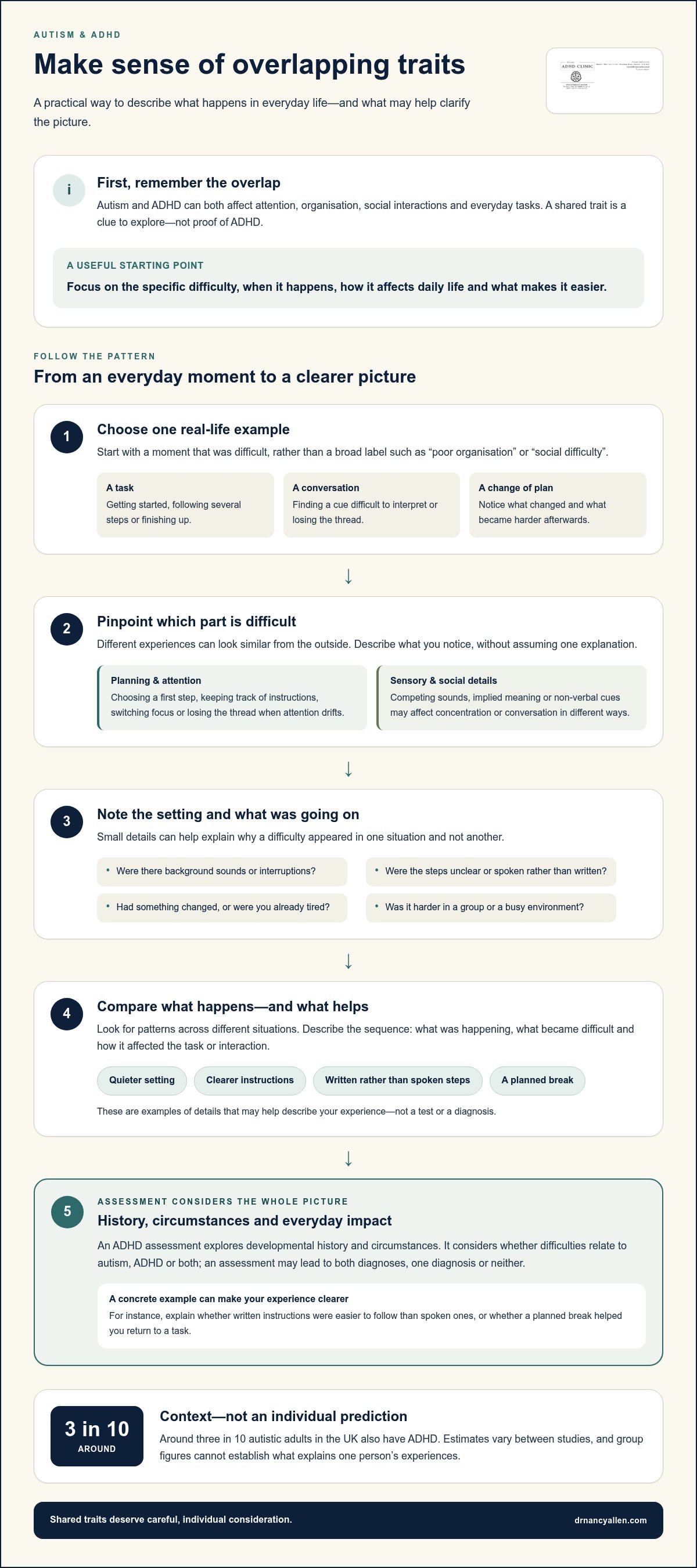
Around three in 10 autistic adults also have ADHD. If you’re wondering how to tell whether you have ADHD if you’re already autistic, look for persistent difficulties with attention, activity or impulsivity that affect daily life, rather than assuming every overlapping trait points to ADHD. Autism and ADHD can be diagnosed together.
It can be difficult to tell the two apart: both may involve intense interests, sensory differences, challenges with organisation and social difficulties. That overlap does not make your questions any less valid, and you do not have to work it out alone.
This article explains which autism and ADHD traits overlap, what differences may offer clues, and why a thorough assessment considers your history and circumstances. You will also learn what to expect when seeking an ADHD assessment as an autistic person, so you can approach the next step with greater clarity.
Table of Contents
Is There a Link Between Autism Spectrum Disorder and ADHD?
Yes. Autism and attention deficit hyperactivity disorder can occur together, although estimates vary between studies. This overlap can help explain why a single trait rarely tells the whole story.
How Often Autism and ADHD Co-occur
Co-occurrence means one person meets the criteria for both autism and ADHD. In the UK, around three in 10 autistic adults also have ADHD. A meta-analysis drawing on more than 50 studies estimated that 39% of autistic people had ADHD. These findings show that considering both conditions can matter during an assessment.
Other estimates differ: studies suggest autism and ADHD co-occur in 20% to 37% of cases. Figures can vary because studies may use different groups, definitions and assessment methods. A study of preschool and school-age children found ADHD in 10% of children with autism, illustrating how results depend on the population examined.
These percentages describe groups, not an individual’s likelihood of having ADHD or receiving a diagnosis. For example, an autistic adult who struggles with attention may also have ADHD, but attention difficulties alone do not establish this. Frequency figures provide context, but cannot determine what explains one person’s experiences.
Co-occurring Autism and ADHD
Having both conditions means that autism-related and ADHD-related characteristics are present in the same person. Older versions of the DSM diagnostic manual prevented clinicians from diagnosing autism and ADHD together. Since the DSM-5 was published in 2013, both diagnoses can be made. This change matters because a person’s difficulties need not be explained by autism alone.
Having both conditions may feel different from experiencing either one alone. An autistic person may value a predictable routine, yet ADHD-related distractibility or impulsivity can make it difficult to maintain. Sensory experiences may also affect concentration, while attention differences add another influence. These examples are clues to explore, not proof of either diagnosis.
Autism and ADHD can both affect mental health, everyday tasks and relationships. Someone might find social situations tiring because of communication differences; another person might lose track of conversations because their attention drifts. These experiences can occur together, but their causes and effects vary from person to person.
“AuDHD” is a community term for the co-occurrence of autism and ADHD, not a separate formal diagnosis in clinical guidelines such as the DSM-5 or ICD-11. An assessment considers each condition’s characteristics and their effects. That distinction can help make sense of support needs without treating one label as an explanation for everything.
Overlapping executive-function and social differences
Autism and ADHD can both affect executive function, the mental skills involved in planning, starting and completing tasks. Difficulties may look alike, even when their causes differ. A missed appointment, for example, might involve losing track of time, struggling to switch attention or having an unexpected change disrupt a plan. Understanding the context can make the experience easier to describe.
Executive-function differences can affect everyday routines. Someone might know they need to prepare dinner but struggle to choose a first step, keep track of cooking times and finish tidying up. Another person may manage familiar tasks but lose track of instructions with several stages. Notice which parts of a task cause difficulty and what kind of structure helps.
Attention can vary depending on the activity and setting. Someone may focus intensely on a preferred interest, then find it difficult to start or sustain routine paperwork. Competing sounds, interruptions or unclear steps can make concentration harder. Briefly noting what was happening, what interrupted your focus and what helped can reveal patterns across different situations.
Social communication differences can have distinct causes, even when they look similar. An autistic person may find implied meaning or non-verbal cues difficult to interpret. Someone with ADHD may miss part of a conversation when their attention drifts, interrupt before another person finishes or answer quickly. Either way, they may leave the conversation unsure what was expected.
Think about a group conversation. One person might struggle to identify when to join in, while another loses the thread after background noise distracts them. Someone may experience both, or find that fatigue makes one difficulty more noticeable. These details explain what happens more clearly than a broad label such as “social difficulty”.
Shared traits can interact. Bright lighting or several people speaking may make it harder to concentrate and follow social cues. An unexpected change can increase stress, while frustration may build when a task repeatedly slips from attention. Notice the sequence: what changed, what became difficult, and whether a quieter setting or clearer instructions helped.
Social demands can also affect you after an interaction. You might replay a conversation to work out whether you missed a cue, or feel mentally tired after concentrating hard to stay engaged. The specific details matter: whether the strain came from interpreting meaning, keeping your attention on the exchange or managing both at once.
When describing these experiences, give a concrete example and explain its impact. For instance, note whether written instructions were easier to follow than spoken ones, or whether a planned break helped you return to a task. This gives a clearer picture of your needs and what supports you in daily life.
Seeking an ADHD diagnosis as an autistic person
Autism and ADHD can be assessed separately or together. The assessment may lead to both diagnoses, one diagnosis or neither. Its purpose is to understand your development, current difficulties and support needs.
Seeking Help with Diagnostic Uncertainty
Diagnostic uncertainty means you are unsure whether your difficulties relate to autism, ADHD or another factor. Talking with a GP can help you explain what is affecting your daily life and discuss an appropriate assessment route.
Tell your GP that you are autistic and describe specific examples, such as repeatedly missing appointments, struggling to finish tasks or acting impulsively. Explain when these patterns began, where they occur and how they affect work, relationships or everyday responsibilities. Share any information from previous assessments, too.
ADHD Assessments for Autistic Adults
An ADHD assessment for an autistic adult explores current symptoms, childhood development and the impact of difficulties across different settings. A qualified healthcare professional considers attention, hyperactivity and impulsivity alongside autism-related needs and other possible explanations.
In the UK, an assessment involves a thorough clinical review, not just a checklist. For an adult ADHD diagnosis, the relevant behaviours must have been present in childhood. Examples might include persistent difficulty completing schoolwork, losing belongings or waiting for a turn, although memories and records vary.
How is ADHD assessed in autistic adults in the UK? A qualified professional discusses your developmental history, symptoms and daily functioning, and considers whether your difficulties fit ADHD, autism or both. They may use information from someone who knew you as a child, if available.
What should I tell my GP if I think I have ADHD as well as autism? Explain your autism diagnosis, the specific attention or impulsivity difficulties you experience, and how they affect daily life. Include examples from childhood and adulthood, as well as any relevant school or health records.
How do I get an ADHD assessment on the NHS in England, Scotland, Wales or Northern Ireland? Talk to your GP about an NHS referral and the local pathway. In England, you can ask about Right to Choose; arrangements differ across Scotland, Wales and Northern Ireland.
Late Autism and ADHD Diagnosis
A later diagnosis can follow years of adapting, masking difficulties or having one condition explain only part of someone’s experience. Autism-related differences begin during development, and ADHD behaviours must also have been present in childhood for an adult diagnosis.
Bring concrete examples from different stages of life, such as school reports, family observations or work patterns. A late diagnosis does not mean the difficulties began recently. It can offer a clearer account of longstanding needs and inform discussions about support.
Can ADHD medication help autistic people, and what are the risks? ADHD medication can improve focus for some people, but autistic people can be more or less sensitive to it. Expert consensus recommends starting at a low dose and increasing slowly for adults with both conditions, with a prescriber monitoring the effects and any unwanted changes.
Recognising ADHD traits in an autistic person
What signs suggest someone may have both autism and ADHD? Persistent difficulties with attention, activity or impulsivity alongside autistic experiences may be a reason to explore both. For example, you might value a predictable routine but repeatedly lose track of the steps needed to follow it. If you are wondering how to tell if you have ADHD when you are already autistic, focus on patterns and their impact, not one isolated trait.
ADHD traits can appear in everyday tasks. You may lose track of a conversation, forget why you entered a room or leave several tasks unfinished despite wanting to complete them. Repeated difficulties that affect daily life are more informative than occasional lapses. Consider whether the same pattern occurs at home, at work or during activities you enjoy.
Attention is not simply an inability to focus. Someone may concentrate for a long time on a preferred interest, then struggle to begin a less engaging task, such as replying to an email. Notice what holds your attention, what interrupts it and whether reminders or external structure change the outcome. These details can show how your attention works in different situations.
Impulsivity may appear in particular situations. You might interrupt because a thought feels urgent, make a quick decision before considering the consequences or find waiting unusually difficult. Hyperactivity can feel less like constant movement and more like persistent restlessness or a mind that keeps shifting between thoughts. Note how often these experiences happen and how they affect you.
Autistic and ADHD traits can pull in different directions. A predictable plan may feel calming, while novelty or spontaneous action is also appealing. Starting a new routine might feel motivating at first, but maintaining it can become difficult when the initial interest fades. Reflecting on that tension may help you describe your experience during an assessment.
Masking means consciously adjusting your behaviour to fit a situation. You might rehearse what to say before a meeting, wait to speak until invited or use reminders to compensate for forgetfulness. Consider how much effort these strategies take and whether difficulties become more noticeable when structure or support disappears. This can reveal challenges that others may not readily see.
Shared traits can make experiences harder to interpret. Sensory input might make instructions harder to follow, while strong interest in a subject can resemble intense focus. Rather than treating one example as decisive, note the context: whether noise, change, boredom or competing thoughts came first, and what happened afterwards. This helps build a fuller account of your difficulties.
A brief record can make patterns easier to discuss. Note the situation, what was difficult, its effect and any strategy that helped. Comparing a missed appointment with one managed using a phone reminder may offer useful context. If you are working out whether you have ADHD when you are already autistic, specific examples can support a more informed conversation with a healthcare professional.
Autism and ADHD in children and adults
Age can shape how autism and ADHD appear and what other people notice. With children, adults at home or school may see different parts of the picture. Adults may have years of experience adapting to difficulties that began earlier.
Around 28% of autistic children also meet the criteria for ADHD. The signs can affect learning and daily routines in different ways: a child might find classroom noise overwhelming, lose track of instructions, or struggle to move between activities. These examples describe possible difficulties, not a checklist that confirms a diagnosis.
For children, observations across settings can help build a fuller picture. A parent may notice unfinished tasks at home, while a teacher sees difficulty waiting or staying focused on classroom work. Comparing examples helps show whether challenges occur in more than one environment and whether they affect learning, friendships or family life.
Interests can also be misunderstood. A child’s deep focus on a favourite subject may be part of their autistic experience, while difficulty shifting attention between school tasks may raise a separate question. Sensory discomfort can also contribute to apparent inattention. Considering what happens before a child disengages can help distinguish these possible influences.
Adults may describe a different pattern. Someone might have developed systems for appointments, bills or household tasks, yet still struggle when plans change or several demands arrive together. A missed deadline, for example, could involve difficulty getting started, holding instructions in mind or returning to a task after an interruption. Specific situations are more useful than judging effort or ability.
An adult diagnosis can involve piecing together childhood development. Old school reports, family memories or examples of early difficulties may help explain how current challenges developed. Not everyone has records or someone who remembers their childhood, so the assessment considers the history available alongside present-day functioning.
Labels such as “attention deficit” can make ADHD sound like a simple lack of focus. In practice, attention can vary with interest, demands and surroundings. A pupil may concentrate on a preferred subject but struggle with several classroom instructions; an adult may focus well at work yet find routine administration difficult.
Parents and carers can note specific examples from home, education and social situations, including what support helps. Adults can record when difficulties arise, what demands are involved and how they affect everyday responsibilities. This practical information can make conversations about a child’s or adult’s needs more focused and useful.
Dr Nancy Allen: Adult ADHD Assessment
Dr Nancy Allen’s Adult ADHD Assessment gives adults a structured opportunity to explore whether ongoing difficulties with attention, organisation or impulsivity may relate to ADHD alongside autism. The assessment considers your symptoms, developmental history and individual circumstances to build a clearer picture of how these difficulties affect daily life.
You can discuss your experiences and relevant background, including examples from childhood and adulthood. The findings can inform a conversation about appropriate next steps and options, without assuming the outcome in advance. General information can help you prepare, but it cannot replace an individual clinical assessment.
Take the next step towards clarity
Working out how to tell if you have ADHD when you are already autistic is not about matching yourself to a checklist. A useful next step is to describe what you experience, how long it has been happening and where it affects daily life. Bring notes, examples from different settings and questions you want the assessment to address.
Dr Nancy Allen offers Adult ADHD Assessment and Child ADHD Assessment for people seeking a more individual understanding of their difficulties. Her practice also offers Peri-menopause & Menopause Specialist Care. An assessment gives you space to explore your history and discuss appropriate options, without assuming the outcome in advance.
If you’re ready to discuss your situation, contact Dr Nancy Allen. Taking the first step can help you approach the questions ahead with greater confidence and support.
Frequently Asked Questions
What Is ADHD?
ADHD is a neurodevelopmental condition that can affect attention, activity and impulse control. Its impact may show up in practical ways, such as forgetting an agreed plan, finding it hard to prioritise competing tasks or acting before considering the consequences. These difficulties can vary with the demands of a situation. Concrete examples are more useful than a general impression of being distracted or disorganised.
What is AuDHD?
AuDHD is shorthand some people use to describe being autistic and having ADHD. People may use it differently, so it can help to ask which experiences they mean rather than assume it means the same thing for everyone. For example, someone might use the term to explain why they need clear plans but find it difficult to keep track of them.
What are the symptoms of ADHD in autistic adults?
Possible ADHD-related difficulties in autistic adults include frequently misplacing everyday items, struggling to estimate how long a task will take or finding it hard to switch between unfinished jobs. Someone might start getting ready for an appointment, become absorbed in another activity and leave without essential items. A clinician considers how often this happens, its history and its practical impact, rather than treating one example as decisive.
How do ADHD and autism symptoms overlap and differ?
The same situation can reveal different support needs. Written instructions may help someone who finds spoken information difficult to process, while breaking a long task into short steps may make it easier to stay on track. Notice which adjustments help and in what circumstances. This practical information can describe how difficulties affect you without assuming that one behaviour has only one explanation.
Can ADHD be diagnosed if you already have an autism diagnosis?
Yes. An autism diagnosis does not rule out a separate ADHD assessment. If you are seeking one, bring your autism assessment report if you have it, and mark any sections that describe attention, planning or impulsivity. You can also prepare examples of how these difficulties affect a typical week. This helps the clinician understand what has already been explored and what questions remain.
What screening questionnaires are used for ADHD, and can they diagnose it?
Questionnaires may ask how often particular behaviours occur and how they affect daily activities. They can help you organise examples before an appointment, but cannot diagnose ADHD on their own. If a question feels ambiguous, note a real situation that illustrates your answer. A clinician can explore the context, developmental history and impact alongside your responses.



Comments