


ADHD Diagnosis: Why Being 'Good at School' Doesn't Rule It Out

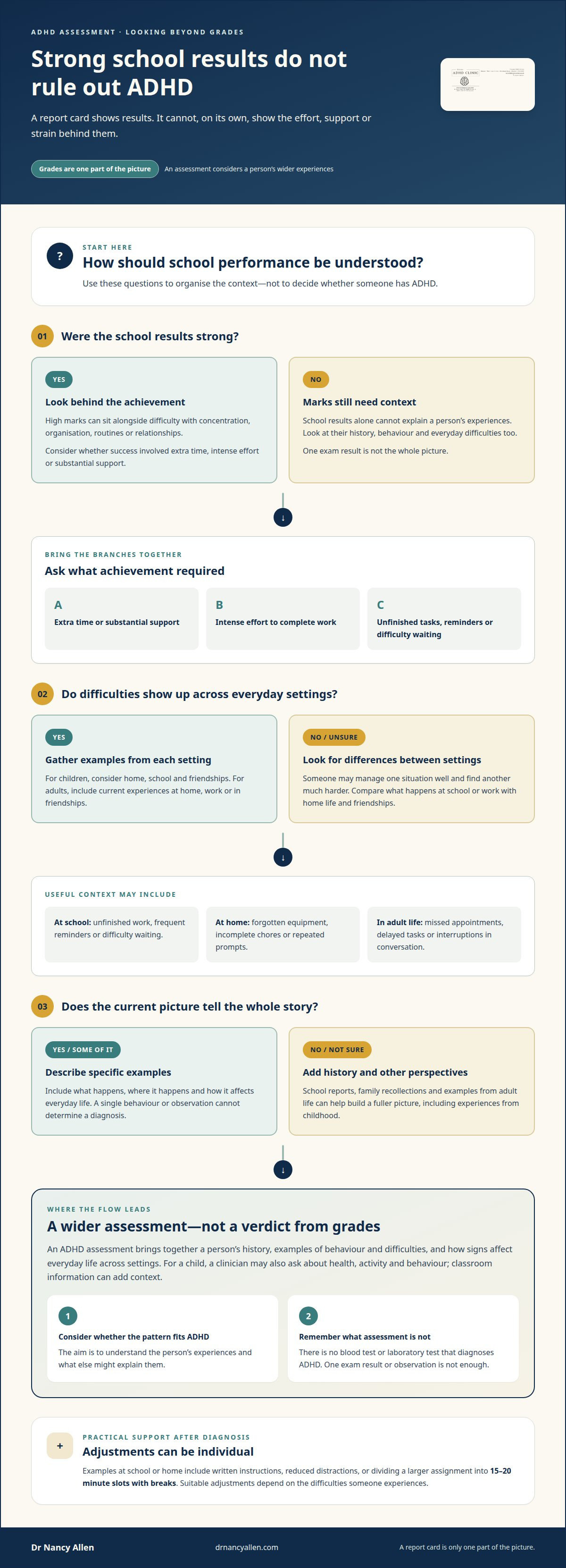
Strong school results do not rule out ADHD. Someone may have met academic expectations while finding concentration, organisation or everyday routines difficult. This is especially important when friends or family dismiss a diagnosis because the person was “good at school”.
It’s understandable to see academic success as evidence that someone was coping well. Yet grades alone don’t show the effort, support or strain behind them. ADHD signs begin in childhood, even if they aren’t recognised until later, and may affect life at home, school and in friendships.
This article explains why school performance is only one part of the picture, what an ADHD assessment considers, and how learning difficulties or co-occurring conditions may shape someone’s experience. A person’s history and experiences beyond the report card can help build a fuller understanding, without treating academic achievement as proof for or against ADHD.
Table of Contents
ADHD diagnosis and assessment
An ADHD assessment looks at a person’s experiences, not just their report card. Strong grades can sit alongside difficulties with routines, attention or relationships. ADHD signs begin in childhood, although recognition may come much later. An assessment considers how those signs affect everyday life across settings, including home and school.
For a child, the clinician may ask about health, activity and behaviour. Classroom information can add useful context. For example, school reports might describe unfinished work, frequent reminders or difficulty waiting, even when marks were high. Adults may reflect on childhood experiences and current challenges at work, home or in friendships.
There’s no blood test or laboratory test that diagnoses ADHD. Instead, assessment brings together a person’s history and examples of their behaviour and difficulties. The aim is to understand whether the pattern fits ADHD and what else might explain the experiences. A careful discussion matters more than one exam result or a single observation.
Evidence for a later diagnosis may include school reports, family recollections and examples from adult life. Someone might have achieved highly but relied on extra time, intense effort or substantial support to complete work. These details show what achievement required and whether similar difficulties appear elsewhere in life.
If friends or family dismiss the possibility because someone did well at school, explain calmly that grades show results, not the effort behind them. Specific examples, such as missed deadlines or exhaustion after managing routines, can help make the difference clear. An assessment considers the whole history, not other people’s assumptions.
For information about private ADHD assessment costs, consult the relevant provider’s published fee information and check what the assessment includes. Consider whether the stated service covers assessment appointments, follow-up or both, so you understand what the fee relates to.
Support after diagnosis can be practical and individual. At school or home, this may include written instructions, reduced distractions or dividing a large assignment into smaller tasks. The NHS says school and home support can include breaking tasks into 15 to 20 minute slots with breaks. A person can discuss suitable adjustments with their school or workplace, based on the specific difficulties they experience.
ADHD signs and symptoms
ADHD can affect attention, activity and self-control, with signs appearing differently across daily situations. A pupil may achieve well yet need considerable effort to manage lessons, homework and friendships.
Recognising ADHD signs
ADHD signs are recurring patterns of inattention, hyperactivity or impulsivity that affect everyday life. Examples across home, school and friendships can help distinguish persistent difficulties from an occasional distracted day.
In class, a pupil might lose track of instructions, overlook details or struggle to finish tasks. At home, the same child may forget equipment, leave chores incomplete or need repeated reminders. Another pupil might find sitting through a lesson difficult, speak before others finish or act quickly without considering consequences.
These examples can look different in adults. Someone might miss appointments, put off tasks requiring sustained concentration or interrupt during conversations. A person may manage one setting well while finding another much harder. The key question is how the pattern affects ordinary responsibilities, not whether every possible sign is present.
Masking or compensating at school
Masking or compensating means hiding difficulties or using extra strategies to meet school expectations. A pupil might copy classmates’ routines, stay quiet to avoid attention or rely on detailed reminders to keep track of work. Similar efforts may occur for autistic pupils, but these behaviours alone don’t establish ADHD or autism.
For example, a pupil could complete homework only with close help, then appear independent in class. Another might hold back movement during lessons and feel exhausted afterwards. High marks may reflect ability, structure or sustained effort, while concealing how demanding the school day feels.
To notice possible masking, compare what adults see at school with what happens before or after it. Examples might include distress after lessons, repeated prompting at home or extensive preparation for ordinary tasks. Share these observations with an appropriate clinician, as one behaviour alone cannot determine a diagnosis.
If school performance seems to conflict with someone’s difficulties, describe specific examples rather than relying only on grades. A calm explanation can help friends or family understand that achievement doesn’t reveal the effort behind it. For more context on ADHD signs and assessment, consider the wider pattern across settings.
Inattention, hyperactivity and impulsivity
ADHD can involve differences in brain development and functioning that affect attention, activity and self-control. These patterns may overlap: someone might lose track during a conversation while feeling restless in their chair.
Inattention is more than an occasional lapse. A pupil may start a worksheet, notice another sound and forget the next instruction. An adult might open an email, switch to another task, then lose track of the original message. Some people find it hard to organise steps, sustain focus on routine tasks or notice details. They may overlook part of a question despite understanding the subject. Interest can also affect concentration: someone may focus closely on a preferred activity but struggle to stick with a repetitive one.
Hyperactivity describes difficulty regulating movement or activity. In a classroom, this might look like tapping a pencil, shifting position or getting up when others remain seated. For an adult, restlessness may feel internal rather than obvious; they might pace during a phone call or find quiet waiting uncomfortable. Some people speak at length or feel driven to keep busy. Others show less visible movement but still experience persistent agitation.
Impulsivity involves acting or responding before there’s time to pause. A child might call out an answer before the teacher finishes asking, or interrupt a game because waiting feels difficult. An adult may cut into conversations, make a quick decision or send a message before considering its effect. These examples describe possible patterns, not proof of ADHD. The important distinction is whether difficulties recur and affect ordinary activities, rather than appearing only in one stressful moment.
The three areas can interact. Someone may miss part of a discussion, interrupt to regain their place, then feel unsettled when asked to wait. At school, clear routines can make a pupil’s difficulties less visible; at home, an unstructured afternoon may bring them into sharper focus. A supportive setting can help someone manage, but it doesn’t show how much attention or effort that takes.
Look at patterns across settings and situations. Note whether the same person struggles with a lesson, a household task and a conversation, or whether difficulties arise only in one context. Specific examples help describe the impact clearly without assuming any single behaviour establishes a diagnosis.
Learning difficulties and other co-occurring conditions
ADHD can occur alongside learning problems, anxiety, depression or challenging behaviour. These experiences may affect school, home and friendships, even when a pupil earns strong marks. Considering each difficulty separately helps build a fuller picture of what support may be useful.
A learning problem can make a particular part of school harder. A pupil may understand a lesson but struggle to organise written work, follow several instructions or complete assignments on time. Another might need extra help planning revision or keeping track of books. These difficulties can overlap with ADHD-related attention or organisation challenges, but they don’t automatically mean ADHD caused them.
Anxiety can also affect learning. A child who worries about getting an answer wrong may avoid speaking in class, repeatedly check completed work or find tests especially difficult. Depression may affect motivation and participation; a pupil might withdraw from activities they previously enjoyed. These changes deserve attention in their own right, rather than being dismissed as laziness or poor effort.
Families may also notice challenging behaviour, such as frequent arguments over homework or strong frustration when a familiar routine changes. The behaviour alone doesn’t identify its cause. Consider what happens before and after it: a long written task, a noisy classroom or an unclear instruction may make a difference. Concrete examples help adults discuss patterns without labelling the child.
ADHD and autism are different conditions, and an academic record alone cannot establish either. A pupil might meet school expectations while finding communication, changes in routine or independent work difficult. If these concerns arise, share specific examples from home and school with an appropriate clinician. The aim is to understand the person’s overall needs, not infer a diagnosis from one trait.
Families can use NHS information as a starting point for learning about ADHD and autism, then discuss questions about academic achievement with a suitable healthcare professional. Useful details include what the pupil manages independently, where reminders are needed and how they feel after school. For instance, completing homework only with sustained adult support offers different context from completing it comfortably alone.
School achievement remains relevant, but it is only one part of the evidence. A child may perform well in lessons yet experience anxiety, learning difficulties or considerable strain elsewhere. Paying attention to those experiences can help families and professionals consider what may be contributing and what support could address the specific difficulty.
Why can high academic achievement mask ADHD or autism in children and adults?
High marks show what someone achieved, not the effort or support behind them. A pupil may meet school targets yet struggle to manage everyday demands independently.
A child might excel in science but need a parent beside them to begin homework. Clear school routines, teacher reminders or strong interest in a subject may also make performance look effortless. At home, the same child could struggle when instructions are less structured. Achievement alone cannot explain these differences.
Adults can experience a similar gap between visible success and daily strain. Someone may gain qualifications or perform well at work, yet rely on strict calendars, late nights or a partner’s help to stay organised. A promotion that brings changing priorities may expose difficulties that were less apparent in a predictable role.
Autistic people may also have strong academic skills while finding social communication, sensory demands or changes in routine difficult. A student might know their subject well but find group projects exhausting or an unexpected timetable change distressing. These examples can inform a conversation, but they do not establish autism or ADHD on their own.
Structure can conceal support needs. A school timetable may break the day into familiar lessons, while home requires someone to plan meals, belongings and travel. At work, a clear task list may help, but open-ended projects can feel harder to organise. The setting changes, and so may the visibility of someone’s difficulties.
High achievement can also come with a personal cost. A teenager may spend hours checking work to avoid mistakes; an adult might use evenings to recover after concentrating through meetings. These patterns matter because grades or job titles don’t show the time, stress or assistance involved.
A fuller picture considers strengths alongside difficulties. Useful examples include the support someone needs, tasks they avoid, changes that disrupt routines and how they feel after demanding days. School reports, family observations and workplace experiences can each add context. Looking across settings helps prevent achievement in one area from overshadowing challenges elsewhere.
If you’re considering whether ADHD assessment could help clarify persistent difficulties, explore an ADHD assessment as a possible next step.
ADHD may be mistaken for typical childhood behaviour, particularly in younger children. Signs begin early, although some people are not diagnosed until they are older. Strong results do not settle whether persistent difficulties need further attention. Information about a child’s classroom behaviour matters in an ADHD assessment, alongside the wider picture of how they manage.
ADHD may be inherited from parents, and many children and teenagers with ADHD have a parent or relative with the condition. Being born early, exposure to lead or exposure to drugs during pregnancy may increase a child’s likelihood of having ADHD. These are factors to share as context, not conclusions drawn from achievement alone. ADHD medicine may help children pay attention, slow down and use more self-control.
Dr Nancy Allen
Dr Nancy Allen offers private ADHD assessments for adults and children. An assessment may be a useful next step when longstanding difficulties affect everyday life, even if school results were strong. Academic achievement doesn’t show the full effort, support or strain involved. The assessment provides space to discuss concerns in context, rather than judging someone by grades alone.
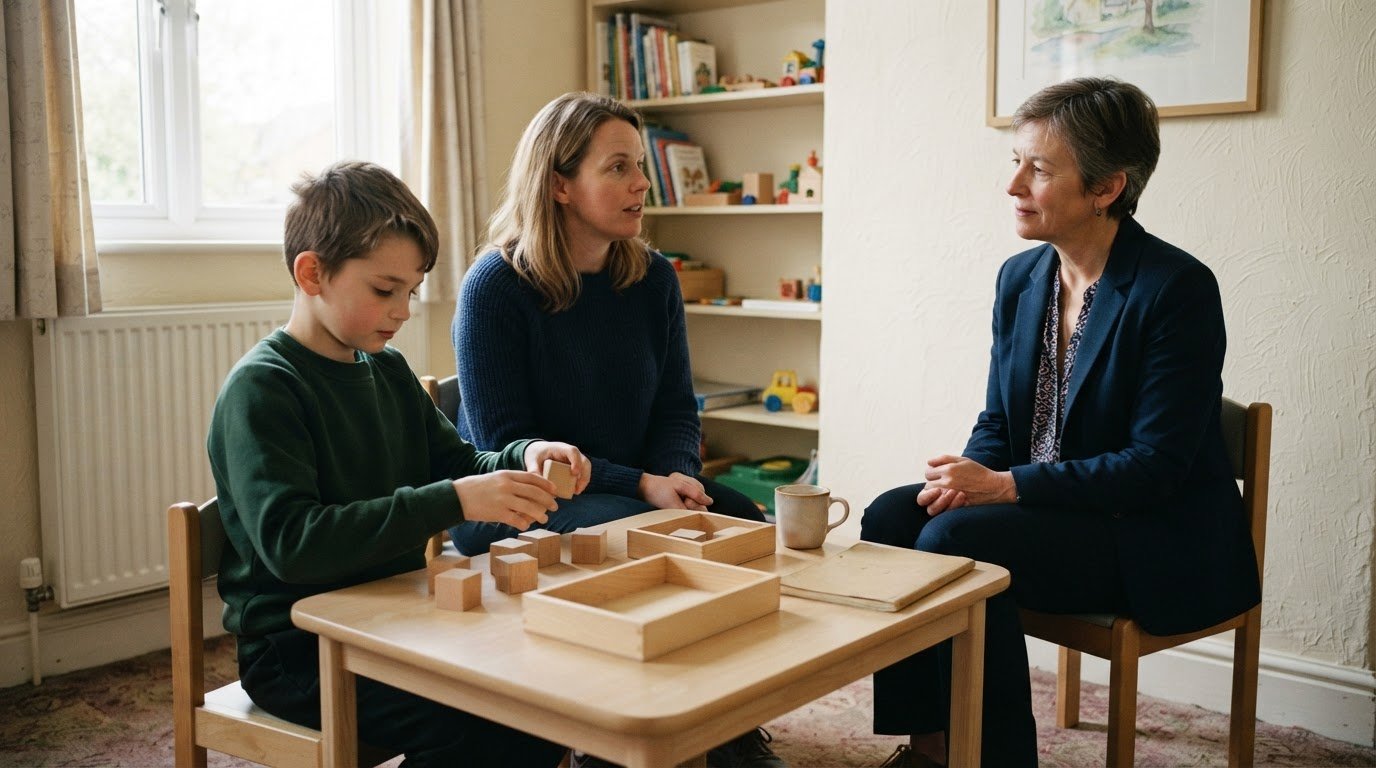
In a consultation, Dr Allen aims to understand the person’s symptoms, history and circumstances. For an adult, this means discussing how difficulties affect areas such as work, relationships and daily routines. For a child, parents or carers can explain what they notice at home and school. The conversation considers the individual, not just one result or someone else’s opinion.
This can matter when family members doubt the possibility of ADHD because someone appeared successful at school. Specific concerns, such as difficulty organising everyday tasks or managing attention, can be explored alongside strengths and past achievements. An assessment is an opportunity to consider the wider picture and discuss appropriate options together. It isn’t a judgement on someone’s ability or effort.
Appointments are available online where appropriate. With the patient’s consent, care may also involve communication with their NHS GP or other healthcare professionals. This can support joined-up discussion about care. Adults, parents and carers can raise questions about how reported difficulties affect everyday life during a consultation.
A general article can explain why school success doesn’t rule out ADHD, but it can’t assess an individual or determine whether they have the condition. An assessment considers a person’s own experiences and circumstances. Dr Allen’s approach is thoughtful and individualised, with appropriate options discussed collaboratively. The aim is to make sense of concerns, not promise a particular diagnosis or outcome.
If persistent difficulties are affecting you or your child, contact Dr Nancy Allen to discuss whether an ADHD assessment may be a suitable next step.
Take the next step at your own pace
A conversation about ADHD can begin with uncertainty, not a ready-made conclusion. You might write down what you hope to understand or bring someone who knows your experiences well. The aim is to make room for your perspective and consider what would be useful next.
This can feel particularly difficult if friends or family question the possibility of ADHD because you were “good at school”. Their view doesn’t need to settle the matter. Your experiences deserve thoughtful consideration, whether you’re seeking answers for yourself or supporting a child.
Dr Nancy Allen offers adult and child ADHD assessments, alongside menopause consultations and HRT reviews. If you’d like to discuss your concerns and possible next steps, contact Dr Nancy Allen. You can make an enquiry when it feels right for you, and take the next step at a pace that feels manageable.
Frequently Asked Questions
What Else Should I Know?
Look beyond grades to how someone manages ordinary demands, such as planning meals, keeping appointments or completing paperwork. A strong report card describes school outcomes, but not necessarily the support, effort or stress behind them. Family observations can add context, particularly when difficulties appear after school or during unstructured time. Focus on specific experiences rather than trying to persuade others with a label.
What Is ADHD?
ADHD is a condition involving differences in brain development and functioning that can affect attention, activity and self-control. It isn’t a measure of intelligence, motivation or caring. For example, someone may understand a task but struggle to begin, remember each step or pause before responding. The way these difficulties show up varies, so a clinician considers the person’s overall history and how daily life is affected.
Can someone have ADHD or autism despite being good at school?
Yes. Academic attainment alone neither confirms nor rules out ADHD or autism. A student might earn strong marks while relying on extensive planning, support or extra time, or find social situations and changes in routine difficult. ADHD and autism are distinct, and one assessment does not automatically establish the other. The relevant question is what the person experiences across daily life, not whether they achieved high grades.
How do adults get an ADHD or autism diagnosis in the UK?
Adults in the UK can begin by discussing concerns with a GP, including examples from childhood and current life. Dr Nancy Allen offers private Adult ADHD Assessment. An assessment explores the person’s history and the effect of difficulties on everyday functioning. If autism is also a concern, raise it separately with the GP, as an ADHD assessment does not diagnose autism.


Comments