


Supporting Children with ADHD: A Guide for Teachers

Updated: 2 hours ago
What if the pupil who constantly disrupts your lesson isn't actually trying to be difficult, but is instead struggling with a brain wired to process the world at a different frequency? It's a question many educators face as they strive to balance the needs of neurodivergent children with the relentless pressure of academic targets. You likely feel the weight of responsibility to support every student, yet without specific training, managing high-needs behaviour can feel like an uphill struggle that leaves both you and your pupils exhausted.
This teacher information guide to children with adhd serves as a clinical and practical resource to help you transform your classroom dynamics. We understand that you need solutions that work in real-time, not just in theory. By reading this guide, you'll gain a deeper understanding of executive function and learn how to implement inclusive adjustments that foster a calmer learning environment. We'll explore effective ways to manage behaviour, improve your communication with parents, and work collaboratively with clinicians to ensure every child has the opportunity to thrive under your expert guidance.
Table of Contents
Understanding ADHD: A Neurobiological Perspective for Educators
ADHD is often misunderstood as a simple lack of willpower or a byproduct of poor parenting. In reality, it's a complex neurodevelopmental difference that affects how the brain processes information and rewards. When a pupil struggles to follow a routine or stay in their seat, they aren't choosing to be defiant. Instead, their brain is wired to function on a different frequency. This teacher information guide to children with adhd moves away from the "naughty child" narrative, focusing instead on the biological drivers behind classroom behaviour.
At the heart of this struggle is dopamine. This neurotransmitter regulates the brain's reward and motivation systems. In children with ADHD, the brain often seeks higher levels of stimulation to achieve the same sense of engagement that neurotypical pupils find easily. Movement, talking, or even minor conflict can provide the "spark" their brain needs to stay alert and focused. By Understanding Attention Deficit Hyperactivity Disorder as a biological reality, we can begin to validate the immense effort these pupils put into simply existing in a traditional school environment. Validating their effort is far more effective than punishing the outcome; it builds the trust necessary for meaningful learning.
The Three Presentations of ADHD
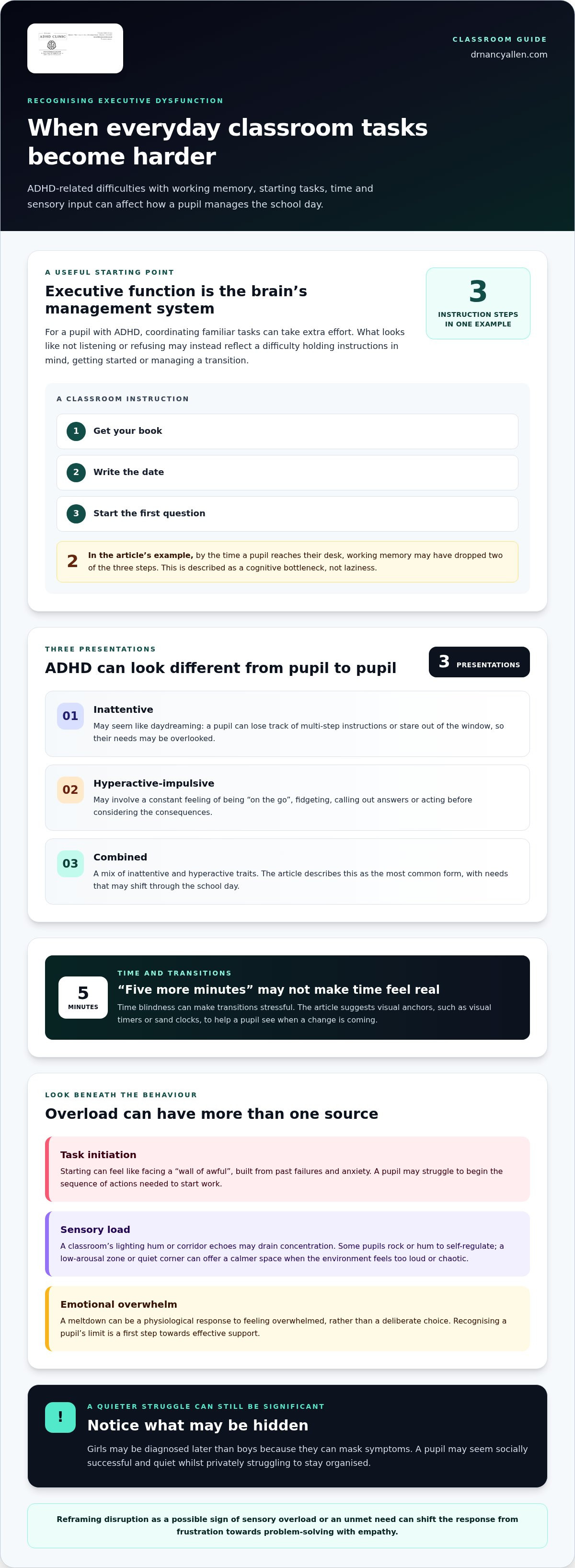
Inattentive presentation: Often described as the "daydreamer," these pupils don't necessarily disrupt the class. They might stare out of the window or lose track of multi-step instructions, meaning their needs are frequently overlooked in a busy room.
Hyperactive-impulsive presentation: This is the child who feels as though they have a constant "motor" running inside them. They might shout out answers, fidget excessively, or act before they've had a chance to consider the consequences.
Combined presentation: This is the most common form. It involves a mix of both inattentive and hyperactive traits, requiring a flexible and nuanced approach to meet their shifting needs throughout the school day.
Why Neurodiversity Matters in Schools
Adopting a neuro-inclusive approach isn't just about supporting one or two individuals. It benefits the entire cohort. When we reframe "disruption" as a sign of sensory overload or an unmet need, we stop reacting with frustration and start problem-solving with empathy. This perspective allows us to see neurodiversity as a strength rather than a deficit. A child with ADHD might be the most creative, energetic, or resilient person in your classroom. By creating an environment that scaffolds executive function, you're building a space where every pupil, regardless of their diagnosis, can feel secure and understood. To further support the emotional well-being and resilience of your students, you can learn more about Jeff Yalden and his work as a youth motivational speaker specialising in teen mental health.
If Section 1 established the "why" behind ADHD, executive dysfunction is the "how" it manifests in your daily lessons. Think of executive function as the brain's management system. In a child with ADHD, this system often struggles to coordinate basic tasks that others take for granted. For instance, a simple request like "get your book, write the date, and start the first question" can be overwhelming. By the time the pupil reaches their desk, their working memory has often dropped two of those three steps. This isn't laziness; it's a cognitive bottleneck. This teacher information guide to children with adhd aims to help you spot these gaps before they lead to frustration for both you and the student.
Starting a task can feel like facing a "wall of awful" built from past failures and anxiety. The child isn't being stubborn; they're often physically unable to initiate the sequence of actions required to begin. Similarly, time blindness makes transitions, such as moving from the playground to a quiet assembly, incredibly stressful. Telling a pupil they have "five more minutes" is often meaningless because they can't feel the passage of time. They need visual anchors to understand when a change is coming. Implementing Practical Classroom Strategies for ADHD Support, such as visual timers or sand clocks, can significantly reduce this friction.
Emotional regulation is another hurdle. When a child has a "meltdown," it's rarely a choice. It's a physiological response to being overwhelmed. Their nervous system has reached a breaking point, and they no longer have the cognitive resources to stay calm. Recognising this as a biological limit rather than a behavioural challenge is the first step toward effective support.
The Impact of Sensory Processing
A busy classroom is a sensory minefield. The subtle hum of fluorescent lighting or the echoes in a busy corridor can drain a child's concentration battery before the lesson even begins. Some pupils use sensory-seeking behaviours, like rocking or humming, to self-regulate. Creating low-arousal zones or quiet corners within your learning centre provides a necessary sanctuary when the environment becomes too loud or chaotic. For families exploring holistic ways to support a child's physical comfort and nervous system, you can discover The Chiropractic Centre and their specialised paediatric services.
Girls are frequently diagnosed much later than boys because they often "mask" their symptoms. A girl might appear socially successful and quiet, but she's internalising her struggle to stay organised. This internalised pressure often leads to high levels of anxiety and exhaustion. Recognising the "socially successful" but internally struggling pupil is vital for early intervention. If you're concerned about a pupil's progress, seeking a Child ADHD Assessment can provide the clinical clarity needed to support them effectively.
Practical Classroom Strategies for ADHD Support
Traditional discipline often relies on consequences that occur hours or days after an event. For a child with ADHD, this delay renders the feedback ineffective because their brain prioritises immediate stimulation over long-term outcomes. Instead, focus on immediate, low-stakes rewards. A quick thumbs-up or a specific "I noticed how well you started that task" provides the dopamine hit their brain needs to stay engaged. This teacher information guide to children with adhd emphasises that consistency and immediacy are your most powerful tools for shaping positive behaviour.
Scaffolding instructions is equally vital for managing executive dysfunction. Rather than delivering a complex list of commands, break tasks down into "one-at-a-time" verbal cues. Supporting these with a visual checklist on the child’s desk allows them to self-monitor without needing to ask for a reminder every two minutes. Seating is another simple but effective adjustment. Placing the child close to your desk, but away from high-traffic areas like the door or the coat pegs, helps them maintain focus. You can find more evidence-based Classroom Strategies for ADHD that align with these clinical recommendations, ensuring your adjustments are both practical and effective.
Movement isn't a distraction; for many ADHD pupils, it's a requirement for concentration. Forcing a child to sit perfectly still actually drains the cognitive energy they should be using for learning. Incorporating short, structured movement breaks can reset their "concentration battery" and prevent the buildup of restlessness that leads to disruption.
Managing Demand Avoidance
What looks like defiance is often an anxiety-driven need for control. Direct commands can trigger a "fight or flight" response in pupils who struggle with demand avoidance. Try using declarative language instead of direct imperatives. Instead of saying "Pick up your pen," try "I wonder if this pen would help us finish the first sentence." This subtle shift reduces the perceived pressure and allows the child to feel in control of their actions. For more specific advice, see our guide on how to manage demand avoidance.
Flexible Working and Fidget Tools
Normalise the use of sensory tools such as wobble cushions, ear defenders, or handheld fidgets. These shouldn't be seen as toys but as essential equipment for self-regulation. Allowing "doodle time" during listening tasks can also help anchor a child's attention, preventing their mind from wandering. A "Now and Next" board provides a clear visual structure for the lesson, reducing the anxiety that comes with unexpected transitions and helping the pupil feel secure in their environment. For families who wish to explore natural health options, Dr.Vaishali Nore's Homeopathy & Wellness Clinic provides holistic homeopathic care that can support a child's overall well-being and internal balance.
Teachers are often the first professionals to notice the subtle signs of neurodiversity that might be missed in a home environment. Your classroom observations provide the objective data that clinicians need to form a complete diagnostic picture. However, communicating these observations to parents can be a delicate process. Rather than providing a "daily bad news" report, try to frame discussions around collaborative problem-solving. This approach validates the parents' experience and positions you as a supportive partner in their child’s development. This teacher information guide to children with adhd aims to bridge the gap between school, home, and the clinic.
Monitoring the impact of medication is another vital role for educators. You might notice "rebound" effects in the afternoon, where a child’s focus drops or irritability increases as medication wears off. This information is invaluable for clinicians when they are adjusting dosages. When it comes to formal support, such as the EHCP process, having clinical evidence from a private specialist can significantly strengthen an application. A detailed Child ADHD Assessment provides the depth of insight and speed of diagnosis required to secure the right provisions for your pupil without the delay of long waiting lists.
What Clinicians Need from Teachers
Clinicians rely heavily on standardised tools like the SNAP-IV or Conners teacher rating scales to measure symptoms across different environments. To provide even more clarity, try writing a single sentence describing the child’s "best day" and their "hardest day." This gives a human context to the numerical data. It's also essential to document the impact of any current interventions. Showing a "graduated response" proves that you've already tried standard adjustments and that the child requires more specialist support to thrive.
Supporting Transitions
To better understand the psychological landscape and the multi-disciplinary support available for children, you can visit Firststep Psychology & Child Development Centre for insights into expert paediatric care.
Wait times for assessments in the UK can sometimes stretch into years, leaving both teachers and pupils in a state of educational limbo. Whilst you might be implementing every strategy found in this teacher information guide to children with adhd, without a formal diagnosis, access to specific funding or intensive support can remain out of reach. A private assessment bridges this gap, offering the speed and depth of clinical insight required to move from managing symptoms to implementing a targeted treatment plan. For families in the West Midlands starting this process, consulting a private GP Solihull can provide the initial medical oversight and professional referrals needed. Dr Nancy Allen provides a secure, online diagnostic service that is accessible to families across the UK, ensuring that geographical location is never a barrier to expert care.
Appointments are often available within days. It means that within days of an assessment, you can have the clinical evidence needed to adjust your teaching approach and support the child’s specific neurobiological needs. This rapid response prevents the child from falling further behind and allows for immediate, evidence-based interventions in the classroom. When you have answers quickly, you can stop guessing which strategies might work and start applying those that are clinically recommended for that specific pupil.
Restoring Confidence Through Diagnosis
A formal diagnosis is often the first step in reducing the self-stigma many children feel when they struggle to meet traditional classroom expectations. It helps them understand that their brain is simply wired differently, rather than being "broken" or "naughty." Dr Nancy Allen combines over 25 years of clinical experience with a deeply compassionate approach, ensuring that the diagnostic journey is supportive for both the child and their family. You can learn more about the child ADHD assessment process and how it provides a foundation for future success.
Next Steps for Teachers and Parents
If you find that standard classroom adjustments are not sufficient to support a pupil, it's important to encourage parents to seek a specialist opinion. A private diagnosis often acts as a key to unlock school funding and reasonable adjustments that might otherwise be delayed. By working together, teachers and parents can use these clinical insights to create a truly inclusive learning environment where the child feels heard and understood. To begin this journey toward clarity, parents can Book a consultation with Dr Nancy Allen today and secure the support their child deserves.
Empowering Neurodivergent Pupils for Long-term Success
Supporting a child with ADHD requires a shift from reactive discipline to proactive scaffolding. By understanding the neurobiological drivers of behaviour and addressing executive dysfunction with practical classroom adjustments, you create an environment where every student feels seen. We've explored how small changes, such as movement breaks and visual timers, can transform the daily learning experience for neurodivergent pupils.
This teacher information guide to children with adhd is just the beginning of the journey toward a more inclusive classroom. When classroom strategies aren't enough, professional clarity is essential. Dr Nancy Allen offers secure online and in-person consultations, with appointments often available within days. Book a Private Child ADHD Assessment with Dr Nancy Allen to secure the specialist support your pupil needs to thrive. You have the power to change a child’s educational trajectory; with the right tools and a dedicated clinical partnership, a calmer and more successful learning environment is well within your reach.
Frequently Asked Questions
How do I tell the difference between ADHD and "naughty" behaviour?
You can distinguish ADHD from defiant behaviour by looking at consistency and intention. Naughty behaviour is often a deliberate choice to break rules for a specific gain. ADHD is a neurodevelopmental difference where the child lacks the executive function to follow the rules, even when they want to. If a pupil seems distressed by their own actions or forgets instructions repeatedly, it's likely a biological struggle rather than a lack of discipline.
Can a child with ADHD succeed in a mainstream classroom?
Most children with ADHD can thrive in mainstream schools when the right support is in place. Success depends on scaffolding their executive functions through visual aids, movement breaks, and clear routines. This teacher information guide to children with adhd highlights that an inclusive environment benefits the whole class. By adjusting the physical space and your communication style, you provide the stability these pupils need to reach their academic potential alongside their peers.
Should I suggest a private ADHD assessment to a parent?
If a child’s progress is stalled despite targeted classroom interventions, suggesting a specialist assessment is a supportive next step. Long waiting lists for state-funded services can delay essential support for years. Recommending a private assessment allows families to access clinical clarity much sooner. This teacher information guide to children with adhd helps you get the formal diagnosis and treatment plan required to unlock school funding and implement more effective, evidence-based adjustments.
What are the most effective classroom adjustments for ADHD?
The most effective adjustments focus on reducing sensory load and supporting memory. Seating the child away from distractions, providing "one-at-a-time" instructions, and using visual timers are highly successful strategies. Incorporating regular movement breaks is also vital; it allows the child to regulate their nervous system so they can return to their work with renewed focus. These simple, low-cost changes create a calmer learning environment where the pupil feels capable of succeeding.
How does ADHD medication affect a child’s performance at school?
Medication often helps pupils by improving their ability to sustain attention and regulate impulses. You might notice the child becomes more engaged with tasks and less disruptive during quiet work. It's important to monitor for "rebound" effects in the late afternoon, where the medication wears off and symptoms may temporarily intensify. Sharing these observations with parents is invaluable, as it helps clinicians fine-tune the treatment to better suit the school day.
What is the role of a SENCO in supporting ADHD pupils?
Your Special Educational Needs Coordinator (SENCO) acts as the bridge between classroom teachers, parents, and external specialists. They coordinate the "graduated response," ensuring that interventions are documented and reviewed regularly. The SENCO also leads the process for Education, Health and Care Plan (EHCP) applications. By working closely with them, you can ensure that clinical advice from private assessments is translated into practical, funded support that meets the child’s specific educational requirements.
How can I support a child with ADHD who also has Pathological Demand Avoidance (PDA)?
Supporting a pupil with both ADHD and PDA requires a focus on reducing perceived demands. Traditional direct commands often trigger a high-anxiety "threat" response. Instead, use declarative language and offer choices to give the child a sense of autonomy. For example, instead of saying "Sit down now," try "I'm wondering if you'd like to work at the desk or use a clipboard on the carpet." This approach lowers anxiety and encourages engagement.
How long does a private ADHD assessment take with Dr Nancy Allen?
A private child ADHD assessment with Dr Nancy Allen is designed for speed and clinical depth. Appointments are often available within days. This rapid turnaround is essential for teachers who need immediate answers to support a struggling pupil. These secure online consultations are available across the UK, providing a swift path to clarity for both schools and families.



Comments