


Revenge Bedtime Procrastination: Causes and Solutions

Updated: 2 hours ago
What if your refusal to turn off the light at 1:00 am isn't a lack of self-discipline, but a desperate act of rebellion against a day that didn't belong to you? For many, the quiet hours of the night are the only moments free from the relentless demands of work, chores, and caregiving. You likely recognise the heavy weight of guilt that arrives each morning. Yet, you find yourself caught in the same cycle of revenge bedtime procastination once the house finally falls silent. It's a common struggle, especially for those navigating the complexities of ADHD or perimenopause, where the brain's need for autonomy often clashes with its need for rest.
In this guide, we'll move beyond the idea that staying up late is a moral failing and instead explore the biological roots of this behaviour. You'll discover why your brain refuses to sleep and learn expert-led strategies to reclaim your nights while maintaining your sense of freedom. We will examine evidence-based approaches that actually work for neurodivergent minds, providing the clinical clarity you need to finally break the cycle and restore your well-being.
Table of Contents
Understanding the Psychology of Revenge Bedtime Procrastination
At its core, revenge bedtime procastination is the decision to delay sleep in response to a perceived lack of daytime control. It isn't simply about being a night owl; it's a specific psychological phenomenon where we trade tomorrow's energy for tonight's autonomy. When your daylight hours are consumed by rigid schedules, work obligations, or the needs of others, the night becomes the only time you truly own. You aren't just staying up; you're reclaiming your life.
The "revenge" element is a silent retaliation against a schedule that feels restrictive or even soul-crushing. By staying awake, you are asserting your agency over a world that demands your constant attention. This behaviour is closely linked to Bedtime procrastination, a term that describes the voluntary delay of sleep despite knowing it will lead to negative outcomes. For many, this isn't a failure of character, but a biological cry for personal space and self-ownership.
To better understand this concept, watch this helpful video:
The Origin of the Term "Retaliatory Staying Up Late"
The concept first gained traction in China as "baofuxing aoye", which translates to retaliatory staying up late. It emerged from the "996" work culture, where employees worked from 9:00 am to 9:00 pm, six days a week. This trend has since spread globally, exacerbated by the rise of remote work. Whilst working from home offers flexibility, it often blurs the boundaries between professional and personal life. People feel like they're "stealing" hours from tomorrow to pay for the lack of freedom they felt today. It's a desperate attempt to balance the scales of a life that feels out of their hands.
Signs You Are Engaging in Bedtime Procrastination
It's important to distinguish this from unintentionally losing track of time. Intentional procrastination involves a conscious, albeit often regretted, choice to stay awake. You might recognise these patterns in your own life:
The "one more episode" loop, where you find yourself watching low-effort leisure content long after you intended to stop.
Ignoring foreseeable consequences, such as knowing exactly how exhausted you'll feel at your 8:00 am meeting but scrolling anyway.
The feeling that your "true self" only appears after 10:00 pm, when the world is quiet and no one expects anything from you.
Autonomy is a fundamental human need. When we don't get enough of it during the day, our brains search for it in the dark, even at the cost of our health. Recognising revenge bedtime procastination as a survival mechanism rather than a moral failing is the first step toward finding a more sustainable way to live.
Executive Dysfunction and the ADHD Connection
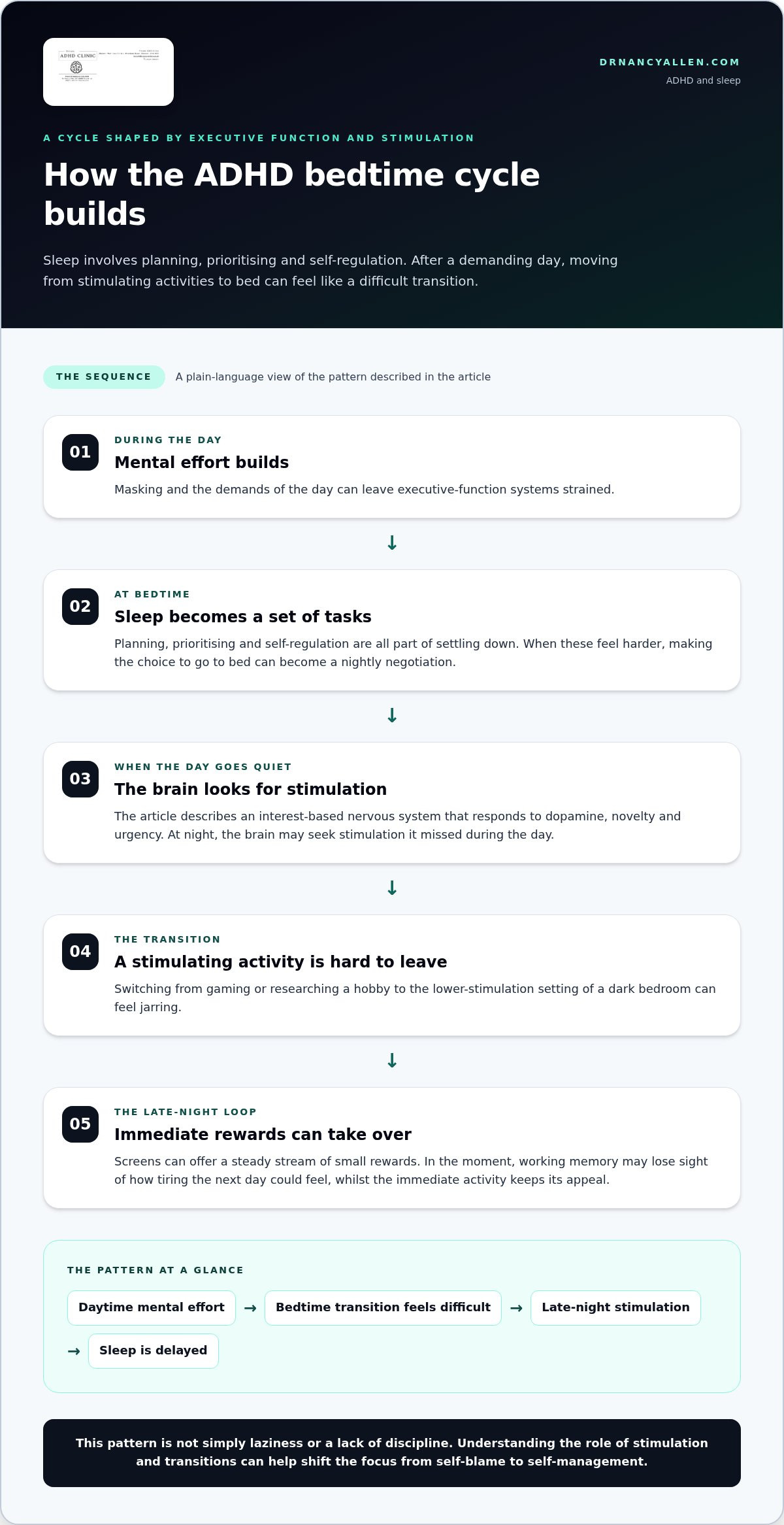
Executive dysfunction is the cognitive management system of the brain that often misfires in ADHD. Whilst many view sleep as a simple off-switch, for the neurodivergent brain, it is a complex series of executive tasks. These tasks include planning, prioritising, and most importantly, self-regulation. When these systems are strained by a long day of "masking" or mental exertion, the ability to make the "correct" choice at 11:00 pm evaporates. This is where revenge bedtime procastination takes hold, transforming a biological need into a nightly negotiation.
The ADHD brain operates on an interest-based nervous system. It does not prioritise tasks based on importance or long-term consequences, but on dopamine, novelty, and urgency. At night, when the world is quiet and the pressure of the day has lifted, the brain finally feels safe enough to hunt for the stimulation it missed. As the Sleep Foundation explains, this delay is often a voluntary decision, yet for those with ADHD, the "choice" feels more like a compulsion driven by an under-stimulated brain.
The Struggle with Mental Transitions
Task switching is one of the most significant hurdles for those with executive dysfunction. Moving from a high-dopamine activity, like gaming or researching a new hobby, to the low-dopamine environment of a dark bedroom is a jarring transition. This struggle explains why the adhd brain struggles to sleep so frequently. Working memory also plays a role; in the heat of a late-night scroll, the brain often "forgets" how debilitating tomorrow's fatigue will feel, focusing instead on the immediate reward of the present moment.
Dopamine Seeking and the Late-Night Scroll
Digital screens are a perfect trap for an ADHD brain. They provide a continuous stream of micro-rewards that keep the prefrontal cortex engaged. You aren't being lazy or undisciplined when you stay up too late. You are seeking the regulation and joy that your schedule denied you during the day. If this cycle feels inescapable, it may be time to look closer at the underlying causes. Gaining clinical clarity through an expert ADHD assessment can be the first step in moving from self-blame to self-management.
The Biological Cost: Hormones and Circadian Rhythms
Whilst we often discuss revenge bedtime procastination as a psychological habit, it's deeply rooted in our internal biology. Our body clock, or circadian rhythm, isn't a static system. It's a delicate balance of hormones that can be easily disrupted by life stages and chronic stress. For many women in midlife, the decision to stay up late isn't just about reclaiming time. It's a response to a body that feels fundamentally out of sync with the demands of the day.
Hormonal fluctuations during perimenopause and menopause can make "revenge" feelings significantly more intense. When you feel that your days are no longer your own due to the pressures of caring for both children and ageing parents, the biological urge to find a quiet moment of solitude becomes overwhelming. This lack of sleep creates a vicious cycle. Poor rest directly impairs emotional regulation the following day, making you more susceptible to stress and less likely to make healthy sleep choices the next evening.
Menopause and the "Second Wind"
The decline of progesterone, which acts as a natural sedative in the brain, often leads to fragmented sleep and increased anxiety. When combined with night sweats, many women find themselves awake at 2:00 am and decide they might as well stay up to achieve something for themselves. This mindset is a direct consequence of the various menopause symptoms that disrupt the standard sleep-wake cycle. Instead of fighting for sleep that feels impossible, the brain hunts for dopamine through late-night activity, further entrenching the procrastination habit.
The Cortisol Spike: Why You Feel Alert at Midnight
Chronic daytime stress leads to a dysregulated HPA axis, the system responsible for your body's stress response. In a healthy system, cortisol levels should be highest in the morning and lowest at night. However, burnout often causes a "tired but wired" phenomenon. This is where a cortisol spike occurs late in the evening rather than dropping off. This surge in alertness makes it physically difficult to wind down, even when you're physically exhausted.
Daytime stress effectively tricks the brain into staying alert for potential threats, preventing the natural transition into rest. Over time, these chronic sleep retaliations lead to serious health consequences, including cardiovascular strain and metabolic issues. Understanding this biological driver is essential. It allows you to move past the guilt of staying up late and towards a clinical solution that restores your natural rhythm and holistic well-being.
Breaking the Cycle: Strategies for a Neuro-Inclusive Bedtime
Standard sleep hygiene advice often fails because it treats sleep as a simple matter of willpower. For those struggling with revenge bedtime procastination, the suggestion to "just put the phone away" ignores the physiological need for autonomy and dopamine. If your brain feels deprived of pleasure during the day, it will naturally resist the transition to a dark, quiet room. To break the cycle, we must move away from restrictive rules and toward strategies that respect how your nervous system actually functions.
The most effective approach involves reclaiming your sense of agency before the sun goes down. This concept, known as "Proactive Autonomy", requires identifying the "time-thefts" in your daily schedule that leave you feeling depleted. When you ensure that small pockets of your day belong entirely to you, the desperate urge to stay awake at midnight begins to diminish. It's about shifting the balance of power so that your evening isn't the only time you feel like your true self.
Daytime Adjustments to Reduce Night-time Revenge
Setting firm boundaries at work and in your personal life is a clinical necessity, not a luxury. If you finish your day feeling "robbed" of your own time, you will inevitably try to "steal" those hours back from the night. Incorporating "productive rest" throughout the day can help. This isn't about scrolling through news feeds; it's about short, intentional breaks that provide genuine sensory regulation. By meeting your brain's need for downtime during daylight hours, you reduce the intensity of the "revenge" impulse later on.
Creating a "Dopamine Bridge" to Sleep
For individuals who find that stress and anxiety continue to disrupt their ability to switch off, seeking professional therapeutic support can be transformative. Brookhouse Hypnotherapy Manchester offers specialised clinical hypnotherapy to help resolve the underlying triggers of sleep procrastination and restore a sense of calm.
The transition to bed is often the hardest task of the day for an ADHD brain because it involves moving from high-stimulation activities to zero stimulation. Instead of a hard stop, create a "dopamine bridge". This involves replacing the high-energy stimulation of social media with sensory-rich, low-energy activities. Consider the following tools:
Audiobooks or podcasts that engage the mind without the blue light of a screen.
Weighted blankets or sensory-friendly loungewear to provide calming physical input.
The "10-minute micro-win": committing to just ten minutes of a bedtime routine rather than the whole hour.
Technology can also be used as a supportive tool rather than a distraction. Setting your phone to "grey-scale" mode at 9:00 pm makes apps significantly less rewarding to the brain. App blockers can provide the external structure that executive dysfunction makes difficult to maintain. If these strategies feel impossible to implement, it may be because your brain requires more than just habit changes. Gaining clinical clarity through a private ADHD assessment can provide the professional insight needed to manage these biological hurdles effectively.
When to Seek Professional Insight
Recognising the point where a habit becomes a clinical symptom is a vital step toward recovery. If you've implemented the strategies discussed in previous sections yet find yourself trapped in the same cycle, it's vital to consider if your revenge bedtime procastination is a symptom of a broader clinical picture. Persistent struggles with self-regulation often indicate that the brain's executive functions are under significant strain, either from neurodivergence or the profound hormonal shifts of midlife. When your brain refuses to switch off despite your best efforts, it is often a sign that you require more than just better sleep hygiene.
Dr Nancy Allen provides a pathway to clarity through secure online consultations that prioritise the human element of medicine. By looking at the intersection of ADHD and hormonal health, it's possible to move beyond the guilt of "failed" discipline and toward an evidence-based plan that actually works for your unique biology. You don't have to navigate these complexities alone; professional assessment can provide the steady hand you need to reclaim your rest and restore your holistic well-being.
Clinical Clarity: Is it Procrastination or ADHD?
Ensuring that your physical health is not being undermined by underlying conditions is a crucial part of this recovery process. For individuals seeking thorough diagnostic support or detailed medical screenings, John Abroon M.D. provides expert primary care services and clinical evaluations to help you understand your body's needs more clearly.
For many adults, a formal adult adhd assessment acts as the missing manual for their brain. It clarifies why certain tasks, like the transition to sleep, feel almost impossible despite your best intentions. A diagnosis validates your experience as a biological struggle rather than a moral failing. Appointments are often available within days. This speed of insight allows you to begin the journey toward restoration without the long waits that often characterise traditional healthcare paths.
Personalised Treatment Plans for Better Rest
Restoring your sleep requires a holistic approach that addresses both the mind and the body. Specialist menopause care can restore the biological foundation for rest by managing the decline of progesterone and stabilising the cortisol spikes that keep you "wired" at midnight. When combined with neuro-inclusive strategies, this medical management provides a robust framework for long-term health. Moving beyond generic advice allows for a treatment plan tailored to your specific needs, focusing on the quality of your life and the restoration of your confidence. Whether you access specialist care or visit a private clinic like Ready Health for general medical support, taking that first step is essential for reclaiming your well-being and ending the cycle of exhaustion.
Understanding that your struggle with revenge bedtime procastination is a biological response to daytime stress rather than a lack of willpower is the first step toward lasting change. We've explored how neurodiversity and hormonal transitions, such as perimenopause, can fundamentally disrupt your internal body clock. By shifting from restrictive rules to dopamine-friendly transitions and proactive autonomy, you can begin to restore the balance between your need for freedom and your need for sleep.
When self-help strategies aren't enough, professional insight provides the clinical clarity you deserve. Dr Nancy Allen offers secure online and in-person consultations, with appointments often available within days. As a practitioner specialising in the overlap of neurodiversity and hormonal health, she provides the patient-centric support needed to break the cycle of exhaustion. Book a private ADHD or menopause consultation with Dr Nancy Allen today to begin your journey toward restoration. You deserve to feel rested, validated, and in control of your well-being.
Frequently Asked Questions
What is the main cause of revenge bedtime procrastination?
The primary cause of revenge bedtime procastination is a perceived lack of control over one's daytime schedule. When your daylight hours are dominated by work, caregiving, or rigid obligations, your brain seeks to reclaim its autonomy during the night. It is a psychological response where you trade necessary sleep for personal freedom. This behaviour acts as a silent rebellion against a life that feels overly scheduled, stressful, or restrictive.
Is revenge bedtime procrastination a symptom of ADHD?
Whilst not a formal diagnostic symptom, it is heavily associated with the executive dysfunction found in ADHD. The ADHD brain operates on an interest-based nervous system, constantly hunting for dopamine. At night, when external demands fade, the brain seeks stimulation through low-effort leisure. This makes the transition to sleep physically and mentally difficult. A professional assessment can help determine if your sleep struggles are part of a broader neurodivergent profile.
How does menopause affect sleep procrastination in women?
Hormonal transitions significantly disrupt the biological foundation for rest. The decline of progesterone, a natural sedative, often leads to fragmented sleep and heightened anxiety. Additionally, many women experience late-evening cortisol spikes that create a "tired but wired" sensation. When daytime demands are high, these physiological shifts make the quiet hours of the night feel like the only opportunity for self-care, leading to a cycle of intentional sleep delay and next-day fatigue.
Can I stop bedtime procrastination without medication?
Can I stop bedtime procrastination without medication?
Many individuals successfully manage this behaviour through behavioural and environmental adjustments. Strategies include creating a "dopamine bridge" with sensory-rich activities like audiobooks or weighted blankets. For those who find it challenging to shift persistent habits, London Hypnotherapy & NLP offers professional clinical support to help reframe the subconscious patterns that drive such behaviours. Reclaiming small pockets of autonomy during the day also reduces the desperate urge to stay up late. However, if these struggles stem from undiagnosed ADHD or hormonal imbalances, clinical insight may be required to address the biological drivers that make habit change feel nearly impossible to maintain.
During these episodes, the prefrontal cortex, which is responsible for self-regulation and decision-making, is often exhausted from a day of mental exertion. Meanwhile, the brain's reward system remains highly active, seeking immediate dopamine hits from screens or hobbies. This creates a conflict where you know you should sleep, but your brain prioritises the instant gratification of personal time. It is a failure of the cognitive management system, not a moral failing or lack of willpower.
Is bedtime procrastination the same as insomnia?
Reclaiming your daytime involves identifying "time-thefts" and setting firm boundaries. You can start by carving out fifteen-minute blocks of "productive rest" throughout your day that belong entirely to you. Reducing your daytime "autonomy deficit" lessens the brain's need to seek revenge at night. Focus on meeting your sensory and emotional needs during daylight hours so that the night no longer feels like your only escape from a demanding and exhausting schedule.
When should I see a doctor about my sleep habits?
You should seek professional advice if your sleep habits consistently interfere with your mental health, work performance, or physical well-being. If you feel your struggle with self-regulation is chronic, it may indicate underlying ADHD or perimenopause. Dr Nancy Allen provides specialist consultations that offer clinical clarity on these overlapping issues. Gaining an expert diagnosis can provide the necessary framework to move from self-blame toward effective, personalised medical and lifestyle management that restores your rest.



Comments