


Is My Son Addicted to Gaming? Key Signs and Next Steps

Updated: 2 hours ago
What if the hours your child spends behind a screen aren't a sign of defiance, but a frantic search for the dopamine his brain is naturally lacking? It is exhausting to feel like the 'bad guy' every time you try to set a boundary, only to be met with another explosive argument. You may find yourself constantly wondering, "is my son addicted to gaming," or worrying that he is falling behind his peers whilst lost in a virtual world.
We understand the weight of this uncertainty and the fear that your child’s potential is being overshadowed by a console. This article will help you distinguish between a passionate hobby and a genuine clinical concern, whilst exploring the deep-seated link between intense gaming habits and neurodiversity. You will gain clarity on whether this behaviour is typical for his age and discover actionable steps to reduce conflict at home. By understanding if ADHD is an underlying factor, you can move from a cycle of constant policing to providing the specific, expert support he needs to thrive in the real world.
Table of Contents
Recognising the Signs of Video Game Addiction in Children
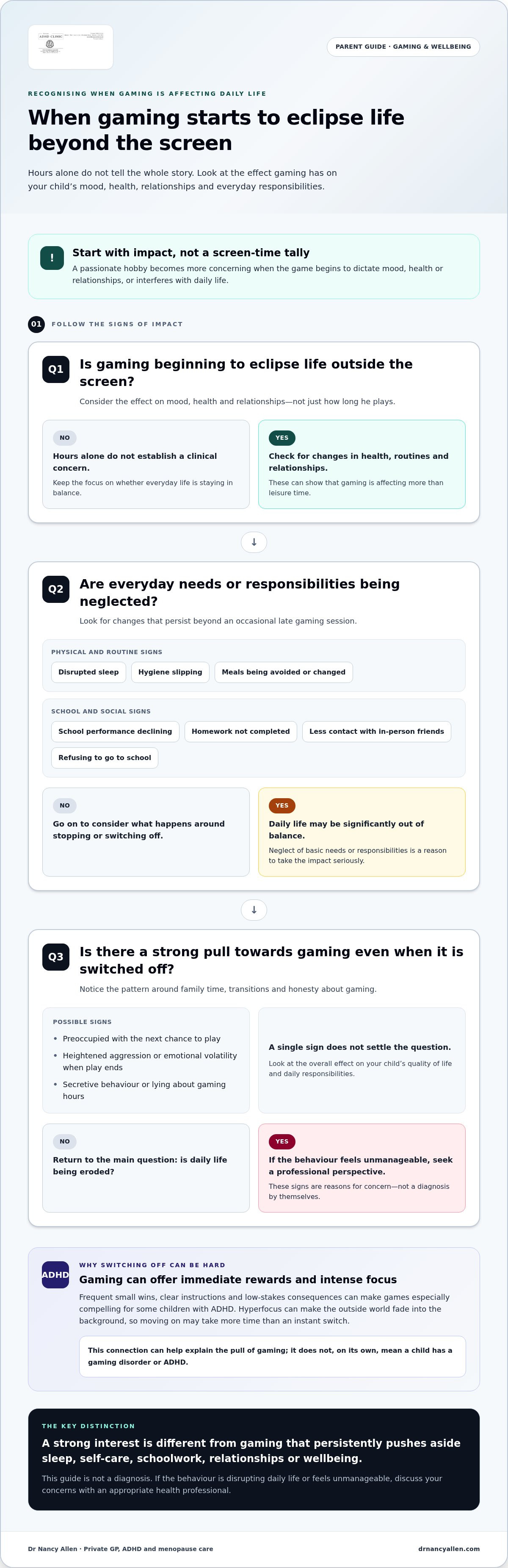
Identifying the moment a hobby transforms into a compulsive need is often the hardest part of the journey for parents. It isn't just about the number of hours spent at the console. It's about the "pull" the game has over your child's life. If you are constantly asking yourself, "is my son addicted to gaming," it's likely because you've noticed his digital life is beginning to eclipse his physical one. Whilst many children enjoy gaming, a clinical concern arises when the game starts to dictate their mood, their health, and their relationships.
Physical red flags are often the most visible indicators of a deeper problem. You might notice a total disruption of sleep patterns, with your son staying up until the early hours and struggling to wake for school. His hygiene might slip, or his eating habits might change as he avoids family meals to stay "in the zone." Socially, you might see a decline in school performance or a sudden isolation from friends he used to see in person. These aren't just phases; they are signs that the balance of his life has shifted significantly.
The Red Flags of Withdrawal and Preoccupation
Even when the console is off, a child struggling with addiction remains mentally tethered to the screen. You might notice he seems distant during family time, as if he is simply waiting for the next opportunity to play. This state of constant preoccupation is a core symptom of Video game addiction. Another warning sign is the "rebound effect," where a child displays heightened aggression or emotional volatility when screen time ends. If you've started to notice him being secretive or lying about his gaming hours, it's a clear sign that the behaviour is becoming unmanageable and requires a professional perspective.
When Gaming Interferes with Functional Life
We often use the term "functional impairment" to describe when a habit begins to erode a child's quality of life. If you are asking yourself, "is my son addicted to gaming," look closely at his ability to meet his daily responsibilities. Is he refusing to go to school or failing to complete his homework? Is he neglecting basic self-care, like showering or eating proper meals, because he cannot bear to step away from the screen? When gaming interferes with these fundamental pillars of development, it has moved beyond a simple interest. It's no longer a choice he's making; it's a compulsion that is actively holding him back from his potential and his wellbeing.
The ADHD Connection: Why Neurodivergent Children Are More Vulnerable
It is often a revelation for parents to learn that the struggle they are witnessing is not a moral failing or a lack of discipline. When you find yourself wondering, "is my son addicted to gaming," you may actually be seeing the symptoms of a neurodivergent brain seeking the stimulation it lacks naturally. Children with ADHD often have lower levels of dopamine, the chemical responsible for reward and motivation. Video games are, quite literally, dopamine delivery systems. They provide a constant stream of small wins, level-ups, and visual rewards that a neurotypical world, such as a quiet classroom or a pile of homework, simply cannot match.
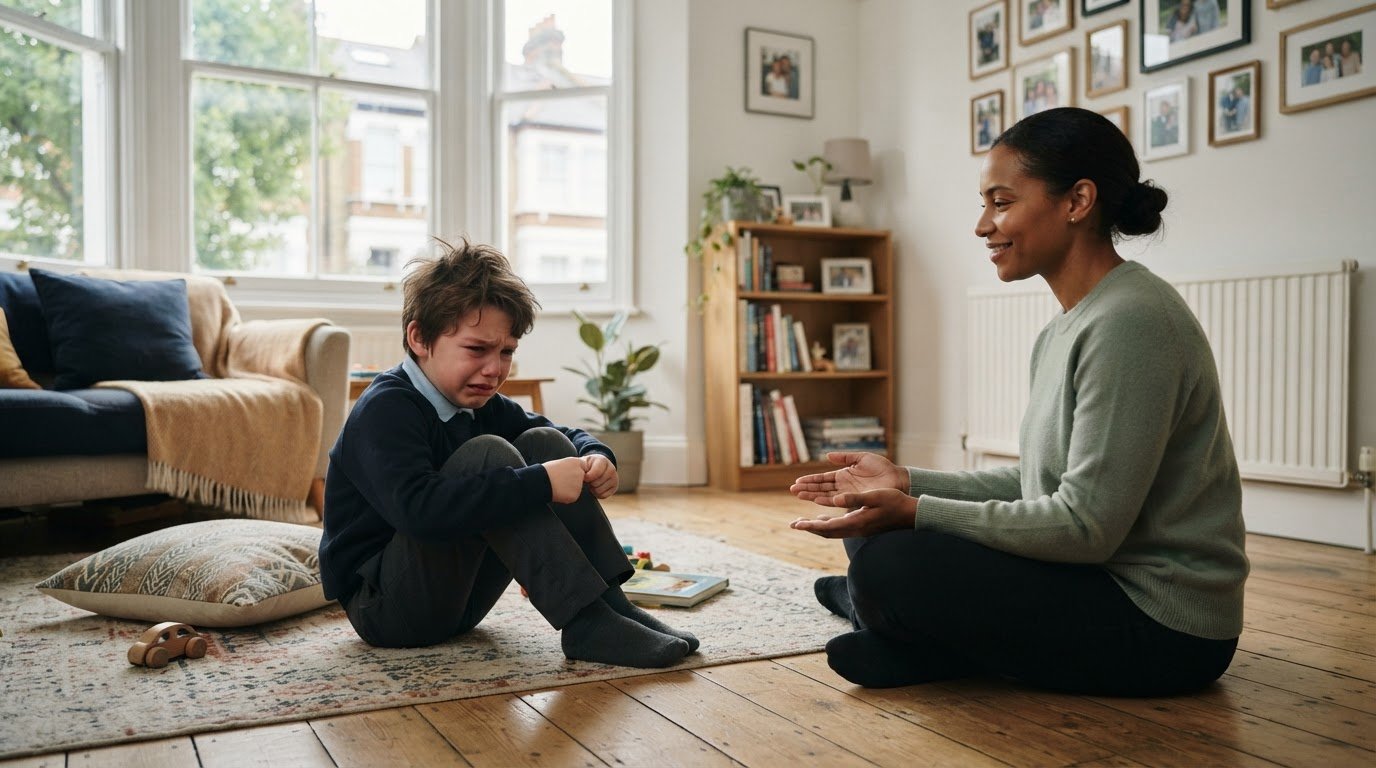
This biological pull is why many neurodivergent children meet the American Psychiatric Association's criteria for Internet Gaming Disorder more readily than their peers. It isn't that they are 'naughty' or 'addicted' in the traditional sense; rather, they have found a tool that effectively, albeit temporarily, manages their internal restlessness. Traditional punishments, like confiscating the console, often fail because they don't address the underlying chemical need. Instead, they can lead to intense emotional meltdowns as the child's primary source of regulation is suddenly removed.
The Dopamine Loop and Executive Function
The immediate feedback loops in modern gaming are perfectly tuned to the ADHD brain's needs. Whilst a neurotypical child might find it easier to delay gratification, a child with poor impulse control finds the 'one more round' pull almost impossible to resist. For these children, gaming feels easier than schoolwork because the instructions are explicit, the rewards are immediate, and the consequences for failure are low-stakes. It is an environment where they feel competent, perhaps for the first time in their day, making the transition back to reality feel jarring and unrewarding.
Hyperfocus, a common trait of ADHD, also plays a significant role. When a child is in this state, their brain is so intensely engaged that the outside world effectively ceases to exist. This makes 'switching off' a complex neurological task rather than a simple choice. Without the right strategies, expecting a child with ADHD to stop gaming instantly is like asking a speeding car to stop on a sixpence; the brain simply needs more time to decelerate and transition to the next task.
Gaming as Self-Medication for Undiagnosed ADHD
For many, gaming acts as a form of self-medication. If your son has undiagnosed ADHD, he may be using the intense focus of a game to quieten a mind that otherwise feels chaotic or 'too loud.' In the virtual world, he is successful, capable, and perhaps even a leader. In the physical world, he might feel like he is constantly failing to meet expectations or struggling with social cues. The game provides a safe, structured space for social interaction where the rules are clear and social anxiety is minimised.
When you ask, "is my son addicted to gaming," you might actually be asking if he is struggling to cope with an undiagnosed condition. Moving the conversation from 'lazy' to 'neurodivergent' can be a transformative step for a family, replacing conflict with understanding. If you suspect these patterns are at play, exploring a Child ADHD Assessment can help you stop the guessing and start providing the specific, expert support he needs to thrive in both the digital and real worlds.
Distinguishing Between 'Heavy Gaming' and Gaming Disorder
When you find yourself asking, "is my son addicted to gaming," it is vital to look beyond the clock. Many children spend significant time online, but there is a distinct clinical line between a dedicated hobby and a diagnostic disorder. The World Health Organisation (WHO) officially recognised Gaming Disorder in its 11th Revision of the International Classification of Diseases (ICD-11). This isn't a label to be used lightly. It describes a pattern of behaviour so severe that it takes precedence over nearly all other life interests and daily activities. Crucially, this pattern must typically be evident for at least 12 months, meaning a "bad week" during the school holidays doesn't automatically equate to a clinical addiction.
The defining marker of a disorder is the total loss of control. A child with a healthy passion can still stop when asked, even if they do so with a bit of grumbling. In contrast, a child struggling with a disorder feels an inability to control the frequency, intensity, or duration of their play. They continue to play despite the occurrence of negative consequences, such as failing grades or deteriorating physical health. It is this persistence in the face of harm that signals a shift from "heavy use" to a medical concern.
ICD-11 Criteria Simplified for Parents
To help you gain clarity, we can break down the clinical criteria into three primary areas of concern:
Impaired control: Your son cannot decide when to start, how long to play, or when to finish, regardless of external commitments.
Increasing priority: Gaming has moved from being a favourite activity to the only activity that matters, eclipsing school, family, and even basic self-care.
Continuation or escalation: Even when the gaming causes clear problems, such as social isolation or health issues, the behaviour does not stop. In many cases, it actually intensifies.
Passion vs. Pathology: The Context Matters
Context is everything when evaluating your son's habits. Is his gaming a social outlet where he is laughing and collaborating with school friends? Or is it a solitary retreat used to escape the pressures of the real world? We must also consider the vulnerability of children with ADHD, who may use games as a primary coping mechanism for their neurodivergent traits. A child who games intensely during a rainy half-term but returns to their usual routine once school starts is likely displaying a passion. However, when the gaming becomes a chronic, unshakeable necessity that erodes his quality of life, it has moved into the realm of pathology. Recognising this distinction is the first step toward providing the right kind of support.
Practical Strategies for Managing Screen Time and Restoring Balance
Moving from a role of constant surveillance to one of collaborative guidance is a powerful shift. If you've been asking "is my son addicted to gaming," you've likely spent months in a cycle of conflict that leaves everyone feeling drained. The goal isn't necessarily to eliminate gaming entirely, but to restore a sense of balance to the household. One of the most effective tools for this is "transition time." Because the brain, particularly a neurodivergent one, struggles to disengage from a high-dopamine state, a five-minute warning is rarely enough. Instead, use a physical timer or a visual countdown to help the brain begin its deceleration process before the screen actually goes dark.
A "Digital Sunset" is another essential strategy for restoring the family rhythm. This involves turning off all high-stimulation screens at least an hour before bed to protect the body's natural production of melatonin and ensure a restorative night's sleep. To make this work, you must offer dopamine-rich alternatives that provide a different kind of engagement. This might include a high-energy physical activity, a hands-on hobby, or even a strategic board game that mimics some of the mental stimulation of a video game without the blue light exposure. By providing these outlets, you help his brain find satisfaction in the real world, though some families find that working with a digital confidence coach NZ provides the extra structure needed to make these transitions stick.
Building a Collaborative Gaming Contract
Compliance is far higher when a child feels they have had a hand in creating the rules. Sit down together to draft a gaming contract that outlines clear expectations for everyone. Use natural consequences rather than arbitrary punishments; for instance, if he chooses to stay on for an extra twenty minutes today, that time is automatically deducted from tomorrow's session. This teaches self-regulation and places the responsibility back on him. Ensure the contract prioritises what needs to happen first, making gaming a reward for completed homework or chores rather than an unconditional right.
The Importance of Validating the Hobby
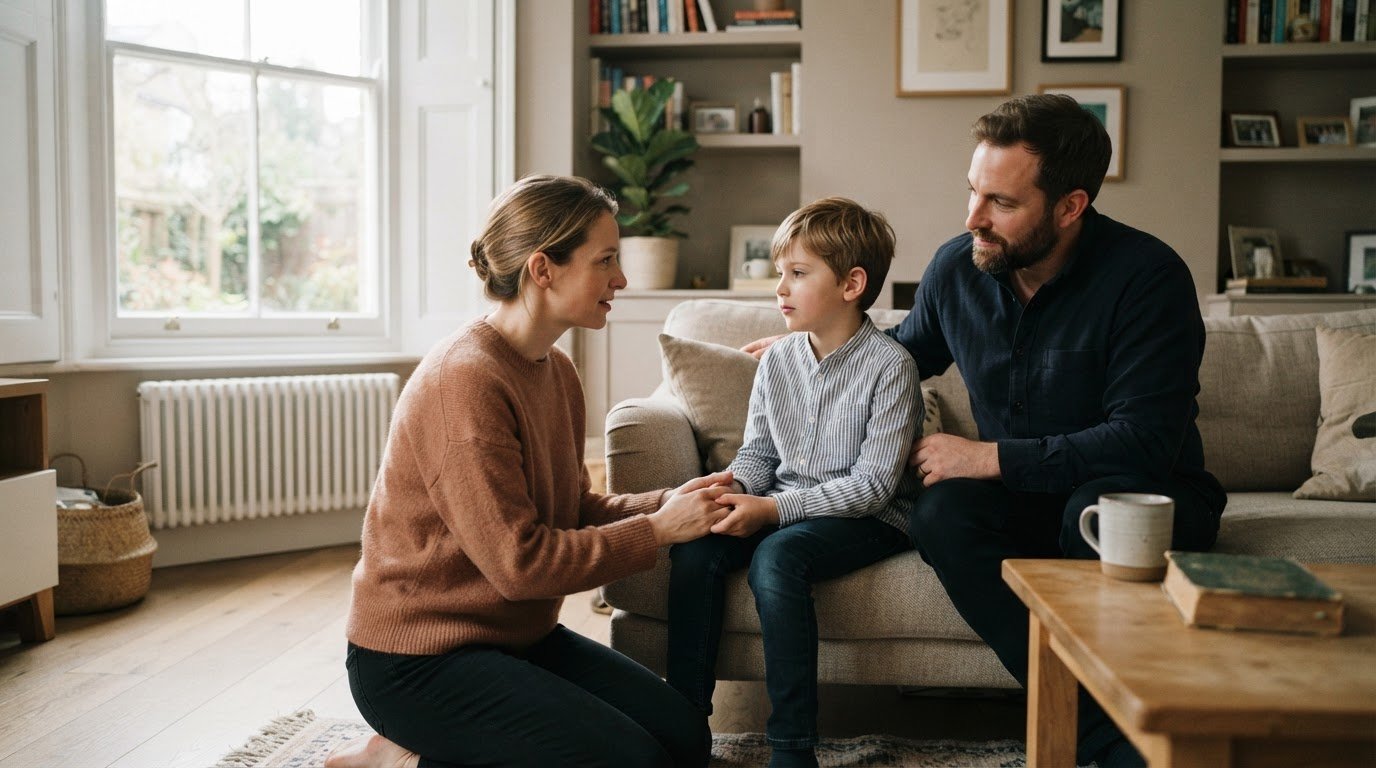
It is easy to view the console as the enemy, but showing a genuine interest in what your son is playing can bridge a widening communication gap. Ask him to explain the strategy or show you a particular achievement he is proud of. By recognising the skills he is developing, such as complex teamwork or rapid problem-solving, you validate his experience whilst maintaining your authority as a guide. This validation makes him more likely to listen when you do need to set firm limits. If you still find yourself worrying "is my son addicted to gaming" because these strategies aren't working, it may be time to seek professional clarity. You can book a Child ADHD Assessment to understand if his struggle with boundaries is rooted in his neurology rather than simple defiance.
When to Seek a Specialist ADHD Assessment
If the boundaries and collaborative contracts discussed earlier haven't brought the peace you hoped for, it's time to consider a different perspective. When you find yourself constantly asking "is my son addicted to gaming," the answer might not lie in the game itself, but in how his brain processes reward and impulse. Seeking a professional assessment is often the kindest thing a parent can do. It moves the child away from a narrative of 'addiction' and 'defiance' towards one of clarity and support. This transition allows you to stop policing a habit and start supporting a person.
Many families are advised to 'wait and see' if a child grows out of these intense behaviours. In the context of neurodevelopment, this approach can be counterproductive. Every month spent in high-conflict cycles over screen time is a month where a child's self-esteem may be eroding as they feel misunderstood. A specialist assessment provides a structured pathway from confusion to a personalised management plan that respects his neurodiversity. It replaces the exhausting guesswork with a clear, evidence-based roadmap for his future development.
The Benefits of a Private Child ADHD Assessment
Waiting for answers shouldn't be a source of further stress for a struggling family. Whilst the NHS provides vital services, the current waiting lists for neurodevelopmental assessments can often stretch into years. Choosing a private route allows your family to access support when the need is most acute, preventing the situation from escalating further. Dr Nancy Allen offers secure online and in-person consultations, with appointments often available within days. This rapid turnaround ensures that you can begin implementing effective strategies whilst the motivation for change is high.
What to Expect During a Specialist Consultation
The process is designed to be as stress-free as possible for both you and your child. Consultations are conducted through a secure online platform, allowing your son to remain in the comfortable, familiar environment of his own home. This often helps children feel more relaxed and articulate during the assessment. We take a holistic look at his life, exploring his strengths, school experiences, and social interactions, rather than focusing solely on his screen time. This comprehensive view helps to remove the shame often associated with the question "is my son addicted to gaming" and replaces it with a shared understanding of his unique neurological profile.
With over 25 years of clinical experience, Dr Nancy Allen provides the steady hand and expert insight needed to navigate these complexities. A diagnosis isn't just a clinical label; it's the first step towards restoring your son's confidence and bringing balance back to your family life. By understanding the 'why' behind the behaviour, you can finally move forward with a plan that prioritises his long-term wellbeing and success.
Restoring Harmony and Moving Forward
Understanding the difference between a passionate interest and a clinical disorder is the first step towards healing your home life. If you have spent months wondering, "is my son addicted to gaming," it is likely that your family needs more than just a stricter set of house rules. By recognising the link between compulsive play and the ADHD brain's search for dopamine, you can replace constant arguments with empathy and effective support. You don't have to be the 'bad guy' in your son's story anymore; instead, you can be the guide who helps him navigate his neurodiversity with confidence. Resources like Dr. Grant Johnson - Common Sense Psychology for Everyday Living offer practical, story-driven guidance to help parents apply psychological principles to these everyday family dynamics.
Taking the next step shouldn't involve years of waiting or clinical uncertainty. Dr Nancy Allen provides compassionate, expert-led care through national online consultations from the comfort of your home. Appointments are often available within days. Book a Specialist Consultation with Dr Nancy Allen today to start your journey towards a more balanced and supportive future. There is a clear path forward, and your son's potential is waiting to be rediscovered.
Frequently Asked Questions
Is gaming addiction a recognised medical condition in the UK?
Yes, it is officially recognised as 'Gaming Disorder' by the World Health Organisation (WHO) in the ICD-11, which is the standard used by both the NHS and private practitioners across the UK. This classification defines it as a pattern of persistent or recurrent gaming behaviour that is so severe it takes precedence over other life interests. It helps clinicians distinguish between a dedicated hobby and a clinical concern that requires professional support. For those navigating these challenges, the Addiction Centre offers guidance and referral services to help families find the right path forward.
Can ADHD cause a child to be addicted to video games?
ADHD does not directly cause addiction, but the neurodivergent brain is significantly more vulnerable to compulsive gaming due to its natural dopamine deficit. The immediate rewards and constant stimulation found in games provide the chemical 'fix' that a child with ADHD often lacks in daily life. This biological pull frequently leads parents to ask, "is my son addicted to gaming," when they are actually witnessing a struggle with neurological self-regulation.
How many hours of gaming a day is considered an addiction for a teenager?
There is no specific hourly threshold that defines an addiction, as clinical diagnosis focuses on the impact on a child's life rather than just the clock. Some teenagers play for several hours whilst maintaining their schoolwork, hygiene, and social connections. A disorder is only suspected when gaming becomes the sole priority and continues even when it causes clear harm to their health, education, or family relationships.
What should I do if my son becomes aggressive when I take his console away?
Aggression during the removal of a console is often a sign of emotional dysregulation or a reaction to a sudden, sharp drop in dopamine. Instead of an abrupt stop, try using transition strategies like visual timers or a ten-minute warning to help his brain decelerate. If the aggression is persistent or escalates into physical outbursts, it suggests a level of compulsion that requires a specialist assessment to manage safely.
Will an ADHD diagnosis help with my son's gaming habits?
A formal diagnosis provides the clarity needed to move from a cycle of punishment to a strategy of support. Understanding the neurological drivers behind the behaviour helps you implement boundaries that actually work with his brain rather than against it. This clarity is often the first step in resolving the question, "is my son addicted to gaming," as it identifies whether the behaviour is a symptom of an underlying condition like ADHD.
Is it possible to 'cure' gaming addiction without banning games entirely?
Recovery usually focuses on restoring a healthy balance rather than enforcing a total, permanent ban on all digital devices. For many children, gaming is a primary social outlet, so a total ban can lead to further isolation and resentment. The goal is to build self-regulation skills and introduce offline activities that offer similar rewards, allowing the child to enjoy gaming as a controlled part of a varied life.
How do I talk to my son about his gaming without starting an argument?
The most effective way to open a dialogue is to show a genuine curiosity about his hobby rather than leading with a criticism. Ask him to explain the strategy of his favourite game or what he has achieved in his latest session. By validating his interest first, you reduce his defensiveness and create a safer space to discuss your concerns about balance and house rules without it descending into conflict.
What are the long-term effects of gaming addiction on a child's brain?
Chronic, compulsive gaming can lead to a desensitisation of the brain's reward system, making real-world achievements feel less satisfying. This can eventually impact executive functions such as attention span, impulse control, and the ability to regulate emotions. Early intervention through a specialist consultation can help protect the brain's development and ensure your son has the tools to find reward and success in the physical world.

Comments