


Child ADHD Assessment: A Parent’s Guide to Private Diagnosis in the UK

Updated: 2 hours ago
You see their potential. You know they are bright, inquisitive, and capable. Yet, the daily reality is one of friction and frustration. Perhaps your son is constantly in trouble at school, labelled as ‘disruptive’ or ‘naughty’ for being unable to sit still, his report cards a litany of unmet potential. Or maybe your daughter, despite her intelligence, seems to be in a world of her own, forgetting instructions and losing belongings, with her teachers simply noting she ‘needs to pay more attention’. This quiet struggle often turns inward, manifesting as crippling anxiety, perfectionism, or even disordered eating as she tries desperately to compensate for a brain that works differently.
As a parent, witnessing this disconnect between your child’s true ability and their daily struggles is deeply painful. You are likely navigating a complex web of advice, long NHS waiting lists, and the constant worry that your child’s confidence is being eroded with every passing day. This guide is for you. It is designed to cut through the confusion and provide a clear, empathetic pathway to understanding the private child ADHD assessment process in the UK. An assessment is not about applying a label; it is about finding an explanation, validating your child’s experience, and unlocking the strategies they need to thrive.
Table of Contents
Recognising the Signs: When to Seek a Child ADHD Assessment
Attention Deficit Hyperactivity Disorder (ADHD) is a neurodevelopmental condition, meaning it stems from differences in brain development and activity. Crucially, it is not a behavioural flaw, a sign of poor parenting, or a lack of intelligence. For many families, the most significant step is moving beyond the damaging ‘naughty child’ stereotype to a clinical understanding. This shift in perspective is vital, as it replaces blame with a search for supportive solutions.
Parental intuition plays an enormous role. You know your child better than anyone. If you feel that their energy levels, focus, or emotional regulation consistently cause them significant challenges at school and at home, it is worth exploring further. Early intervention is critical. An undiagnosed child may internalise years of negative feedback, leading to a deep-seated belief that they are ‘bad’ or ‘not good enough’. This can have a lasting impact on their academic achievement, social development, and overall mental health. A formal child ADHD assessment provides the clarity needed to interrupt this cycle.
Inattentive vs Hyperactive Presentations
ADHD doesn't look the same in every child. The condition typically presents in one of three ways: predominantly inattentive, predominantly hyperactive-impulsive, or a combined type. Understanding these differences is key to recognising the signs, especially when they are not the stereotypical image of a child who can’t sit still.
Common signs of inattentiveness: This presentation is often missed, particularly in bright children who can academically compensate for a time. Signs include frequently daydreaming, seeming not to listen when spoken to directly, having a messy bedroom or schoolbag, losing items like homework or PE kits, and struggling to follow multi-step instructions. They may start tasks with enthusiasm but get easily sidetracked.
Hyperactive-impulsive traits: This is the more externally visible presentation. A child might fidget constantly, tap their hands or feet, or squirm in their seat. They may leave their seat in the classroom when expected to remain seated, talk excessively, and interrupt conversations. For many boys, this behaviour is misinterpreted as wilful defiance, leading to punishments and detention, which only deepens their sense of failure.
The "Combined Type": Most children with ADHD exhibit a blend of both inattentive and hyperactive-impulsive symptoms. They may be both restless and easily distracted, creating a significant challenge for them in structured environments like the classroom.
How ADHD Often Goes Unnoticed in Girls
The classic image of ADHD is a hyperactive young boy, which has led to generations of girls being overlooked and undiagnosed. Girls with ADHD often present with the predominantly inattentive type, which is far less disruptive to a classroom and therefore draws less attention from teachers.
Instead of acting out, they often act in. Their hyperactivity can be more subtle—fidgeting with their hair, doodling, or experiencing a constant internal restlessness and a racing mind. To cope, many girls become experts at ‘masking’, forcing themselves to pay attention and behave in a socially acceptable way. This is mentally exhausting and can lead to significant internalised symptoms, such as severe anxiety, low self-esteem, and perfectionism. The constant feeling of being different or failing to meet expectations, despite being bright, can sadly contribute to the development of eating disorders and other mental health conditions in their teenage years. Recognising that a quiet, anxious girl in the classroom may be struggling with ADHD is a critical step toward getting her the support she deserves.
The Clinical Process: What to Expect During a Private Assessment
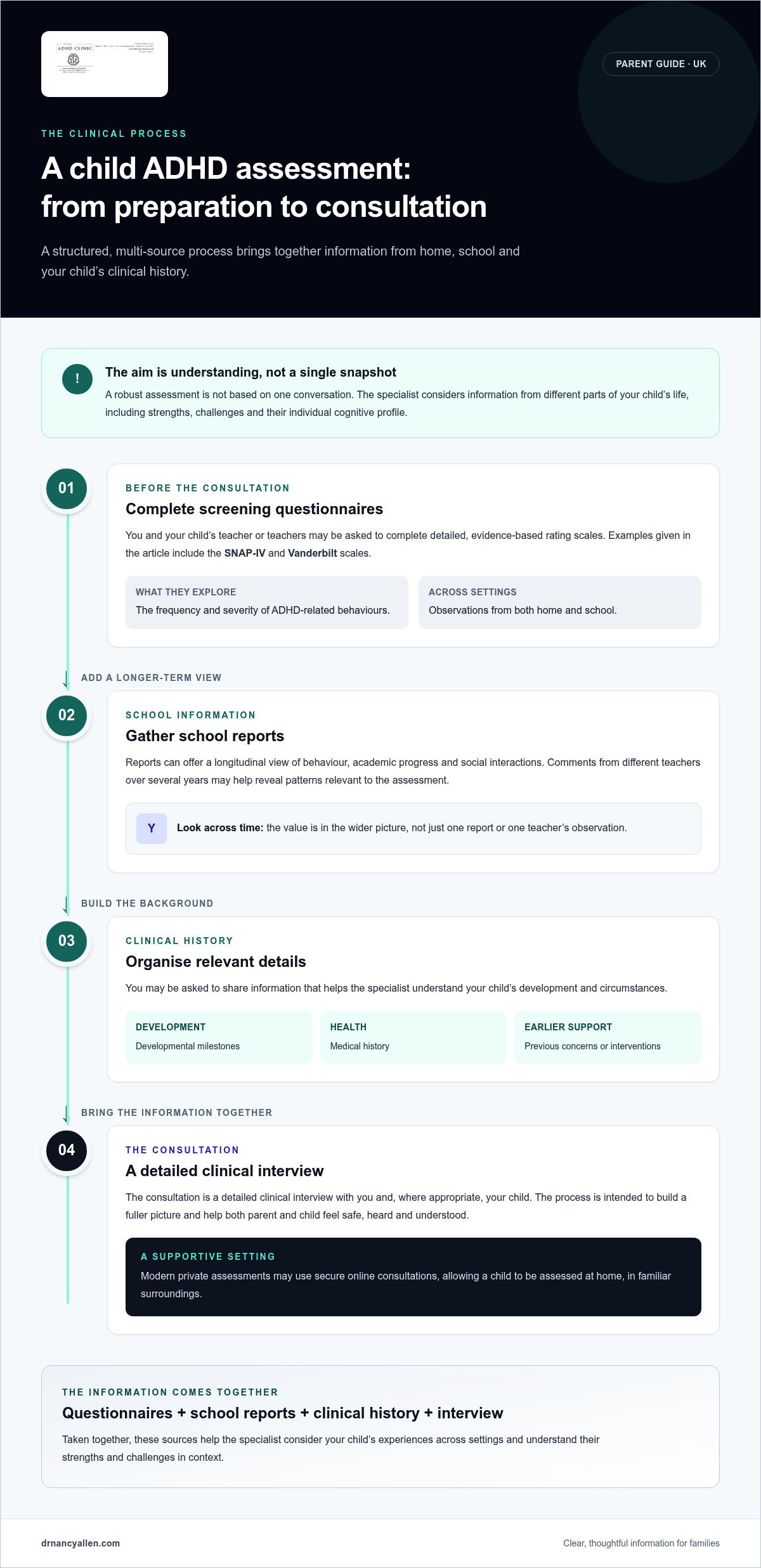
The journey from a parent's initial concern to a formal assessment can feel daunting, but a private clinical process is designed to be structured, supportive, and thorough. The goal is not to put your child under a microscope but to gain a complete picture of their world—their strengths, their challenges, and their unique cognitive profile. Modern private assessments often use secure online consultations, which allow your child to be assessed in the familiar comfort of their own home, reducing anxiety and allowing their true self to emerge.
A robust diagnosis relies on a multi-source approach. It is not based on a single conversation but on a careful synthesis of information from different areas of your child’s life. Throughout the process, the specialist’s priority is to ensure both you and your child feel safe, heard, and understood. This empathetic foundation is essential for an accurate and helpful outcome.
The Pre-Assessment Phase
Before the main consultation, you will work with the clinical team to gather essential background information. This groundwork is vital for an efficient and accurate assessment. This phase typically involves:
Completing standardised screening questionnaires: You and your child’s teacher(s) will be asked to fill out detailed, evidence-based rating scales, such as the SNAP-IV or Vanderbilt scales. These questionnaires measure the frequency and severity of specific ADHD-related behaviours across different settings (home and school).
The importance of the school report: School reports provide a longitudinal view of your child’s behaviour, academic progress, and social interactions. Comments from different teachers over several years can reveal consistent patterns that are highly relevant to the diagnostic process.
Organising clinical history: You will be asked to provide information on your child’s developmental milestones, medical history, and any previous concerns or interventions. This context helps the specialist build a comprehensive understanding.
The Diagnostic Consultation
The consultation itself is a detailed clinical interview with you and, where appropriate, your child. The specialist creates a relaxed, non-judgmental atmosphere to encourage open conversation. During this session, the clinician will:
Conduct a clinical interview: The specialist will discuss the concerns you have, explore the information from the questionnaires in more detail, and ask about your child’s strengths and interests. They will also speak with your child, adapting their communication style to be age-appropriate and engaging.
Observe behaviour and cognitive patterns: Even in an online setting, a trained specialist can observe subtle patterns in speech, attention, and behaviour that contribute to the diagnostic picture. The focus is on understanding how your child’s brain works.
Differentiate ADHD from other conditions: A key part of the assessment is to rule out or identify co-occurring conditions. Symptoms of anxiety, trauma, or Autism Spectrum Disorder (ASD) can sometimes overlap with ADHD, and a skilled clinician will carefully distinguish between them to ensure the final diagnosis is precise.
Navigating UK Pathways: NHS Waiting Lists vs Private Care
When seeking a child ADHD assessment in the UK, parents are faced with two main pathways: the NHS route or private care. Whilst the NHS provides excellent care, the reality for many families is that access to neurodevelopmental services via Child and Adolescent Mental Health Services (CAMHS) is severely strained, with waiting lists that can extend for years.
Why Speed Matters for a Developing Child
For a child or adolescent, waiting two or more years for an assessment is not a benign delay; it is a critical period of lost development. These are formative years when their sense of self, social skills, and relationship with education are being forged. During this long wait, a child may experience:
Erosion of self-worth: Without an explanation for their struggles, a child concludes the problem is them. They internalise labels like ‘lazy’, ‘naughty’, or ‘stupid’, causing significant damage to their self-esteem.
Academic decline: As schoolwork becomes more demanding, a child with unmanaged ADHD will fall further behind, cementing a belief that they are not capable of success.
Preventable secondary mental health issues: The constant stress and failure can directly lead to the development of anxiety, depression, and school refusal. These are the "lost years" where a child's potential is actively diminished by the wait for support.
A timely diagnosis allows for immediate adjustments to be made. It is the key that unlocks support in school, such as extra time in exams or help from the SENCO, and provides the framework for an Education, Health and Care Plan (EHCP) if required.
Private Assessment Credibility
It is natural for parents to question if a private diagnosis will be taken seriously. A credible private assessment is not a shortcut; it is a comprehensive, evidence-based process that adheres to the same high clinical standards as the NHS.
GMC-Registered Specialists: A diagnosis from a specialist doctor registered with the General Medical Council (GMC) carries full clinical authority. Their professional standing ensures the assessment is conducted ethically and competently.
A Comprehensive Diagnostic Report: Following the assessment, you should receive a detailed report that clearly explains the diagnostic process, the evidence considered, the conclusion, and personalised recommendations for home and school. This document is what you will share with your child’s school and GP.
A Clear Path Forward: A good private provider doesn’t just deliver a diagnosis; they provide a clear plan for ongoing management. This may include recommendations for therapy (to see how professional services support wellness, check out Courage Point Counseling and Wellness), school-based strategies, parental coaching, and, where appropriate, medication.
Preparing Your Child and Family for the Diagnostic Journey
Approaching the assessment with a positive and open mindset can make a significant difference to your child’s experience. It’s important to frame this not as a search for something ‘wrong’, but as a positive step toward understanding how their unique brain works. Your own anxiety is understandable, but try to focus on the goal: you are seeking clarity to provide better support, not just looking for a label.
To prepare, begin gathering practical information. Collect previous school reports and any notes from teachers or carers about your child’s behaviour. For the online consultation, create a calm, quiet, and private space where your child feels comfortable and can speak without being interrupted. This preparation ensures the specialist has all the information they need and that the environment is conducive to a productive session.
Communicating with the School
The school’s input is invaluable, and working collaboratively with them is key. Approach the conversation with your child’s teacher or the Special Educational Needs Co-ordinator (SENCO) as a partnership.
Ask for specific observations: Instead of asking, “Is my child naughty?”, ask for specific examples: “Can you describe what happens when he is asked to work independently?” or “How does she manage transitions between activities?”
Work with the SENCO: The SENCO is your ally within the school system. Inform them that you are pursuing a private assessment and discuss how you can work together to gather the required information, such as the teacher questionnaires.
Prepare them for the outcome: Let the school know that you will be sharing the diagnostic report with them and that you are keen to work together to implement any recommended support strategies post-diagnosis.
Explaining ADHD to Your Child
How you talk to your child about the assessment will shape their perception of it. It is vital to remove any sense of stigma or failure. The goal is to empower them with self-understanding.
Use age-appropriate language: Frame the assessment as a way to learn about their “brain superpowers” and the “tricky bits” that get in the way sometimes. You could say, “We’re meeting a doctor who is an expert in how brains work, to find out the best ways to help you with things like homework and staying focused.”
Remove the stigma: Talk about famous and successful people who have ADHD, such as Simone Biles, Michael Phelps, or Emma Watson. This helps normalise the experience and shows them that having a different neurotype is not a barrier to success.
Provide reassurance: Emphasise that the assessment is not a test they can pass or fail. It is simply a conversation to help everyone understand them better. Reassure them that you are on this journey together as a team.
Expert Support with Dr Nancy Allen: Clarity, Validation, and Rapid Results
With over 25 years of clinical experience, Dr Nancy Allen offers a private child ADHD assessment service built on a foundation of deep expertise and genuine compassion. The service is designed to address the core anxieties of parents: the need for answers, the desire for validation, and the urgency of getting support in place. Dr Allen’s approach goes beyond a clinical checklist, focusing on the individual child and the wider family dynamic.
We understand that when your child is struggling, every day matters. That is why we are committed to providing rapid results. Appointments are often available within days. The treatment plans are holistic, considering therapy, lifestyle adjustments, and school support alongside medication where appropriate, ensuring a truly personalised path forward.
A Compassionate, Patient-Centric Approach
Our core philosophy is that an assessment should be an empowering experience that restores confidence and improves quality of life. We are dedicated to hearing the parent’s story and validating the child’s struggles, creating a supportive space where families feel truly understood. The use of secure, national online consultations makes this expert care accessible to busy families across the UK, removing geographical barriers to high-quality support. For more information on our philosophy, you can read our guide to comprehensive care for ADHD. Our support does not end with a diagnosis; we are committed to helping you navigate the next steps in your child’s journey toward effective management and a brighter future.
Take the First Step Toward Clarity
Choosing to pursue a private assessment is a proactive step toward changing your child’s future. It is an investment in their well-being, their confidence, and their ability to reach their full potential. To book your initial consultation, you will need to have your child’s basic information and a summary of your concerns ready. The long-term impact of gaining expert clarity and timely support cannot be overstated—it can transform a child’s life trajectory from one of struggle to one of success.
Book a private child ADHD assessment with Dr Nancy Allen today
Frequently Asked Questions
How long does a private child ADHD assessment take from start to finish? The entire process, from completing the initial screening forms to receiving the final diagnostic report, can be completed very quickly. Dr Nancy Allen offers secure online and in-person consultations, with appointments often available within days. Will my child’s school accept a private ADHD diagnosis from Dr Nancy Allen? Yes. A diagnosis from a GMC-registered specialist following a comprehensive assessment that adheres to NICE guidelines is fully recognised by schools, universities, and local authorities. The detailed report provides the evidence needed for schools to implement support, such as an EHCP. What is the difference between an NHS assessment and a private one? The primary difference is speed and accessibility. While both pathways adhere to the same clinical standards for diagnosis, the NHS route often involves waits of several years, whereas a private assessment can be completed in a matter of weeks or even days. A private service also offers greater choice over the specialist you see. Can my child receive medication following a private ADHD diagnosis? Yes. If medication is deemed clinically appropriate, a private specialist can issue a prescription. This is often managed through a ‘shared care agreement’ with your NHS GP, where the specialist initiates and stabilises the treatment, and the GP takes over the repeat prescribing. What age can a child be assessed for ADHD in the UK? ADHD can be diagnosed in children from the age of six. For a diagnosis to be made, symptoms must have been present before the age of 12 and be causing significant impairment in at least two settings, such as at home and at school. Do I need a GP referral to book a private assessment for my child? No, you do not need a GP referral to book a private child ADHD assessment. You can self-refer directly, which streamlines the process and allows you to seek help as soon as you have concerns. What happens if the assessment concludes that my child does not have ADHD? A comprehensive assessment is still incredibly valuable even if it rules out ADHD. The specialist will provide a detailed explanation for your child’s difficulties and suggest alternative possibilities or pathways for further investigation, such as assessments for other learning difficulties or mental health conditions. Are online ADHD assessments as accurate as in-person ones? Yes. For ADHD, modern clinical practice has shown that assessments conducted via secure video consultation are just as effective and accurate as in-person appointments. The diagnostic process relies on structured interviews, rating scales, and observation, all of which can be robustly conducted remotely.



Comments