


ADHD Meltdown Action Plan: Practical Support Strategies

Imagine the moment the air in the room shifts. For a parent watching their child or an adult experiencing it themselves, an ADHD meltdown feels less like a tantrum and more like a neurological storm you're powerless to stop. You've likely felt the sting of public judgment or the crushing weight of guilt once the dust settles. It's vital to understand that these episodes aren't "bad behaviour" but a physical response to an overwhelmed nervous system. To navigate these moments with dignity, you need a reliable action plan for meltdowns that prioritises sensory safety over traditional discipline.
We recognise that the exhaustion following an outburst can be just as debilitating as the event itself. You're looking for more than just a temporary fix; you want to restore a sense of lasting calm and safety within your home. This article provides a clinically-grounded, compassionate framework designed to help you identify early triggers, de-escalate intense distress, and manage the recovery process effectively. We'll explore the biological "why" behind the meltdown and offer practical strategies to help both children and adults regain their footing, moving from a state of constant crisis to one of informed, proactive support.
Table of Contents
Understanding the ADHD Meltdown: Why It is Not a Tantrum
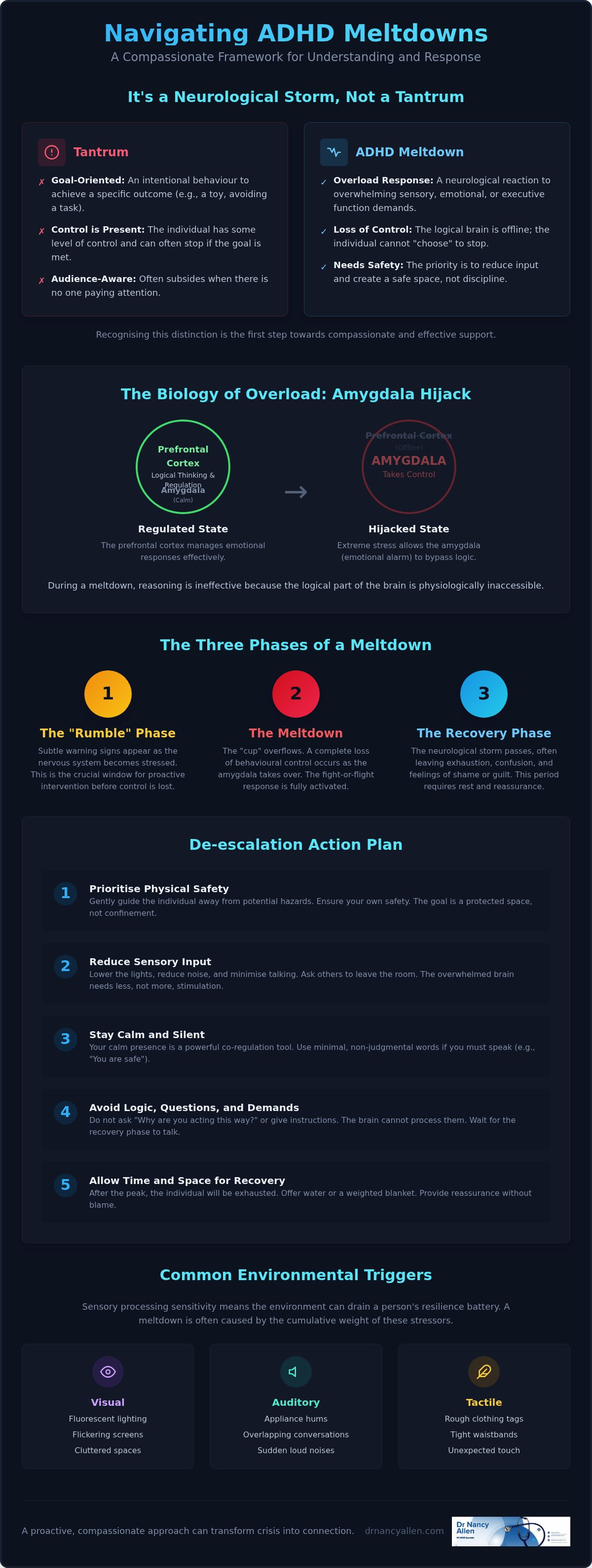
An ADHD meltdown is often mistaken for a tantrum, but the two are fundamentally different. A tantrum is an intentional, goal-oriented behaviour used to get a specific outcome, like a toy or a later bedtime. In contrast, a meltdown is a complete loss of behavioural control triggered by neurological overload. When the brain reaches its limit, the logical prefrontal cortex goes offline. This is why a traditional disciplinary approach fails; the individual has lost the capacity for choice. For those developing an action plan for meltdowns, recognising this distinction is the first step toward effective support.
In adults, these episodes are frequently mislabelled as "anger issues" or a lack of self-discipline. However, the underlying mechanism remains a result of emotional dysregulation. It's not a lack of character, but a biological response to an environment that has become too much to process. Because the person cannot simply "calm down" through willpower, the goal of any intervention must be safety rather than compliance. Identifying these moments as medical distress rather than defiance is a powerful way to reduce the secondary trauma of shame.
The Anatomy of a Neurodivergent Meltdown
Think of the ADHD brain as a cup. Throughout the day, sensory input, social demands, and executive tasks pour in. Whilst a neurotypical person might have a large cup or a steady drain, an ADHD individual's cup often starts nearly full. A minor inconvenience, like a misplaced key or a flickering light, can cause the cup to overflow. This is where executive dysfunction plays a role; when you can't organise your thoughts, even small hurdles feel like mountains. The aftermath is almost always marked by intense shame, as the individual struggles to reconcile their "out of character" behaviour with their actual values.
Meltdowns in Adults vs Children
Children often externalise their distress through shouting or physical movement. Adults, however, frequently learn to "mask" their symptoms to fit social expectations. This leads to "after-school restraint collapse" in kids and a similar "4pm collapse" in adults. You spend your entire energy budget staying calm at work, only to implode the moment you reach the safety of home. Adult meltdowns can also be internalised; instead of an explosion, you might experience a total "shut down" where you become non-verbal or withdrawn. Despite the identical biological roots, adults often face harsher stigma, making expert validation a crucial part of the healing process.
The Biological Triggers: Why the ADHD Brain Overloads
The biology of an ADHD meltdown is rooted in what clinicians call an "Amygdala Hijack". In a neurotypical brain, the prefrontal cortex acts as a steady hand on the wheel, regulating emotions and responses. However, when an ADHD brain faces extreme stress, the amygdala, the emotional alarm system, takes complete control. This effectively locks out the logical part of the brain. Understanding this physiological shift is essential when creating an action plan for meltdowns. It explains why reasoning or logic simply doesn't work once the threshold is crossed.
Sensory processing sensitivity often acts as the silent architect of these episodes. For many, a meltdown isn't caused by one single event, but by the cumulative weight of environmental stressors. When your brain is already working twice as hard to filter out background noise or uncomfortable textures, your capacity for emotional regulation diminishes rapidly.
Sensory Overload and Environmental Factors
Hidden triggers can drain a person's resilience battery throughout the day. A perfect storm occurs when multiple inputs collide, such as a loud office, restrictive clothing, and the smell of strong perfume. Auditing your environment can reveal these stressors before they lead to an overflow. Consider these common factors:
Visual: Fluorescent lighting, cluttered workspaces, or flickering screens.
Auditory: Background hums from appliances, overlapping conversations, or sudden loud noises.
Tactile: Rough clothing tags, tight waistbands, or unexpected physical touch.
Resilience is also deeply tied to restorative rest. Sleep deprivation is a major risk factor, yet many find it difficult to achieve. If you find yourself wondering why the adhd brain struggles to sleep, you are not alone. When the brain is exhausted, the prefrontal cortex is even less capable of managing the amygdala's signals, making a meltdown almost inevitable.
The Hormonal Connection: Menopause and ADHD
Hormonal shifts, particularly during puberty or perimenopause, can radically lower the threshold for emotional overload. Oestrogen plays a vital role in dopamine production. As levels fluctuate, ADHD symptoms often intensify, making previously manageable situations feel impossible. This is a common reason why women in midlife might experience a sudden spike in emotional volatility. Managing menopause symptoms through specialist care is often a missing piece in a comprehensive action plan for meltdowns. If you've noticed your emotional regulation changing alongside your life stage, seeking expert clinical guidance can provide the clarity and support needed to restore balance.
Phase 1: Identifying the "Rumble" and Warning Signs
The period of escalating tension that precedes a full neurological shutdown is known as the "Rumble Phase". This is the most critical window for intervention. Evidence suggests that acting during this phase is ten times more effective than trying to manage an active crisis. By the time the brain reaches the state of overload described earlier, the window of opportunity for logic has closed. A proactive action plan for meltdowns relies on your ability to spot these early tremors before the earthquake begins.
Tracking these patterns through a "trigger diary" is a practical way to build this awareness. By recording the timing, environment, and physical state preceding an episode, you can identify recurring stressors. This process often reveals a clear link between a person's current capacity and how to manage demand avoidance. When the perceived demands of a situation outweigh the individual's executive resources, the resulting frustration often acts as the primary catalyst for the rumble phase.
Physical and Behavioural Red Flags
Warning signs are often physiological. You might notice an increased heart rate, shallow breathing, or visible sweating. Some individuals begin to "zone out" or appear hyper-focused on a single, minor task. Behavioural cues are equally telling. These may include:
Verbal changes: Repetitive questioning, increased irritability, or becoming uncharacteristically quiet.
Movement: Pacing, intense fidgeting, or "stimming" behaviours like rocking or hand-tapping.
Sensory sensitivity: Expressing sudden annoyance at normal background noises or the feel of clothing.
Proactive Intervention Strategies
Once you identify the rumble, the goal is to lower the "neurological temperature" immediately. A "Change of Scene" is one of the most effective techniques. Simply moving to a different room or stepping outside can break the sensory loop that is driving the escalation. Sensory tools also play a vital role here. Noise-cancelling headphones or a weighted blanket can provide the necessary grounding to prevent the cup from overflowing.
Communication during this phase should be "low-demand". Avoid asking complex questions or offering choices that require significant executive effort. Instead, use calm, declarative statements and give the individual plenty of physical space. This approach validates their distress without adding to the cognitive load, allowing the nervous system a chance to self-regulate before it reaches the point of no return.
The Action Plan: De-escalation and Recovery Steps
When a meltdown reaches its peak, the time for teaching lessons or asking "why" has passed. The individual's logical brain is effectively offline. Your primary goal is now safety and sensory reduction. This is the core of any effective action plan for meltdowns. Trying to "talk it out" during this stage is like trying to reason with a house fire; it only adds fuel to the flames. You must focus on cooling the environment until the neurological storm passes.
Adults who feel the "rumble" whilst alone should immediately strip away all external demands. If you're at work, excuse yourself to a quiet space. If you're at home, cancel your immediate plans, put on noise-cancelling headphones, and find a dark room. Acknowledge the physical sensation without judgment. Your goal is simply to survive the next twenty minutes without adding further cognitive load to your already overwhelmed system.
Step-by-Step De-escalation
For caregivers, a structured order of operations is essential to remain calm and effective. Follow these five steps during the height of the crisis:
1. Reduce Input: Dim the lights immediately. Turn off any music or television. If you're in a public space, move to a quieter corner. Stop talking; even gentle reassurance can be perceived as an intrusive sensory demand.
2. Ensure Safety: Quietly remove any dangerous objects from the immediate vicinity. If possible, guide the person to a pre-arranged "nest" or safe space where they can't hurt themselves or others.
3. Use Minimal Speech: If you must speak, use short, calm, non-confrontational phrases. "You're safe" or "I'm here" is enough. Avoid questions entirely.
4. Give Space: Stay close enough to ensure safety but avoid physical touch unless it's specifically requested. For many, touch during a meltdown feels like a physical assault and will escalate the distress.
5. Wait for the Reset: Don't rush the process. Let the individual's nervous system return to a baseline naturally without hovering or demanding eye contact.
The Recovery Phase: Post-Meltdown Care
The aftermath of an episode is often characterised by the "meltdown hangover". This is a period of extreme fatigue, physical vulnerability, and emotional fragility. It's common to feel shaky, nauseated, or deeply ashamed. For several hours following the event, prioritise hydration and rest. Avoid returning to demanding tasks or high-sensory environments too quickly, as the threshold for a second meltdown will be significantly lower.
Wait at least 24 hours before attempting a "repair" conversation. Discussing triggers or solutions too soon risks re-triggering the nervous system. For educators managing these transitions in a school setting, our teacher information guide to children with adhd offers specific strategies for classroom recovery. If these episodes are becoming a regular occurrence, a professional Child ADHD Assessment can provide the expert validation and tailored support your family needs to move forward.
Long-term Management: The Role of Specialist Assessment
Whilst having a robust action plan for meltdowns provides immediate security, it's ultimately a reactive tool. To move beyond constant crisis management, you need to understand the unique neurological landscape that leads to these episodes. A specialist assessment is the bridge between surviving the day and thriving in the long term. It transforms a series of confusing outbursts into a clear clinical picture, allowing for targeted interventions that address the root cause rather than just the symptoms.
For many, the most transformative aspect of a formal adult adhd assessment is the removal of internalised shame. When a seasoned practitioner confirms that your struggles are biological, the internal narrative shifts from "I am failing" to "my brain is overloaded". This validation is a powerful regulator in itself. It reduces the secondary anxiety that often lowers your meltdown threshold. In the private sector, this clarity arrives quickly. With the ability to receive a diagnosis and treatment plan in as little as 72 hours, families can prevent further burnout and begin the recovery process without the weight of a years-long waiting list.
Personalised Treatment Plans
A formal diagnosis is the gateway to a personalised treatment plan that "raises the floor" of your daily resilience. Medication often plays a vital role here, not by changing your personality, but by making the brain less reactive to sensory and emotional triggers. This creates a larger buffer before the "rumble" begins, making your action plan for meltdowns even more effective when needed. Alongside medication, neuro-affirming therapy provides bespoke strategies tailored to your specific life demands. By addressing co-existing issues such as anxiety or chronic sleep disturbances, you significantly reduce the total load on your nervous system.
Taking the Next Step with Dr Nancy Allen
Dr Nancy Allen offers a compassionate and unhurried consultation process that prioritises the individual's experience. Whether you are seeking a child ADHD assessment or guidance as an adult, the focus remains on holistic well-being and restoring confidence. For those who find travel or new environments stressful, secure online consultations provide a comfortable way to access specialist care from the safety of home. This supportive relationship ensures you aren't just given a label, but a clear and inviting path forward. You can book a private ADHD assessment for clarity and support today to begin your journey toward lasting stability.
Restoring Stability and Confidence
Navigating the intensity of an ADHD meltdown requires a fundamental shift in perspective. By recognising these episodes as a biological "system failure" rather than a choice, you can replace judgment with deep-seated compassion. We've explored how identifying the subtle warning signs of the rumble phase and implementing a sensory-focused action plan for meltdowns can prevent escalation and protect the emotional well-being of everyone involved. These tools are vital for managing the immediate storm, but they are only one part of a larger journey toward stability.
Achieving lasting peace and understanding comes from expert validation and personalised care. Dr Nancy Allen provides neuro-affirming, specialist assessments backed by over 25 years of clinical experience. With the ability to receive a diagnosis and a tailored treatment plan within 72 hours, you don't have to wait to start your recovery. Book Your Private ADHD Assessment Today to move beyond the cycle of crisis and toward a state of informed, proactive support. You deserve the clarity that comes from professional insight, and a calmer, more predictable future is within your reach.
Frequently Asked Questions
Is an ADHD meltdown the same as an autistic meltdown?
The neurological mechanism is nearly identical, as both involve an overwhelmed nervous system and an "amygdala hijack" that bypasses the logical brain. Whilst the triggers may differ, ADHD meltdowns are often linked to executive function fatigue or intense frustration, whereas autistic meltdowns are frequently sensory-driven. Both require a compassionate response focused on safety and sensory reduction rather than traditional disciplinary measures or reasoning.
How can I stop a meltdown in public without feeling judged?
Focus entirely on the individual's safety and your own regulated breathing rather than the reactions of onlookers. Move to a quieter area, such as a parked car or a secluded corner, as quickly as possible to reduce sensory input. Having a pre-prepared action plan for meltdowns in public helps you stay grounded and provides a structured script to follow, reducing the anxiety of social scrutiny.
Can ADHD medication help reduce the frequency of meltdowns?
Medication can significantly increase an individual's "window of tolerance" by regulating dopamine levels in the brain. This helps the prefrontal cortex maintain control for longer when faced with stressors. Whilst it doesn't eliminate meltdowns entirely, it often "raises the floor," making the brain less reactive to minor triggers. It's a foundational step in a long-term management strategy following a formal specialist assessment.
Why does my child only have meltdowns at home after school?
This phenomenon is known as "restraint collapse." Your child has spent their entire energy budget masking their symptoms and following complex rules throughout the school day. Once they reach the safety of home, their executive resources are completely depleted. Providing a "low-demand" hour with snacks and quiet time immediately after school can help prevent their cup from overflowing before the evening routine begins.
What should I do if I feel a meltdown coming on as an adult?
Remove yourself from your current environment immediately without over-explaining your departure. If you're at work, excuse yourself to a quiet space or your car to strip away external demands. Put on noise-cancelling headphones and focus on grounding your physical senses. Don't try to "think" your way out of the distress; simply focus on reducing sensory input until you feel your heart rate settle.
How do I explain ADHD meltdowns to family members or teachers?
Use the "neurological storm" analogy to explain that a meltdown is a physical reaction to an overwhelmed brain rather than a choice. Share your written action plan for meltdowns with them so they know exactly how to support de-escalation. Emphasise that silence and physical space are far more effective than questioning or reprimands during the height of the episode, as these only add to the cognitive load.
When should I seek a private ADHD assessment for my child?
Consider a private assessment if meltdowns are significantly impacting your child's education, self-esteem, or family relationships. If traditional parenting strategies aren't working, a professional diagnosis provides the necessary validation and access to targeted support. Dr Nancy Allen offers comprehensive assessments that look at the whole child, providing clear answers and personalised treatment plans in as little as 72 hours to prevent further family crisis.
Are meltdowns more common during perimenopause for women with ADHD?
Hormonal fluctuations significantly impact emotional regulation because falling oestrogen levels reduce dopamine efficiency in the brain. This often causes ADHD symptoms to flare, making the "meltdown threshold" much lower than it was previously. Addressing these hormonal shifts alongside ADHD management is a specialist area of care. Managing these symptoms through expert clinical guidance can restore the emotional stability that many women feel they've lost during midlife.


Comments